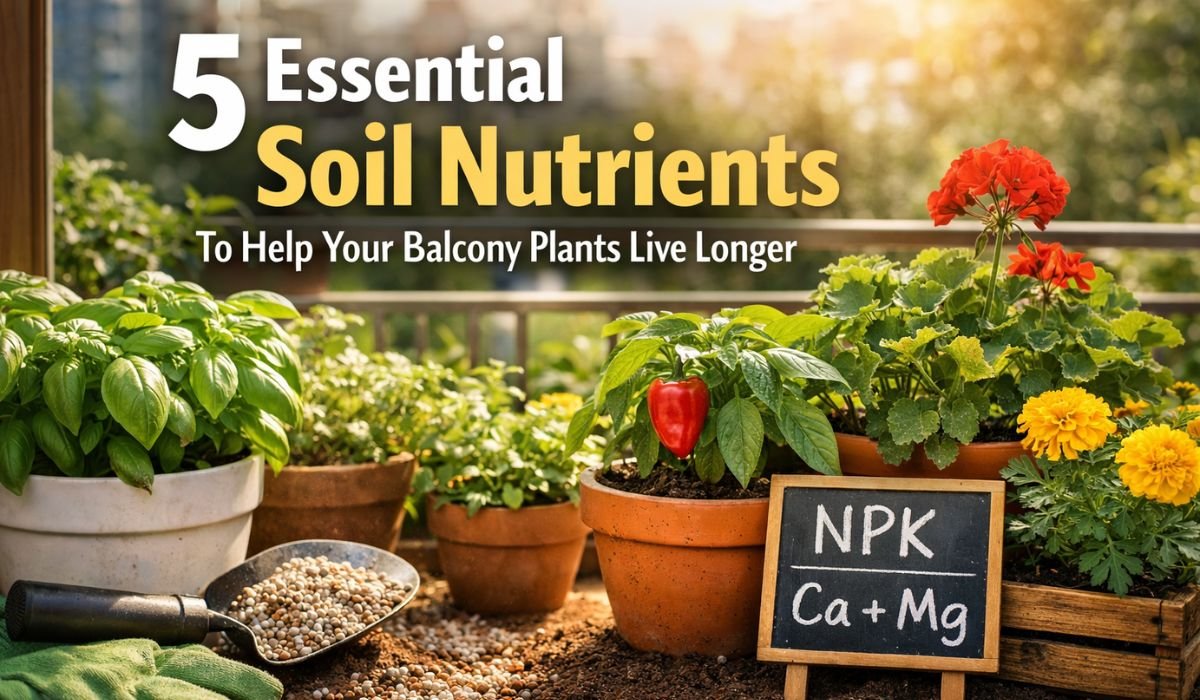
5 Essential Soil Nutrients for Balcony plants live longer when they get the right balance of five core nutrients: nitrogen, phosphorus, potassium, calcium, and magnesium. These nutrients support leafy growth, root strength, flowering, cell health, and chlorophyll production. In containers, nutrients wash out faster with regular watering, so feeding the soil matters more than most plant owners realize.
- Nitrogen helps leaves stay green and keeps growth steady.
- Phosphorus supports roots, blooms, and overall plant energy.
- Potassium improves stress tolerance and plant strength.
- Calcium helps build strong cell walls and prevents weak new growth.
- Magnesium supports chlorophyll, which keeps foliage green and active.
Balcony gardening looks easy from the outside. A few pots, some sun, a watering can, and you’re set. But here’s the part people learn the hard way: container plants burn through nutrients fast. Between frequent watering, summer heat, and cramped root zones, even healthy-looking plants can start fading long before the season should be over. That’s exactly why nutrient-smart care gives balcony plants a longer, healthier life.
Why do balcony plants need extra nutrient support?
Balcony plants depend on a limited amount of potting mix, so they cannot keep drawing nutrients from the ground the way garden plants can. Repeated watering also leaches nutrients out of containers over time. That means even a beautiful planter can quietly become nutrient-poor within weeks.
I’ve seen this happen with herbs more than anything. Basil starts strong, mint looks full, and then a month later the leaves lose color and the whole pot seems tired. Most people assume it’s just heat. Sometimes it is. But very often, the real issue is simple: the soil has run out of fuel.
What are the 5 essential soil nutrients balcony plants need most?
The five most practical nutrients to focus on for balcony plants are nitrogen, phosphorus, potassium, calcium, and magnesium. Plants need more nutrients overall, but these five are especially useful for home growers because they directly affect growth, flowering, leaf color, and resilience in containers.
1) Nitrogen: What does it do for balcony plants?
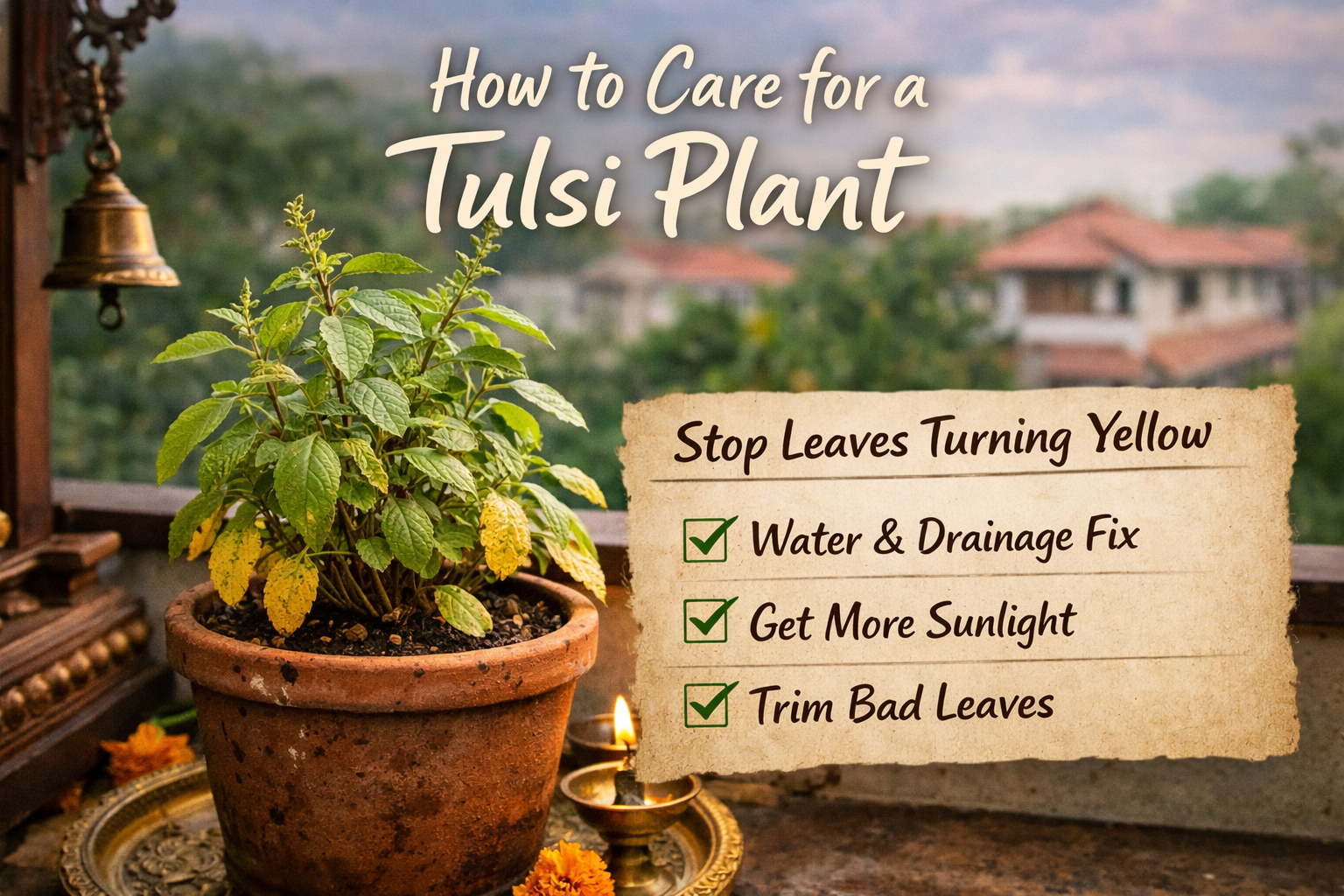
Nitrogen drives leafy growth and rich green color. It is one of the nutrients most commonly lacking in growing media and fertilizers are often used to replenish it. When a balcony plant looks pale, slow, or weak, nitrogen is often part of the problem.
Common signs your plant may need more nitrogen:
- Older leaves turning light green or yellow
- Slow overall growth
- Small leaves
- Thin, leggy stems
This matters most for leafy balcony plants like basil, spinach, pothos, coleus, and leafy ornamentals. Too little nitrogen and they stall out. Too much, though, can push lots of soft leaves and fewer flowers.
2) Phosphorus: Why is i t important for roots and flowers?
Phosphorus helps plants build stronger roots and supports flowering and fruiting. It also plays a major role in energy transfer inside the plant, which is one reason stressed or newly transplanted container plants benefit from balanced nutrition that includes phosphorus.
If your balcony includes flowering plants like petunias, geraniums, marigolds, or tomatoes in pots, phosphorus matters a lot. A plant may still stay green without enough phosphorus, but it often won’t perform the way you hoped.
Watch for:
- Weak root development
- Fewer flowers
- Slower maturity
- Poor recovery after transplanting
3) Potassium: How does it help plants live longer?
Potassium helps plants handle stress better. It supports overall vigor, water regulation, and stronger growth, which is especially valuable on balconies where plants deal with reflected heat, wind, and inconsistent moisture.
This is the nutrient I think of as the plant’s toughness factor.
When potassium is low, balcony plants often seem more fragile. They may droop faster, struggle through heat waves, or produce weak flowers and fruit. Good potassium support helps a container garden stay resilient instead of collapsing halfway through summer.
4) Calcium: Why do container plants need it?
Calcium helps build strong plant cell walls and supports healthy new growth. Even though many soils naturally contain some calcium, container conditions can still create imbalances, especially when watering and fertilizer habits are inconsistent.
Calcium helps with:
- Strong stems
- Better root and shoot development
- Healthier new leaves
- Reduced risk of weak, distorted fresh growth
A real-world example: cherry tomatoes on balconies often grow fast in warm weather, but if watering is erratic and calcium uptake is affected, new fruit can suffer. Gardeners often blame the plant variety first. The growing conditions are usually the bigger story.
5) Magnesium: What role does it play in leaf health?
Magnesium is central to chlorophyll production, which is what keeps leaves green and photosynthesis working efficiently. Without enough magnesium, plants can lose color and energy, even when everything else looks mostly fine.
Possible signs of low magnesium:
- Yellowing between leaf veins
- Faded older leaves
- Reduced vigor
- Less lush foliage over time
For balcony gardeners, magnesium often becomes important in long-running containers, especially when plants have been watered heavily for weeks.
Which nutrient does potting soil lose fastest on a balcony?
Nitrogen is usually the first nutrient balcony gardeners notice running low, but regular watering can reduce several nutrients over time. Container plants are especially vulnerable because each watering flushes part of the nutrient supply through the pot.
That’s why a plant can look fantastic in May and exhausted by July even when you never missed a watering day.
How do you know if your balcony plants have a nutrient problem?
Look for patterns, not just one bad leaf. Nutrient issues usually show up as pale foliage, poor blooming, slow growth, weak stems, or a plant that dries out and declines faster than expected. Those symptoms can overlap with watering or light problems, so the goal is to read the full picture.
Here’s a simple guide:
| Nutrient | What it helps with | Common clue |
|---|---|---|
| Nitrogen | Leaf growth and green color | Older leaves turn pale |
| Phosphorus | Roots and flowers | Weak blooming or root growth |
| Potassium | Stress tolerance and vigor | Plant seems weak in heat |
| Calcium | Strong new growth | Distorted or weak young growth |
| Magnesium | Chlorophyll and leaf energy | Yellowing between veins |
What fertilizer is best for balcony plants?
A balanced all-purpose fertilizer is usually the safest starting point for balcony plants. University extension guidance notes that all-purpose fertilizers typically contain nitrogen, phosphorus, and potassium, and often include other essential nutrients like iron, manganese, and zinc.
Look for:
- A balanced or near-balanced fertilizer for general foliage plants
- A bloom-focused fertilizer for flowering pots
- Slow-release fertilizer for convenience
- Liquid feeding for quick correction during active growth
Here’s the truth: you do not need the most expensive fertilizer on the shelf. You need one that matches the plant and that you use consistently.
How often should you feed balcony plants?
Many balcony plants benefit from regular feeding because nutrients in containers do not last as long as they do in garden soil. Extension guidance notes that regular fertilizer applications often begin two to six weeks after planting, depending on potting mix, watering frequency, and plant growth.
A practical rhythm:
- Fast-growing annuals: feed regularly during active growth
- Herbs and foliage plants: lighter, steady feeding
- Flowering plants: consistent feeding once buds and blooms start
- Winter slowdown: reduce feeding when growth slows
A quick balcony plant example
Last summer, a small balcony planter with basil, marigolds, and a dwarf pepper started the season beautifully. By midseason, the basil had pale leaves, the marigolds were flowering less, and the pepper looked tired by afternoon. The watering routine was fine. The sun exposure was fine. The real fix was restoring nutrition with a balanced feed and more consistent care. Within a couple of weeks, the growth came back stronger.
That pattern is common. Plants do not just need water. They need usable nutrition in the root zone.
People Also Ask
What are the most important nutrients for potted plants?
The most important nutrients for potted plants are nitrogen, phosphorus, and potassium, with calcium and magnesium also playing major support roles. These nutrients help with leaf growth, roots, flowering, strength, and chlorophyll production. In containers, they matter even more because watering can wash nutrients out faster.
Why do balcony plants die faster than garden plants?
Balcony plants often die faster because they grow in a limited volume of potting mix that dries out and loses nutrients quickly. They also face more heat, wind, and watering stress than in-ground plants. Regular feeding and better soil care can make a major difference in plant lifespan.
Can potting soil lose nutrients over time?
Yes. Potting soil can lose nutrients over time, especially in containers that are watered often. Repeated watering can leach nutrients from the root zone, which is why many balcony plants need ongoing fertilizer instead of relying only on the original potting mix.
Is NPK enough for container plants?
NPK is a strong foundation, but it is not always the whole story. Container plants also benefit from secondary nutrients such as calcium and magnesium, plus trace nutrients in many complete fertilizers. A good all-purpose fertilizer often covers both the major and supporting nutrients plants need.
What helps balcony plants stay green longer?
Balanced nutrition, proper watering, and enough light all help balcony plants stay green longer. From a nutrient standpoint, nitrogen supports green growth and magnesium supports chlorophyll. When either one is lacking, leaves often lose color and the plant starts looking older than it should.
FAQs
Should I use liquid or slow-release fertilizer for balcony plants?
Both can work well. Slow-release fertilizer is easier for steady feeding, while liquid fertilizer is useful when plants need a quicker boost. Many balcony gardeners use slow-release nutrition as a base and add occasional liquid feeding during heavy growth.
Do herbs need the same nutrients as flowering balcony plants?
Not exactly. Herbs still need balanced nutrition, but flowering plants usually demand more support for blooms and fruit. Leafy herbs often respond best to steady, moderate feeding rather than aggressive bloom formulas.
Can I overfeed potted plants?
Yes. Overfeeding can damage roots, create salt buildup, and push weak, overly soft growth. It is safer to feed consistently at the recommended rate than to give occasional heavy doses.
Is fresh potting mix enough for the whole season?
Usually not. Fresh potting mix may support plants early on, but long-season balcony containers often need additional feeding because nutrients are gradually used up or washed out.