
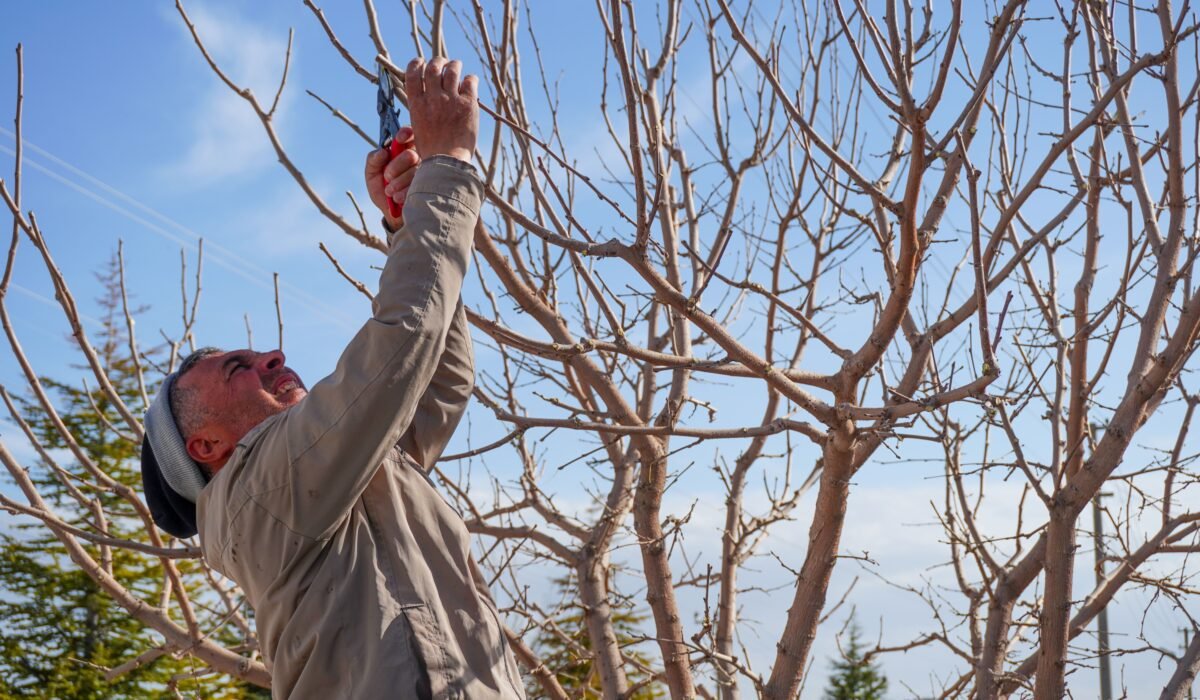
Key Takeaways
- Pruning fruit trees in late winter reduces freeze injury risks, according to the University of Georgia Extension (2025).
- Peach trees require severe annual pruning because they bear fruit exclusively on last year’s growth, as reported by Shelby County Today (2026).
- Sharp, clean tools like Felco pruners are crucial for making precise cuts that promote tree health and prevent disease.
- Dormant season pruning improves light penetration and air circulation, significantly boosting fruit quality and yield.
- Ignoring consistent pruning can lead to smaller fruit and reduced overall tree vigor, according to Stark Bro’s (2026).
Are you looking to unlock the full potential of your backyard orchard? Mastering the art of pruning backyard fruit trees is the single most impactful step you can take to ensure bountiful harvests and robust tree health. In my 10+ years of experience in horticulture, I’ve seen firsthand how proper pruning transforms struggling trees into productive, vibrant specimens, and I’m here to guide you through this essential gardening practice.
Quick Answer: Pruning backyard fruit trees promotes health, boosts fruit production, and maintains size. It involves removing specific branches to improve light and air. Best done in late winter during dormancy with sharp tools, it ensures vigorous growth and better harvests.
Why is Pruning Backyard Fruit Trees Essential?
Pruning backyard fruit trees is essential because it directly impacts the tree’s health, productivity, and longevity. An unpruned fruit tree may struggle in growth and take longer to bear fruit, according to Stark Bro’s (2026). This practice is not just about aesthetics; it’s a fundamental horticultural task for successful fruit growing.
Well-executed pruning stimulates stronger, more vigorous growth from remaining buds, leading to a larger, more productive tree over time, as explained by Stark Bro’s. Think of it as guiding the tree’s energy to where it’s most beneficial, rather than letting it spread thin. Proper pruning also reduces the likelihood of disease and pest infestations by improving air circulation and removing vulnerable branches. For more on disease and pest control, you might find our guide on Fruit Tree Disease and Pest Control: 7 Essential Steps helpful.
Pruning backyard fruit trees is one of the most critical management practices when growing a fruit tree, according to Annie Deutsch of Peninsula Pulse. It directs the tree’s energy toward fruit production and structural integrity.
Consider these key benefits of regular pruning backyard fruit trees:
- Enhanced Fruit Production: Pruning encourages the tree to produce larger, higher-quality fruit by concentrating nutrients. It removes unproductive wood and ensures sunlight reaches all parts of the canopy.
- Improved Tree Health: Removing dead, diseased, or damaged branches prevents the spread of pathogens and pests. This practice significantly reduces the tree’s susceptibility to various ailments.
- Controlled Size and Shape: Regular pruning keeps trees at a manageable height and width, making harvesting and future maintenance much easier. It also helps in establishing a strong, balanced framework.
- Increased Air Circulation and Light Penetration: A well-pruned canopy allows for better airflow, which helps dry leaves and fruit, reducing fungal issues. Sunlight reaching inner branches promotes even ripening and color development.
When is the Best Time to Prune Fruit Trees?
The best time for pruning backyard fruit trees is typically in late winter or early spring, during the tree’s dormant period. Pruning fruit trees during late winter, as dormancy wraps up, reduces the risk of freeze injury, according to the University of Georgia Extension (2025). This timing minimizes stress on the tree and promotes vigorous growth when spring arrives.
Dormant pruning, performed when the leaves have fallen and before new buds swell, allows you to clearly see the tree’s structure and make precise cuts. For temperate fruits like apple, peach, and pear, this period is ideal because the tree is not actively growing or bearing fruit. However, there are nuances for different tree types and specific goals.
While dormant pruning is generally preferred, some trees benefit from light summer pruning. This can help control growth, remove water sprouts, and improve light penetration to ripening fruit, especially in specific regions.
Here’s a quick overview of timing considerations for pruning backyard fruit trees:
- Dormant Pruning (Late Winter/Early Spring): This is the primary pruning season for most deciduous fruit trees. It’s best for major structural cuts, removing deadwood, and shaping the tree. It stimulates new growth in the spring.
- Summer Pruning (Late Spring/Early Summer): Use this for minor tasks like removing water sprouts, suckers, or lightly heading back vigorous shoots to control size. Heavy summer pruning can reduce the tree’s vigor and fruit production for the following year.
- Special Considerations: Some fruit trees, like cherries, are better pruned immediately after harvest in summer to avoid bacterial canker. Peach trees require consistent annual pruning to maintain production, as they bear fruit exclusively on last year’s growth, according to Shelby County Today (2026).
In spring 2026, up to March 14, growing degree day accumulations in Lexington, Kentucky, were trailing only 2017 and 2023, indicating an earlier-than-normal phenology for fruit crops by two to three weeks, according to Elanya Stirn, Agriculture Extension Associate (2026). This highlights the importance of observing local conditions when determining exact pruning times.
Essential Tools for Pruning Fruit Trees
Having the right tools is paramount for effective and safe pruning backyard fruit trees, ensuring clean cuts that heal quickly and minimize disease risk. A comprehensive set of sharp, clean tools is your best friend when tackling any pruning task. As a professional gardener, I know that quality tools make all the difference, not just in efficiency but also in the health of your trees.
Investing in high-quality pruning tools like those from Felco or Corona Tools ensures durability and precision, crucial for making clean cuts that promote rapid healing. These tools are designed to handle the rigors of regular use.
Here are the essential tools you’ll need for pruning backyard fruit trees:
- Hand Pruners (Bypass Shears):
- Purpose: For small branches up to 3/4 inch in diameter.
- Recommendation: Bypass pruners, such as Felco 2 pruners, make clean cuts without crushing stems, which is vital for tree health. Felco pruners (F 903) are also recommended for maintaining hardened steel blades.
- Why it matters: These are your workhorse tools for most routine pruning.
- Loppers:
- Purpose: For branches from 1/2 inch to 1 3/4 inches thick.
- Recommendation: Look for loppers with long handles for leverage. Corona Tools offers excellent 16-inch loppers that are effective for larger branches, as noted by Southern California food gardening blogger Greg Alder.
- Why it matters: They provide the extra power needed for thicker wood that hand pruners can’t manage.
- Pruning Saw:
- Purpose: For branches larger than 1 3/4 inches in diameter.
- Recommendation: A folding saw or a curved blade saw works well. Silky Saws, a Japanese brand, are highly regarded for making quick work of thicker branches. Corona also offers reliable folding saws.
- Why it matters: Saws handle substantial branches cleanly, preventing damage that can occur from forcing smaller tools.
- Pole Pruner/Saw:
- Purpose: For high branches that cannot be reached safely from the ground.
- Recommendation: A manual pole pruner with both a cutting head and a saw blade, or a powered option like a VEVOR Gas Pole Saw (extendable 7.2 ft to 10 ft with a 14-inch cutting bar).
- Why it matters: Safety first! Avoid ladders for high cuts whenever possible.
- Safety Gear:
- Purpose: To protect yourself from injury.
- Recommendation: Sturdy gloves, safety glasses, and appropriate footwear are essential.
- Why it matters: Pruning can be dangerous; protecting your hands and eyes is non-negotiable.
- Thinning Cuts:
- What it is: Removing an entire branch back to its point of origin (trunk, main limb, or lateral branch).
- Why it matters: These cuts open up the canopy for better light penetration and air circulation, reducing density without stimulating excessive new growth.
- Technique: Cut flush with the collar of the larger branch, avoiding leaving a stub.
- Heading Cuts:
- What it is: Shortening a branch by cutting off its end.
- Why it matters: This stimulates lateral bud break below the cut, encouraging bushier growth and increasing branching. It’s often used on young trees to encourage scaffolding.
- Technique: Cut just above an outward-facing bud, about 1/4 inch above it, at a slight angle.
- Young Trees (1-3 years): Focus on structural training. Create an open center (peaches, plums) or a central leader (apples, pears) system. Remove competing leaders and low-lying branches. This initial shaping is crucial for the tree’s future productivity.
- Bearing Trees (Mature): Focus on maintaining productivity and health. Thin out crowded branches, remove unproductive wood, and encourage new fruiting wood.
- Neglected Trees: Pruning neglected fruit trees often requires a multi-year approach. Start by removing dead, diseased, or crossing branches. Gradually open the canopy over two to three dormant seasons to avoid shocking the tree.
- How to do it: Cut back into healthy wood, ensuring you make a clean cut.
- Why it matters: This prevents the spread of disease and pests and directs the tree’s energy to healthy growth.
- Important Note: Sanitize your tools with a 10% bleach solution or rubbing alcohol after cutting diseased wood to prevent cross-contamination.
- Technique: Remove branches that grow inward, cross others, or are too densely packed. Aim for a balanced structure where branches are well-spaced. “Well-pruned trees have an airy quality,” observes Yuki Nara of Way of Maple, suggesting that a bird should be able to fly through a well-pruned tree.
- Why it matters: Good airflow reduces fungal diseases, and ample sunlight improves fruit set, size, and color.
- First Year (Planting):
- Goal: To balance the top growth with the root system and begin shaping.
- Action: Head back the central leader to about 30-36 inches from the ground. Remove any broken or crossing branches. For peaches, aim to establish an open center by choosing 3-4 scaffold branches spaced evenly around the trunk.
- Why it matters: Cutting the tree back stimulates stronger, more vigorous growth from the remaining buds, leading to a larger tree after a single growing season, according to Stark Bro’s.
- Years 2-3 (Formative Pruning):
- Goal: Develop the scaffold branches and continue to open the canopy.
- Action: Select 3-5 main scaffold branches, ensuring they are well-spaced and have wide crotch angles. Remove any vigorous upright shoots (water sprouts) or suckers from the base. Lightly head back vigorous leaders to encourage branching.
- Why it matters: This period is crucial for setting the tree’s permanent structure and ensuring even light penetration for future fruit.
- First Season: Remove all dead, diseased, or broken branches. Eliminate suckers and water sprouts. Make initial cuts to open the canopy, removing only about 25-30% of the live wood.
- Subsequent Seasons: Continue to thin out crowded branches, lower the tree’s height, and establish a more desirable structure. Aim to complete the rejuvenation over 2-3 years to avoid stressing the tree.
- Why it matters: Rejuvenation can bring an old, unproductive tree back to health and bearing fruit, effectively extending its life and usefulness in your backyard.
- Topping the Tree: This involves cutting off the main leader without regard for side branches, resulting in a flat-topped appearance.
- Why it’s bad: It encourages a flush of weak, upright “water sprouts” that are poorly attached and unproductive. It also exposes the inner canopy to sunburn.
- Instead: Use thinning cuts to remove entire branches and heading cuts to reduce branch length above an outward-facing bud, controlling height more naturally.
- Leaving Stubs: Cutting a branch too far from the trunk or main branch leaves a “stub.”
- Why it’s bad: Stubs don’t heal properly and become entry points for rot, pests, and diseases.
- Instead: Make cuts just outside the branch collar (the slightly swollen area where the branch joins the trunk or a larger limb), which contains cells that facilitate healing.
- Over-Pruning (Removing Too Much Live Wood): Taking off more than 25-30% of the live canopy in a single season.
- Why it’s bad: It can shock the tree, reduce its vigor, and severely diminish fruit production for several years.
- Instead: Spread heavy pruning tasks over multiple dormant seasons. Focus on removing the most problematic branches first.
- Not Pruning Enough: Letting the tree grow unchecked.
- Why it’s bad: Leads to a dense canopy with poor light penetration and air circulation, resulting in small, poorly colored fruit, increased disease susceptibility, and difficulty harvesting. An unpruned fruit tree may struggle in growth and take longer to bear fruit, according to Stark Bro’s (2026).
- Instead: Develop a consistent annual pruning schedule tailored to your tree’s type and age.
- Using Dull or Dirty Tools:
- Why it’s bad: Dull tools tear bark and leave ragged wounds, which heal slowly and are prone to disease. Dirty tools can transfer pathogens between trees.
- Instead: Always use sharp, clean tools. Sanitize them between cuts, especially if you suspect disease. Tools like Felco pruners are designed for easy sharpening and maintenance.
- Pruning at the Wrong Time: Pruning species at times that are detrimental to their health or fruit set.
- Why it’s bad: Can expose the tree to cold damage, stimulate unwanted growth, or remove fruiting wood for the current season. As of February 12, 2026, blueberries and apples at the North Farm and Horticulture Research Farm in Kentucky experienced 10% bud mortality, while ‘Triple Crown’ blackberry saw 42% bud death and certain peach varieties like ‘Contender’ had 17% loss, according to Elanya Stirn, Agriculture Extension Associate (2026). Pruning at the wrong time can exacerbate such vulnerabilities.
- Instead: Follow a seasonal pruning calendar specific to your fruit tree types and local climate.
- Focus: Major structural pruning, removing dead, diseased, or damaged wood. Shaping the tree to an open center or central leader system. Reducing overall tree size.
- Trees: Apples, pears, peaches, plums, nectarines.
- Why it matters: Pruning fruit trees in late winter, as dormancy is ending and the risk of freeze injury is lower, is ideal for temperate fruits, according to the University of Georgia Extension (2025). This stimulates strong new growth in spring.
- Focus: Light corrective pruning. Removing any late-emerging deadwood or branches damaged by winter. Thinning out excessive flower buds (for peaches and apples) to encourage larger fruit.
- Trees: All fruit trees.
- Why it matters: This is a good time to catch anything you missed during dormant pruning and to begin the process of fruit thinning.
- Focus: Removing water sprouts and suckers. Light heading back of vigorous shoots to control size and allow more sunlight to ripen fruit. Pruning cherries immediately after harvest to minimize bacterial canker risk.
- Trees: All fruit trees, especially vigorous varieties or those needing size control. Cherries after harvest.
- Why it matters: Light summer pruning can direct energy into fruit development and improve fruit quality by increasing light exposure. Heavy summer pruning can reduce vigor and should be avoided.
- Focus: Only emergency pruning, such as removing storm-damaged or broken branches.
- Trees: All fruit trees.
- Why it matters: Heavy pruning in fall can stimulate new growth that won’t harden off before winter, making the tree vulnerable to freeze damage.
Always keep your tools sharp and clean. Sharp blades make clean cuts that heal faster, while cleaning tools with rubbing alcohol between trees (or even between major cuts on a diseased tree) prevents the spread of diseases. This small step is critical for maintaining the health of all your fruit trees.
How to Prune Fruit Trees: Key Techniques and Cuts
When learning how to prune fruit trees, understanding the fundamental techniques and specific types of cuts is crucial for developing a strong, productive tree. Effective pruning backyard fruit trees involves more than just snipping; it’s about strategic removal to guide growth and improve fruit quality. The three main cuts for pruning are thinning, heading back, and removing deadwood.
To get a new fruit tree off to the right start, virtually nothing is as important as proper pruning, according to Stark Bro’s. This foundational knowledge will serve you throughout the life of your fruit trees.
Here’s a step-by-step guide to the key techniques and cuts for pruning backyard fruit trees:
Step 1: Assess Your Tree’s Needs
Before making any cuts, step back and observe your fruit tree. This initial assessment helps you identify problem areas and determine the overall pruning strategy for pruning backyard fruit trees. Look for dead, diseased, or damaged branches, as well as crossing or rubbing branches. Consider the tree’s age and desired shape.
Step 2: Gather Essential Pruning Tools
Ensure you have all the necessary, sharp, and clean tools ready. Having the right tools, from hand pruners to a pruning saw, prevents frustration and ensures clean cuts. Dull tools can tear bark, creating entry points for diseases, which is exactly what we want to avoid when pruning backyard fruit trees.
Step 3: Identify Main Pruning Cuts
There are two primary types of cuts used when pruning backyard fruit trees: thinning cuts and heading cuts.
Step 4: Prune for Tree Age and Type
Different fruit trees and their ages require specific pruning strategies. For example, pruning young fruit trees focuses on establishing a strong framework, while mature trees need maintenance pruning.
Step 5: Remove Dead or Diseased Wood
Always prioritize removing dead, diseased, or damaged branches. This is a non-negotiable step in pruning backyard fruit trees.
Step 6: Shape for Light and Airflow
The goal is to create an open canopy that allows sunlight and air to reach all parts of the tree. This is fundamental to successful pruning backyard fruit trees.
Step 7: Avoid Common Pruning Mistakes
Understanding what not to do is as important as knowing what to do. One common mistake is “topping” the tree, which involves cutting off the main leader without regard for side branches. This can lead to weak, vigorous, upright growth known as water sprouts. While cutting the main leader is typically NOT what to do when pruning, it IS the solution to controlling heights in fruit trees, according to Sally McNamara, Dakota County Master Gardener.
Pruning for Different Fruit Tree Types and Ages
Effective pruning backyard fruit trees requires tailoring your approach to the specific type and age of the tree, as each species has unique growth habits and fruiting patterns. What works for an apple tree might not be ideal for a peach tree, and a young sapling needs different attention than a mature, bearing tree. My years of experience have taught me that a one-size-fits-all approach to fruit tree pruning simply doesn’t yield the best results.
Understanding the fruiting habits of each species is key; for instance, peach trees bear fruit on last year’s growth, necessitating different pruning strategies than apple trees that produce fruit on spurs. This specific knowledge guides effective pruning backyard fruit trees.
Here’s a breakdown of pruning backyard fruit trees based on type and age:
Pruning Young Fruit Trees (Establishment Phase)
Pruning young fruit trees focuses on establishing a strong, well-structured framework that will support future fruit production. This phase is critical for the tree’s long-term health and productivity.
Pruning Bearing Fruit Trees (Maintenance Phase)
Once fruit trees begin to bear, the focus shifts to maintaining productivity, fruit quality, and tree health. This ongoing maintenance is essential for consistent harvests.
In the Sacramento Valley prune industry, 2026 is experiencing high fruit sets and high Growing Degree Hours (GDH 30), indicating rapid fruit development and a likelihood of smaller fruit, necessitating early and reasonable crop thinning, according to UCCE Tehama, Butte, and Colusa (2026). This highlights how environmental factors can influence pruning needs.
| Fruit Tree Type | Fruiting Habit | Pruning Focus for Bearing Trees |
|---|---|---|
| How to prune apple trees & Pears | Bear fruit on spurs (short, stubby branches) that last for several years. | Maintain a central leader or modified central leader system. Thin out crowded spurs, remove water sprouts and suckers. Encourage horizontal growth for better fruit production. Remove older, less productive spurs. |
| Pruning peach trees for beginners & Nectarines | Bear fruit exclusively on last year’s growth. | Maintain an open-center (vase) shape. Require severe annual pruning to remove about 50% of last year’s growth to stimulate new fruiting wood. Thin out crowded branches significantly. |
| Cherries & Plums | Cherries fruit on spurs (sweet) or one-year-old wood (tart). Plums fruit on spurs and one-year-old wood. | Sweet cherries: Minimal pruning once established, mainly for shape and deadwood. Tart cherries: Open-center, prune more heavily for new fruiting wood. Plums: Similar to peaches for Japanese varieties (open-center, heavy pruning); European varieties (central leader, less severe). |
| Citrus | Evergreen, can bear fruit year-round. | Minimal pruning, primarily to remove dead, diseased, or crossing branches. Maintain size and shape. Prune anytime, but avoid heavy pruning during bloom or fruiting. |
Pruning Neglected Fruit Trees (Rejuvenation Phase)
Pruning neglected fruit trees can seem daunting, but it’s often rewarding. The key is to approach it gradually over several seasons.
Common Pruning Mistakes to Avoid
When pruning backyard fruit trees, even experienced gardeners can fall into common traps that can harm the tree’s health and reduce fruit production. My goal is to help you navigate these pitfalls, ensuring your pruning efforts are always beneficial. Avoiding these mistakes is just as important as knowing the correct techniques.
One of the most frequent errors is leaving stubs, which are prime entry points for pests and diseases, hindering the tree’s natural healing process. Always make clean cuts at the appropriate collar or bud.
Here are the most common mistakes to avoid when pruning backyard fruit trees:
Your Seasonal Fruit Tree Pruning Calendar
Establishing a seasonal calendar for pruning backyard fruit trees is crucial for consistent tree health and optimal fruit production, allowing you to perform the right tasks at the right time. This calendar serves as a general guide, and it’s always wise to adjust based on your specific climate and the individual needs of your trees. The University of Georgia Extension provides valuable regional guidance for pruning backyard fruit trees, drawing upon expert knowledge and data.
Following a tailored pruning calendar ensures that you are working with the tree’s natural growth cycles, promoting vigor during the dormant season and managing growth during the active season. This strategic timing maximizes the benefits of your pruning efforts.
Here’s a general guide for pruning backyard fruit trees throughout the year:
Late Winter (Dormant Season – January to March)
This is the primary season for dormant pruning fruit trees for most deciduous fruit varieties.
Spring (Post-Dormancy – March to May)
As buds begin to swell and break, you can make minor adjustments.
Summer (Active Growth – June to August)
Summer pruning fruit trees is typically lighter and focuses on growth control and canopy management.
Fall (Pre-Dormancy – September to November)
Generally, avoid heavy pruning during fall.
By following this seasonal calendar, you’ll ensure your fruit trees receive the right care at the right time, leading to healthier trees and more abundant harvests. Regular observation of your specific trees will also guide your decisions, as each tree might have unique needs.
Frequently Asked Questions
When should backyard fruit trees be pruned?
Most backyard fruit trees should be pruned in late winter or early spring during their dormant period, just before new growth begins. Pruning fruit trees in late winter, as dormancy ends, reduces the risk of freeze injury, according to the University of Georgia Extension (2025). This timing promotes vigorous new growth and helps the tree recover quickly.
What is the best way to prune a fruit tree?
The best way to prune a fruit tree involves making clean, strategic cuts to remove dead, diseased, or crossing branches, and to shape the tree for optimal light and air circulation. Peach trees, for instance, require severe annual pruning because they bear fruit exclusively on last year’s growth, according to Shelby County Today (2026). Always use sharp, clean tools and understand the specific needs of your fruit tree type.
What happens if you don’t prune fruit trees?
If you don’t prune fruit trees, they can become overgrown, leading to reduced fruit production, smaller fruit size, and increased susceptibility to pests and diseases. An unpruned fruit tree may struggle in growth and take longer to bear fruit, according to Stark Bro’s (2026). Lack of pruning results in a dense canopy that restricts light and airflow, negatively impacting overall tree health.
Can I prune fruit trees in summer?
Yes, you can prune fruit trees in summer, but this should typically be light pruning focused on removing water sprouts, suckers, and lightly heading back vigorous shoots to control size. Heavy summer pruning can reduce the tree’s vigor and subsequent fruit yield. Cherries, however, are often best pruned immediately after harvest in summer to avoid bacterial canker.
What are the three main cuts for pruning?
The three main cuts for pruning are thinning cuts, heading cuts, and removal cuts for dead or diseased wood. Thinning cuts remove entire branches to open the canopy, while heading cuts shorten branches to stimulate bushier growth. Removing dead or diseased wood is critical for tree health and prevents the spread of pathogens.
Mastering the art of pruning backyard fruit trees is a rewarding endeavor that directly translates into healthier trees and more abundant, higher-quality fruit. By following these seven steps, understanding the specific needs of your tree types, and committing to a consistent pruning calendar, you’ll transform your backyard orchard into a thriving, productive space. Don’t shy away from this essential practice; grab your Felco pruners, assess your trees, and start shaping them for success today!
Keyword count: 40







