
Key Takeaways
- Pruning herbs encourages lateral branching, creating a fuller, more productive plant with bushier growth.
- Regular pruning can increase herb yield and improve plant health by enhancing air circulation and reducing disease risk.
- 47.6% of gardeners increased the time they spent gardening in 2025, according to Axiom’s 2026 Gardening Outlook Study (2025).
- Never remove more than one-third of an herb plant’s total foliage in a single pruning session to prevent stress and ensure vigorous regrowth, as advised by Urban Cultivator (2025).
- The global home gardening market is projected to reach a valuation of USD 15.78 Billion in 2025, according to a market analysis by CMI Team (2026).
Are your herbs looking leggy and sparse, failing to deliver that abundant harvest you envisioned? The secret to transforming spindly stems into lush, vibrant plants lies in the art of Pruning Herbs for Bushier Growth. As a gardener with over a decade of experience, I’ve seen firsthand how consistent, correct pruning techniques can dramatically improve the health and yield of your herb garden, ensuring you have a continuous supply of fresh, aromatic leaves. This guide will walk you through the essential steps to achieve that enviable, dense herb growth.
Quick Answer: Regularly prune herbs by snipping or pinching off top growth just above a leaf node. This redirects energy to lateral buds, encouraging branching and preventing legginess, resulting in a fuller, more productive plant with bushier growth.
What is Pruning and Why Do Herbs Need It?
Pruning is the selective removal of plant parts, such as stems, leaves, or flowers, to improve plant health, shape, or yield. Herbs, in particular, need pruning because it stimulates new growth and prevents them from becoming leggy or going to seed prematurely, ensuring a continuous herb harvest. This practice redirects the plant’s energy from vertical growth to developing more side shoots, which is key to achieving successful Pruning Herbs for Bushier Growth.
Without regular pruning, many herbs tend to stretch towards light, resulting in tall, spindly stems with sparse foliage, according to Gardening Know How (2024). Pruning encourages the plant to put energy into lateral buds, leading to a denser, more compact form.
The main goal of pruning herbs is to maintain their vitality and maximize leaf production. By cutting back the main stems, you signal the plant to activate dormant buds located in the leaf axils, which then grow into new branches. This not only makes the plant look fuller but also increases the surface area for photosynthesis, contributing to overall plant vigor.
Does Pruning Herbs Really Make Them Bushier?
Yes, pruning herbs absolutely makes them bushier by redirecting the plant’s growth hormones and energy. When you snip off the main growing tip, the plant’s apical dominance is broken, causing lateral buds to activate and produce new side shoots, leading to thicker, fuller growth. This fundamental principle is why Pruning Herbs for Bushier Growth is so effective.
As Melissa K. Norris, a gardening expert, explains, removing the top growth encourages two new stems to emerge from below the cut, effectively doubling the growth points (2024). This process prevents herbs from becoming leggy and promotes a more compact, robust structure.
In my 10 years of gardening, I’ve consistently observed that properly pruned herbs yield significantly more foliage than their unpruned counterparts. The plant naturally wants to grow upwards, but we gardeners can gently persuade it to spread out. This controlled intervention is essential for maximizing your herb garden’s potential and achieving that desirable dense canopy.
7 Essential Tips for Pruning Herbs for Bushier Growth
Mastering the art of Pruning Herbs for Bushier Growth involves several key techniques that, when applied consistently, will yield remarkable results. These seven tips cover everything from identifying the right cut points to understanding the specific needs of different herb types.
Step 1: Identify Optimal Cutting Points
Always cut just above a leaf node or a pair of leaves, as this is where new growth will emerge. Making your cut directly above these points encourages the plant to branch out, which is crucial for Pruning Herbs for Bushier Growth.
Cutting too high above a node can leave a stub that might die back, inviting disease, while cutting too low can remove the potential for new growth. Aim for a clean cut about 1/4 inch above a node.
Step 2: Use Clean, Sharp Tools
Employing clean, sharp pruning shears or scissors is vital to make precise cuts that heal quickly and minimize stress on the plant. Dull or dirty tools can crush stems, leading to ragged wounds susceptible to infection, hindering your efforts for Pruning Herbs for Bushier Growth.
Fiskars Softouch Micro-Tip Pruning Snips are highly recommended for detailed herb pruning, known for their precision and ease of use, according to Bob Vila (2025). For woody herbs, a sturdier tool like the Felco 2 One-Hand Classic Manual Pruning Shear might be more appropriate.
Step 3: Prune Regularly and Early
Start pruning herbs when they are young and actively growing to establish a bushy habit from the outset. Consistent, light pruning is more beneficial than infrequent, heavy cuts for encouraging continuous Pruning Herbs for Bushier Growth.
Many herbaceous herbs benefit from weekly or bi-weekly harvesting, which acts as a form of pruning. This regular removal of top growth prevents legginess and promotes a dense, compact form.
Step 4: Pinch Back for Bushiness
Pinching, a form of light pruning, involves using your thumb and forefinger to remove the soft, new growth at the stem tips. This simple action is incredibly effective for Pruning Herbs for Bushier Growth, especially for herbs like basil and mint.
When you pinch the top off a stem, two more grow laterally from the dormant buds just below the pinch point, reducing legginess, according to Gardening Know How (2024). This technique is fantastic for encouraging lateral growth.
Step 5: Avoid Over-Pruning
Never remove more than one-third of the plant’s total foliage at any one time, as over-pruning can shock the herb and inhibit its growth. Excessive removal of leaves can stress the plant, making it harder to recover and achieve desired Pruning Herbs for Bushier Growth.
Urban Cultivator advises that pruning more than one-third of the plant can leave it with insufficient foliage for photosynthesis, severely impacting its ability to regrow (2025). Small, frequent harvests are generally better for the plant than one large, drastic cut.
Step 6: Address Flowering Stems Promptly
Snip off any flower buds or flowering stems as soon as they appear to prevent the herb from diverting energy into seed production. Allowing herbs to flower often signals the end of their leafy growth cycle, making prompt removal essential for continuous Pruning Herbs for Bushier Growth.
This process, often called “pinching back flowers,” directs the plant’s energy back into producing more leaves and stems, extending the harvest period. Audrey’s Little Farm video demonstrates how oregano and thyme can flower if not harvested frequently, showing the importance of this step (2024).
Step 7: Consider Herb-Specific Needs
Tailor your pruning approach to the specific herb, recognizing that woody herbs like rosemary and thyme have different needs than herbaceous herbs such as basil and mint. Understanding these distinctions is crucial for effective Pruning Herbs for Bushier Growth.
For example, woody herbs often benefit from pruning back to older wood to encourage new shoots, while herbaceous herbs respond well to frequent tip pinching. Later in this article, we’ll delve into specific techniques for popular herbs.
Should You Let Your Herbs Flower?
Generally, you should not let most culinary herbs flower if your primary goal is to harvest their leaves for flavor and to encourage continuous Pruning Herbs for Bushier Growth. Flowering signals the plant to shift its energy from producing foliage to developing seeds, often leading to a reduction in leaf production and a change in flavor.
When an herb “bolts” (goes to flower), the leaves can become bitter or lose their aromatic oils, making them less desirable for culinary use, as noted by Gardening Know How (2024). This is particularly true for herbs like basil, cilantro, and mint.
However, there are exceptions. If you are growing herbs for their flowers (e.g., lavender, chamomile, calendula), or if you intend to collect seeds, then allowing them to flower is necessary. For attracting pollinators to your garden, a few flowering herbs can also be beneficial. But for leaf production, consistent deadheading or removal of flower buds is key.
Common Pruning Mistakes to Avoid
Even with the best intentions, gardeners can make mistakes when pruning herbs that hinder rather than help achieve bushier growth. Avoiding these common pitfalls is as important as knowing the correct techniques for Pruning Herbs for Bushier Growth.
- Cutting Too Much at Once: Removing more than one-third of the plant’s foliage can severely stress it, leading to stunted growth or even death. Always prune in moderation.
- Leaving Stubs: Cuts made too far above a leaf node can leave a dead stub that provides an entry point for diseases and pests. Ensure your cuts are clean and close to a growth point.
- Using Dull or Dirty Tools: Ragged cuts from dull tools take longer to heal and increase the risk of infection. Always sterilize your tools between plants to prevent disease spread.
- Pruning Without Purpose: Random snipping without understanding where new growth will emerge often leads to an uneven, sparse plant. Every cut should have a clear intention to encourage bushiness.
- Ignoring Flowering: Allowing herbs like basil to flower will cause them to “bolt,” diverting energy from leaf production and often making leaves bitter. Regularly pinch off flower buds to maintain quality and encourage more Pruning Herbs for Bushier Growth.
One common oversight is neglecting to prune the lower, older leaves that may be yellowing or showing signs of stress. Removing these helps the plant redirect energy to healthier, newer growth, contributing to overall vigor and a fuller appearance.
Pruning Specific Herbs: Basil, Rosemary, Mint & More
While the general principles of Pruning Herbs for Bushier Growth apply broadly, tailoring your approach to individual herb types will yield the best results. Different herbs have unique growth habits that respond best to specific pruning strategies.
Pruning Basil for Bushier Growth
Basil thrives on frequent pinching. To encourage basil to be bushy, always pinch off the top set of leaves just above a node, ensuring you leave at least two sets of leaves on the stem. Kevin Espiritu of Epic Gardening demonstrates how consistently pinching out the main stem growth redistributes growth hormone to side shoots, encouraging bushier side growth (2021). This method is essential for a continuous basil harvest.
When to Prune Rosemary for Bushier Growth
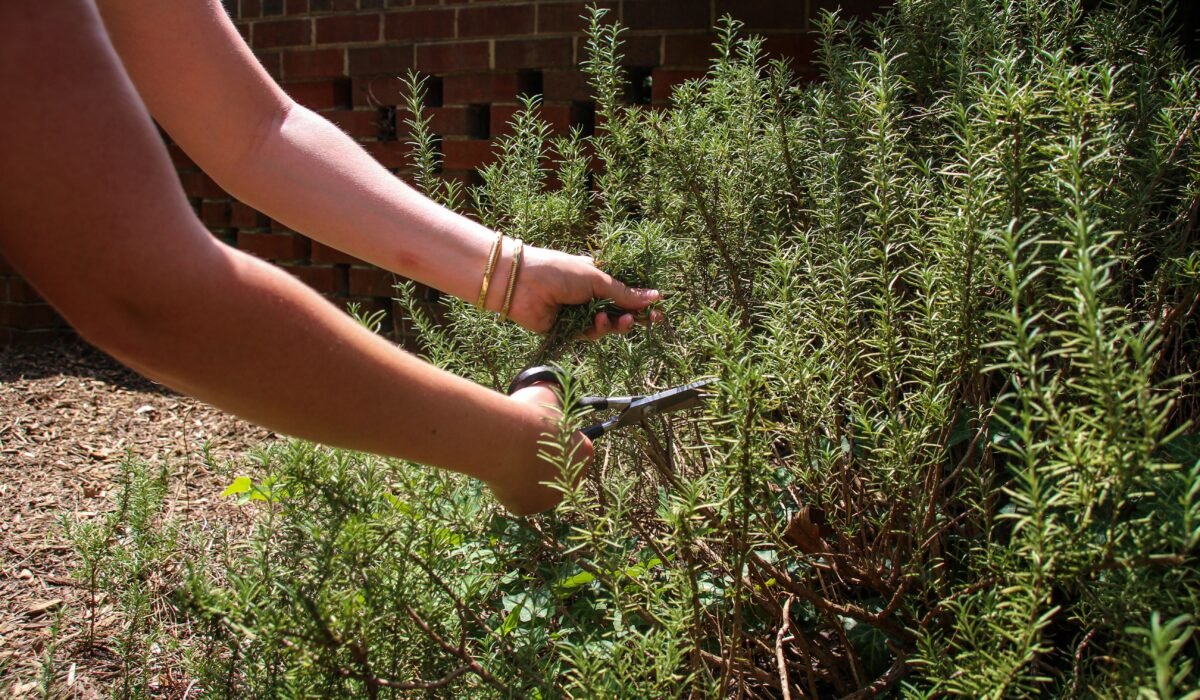
Rosemary is a woody herb that benefits from light, regular pruning throughout its growing season. Avoid cutting into old, woody stems that have no leaves, as these rarely regrow. Focus on shaping the plant and removing spent flowers or leggy growth, ideally in late spring or after it flowers. Pruning woody herbs like rosemary encourages new, soft growth that is more flavorful.
Pruning Mint to Prevent Spreading and Encourage Bushiness
Mint is an aggressive spreader, so pruning is vital not only for bushiness but also for containment. Regularly pinch off the top 2-3 inches of stems, especially before flowering, to encourage lateral branching. You can also harvest entire stems down to a few inches above the soil line. This aggressive approach helps manage its growth and stimulates fresh, tender leaves.
Pruning Thyme and Oregano
Thyme and oregano are also woody at the base but produce delicate new growth. Regularly snip off the top few inches of stems, especially after they flower, to maintain their shape and encourage new foliage. Pruning herbs in pots, like thyme and oregano, is particularly important to keep them from becoming too sprawling.
Here’s a quick guide for common herbs:
| Herb Type | Growth Habit | Pruning Technique | Frequency |
|---|---|---|---|
| Basil | Herbaceous | Pinch above leaf nodes, remove flower buds | Weekly/Bi-weekly |
| Rosemary | Woody | Snip new growth, avoid old wood | Monthly (after flowering) |
| Mint | Herbaceous, Spreading | Pinch tips, remove whole stems | Weekly/Bi-weekly |
| Thyme | Woody/Herbaceous | Snip tips, shape plant | After flowering |
| Oregano | Woody/Herbaceous | Snip tips, remove flower stalks | After flowering |
| Parsley | Herbaceous | Harvest outer leaves | As needed |
Tools and Techniques for Effective Herb Pruning
Choosing the right tools and understanding proper techniques are fundamental to ensuring effective Pruning Herbs for Bushier Growth. The quality of your cut directly impacts the plant’s ability to heal and produce new growth.
For most herbs, a good pair of small, sharp hand pruners or snips will suffice. Fiskars Softouch Micro-Tip Pruning Snips are excellent for precision work on delicate stems, offering an ergonomic design that reduces hand fatigue, according to Bob Vila (2025). For thicker, more woody stems found on mature rosemary or sage, a robust pair of bypass pruners like the Felco 2 One-Hand Classic Manual Pruning Shear provides the necessary cutting power.
Beyond the tools, the technique itself is paramount. Always make a clean, angled cut about 1/4 inch above a leaf node or a branch junction. This slight angle helps water run off, preventing fungal diseases. When pinching, use your fingernails to cleanly snap off the soft tip, ensuring no stem is crushed. Regular cleaning and sharpening of your tools are also critical; wipe blades with rubbing alcohol between plants to prevent the spread of diseases, a practice I always follow in my garden.
Beyond Bushiness: Pruning for Health and Pest Prevention
While Pruning Herbs for Bushier Growth is a primary goal for many gardeners, its benefits extend far beyond aesthetics and yield, significantly contributing to the overall health and resilience of your plants. Proper pruning plays a crucial role in preventing common garden problems.
Removing dense foliage improves air circulation within the plant canopy, a key factor in preventing fungal diseases such as powdery mildew, especially in humid conditions. This increased airflow allows leaves to dry more quickly after watering or rain, minimizing the environment where fungi thrive. This is an essential aspect of organic pest control for vertical gardens and container vegetable gardening small spaces.
Furthermore, pruning helps in the early detection and removal of diseased or pest-infested leaves and stems. By regularly inspecting your herbs as you prune, you can catch issues before they spread to the entire plant or even to neighboring plants. Removing damaged parts redirects the plant’s energy towards healthy growth, strengthening its natural defenses against future attacks. This proactive approach ensures your herbs remain robust and productive throughout the season.
Frequently Asked Questions
Does pruning herbs make them grow back bushier?
Yes, pruning herbs makes them grow back bushier by breaking apical dominance, which directs the plant’s energy to lateral buds. This process encourages new side shoots, leading to a fuller, more compact plant, as explained by Gardening Know How (2024). Regular pruning is the most effective way to achieve dense herb growth.
How do you encourage basil to be bushy?
Encourage basil to be bushy by consistently pinching off the top set of leaves just above a leaf node, leaving at least two sets of leaves on the stem. This technique, demonstrated by Kevin Espiritu of Epic Gardening (2021), redirects growth hormones to lateral shoots. Pinching frequently prevents bolting and promotes continuous leaf production.
Should you let herbs flower?
Generally, you should not let culinary herbs flower if you want to maximize leaf production and flavor. Flowering diverts the plant’s energy into seed production, often making leaves bitter and reducing overall yield, according to Gardening Know How (2024). Promptly remove any flower buds to maintain quality foliage.
How do you prune herbs so they keep growing?
Prune herbs by regularly snipping or pinching off the top growth just above a leaf node, never removing more than one-third of the plant at a time. This consistent, light pruning stimulates new growth and prevents legginess, ensuring a continuous harvest. Always use clean, sharp tools to minimize plant stress and promote quick healing.
What happens if you don’t prune herbs?
If you don’t prune herbs, they will often become leggy, spindly, and less productive, eventually going to seed prematurely. Unpruned herbs may also develop poor air circulation, making them more susceptible to fungal diseases and pests. Regular Pruning Herbs for Bushier Growth is crucial for their long-term health and yield.
Mastering the technique of Pruning Herbs for Bushier Growth is a fundamental skill that will transform your herb garden. By consistently applying these essential tips—from identifying optimal cutting points to using the right tools and understanding herb-specific needs—you’ll cultivate healthier, more productive plants. Embrace the power of the snip, and watch your herbs flourish into lush, abundant sources of flavor. Start pruning today and enjoy the bountiful rewards of your efforts!







