
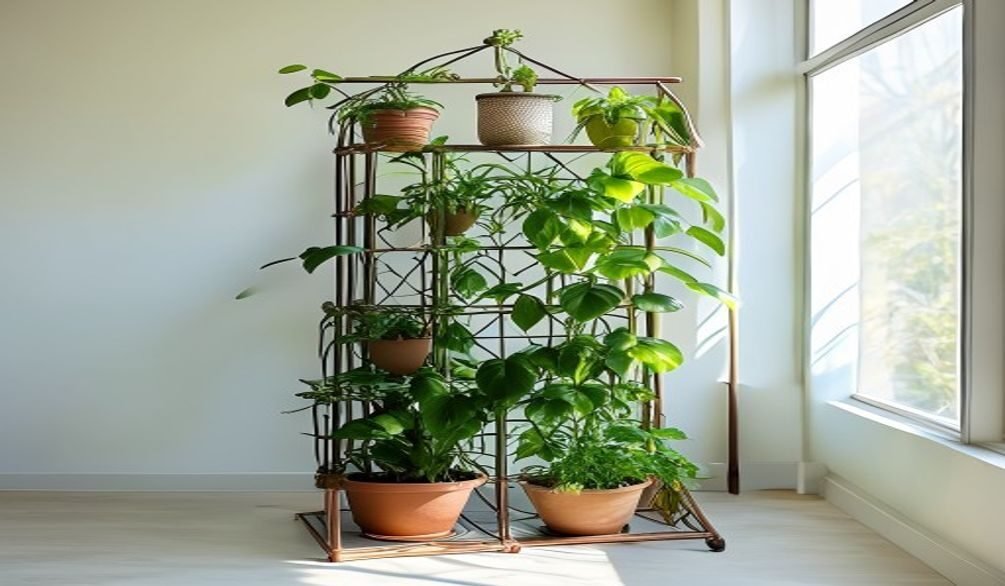
Key Takeaways
- An Easy DIY Indoor Plant Trellis significantly improves air circulation, crucial for preventing fungal diseases, according to Wright Timberframe (2025).
- The global indoor plant market was valued at approximately $21 billion in 2025, according to Terrarium Tribe (2026).
- Online plant sales are projected to grow at a 10.05% compound annual growth rate through 2031, according to Mordor Intelligence (2026).
- 65% of plant enthusiasts prefer sustainable options for houseplant supports, according to a 2023 industry report (2026).
- Vertical growth on an Easy DIY Indoor Plant Trellis ensures plants receive more balanced light exposure, promoting healthier development.
Crafting an Easy DIY Indoor Plant Trellis can transform your vining houseplants from sprawling messes into elegant, thriving botanical displays. Many plant enthusiasts find their climbing plants quickly outgrow their space, leading to tangled stems and stunted growth, but a simple homemade support system offers an effective solution. As an expert gardener with over 10 years of experience, I’ve seen firsthand how a well-chosen and constructed trellis can dramatically improve plant health and aesthetic appeal, providing the necessary structure for vertical growth and maximizing your indoor green space.
Quick Answer: To create a DIY indoor plant trellis, gather materials like bamboo, wood, or wire, then design a structure like a ladder, teepee, or hoop. Assemble the pieces securely with twine or screws, ensuring stability for your climbing plant, and gently guide its growth.
Why do your indoor plants need a trellis?
Your indoor plants often need a trellis to provide essential structural support, encouraging healthier growth and maximizing space. Vertical growth also provides better air circulation, which is crucial for preventing fungal diseases like powdery mildew, according to Wright Timberframe (2025). Without proper support, vining plants can become unruly, leading to weaker stems and less vigorous development.
A well-placed plant support for climbing plants allows light to reach all parts of the plant more evenly, promoting balanced development. This is especially important for houseplants grown indoors, where light sources might be limited or directional. Elevating your plants with an Easy DIY Indoor Plant Trellis ensures every leaf gets its share of sunlight.
Beyond health benefits, a trellis significantly enhances the aesthetic appeal of your indoor space. “One of the most obvious advantages of using a trellis is the way it can enhance your space. If you have a small area or garden, incorporating vertical gardening can be game-changing,” states Vego Garden (2024). This makes your plants not just functional elements but also beautiful focal points.
What materials can you use for a diy indoor plant trellis?
You can use a variety of readily available and often affordable materials to construct an Easy DIY Indoor Plant Trellis, ranging from natural elements like bamboo and wood to more modern options like wire. 65% of plant enthusiasts prefer sustainable options for houseplant supports, according to a 2023 industry report (2026), making natural and upcycled materials particularly appealing. Choosing the right material depends on your plant’s needs, your aesthetic preference, and your budget.
For a rustic or natural look, bamboo stakes and small branches are excellent choices, offering a lightweight yet sturdy framework. You can find these at garden centers or even collect them from your yard. For a more polished wooden look, pine or cedar strips from stores like Home Depot can be cut to size and stained with products like Varathane for added durability.
Wire mesh or galvanized wire is ideal for creating intricate designs or modern structures. Stores like Hobby Lobby offer various gauges of wire that can be bent into hoops, grids, or custom shapes. Remember, whatever material you choose for your Easy DIY Indoor Plant Trellis, ensure it is non-toxic to plants and will withstand moisture without degrading quickly.
Here’s a comparison of common materials for a homemade plant support:
| Material | Pros | Cons | Best For |
|---|---|---|---|
| Bamboo Stakes | Lightweight, natural look, affordable, sustainable. | Can degrade over time, less customizable shapes. | Ladder, teepee, simple stakes, homemade trellis for pothos. |
| Wood Strips (Pine, Cedar) | Sturdy, customizable, can be stained/painted, durable. | Requires cutting tools, can be heavier, potential for rot if untreated. | Ladder, grid, geometric designs, trellis for vining houseplants. |
| Galvanized Wire / Mesh | Highly customizable, modern look, durable, lightweight. | Can be harder to work with, may require wire cutters. | Hoops, intricate shapes, minimalist indoor climbing plant support. |
| Coco Coir / Moss Poles | Excellent moisture retention, encourages aerial roots, natural. | Can be messy, requires regular misting, heavier. | Aroids like Monstera, Philodendron, how to make a moss pole. |
| PVC Pipes | Very durable, weather-resistant, affordable. | Less aesthetic, can look industrial, not sustainable. | Hidden support, large structures where aesthetics are secondary. |
7 easy steps to build your custom indoor plant trellis
Building your own custom indoor plant trellis is a rewarding project that allows you to tailor support specifically to your plant’s needs and your home’s aesthetic. Following these seven easy steps will guide you through creating a functional and beautiful Easy DIY Indoor Plant Trellis.
Step 1: choose your plant and style
The first step is to identify the vining or climbing plant that needs support and decide on a trellis style that suits both the plant’s growth habit and your decor. Different plants benefit from different structures; for instance, a delicate String of Hearts might prefer a small hoop, while a robust Monstera needs a sturdy moss pole. In my experience, matching the trellis to the plant’s natural climbing method is key for success.
Step 2: gather your materials
Next, collect all the necessary materials based on your chosen design and plant type. This could include bamboo stakes, wood strips from Home Depot, galvanized wire from Hobby Lobby, twine, cutting tools, and a measuring tape. Having everything ready before you start ensures a smooth building process for your Easy DIY Indoor Plant Trellis.
Step 3: design and measure your trellis
Before making any cuts, sketch your design and take precise measurements. Consider the height and spread your plant will eventually achieve, as well as the size of its pot. A mini trellis for small plants will require different dimensions than a large one for a mature, sprawling vine. This planning stage prevents material waste and ensures your DIY plant stakes indoor are perfectly sized.
Step 4: cut and prepare components
Carefully cut your chosen materials to the measured lengths. If using wood, you might want to sand the edges to prevent splinters and apply a plant-safe sealant or stain to protect against moisture. For a coco coir pole DIY, cut the mesh and PVC pipe to length, then prepare your coir or moss. Preparing each component ensures a clean and strong final product for your Easy DIY Indoor Plant Trellis.
Step 5: assemble the trellis structure
Begin assembling your trellis according to your design. For ladder-style trellises, secure horizontal pieces to vertical ones using wood glue and small nails or screws. For bamboo or branch designs, use strong twine or wire to lash pieces together, creating teepee or grid shapes. Ensure all connections are tight and stable to provide reliable plant support for climbing plants.
Step 6: secure in pot and plant
Once assembled, carefully insert the finished trellis into your plant’s pot. Position it firmly in the soil, ensuring it is stable and won’t tip over as your plant grows. Gently place your plant into the pot if repotting, or carefully guide its existing stems towards the new Easy DIY Indoor Plant Trellis. Consider adding fresh soil, which can improve overall plant health. For more tips on soil, check out our guide on best organic soil amendments.
Step 7: train your plant to climb
Finally, gently train your plant’s stems to climb the trellis. Loosely tie the stems to the trellis using soft plant ties, twine, or clips. For plants with aerial roots, misting a moss pole can encourage roots to attach naturally. This initial training is crucial for guiding growth and helping your plant understand its new support system, making it an effective homemade trellis for pothos or other vining houseplants.
Choosing the right diy trellis for your plant type & style
Selecting the appropriate Easy DIY Indoor Plant Trellis for your specific plant and interior design aesthetic is crucial for both functionality and visual harmony. The best materials for plant trellis vary significantly depending on whether your plant uses tendrils, aerial roots, or twining stems to climb. Understanding these differences will help you create the most effective support.
For instance, plants like Monstera deliciosa or Philodendron gloriosum, which develop thick aerial roots, thrive on a moss pole or coco coir pole DIY that provides moisture and a surface for roots to grip. Companies like Treleaf offer inspiration with their customizable wooden trellises designed for specific climbing plants, showing how tailored support can look. Conversely, a delicate Hoya pubicalyx ‘Splash’, with its twining tendrils, will happily wrap around a simple metal hoop or a ladder-style Easy DIY Indoor Plant Trellis made from bamboo.
Consider your home’s style when choosing materials and design. For a minimalist aesthetic, a sleek wire grid or a simple wooden ladder can blend seamlessly. For a bohemian or rustic vibe, natural bamboo or repurposed branches create an organic feel. “In 2026, we’ll likely see a move towards ‘plant maximalism’ — not just more plants, but more personality,” notes Ginny Henry, creative director of Patch Plants (2026), encouraging unique and expressive trellis designs. The Sill also highlights how plants can be a “quiet catalyst for change,” suggesting your trellis can be a part of that personal expression.
Here are some popular plant and trellis pairings:
- Monstera Deliciosa / Philodendron: Moss pole or coco coir pole DIY. These provide humidity and a surface for aerial roots.
- Pothos / Philodendron Brasil: Ladder-style bamboo or wooden trellis, or a simple stake. A homemade trellis for pothos is often very simple.
- Hoya species: Metal hoop, small wooden ladder, or a fan trellis. Their twining stems love to wrap.
- Rhaphidophora Tetrasperma: Ladder-style trellis from wood or bamboo. This plant is specifically mentioned as thriving on such support.
- String of Hearts / Pearls: Small wire hoop or delicate wooden stick trellis. A mini trellis for small plants works perfectly.
- Ivy (Hedera helix): Grid-style wire mesh or a tall bamboo teepee.
How to train your plants and maintain your diy trellis
Training your plants to climb and maintaining your Easy DIY Indoor Plant Trellis are ongoing processes that ensure healthy growth and longevity of your support system. Consistent training encourages the plant to utilize the trellis effectively, rather than sprawling haphazardly. From my extensive experience, patience and gentle guidance are paramount in plant training on trellis.
To initiate training, gently guide new growth shoots towards the trellis. Use soft plant ties, twist ties, or even strips of old pantyhose to loosely secure the stems to the support. Avoid tying them too tightly, as this can constrict growth and damage the stem. As the plant grows, continue to guide new tendrils or aerial roots onto the trellis structure, repeating the tying process as needed.
Maintaining your Easy DIY Indoor Plant Trellis involves regular checks for stability and cleanliness. Dust off your trellis periodically, especially if it’s made of wood or wire, to prevent dust buildup that can harbor pests. For moss poles, remember to mist them regularly to keep the moss damp, which encourages aerial roots to adhere. 42% of plant caregivers prefer biodegradable houseplant support options, according to the 2026 Eco-Products Insights, highlighting the importance of durable and sustainable maintenance practices.
Tips for ongoing trellis maintenance:
- Inspect for Stability: Periodically check that your trellis is firmly anchored in the pot and that all connections are secure. Tighten any loose ties or screws.
- Cleanliness: Wipe down wooden or wire trellises to remove dust and potential pest hiding spots.
- Moss Pole Hydration: If using a moss pole, mist it frequently to maintain humidity, which is vital for plants with aerial roots.
- Pruning: Trim back any unruly or yellowing stems to encourage new, healthier growth that can be trained onto the trellis.
- Repositioning: As your plant grows, you might need to adjust or add new sections to your DIY plant stakes indoor to accommodate its increasing height and spread.
Troubleshooting common diy trellis challenges
When creating an Easy DIY Indoor Plant Trellis, you might encounter a few common challenges, but most have straightforward solutions to ensure your project is successful. Being prepared for these issues can save you time and frustration, allowing your plants to thrive without interruption.
One frequent problem is an unstable trellis that wobbles or tips over, especially as the plant grows heavier. This often happens if the base isn’t sufficiently anchored in the soil or if the structure itself is too flimsy for the plant’s weight. Another challenge is plants refusing to climb or attach to the trellis, which can be due to incorrect training methods or unsuitable material for the plant’s natural climbing mechanism.
From my experience, addressing these issues early prevents long-term problems. For instability, ensure the trellis extends deep into the pot, or consider adding weight to the pot’s base. If your plant isn’t climbing, reassess your tying technique – are you using soft enough ties? Is the trellis material providing enough grip? Sometimes, simply misting a moss pole more frequently can make all the difference for aerial root attachment.
Here’s a table outlining common challenges and their solutions for your Easy DIY Indoor Plant Trellis:
| Challenge | Possible Cause | Solution for Your Easy DIY Indoor Plant Trellis |
|---|---|---|
| Trellis is unstable/wobbly | Not deep enough, flimsy material, too top-heavy. | Insert deeper, use sturdier materials (e.g., thicker bamboo), add rocks to pot bottom for stability. |
| Plant not attaching/climbing | Incorrect training, wrong trellis type for plant, material too smooth. | Gently tie stems more frequently, ensure moss poles are moist, choose materials with texture for grip. |
| Trellis degrading/rotting | Untreated wood, non-galvanized wire rusting. | Use sealed/treated wood (e.g., Varathane stain), galvanized wire, or naturally rot-resistant materials. |
| Pests on trellis | Dust buildup, hidden crevices. | Regularly wipe down trellis, inspect all parts, use natural aphid control solutions if needed. |
| Limited space for growth | Trellis too small for mature plant. | Plan for mature size, choose modular designs, or be prepared to prune aggressively. |
Inspiring diy indoor plant trellis ideas
There are countless inspiring ideas for an Easy DIY Indoor Plant Trellis, allowing you to get creative with materials and designs that complement your unique style. From minimalist structures to intricate artistic pieces, the possibilities for a homemade plant support are vast. The Axiom 2026 Gardening Outlook Study revealed that 49.5% of consumers spent more money gardening in 2025 compared to 2024, indicating a growing interest in personalized plant care solutions.
One popular and versatile option is the ladder-style trellis, easily constructed from small wooden dowels or bamboo stakes. This design provides multiple horizontal rungs for vining plants to climb and can be scaled to fit any pot size. Another favorite is the teepee trellis, created by tying three or more stakes together at the top, offering a charming, rustic look perfect for a homemade trellis for pothos or other vigorous climbers.
For a more modern approach, consider shaping galvanized wire into geometric patterns or a simple hoop. These can be particularly striking for delicate plants like String of Hearts or small Hoya varieties, acting as a stylish mini trellis for small plants. Upcycled plant trellis ideas are also gaining traction, where old window frames, picture frames with chicken wire, or even decorative metal screens are repurposed to create unique indoor climbing plant support.
Here are some creative Easy DIY Indoor Plant Trellis ideas:
- Bamboo Ladder Trellis: Simple, natural, and effective. Cut bamboo sticks to size and lash them together with twine to create a mini ladder.
- Willow Branch Hoop: Bend pliable willow branches into a hoop shape and secure the ends in the soil. Ideal for delicate vines.
- Wire Grid Panel: Purchase a small section of wire mesh from Home Depot or Hobby Lobby and cut it to size. It offers a clean, industrial look.
- Moss Pole with PVC Core: Create a robust coco coir pole DIY by wrapping sphagnum moss or coco coir around a PVC pipe, secured with fishing line or wire.
- Upcycled Picture Frame Trellis: Remove the glass from an old picture frame, replace it with chicken wire or thin string strung in a grid, and paint it to match your decor.
- Twine and Branch Trellis: Use a sturdy branch as a base and string natural twine in a crisscross pattern, providing many points for plants to climb.
- Metal Hoop Trellis: Easy to assemble with metal hoops and wire, providing a strong frame for climbing vines.
Frequently asked questions
What can i use for an indoor plant trellis?
You can use various materials for an indoor plant trellis, including bamboo stakes, small wooden dowels, galvanized wire, or even repurposed items like sturdy branches. The best materials for plant trellis depend on your plant’s climbing habit and your aesthetic preference. 42% of plant caregivers prefer biodegradable houseplant support options, according to the 2026 Eco-Products Insights, favoring natural materials.
How do you make a simple plant trellis?
To make a simple plant trellis, start by gathering materials like bamboo sticks and twine. Arrange the sticks in a ladder or teepee shape, then securely tie them together at the connection points with twine. Insert the finished structure firmly into your plant’s pot, ensuring stability.
How do you make a mini trellis for indoor plants?
To make a mini trellis for indoor plants, select thin materials like floral wire, small bamboo skewers, or slim craft sticks. Design a small hoop, ladder, or fan shape suitable for your plant’s size. Assemble with glue or thin wire, then gently place it into the small pot.
What is the best material for a plant trellis?
The best material for a plant trellis depends on the plant type; moss poles are excellent for aroids with aerial roots, while bamboo or wire works well for twining vines. 65% of plant enthusiasts prefer sustainable options for houseplant supports, according to a 2023 industry report (2026), making natural and eco-friendly choices popular. Consider durability, aesthetics, and ease of customization when choosing.
How do you make a moss pole?
To make a moss pole, you’ll need a PVC pipe or a sturdy wooden dowel, sphagnum moss or coco coir, and fishing line or zip ties. Soak the moss/coir, then wrap it tightly around the pole, securing it firmly with the line or ties. Insert the pole into your plant’s pot, ensuring it’s stable and ready for aerial roots.







