
Key Takeaways
- Deep, infrequent watering encourages strong root growth, making plants more resilient to drought and stress.
- Drip irrigation systems, like those from Raindrip, can reduce water usage by up to 50% compared to overhead sprinklers.
- Fresh vegetable prices increased by 11.5% from April 2025 to April 2026, according to USDA ERS data.
- Monitoring soil moisture with tools like the XLUX Soil Moisture Meter eliminates guesswork and prevents overwatering.
- Mulching around plants conserves up to 75% more soil moisture, significantly reducing the need for frequent watering.
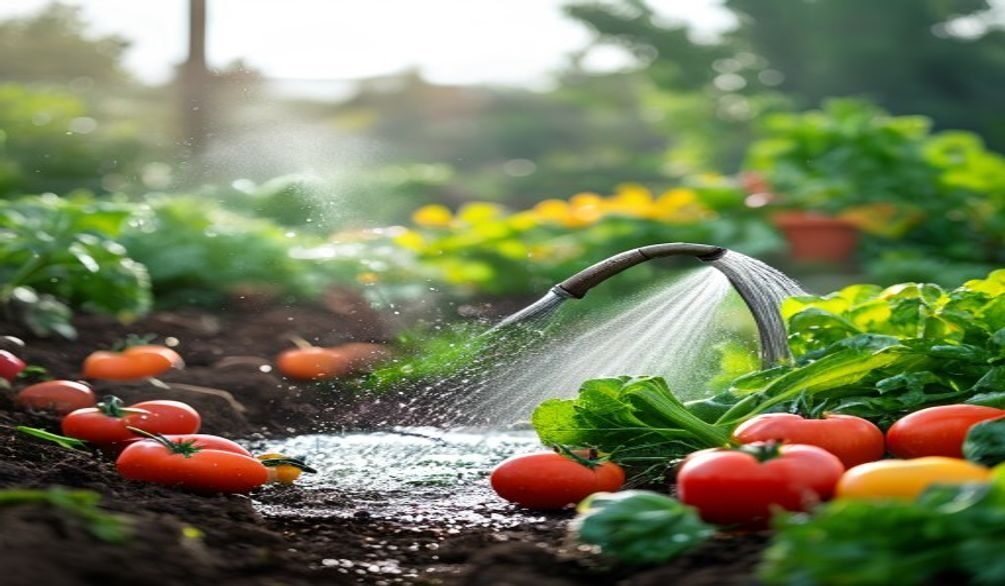
Mastering effective **watering vegetable garden techniques** is crucial for bountiful harvests and healthy plants, yet it’s often a source of confusion for many gardeners. Without proper hydration, your plants can suffer from stress, disease, and poor yields, impacting both your hard work and the quality of your produce. As an expert gardener with over a decade of experience, I’m here to share proven methods that will optimize your watering strategy, ensuring your garden thrives while conserving precious resources.
Quick Answer: Water vegetable gardens deeply and infrequently, about 1 inch per week, early morning. This encourages strong roots and minimizes evaporation. Use drip irrigation or soaker hoses for efficient delivery directly to the root zone, adjusting for soil and weather.
What is the most effective way to water a vegetable garden?
The most effective way to water a vegetable garden is through deep, infrequent irrigation directly at the root zone, which encourages robust root development and minimizes water waste. This approach ensures moisture penetrates deeply into the soil, supporting a strong plant foundation, as emphasized by Noah Mabey, senior gardener at Thornbridge Hall, who notes that “By watering deeply and consistently, you’ll use water more efficiently while encouraging healthier growth” (June 2026). My 10+ years of experience in horticulture confirm that this method yields the most resilient and productive plants.
Frequent shallow watering, in contrast, leads to weak, surface-level roots that are highly susceptible to drought stress and disease. It’s a common mistake that leaves plants vulnerable, especially during hot weather. Instead, the goal is to saturate the soil to a depth of 6-12 inches, depending on the plant’s root system.
This deep watering strategy also helps to leach salts away from the root zone, preventing harmful buildup. For effective **watering vegetable garden techniques**, focus on delivering water slowly and directly to the soil surface around your plants. This is far more beneficial than overhead sprinkling, which can promote fungal diseases on foliage.
How much water do vegetable gardens need each week?
Most vegetable gardens require approximately 1 inch of water per week, either from rainfall or irrigation, though this can vary significantly based on plant type, soil composition, and local climate. For instance, the University of Minnesota Extension (2023) advises that a general rule of thumb is about an inch of water weekly, ensuring it reaches an 8-12 inch depth. This guideline helps ensure adequate moisture without overwatering.
To measure 1 inch of water, you can place a rain gauge or a shallow, straight-sided container (like a tuna can) in your garden while watering. When the container collects 1 inch of water, you’ve typically applied enough. This provides a practical way to gauge your **watering vegetable garden techniques**.
Different vegetables have varying needs; leafy greens like lettuce may require more consistent moisture, while root vegetables such as carrots prefer steady, deep watering. Fruiting plants like tomatoes and peppers need ample water, especially during fruit development. Approximately 63.6% of gardeners plan to expand their gardens and plant more in 2026, according to a recent study, making efficient watering an even greater priority for increased yields.
| Vegetable Type | Water Needs (General) | Depth of Watering (Target) | Frequency (Typical) |
| :———————- | :——————– | :————————- | :—————— |
| Leafy Greens (Lettuce, Spinach) | High, consistent | 6-8 inches | Every 1-3 days |
| Root Vegetables (Carrots, Radishes) | Moderate, steady | 8-10 inches | Every 3-5 days |
| Fruiting Plants (Tomatoes, Peppers) | High, especially during fruiting | 10-12 inches | Every 2-4 days |
| Legumes (Beans, Peas) | Moderate | 8-10 inches | Every 3-5 days |
When is the best time of day to water your vegetables?
The best time of day to water your vegetables is early morning, typically between 6 AM and 10 AM, as this minimizes water loss due to evaporation and allows foliage to dry before nightfall, reducing disease risk. Watering during this cool period ensures that the maximum amount of water reaches your plants’ roots, as highlighted by the National Garden Association (2024), which recommends morning watering for optimal absorption. This is a key aspect of effective **watering vegetable garden techniques**.
Watering in the middle of the day, especially during peak heat, can lead to significant water loss through evaporation. Up to 50% of water can be lost to evaporation when watering in the afternoon sun, making it an inefficient practice. The plants also struggle to absorb water effectively when stressed by heat.
Conversely, watering late in the evening or at night can leave plant foliage wet for extended periods, creating an ideal environment for fungal diseases to develop. While the soil might absorb the water, the damp leaves can become problematic. Early morning watering strikes the perfect balance for plant health and water efficiency.
7 smart watering techniques for your vegetable garden
Implementing smart **watering vegetable garden techniques** is essential for maximizing yields and conserving resources, especially with increasing concerns about water availability. These methods focus on precision watering vegetables, delivering moisture directly where it’s needed most to foster robust growth. My goal here is to help you achieve both a thriving garden and responsible water usage.
Step 1: understand soil moisture needs
The first step in effective watering is to truly understand your soil’s moisture requirements and how different soil types retain water. Knowing whether your soil is sandy, loamy, or clay will dictate how frequently you need to apply water, as sandy soils drain quickly while clay soils hold moisture longer. A simple hand test can reveal your soil type and its current moisture level.
Step 2: water deeply and infrequently
To promote strong, deep root systems, always water deeply but less often, rather than shallowly and frequently. This encourages roots to grow downwards in search of moisture, making plants more resilient to dry spells. Noah Mabey, a senior gardener, confirms that “One of the most common mistakes I see is frequent shallow watering. A quick sprinkle may dampen the surface of the soil, but it rarely reaches the roots where plants actually need moisture” (June 2026).
Step 3: choose the best time to water
Always aim to water your garden in the early morning to minimize evaporation and allow plant foliage to dry before evening. This timing is critical for both water conservation and preventing fungal diseases that thrive in prolonged damp conditions. Early morning watering ensures your plants have access to water as they begin their daily photosynthetic processes.
Step 4: utilize drip irrigation and soaker hoses
Employing drip irrigation for small vegetable gardens or soaker hoses is one of the most efficient **watering vegetable garden techniques**, delivering water directly to the root zone with minimal waste. These systems significantly reduce evaporation and prevent water from splashing onto leaves, which helps deter diseases. Nicole Johnsey Burke, Founder of Gardenary, states, “For most home gardens, a drip irrigation system is the best choice. It delivers water directly to the root zone, reduces water waste, and keeps foliage dry, which means fewer fungal problems” (May 2026).
* **Drip Irrigation Systems:** Brands like Raindrip offer vegetable garden drip kits that provide all necessary components for precise water delivery in raised beds and rows.
* **Soaker Hoses:** These porous hoses slowly seep water into the soil, ideal for evenly watering rows of vegetables. Orbit Hose Faucet Timers can automate these systems, setting schedules like “every third day for eight minutes.”
Step 5: mulch to conserve moisture
Applying a layer of organic mulch around your plants is a simple yet highly effective way of saving water in vegetable gardens. Mulch suppresses weeds, regulates soil temperature, and dramatically reduces evaporation, keeping the soil moist for longer periods. Studies show that mulching can conserve up to 75% more soil moisture, drastically cutting down on the need for frequent **watering vegetable garden techniques**.
Step 6: group plants by water needs
Optimize your garden layout by grouping plants with similar watering requirements together, a smart strategy for efficient **watering vegetable garden techniques**. This allows you to apply water precisely where it’s needed, preventing overwatering for drought-tolerant plants and underwatering for thirsty ones. This approach is particularly useful in container vegetable garden watering tips, where different plant types might share a bed.
Step 7: monitor with soil moisture meters
Eliminate guesswork by regularly monitoring soil moisture levels with a reliable tool like the XLUX Soil Moisture Meter, which features a 40 cm probe for deep readings. This precision watering vegetables technique ensures you water only when necessary, preventing both underwatering and overwatering. Consistent monitoring is key to responsive and effective **watering vegetable garden techniques**.
How do you know when your vegetable garden needs water?
You know your vegetable garden needs water by observing signs of underwatering vegetables, feeling the soil moisture, and using a soil moisture meter, which provides the most accurate assessment. The “finger test” is a reliable initial indicator: insert your finger 2-3 inches into the soil; if it feels dry, it’s time to water, a method supported by the University of Florida IFAS Extension (2024). This practical test is a fundamental aspect of effective **watering vegetable garden techniques**.
Beyond the finger test, visual cues from your plants can signal thirst. Wilting leaves, even in the morning, are a clear sign of stress and indicate a need for water. However, it’s important to distinguish wilting from heat stress; plants may temporarily wilt during the hottest part of the day but recover in the evening if adequately hydrated.
A more precise approach involves using a soil moisture meter, such as the XLUX Soil Moisture Meter. This tool provides an objective reading of the water content deep within the soil, taking the guesswork out of your **watering vegetable garden techniques**. This is especially helpful for understanding the watering schedule for common vegetables.
Solving common vegetable garden watering problems
Addressing common vegetable garden watering problems, such as overwatering, underwatering, and hydrophobic soil, requires specific adjustments to your watering schedule and soil management practices. Identifying these issues early is crucial for maintaining plant health and maximizing your garden’s potential. My experience shows that most problems stem from misinterpreting plant signals or inconsistent **watering vegetable garden techniques**.
**Signs of Overwatering Vegetables:**
* Yellowing leaves, often starting from the bottom of the plant.
* Stunted growth or wilting, even when the soil feels wet.
* Fungal issues like powdery mildew or root rot.
* A strong, unpleasant odor from the soil.
If you observe signs of overwatering vegetables, reduce watering frequency and ensure your soil has adequate drainage. For container plants, check that drainage holes are not blocked. This is critical for improving your **watering vegetable garden techniques**.
**Signs of Underwatering Vegetables:**
* Leaves that are consistently wilting and crispy, not just during the hottest part of the day.
* Slowed or stopped growth.
* Dropping flowers or fruit.
* Dry, cracked soil.
When you see signs of underwatering vegetables, increase the depth and frequency of your watering, focusing on deep watering vs shallow watering vegetables. Consider using more efficient delivery methods like drip irrigation.
**Hydrophobic Soil in Vegetable Garden Solutions:**
Hydrophobic soil repels water, often due to a buildup of organic matter or dry conditions. Water tends to bead up and run off instead of penetrating. To solve this, you can:
* **Aerate the soil:** Gently loosen the top few inches with a fork to break up compacted layers.
* **Add organic matter:** Incorporate compost or well-rotted manure to improve soil structure and water retention.
* **Use a wetting agent:** Some commercial products can help water penetrate hydrophobic soil.
* **Slow, consistent watering:** Apply water very slowly over an extended period to allow it to gradually soak in, a refined approach to **watering vegetable garden techniques**.
Water conservation: smart watering for a sustainable garden
Water conservation in gardening is increasingly vital, requiring the adoption of smart **watering vegetable garden techniques** that minimize waste and support a sustainable ecosystem. With fresh vegetable prices up 11.5% year over year from April 2025 to April 2026, according to USDA ERS data, optimizing garden output while conserving resources is more important than ever. This approach not only saves water but also promotes healthier, more resilient plants.
Amanda Begley, TreePeople’s Associate Program Manager for Water Equity, notes, “With the aridification of the West, where the region has become drier over time, it’s crucial to responsibly manage the water we have” (March 2023). This underscores the importance of water-saving gardening tips for every region. Smart **watering vegetable garden techniques** contribute directly to this goal.
* **Rainwater Harvesting:** Collect rainwater in barrels or cisterns for use in your garden. This provides a natural, chlorine-free water source.
* **Ollas (Clay Pots):** Oya is a brand that produces porous clay pots (ollas) that are buried near plants, slowly seeping water directly into the root zone. This method dramatically reduces evaporation and encourages deep root growth.
* **Smart Irrigation Controllers:** These devices, often paired with soil moisture sensors, can adjust watering schedules based on real-time weather data and soil conditions. They represent the pinnacle of efficient **watering vegetable garden techniques**.
* **Permaculture Principles:** Design your garden to retain water naturally, using swales, berms, and contour planting to capture and slowly release moisture.
* **Companion Planting:** Group plants that can shade each other’s soil, reducing evaporation. This natural method complements other water-saving efforts.
* **Recycling Greywater:** In some areas, treated greywater from household sinks or showers can be safely used for garden irrigation, though local regulations vary.
Utilizing these strategies not only helps in saving water in vegetable gardens but also creates a more sustainable and resilient gardening practice. For more comprehensive insights, you might find valuable information on natural ways to conserve water in an organic garden.
Frequently asked questions
What are the 3 best ways to water vegetables?
The three best ways to water vegetables are drip irrigation, soaker hoses, and hand watering directly at the base of the plant. Drip irrigation and soaker hoses deliver water efficiently to the root zone, reducing evaporation and preventing foliar diseases, as highlighted by Nicole Johnsey Burke (May 2026). Hand watering allows for precise application to individual plants.
How much water does a vegetable garden need per week?
A vegetable garden typically needs about 1 inch of water per week, which includes both rainfall and supplemental irrigation. This amount ensures moisture penetrates 8-12 inches deep into the soil, supporting healthy root development, according to the University of Minnesota Extension (2023). Always adjust this based on your specific soil type, plant needs, and current weather conditions.
What is the best time of day to water a vegetable garden?
The best time of day to water a vegetable garden is in the early morning, between 6 AM and 10 AM. This timing minimizes water loss due to evaporation and allows plant foliage to dry completely before evening, significantly reducing the risk of fungal diseases, as recommended by the National Garden Association (2024). Watering during cooler hours ensures maximum water absorption by the roots.
What is the most efficient way to water a vegetable garden?
The most efficient way to water a vegetable garden is by using drip irrigation or soaker hoses, which deliver water directly to the plant’s root zone. These methods reduce water waste by minimizing evaporation and runoff, leading to a more effective use of resources. Farm-level vegetable prices rose 56.3% from April 2025 to April 2026, making efficient watering crucial for maximizing yield and value.
How do you know when your vegetable garden needs water?
You know your vegetable garden needs water by performing the “finger test,” where you feel the soil 2-3 inches deep; if it’s dry, it’s time to water. Additionally, wilting leaves, especially in the morning, are a strong indicator of thirst, as confirmed by the University of Florida IFAS Extension (2024). Using a soil moisture meter provides the most accurate and objective assessment.
In conclusion, mastering effective **watering vegetable garden techniques** is the cornerstone of a thriving and productive garden. By consistently applying these smart methods—deep, infrequent watering, early morning schedules, utilizing drip systems, and mulching—you’ll ensure your plants receive optimal hydration while conserving water. Embrace these strategies to cultivate a resilient garden, enjoy abundant harvests, and contribute to sustainable gardening practices for years to come.







