Key Takeaways
- Outdoor water use can be as high as 60% of total household water use in arid regions, according to general statistics.
- Up to 50% of irrigation water can be wasted due to inefficient methods like evaporation and runoff, according to research.
- WaterSense-labeled irrigation controllers can save an average home up to 15,000 gallons of water annually, according to the EPA.
- The optimal time to water a garden is early morning, before the sun gets high, according to horticulturist Noelle Johnson.
- Drip irrigation systems are praised for targeted water delivery and efficiency, saving both water and money, according to Rain Bird.
Are your flower garden efforts falling flat, leaving you with less-than-vibrant blooms? Mastering effective watering flower garden strategies is the single most important step to cultivating a thriving, colorful display. In my 10 years of experience, I’ve seen firsthand how proper watering can transform a struggling garden into a showstopper, and I’m here to share the essential techniques that will ensure your flowers get exactly what they need to flourish.
Quick Answer: For successful flower garden watering, water deeply and infrequently in the early morning, aiming at the plant’s base. Check soil moisture before watering, use mulch to retain moisture, and consider efficient tools like soaker hoses or drip irrigation.
What is the best way to water flowers?
The best way to water flowers is by delivering water slowly and deeply directly to the plant’s root zone, rather than sprinkling overhead. Up to 50% of irrigation water can be wasted due to evaporation, wind, or runoff from inefficient irrigation methods and systems, according to research. This focused approach encourages deeper root growth, making plants more resilient to dry spells and optimizing your watering flower garden strategies.
When you water overhead, much of the water evaporates before it reaches the roots, and the wet foliage can also encourage fungal diseases. Instead, aim for the soil at the base of the plant. Think of it like a slow, steady drink rather than a quick shower. This is one of the most important watering flower garden strategies you can adopt.
Deep and slow watering
Watering deeply means applying enough water for it to penetrate several inches into the soil. How do you know if you’re doing it right? Dig a small hole a few hours after watering to check the moisture depth. My personal rule of thumb is to aim for at least 6-8 inches of penetration for most established flowers. This encourages roots to grow downwards, seeking out that moisture, which creates a stronger, healthier plant. Slow watering prevents runoff, especially in compacted or sloped beds, ensuring the water has time to soak in.
Watering at the base
Directing water to the plant’s base is crucial for effective watering flower garden strategies. This keeps the foliage dry, reducing the risk of fungal diseases like powdery mildew, which can be a real headache. It also ensures that the water goes directly where it’s needed – to the roots – minimizing waste from evaporation off leaves. For container plants, this means watering until water begins to drain from the bottom, indicating the entire root ball is saturated.
How often should you water your flower garden?
You should water your flower garden infrequently but deeply, adjusting the schedule based on factors like plant type, soil, and weather conditions. Outdoor water use accounts for more than 30% of total household water use on average, and can be as high as 60% in arid regions, highlighting the need for efficient watering flower garden strategies. The goal is to let the top few inches of soil dry out between waterings, prompting roots to grow deeper in search of moisture.
Here’s the thing: there’s no single “right” answer for all gardens. What works for a sandy bed in a hot climate won’t work for a clay-rich perennial border in a cool, humid area. This is where your observation skills become a key part of your watering flower garden strategies.
* **Plant Type:** Annuals, especially those in containers, often need more frequent watering than established perennials. Drought-tolerant plants, like many succulents or native wildflowers, require very little supplemental water once established.
* **Soil Type:** Sandy soils drain quickly and require more frequent watering. Clay soils hold moisture longer, so you’ll water less often but may need to water slower to prevent runoff. Amending your soil with organic matter can significantly improve its water retention, a smart move for any of your watering flower garden strategies.
* **Weather Conditions:** Hot, windy days increase evaporation and transpiration, meaning plants will dry out faster and need water sooner. Cooler, cloudy weather means less frequent watering.
What time of day is best to water flowers?
The best time of day to water flowers is early in the morning, ideally before the sun gets high and temperatures start to rise. “In most regions, the optimal time to water your garden is early in the morning, ideally before the sun gets high and temperatures start to rise,” states horticulturist Noelle Johnson (AZ Plant Lady). Watering in the morning gives plants ample time to absorb moisture before facing the day’s heat, reducing water loss to evaporation and supporting effective watering flower garden strategies.
This is where most guides stop – we won’t. Let me be honest with you: sometimes life happens, and you can’t water in the morning. Is it the end of the world? Not necessarily, but it’s certainly not ideal.
Why morning is prime time
Morning watering, as Johnson emphasizes, “gives plants time to absorb moisture before facing the day’s challenges.” Cooler temperatures and calmer winds reduce evaporation, meaning more water reaches the roots where it’s needed. This also allows foliage to dry before nightfall, which is crucial for preventing fungal diseases. Annie Morton, gardening expert, adds that morning watering “is a small habit that costs nothing extra but can transform your garden’s health and resilience over time.” It’s a cornerstone of solid watering flower garden strategies.
Avoiding midday and late evening watering
Watering at midday is largely inefficient because the high sun and heat cause rapid evaporation. You’ll lose a significant portion of your water to the air before it can even reach the roots. Watering late in the evening can be problematic because the leaves remain wet overnight, creating a perfect breeding ground for fungi and other plant diseases. While emergency watering is sometimes necessary, consistent late-day watering undermines good watering flower garden strategies.
How do you know when flowers need water?
You know when flowers need water primarily by checking the soil moisture, observing plant appearance, and understanding their specific needs. Most people skip this step and regret it, relying instead on a fixed schedule, which is rarely optimal for watering flower garden strategies. A simple finger test is often the most reliable indicator.
The finger test and moisture meters
For me, the finger test is indispensable. Stick your finger about an inch or two into the soil near the plant’s base. If it feels dry, it’s time to water. If it’s still moist, hold off. This sounds simple, but it’s not always. For deeper root zones, or if you don’t like getting your hands dirty, a moisture meter can provide a more precise reading. These inexpensive tools are great additions to your watering flower garden strategies toolkit.
Observing plant appearance
While not always the first indicator you want to see, a plant’s appearance can certainly tell you when it’s thirsty. Wilting leaves are the most obvious sign. They might look droopy or limp. However, it’s worth knowing that wilting can also be a sign of overwatering or disease, so always cross-reference with a soil check. Leaves might also appear duller in color or slightly curled. A newly planted shrub, vegetable, or container showing signs of wilting absolutely needs immediate attention, according to Annie Morton.
Should you water flowers every day?
No, you generally should not water flowers every day, as frequent shallow watering encourages shallow root growth and makes plants more susceptible to drought and disease. Instead, focus on deep, infrequent watering as a core component of your watering flower garden strategies. Daily watering can also lead to overwatering issues, which are just as detrimental as underwatering.
Real talk: daily watering is only typically necessary for specific situations.
* **Newly Planted Flowers:** When flowers are first transplanted, their root systems are still developing and need consistent moisture to establish. For the first week or two, daily watering might be appropriate, especially in hot weather.
* **Container Plants:** Containers dry out much faster than in-ground garden beds due to increased air circulation around the pot. Depending on the size of the container, the plant, and the weather, container plants might indeed need daily, or even twice-daily, watering. This is a common exception to general watering flower garden strategies.
* **Extremely Hot or Windy Conditions:** During heatwaves or periods of strong winds, evaporation rates skyrocket. Even established plants might need more frequent checks and potentially more water to cope with the stress.
The key insight here is that you’re aiming for consistency of soil moisture at the root level, not just getting the surface wet every day. This distinction is critical for successful watering flower garden strategies.
What tools are essential for efficient flower garden watering?
Several tools are essential for efficient flower garden watering, enabling targeted delivery, water conservation, and automation to simplify your routine. Replacing a standard clock-based irrigation controller with a WaterSense-labeled controller can save an average home up to 15,000 gallons of water annually, according to the EPA. Investing in the right tools significantly enhances your watering flower garden strategies.
Smart watering tools for your garden
- Soaker Hoses and Drip Irrigation: These systems deliver water directly to the plant’s roots, minimizing evaporation and runoff. Joe Gardener® recommends soaker hoses or emitter tubing for slow-release watering, suitable for larger areas and raised beds. Brands like Rain Bird offer drip irrigation kits, such as their Raised Bed Garden Kit, which are ideal for precise watering flower garden strategies.
- Watering Wands: For manual watering, a watering wand (like those from Dramm, a highly-regarded brand) allows you to reach hanging baskets and the base of plants without bending over. Its gentle flow prevents soil erosion and plant damage, making it a professional choice for watering flower garden strategies.
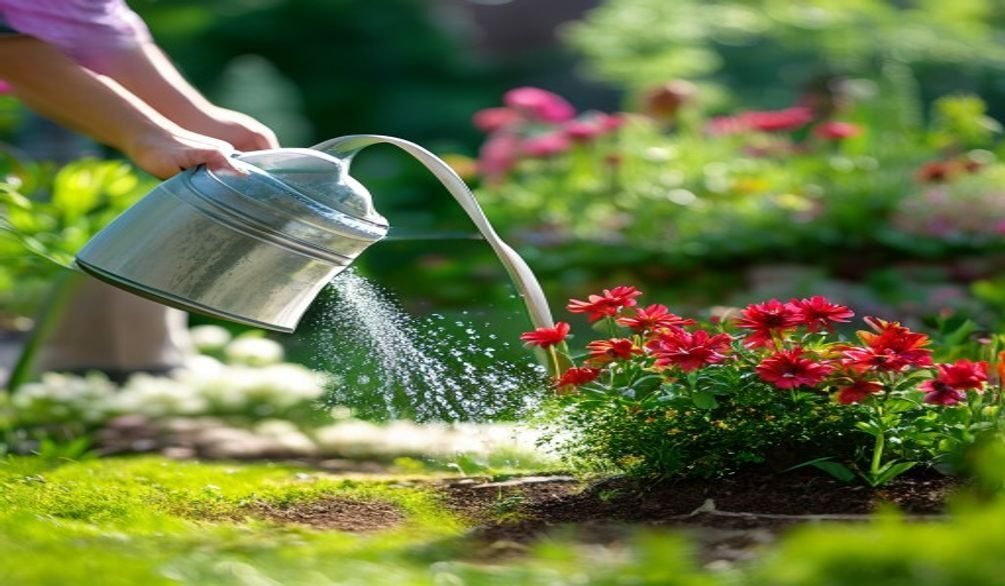
- Watering Cans: Essential for small beds, containers, or newly planted seedlings. Choose one with a fine rose (sprinkler head) for gentle application.
- Moisture Meters: As mentioned, these gadgets take the guesswork out of knowing when to water. They provide a quick, accurate reading of soil moisture levels.
- Smart Timers/Controllers: These devices automate your watering schedule, ensuring consistency. WaterSense-labeled controllers are particularly effective, adjusting watering based on local weather conditions.
| Tool Type | Best Use Case | Key Benefit for Watering Flower Garden Strategies |
|---|---|---|
| Drip Irrigation / Soaker Hoses | Large beds, rows, raised beds, containers | Water efficiency, targeted root watering, reduced disease |
| Watering Wand | Hanging baskets, individual plants, reaching deep into beds | Precision, gentle flow, ergonomic |
| Moisture Meter | Any garden, especially new gardeners | Removes guesswork, prevents over/underwatering |
| Smart Controller | Automated systems (sprinklers, drip) | Water conservation, adjusts to weather, convenience |
How can you conserve water in your flower garden?
You can conserve water in your flower garden by implementing several smart practices, including mulching, choosing drought-tolerant plants, and optimizing your irrigation systems. Up to 50% of irrigation water can be wasted due to inefficient methods, making water conservation a critical part of your watering flower garden strategies. These methods not only save water but also promote healthier plant growth and reduce maintenance.
Key water conservation techniques
* **Mulching:** This is perhaps the single most effective way to conserve moisture. A 2-4 inch layer of organic mulch (like wood chips, shredded leaves, or straw) significantly reduces evaporation from the soil surface, suppresses weeds (which compete for water), and moderates soil temperature. It’s a non-negotiable part of my watering flower garden strategies.
* **Drought-Tolerant Plant Selection:** Choosing plants that are naturally adapted to drier conditions in your region will drastically reduce your need for supplemental watering. Research native plants or those labeled as “water-wise” for your climate.
* **Improve Soil Health:** Amending your soil with compost or other organic matter improves its structure, increasing its water-holding capacity in sandy soils and improving drainage in clay soils. Melinda Myers, a garden expert, suggests that amending soil with organic products like wool pellets can reduce the need for water by up to 25%.
* **Utilize Efficient Irrigation:** As discussed, drip irrigation and soaker hoses are far more efficient than overhead sprinklers. They deliver water directly to the roots, minimizing waste. This is one of the most effective watering flower garden strategies.
* **Group Plants with Similar Water Needs:** When designing your garden, place plants with similar watering requirements together. This allows you to water specific zones efficiently without overwatering some plants or underwatering others.
* **Rain Barrels:** Collecting rainwater in barrels is an excellent way to capture free, soft water for your garden, reducing your reliance on tap water.
Understanding signs of overwatering and underwatering flowers
Understanding the signs of both overwatering and underwatering is crucial for maintaining healthy flowers, as both can lead to similar visible symptoms like wilting, making proper diagnosis key to effective watering flower garden strategies. Dr. Kelly Kopp, a plant scientist at Utah State University, highlights that 30–60% of irrigation water is wasted due to leaks, broken heads, and poor scheduling, underscoring how easily plants can suffer from incorrect watering. It’s a common mistake to confuse these two very different problems.
Signs of underwatering
When a plant is underwatered, it’s essentially dehydrated. Its cells lose turgor pressure, causing it to droop.
- Wilting or Drooping Leaves: This is the most obvious sign. Leaves will look limp and lifeless.
- Dry, Crumbly Soil: The soil will feel completely dry to the touch, and often pull away from the sides of pots.
- Stunted Growth: The plant might stop growing or grow very slowly.
- Brown, Crispy Leaf Edges: The tips or edges of leaves might turn brown and feel brittle.
- Flower Drop: Buds or flowers might prematurely fall off.
The good news is that underwatered plants often bounce back quickly after a good, deep watering. This is why consistent and observant watering flower garden strategies are so important.
Signs of overwatering
Overwatering is often more insidious and harder to correct than underwatering. It starves the roots of oxygen, leading to root rot.
- Wilting or Drooping Leaves: Yes, this is where it gets tricky! Overwatered plants also wilt because their roots are suffocating and can’t absorb water. The difference is the soil will be consistently wet.
- Yellowing Leaves (especially lower leaves): This is a classic sign, as nutrient uptake is impaired.
- Mushy Stems or Base: The stem might feel soft and squishy near the soil line, indicating rot.
- Fungus Gnats: These small flies are attracted to consistently wet soil.
- Foul Odor from Soil: A sour or rotten smell indicates anaerobic conditions and root rot.
- Edema: Small, blister-like swellings on leaves, particularly on the undersides.
If you suspect overwatering, the first step is to stop watering immediately and allow the soil to dry out significantly. Sometimes, repotting into fresh, well-draining soil is necessary. Understanding these nuances is critical for effective watering flower garden strategies.
Frequently asked questions
What is the best way to water flowers?
The best way to water flowers is by applying water slowly and deeply directly to the plant’s root zone, rather than sprinkling overhead. This method minimizes evaporation and runoff, ensuring water reaches where it’s most needed, according to general gardening advice. It encourages deeper, stronger root systems that are more resilient to dry conditions.
How often should i water my flower garden?
You should water your flower garden infrequently but deeply, adjusting the frequency based on plant type, soil, and current weather conditions. Most established flowers don’t need daily watering; instead, check the soil moisture level by feeling it an inch or two deep before watering again. This prevents both underwatering and overwatering, which are common pitfalls in watering flower garden strategies.
What time of day is best to water flowers?
The best time of day to water flowers is early in the morning, ideally before the sun gets high and temperatures start to rise. Watering in the morning allows plants to absorb moisture before the heat of the day, reducing water loss through evaporation, according to horticulturist Noelle Johnson. This also ensures foliage dries before nightfall, helping to prevent fungal diseases.
How do you know when flowers need water?
You know flowers need water by checking the soil moisture with your finger, observing wilting leaves, and noting if the soil feels dry to the touch an inch or two down. If the soil is dry and the plant shows signs of drooping, it’s time to water, but always cross-reference wilting with a soil check to distinguish from overwatering.
Should you water flowers every day?
Generally, you should not water flowers every day, as daily shallow watering promotes weak, shallow root systems and can lead to overwatering issues. Exceptions include newly planted flowers establishing roots, container plants that dry out quickly, or during extreme heatwaves, where more frequent watering might be necessary.
Mastering these watering flower garden strategies will undoubtedly transform your garden into a vibrant, healthy oasis. By focusing on deep, infrequent watering, choosing the right time of day, and employing efficient tools, you’ll conserve water and ensure your flowers thrive. Don’t forget to regularly check your soil and observe your plants – they’ll tell you exactly what they need. Now go forth and grow a truly magnificent flower garden!