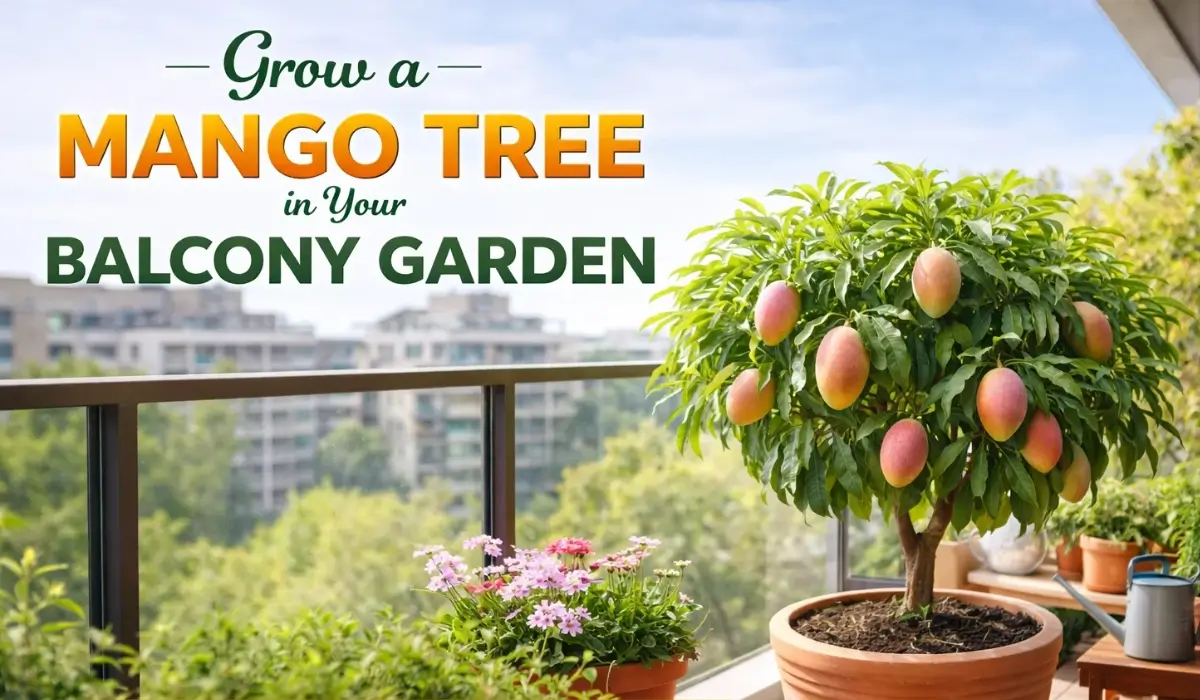
Grow a Mango Tree in Your Balcony Garden at Home is absolutely possible if you choose a dwarf or compact grafted variety, plant it in a large well-draining container, and give it full sun and warmth. The biggest mistake people make is starting with a random seed and expecting quick fruit. A balcony mango works best when you treat it like a managed fruit tree, not a wild backyard giant.
- Pick a grafted dwarf mango, not a supermarket seedling, for faster and more reliable fruiting.
- Place it where it gets full sun and protect it from cold snaps.
- Use a large pot with excellent drainage and avoid soggy soil.
- Prune regularly to keep the canopy compact and balcony-friendly.
- Expect better results from a healthy nursery tree than from a seed-grown plant.
There’s something a little magical about stepping onto your balcony, brushing past glossy green leaves, and spotting a mango swelling in the sun. Not ten kilos from the market. Yours. Grown at railing height, in a pot, in a tight urban space that most people would write off as “too small for fruit trees.” That’s the hook here. A mango tree can work in a balcony garden. But only if you set it up the smart way from day one.
Why is a mango tree a smart choice for a balcony garden?
Yes, a mango can work on a balcony because not every mango tree has to become a 40-foot monster. Extension guidance notes that mango trees can grow extremely large in the ground, but smaller varieties can be grown in containers and kept manageable with pruning.
Here’s the thing: the balcony setup changes the whole game.
A container naturally limits root spread. That slows the tree down, which actually helps you keep it compact. Pair that with pruning, and suddenly mango becomes much more realistic for city gardeners. I’ve seen people overcomplicate this, but the basic logic is simple: small variety, big pot, lots of sun, disciplined pruning.
What makes balcony mango growing different from backyard growing?
A backyard mango can stretch. A balcony mango has to behave.
That means you are managing:
- root space
- canopy size
- sun exposure
- watering consistency
- wind and heat stress
A container-grown tree also dries out faster than one planted in the ground, so your routine matters more. At the same time, drainage matters even more, because mango dislikes staying wet for long.
Which mango tree is best for a balcony garden?
The best choice is a grafted dwarf or naturally compact mango variety from a nursery. That gives you a tree with predictable growth, earlier fruiting, and fruit quality you can actually count on. Seed-grown trees may grow, but they are less reliable for home fruit production and often take much longer.
This is where a lot of home gardeners lose time.
They eat a good mango, save the seed, plant it, and imagine balcony harvests two years later. Real life is rougher than that. Seed-grown mangoes can be slow, vigorous, and unpredictable. A grafted plant is a shortcut in the best sense.
What should you look for at the nursery?
Choose a tree that has:
- a strong central stem
- healthy green leaves
- no black spots, scale, or sticky residue
- a graft union that looks clean and healed
- a compact branching habit
If your nursery labels varieties for home culture or limited-space growing, start there. UF/IFAS specifically recommends smaller varieties for limited spaces and notes they can be container-grown and pruned to a reasonable size.
What pot size does a balcony mango tree need?
Start with a large container that drains freely, then size up gradually as the tree grows. A balcony mango needs enough root room to establish, but not a giant decorative pot full of dense wet soil. Mango roots want oxygen as much as moisture.
A good practical approach looks like this:
| Tree stage | Suggested container approach | Why it works |
|---|---|---|
| Young grafted tree | Start in a nursery container or modest starter pot | Avoids overwatering in too much soil |
| Early growth | Move into a large, sturdy pot with drainage holes | Supports root development and stability |
| Mature balcony tree | Keep in a final large container and prune roots/canopy as needed | Maintains size without forcing excessive growth |
Balcony grower checklist
- Use a pot with multiple drainage holes
- Choose a heavy or stable container so wind does not tip it
- Elevate the pot slightly so water drains freely
- Never let the root zone sit in water
- Refresh the top layer of potting mix when it compacts
Mango requires good internal drainage and has low tolerance for poor site conditions, including salt stress and cold exposure. Those same principles matter even more in containers.
How much sunlight does a mango tree need on a balcony?
A mango tree needs full sun for strong growth and fruiting. Extension guidance recommends full sun, and balcony growers should aim for the brightest, warmest position available.
No sugarcoating here: a shaded balcony is usually the wrong place for a fruiting mango.
If your balcony only gets a couple of soft morning hours, you may grow leaves, but fruiting will be inconsistent at best. A south- or west-facing exposure in warm climates is usually more promising.
What about cold weather?
Mango is sensitive to cold. Texas A&M notes it should be planted in the most protected site available because of its extreme sensitivity to cold. In a container, that gives you one major advantage: mobility. You can move the tree to a protected wall, indoors, or under temporary cover when temperatures drop.
What soil mix works best for a potted mango tree?
The best soil mix is loose, fast-draining, and airy, not heavy garden soil. Mango performs best where water drains quickly and roots are not suffocated.
A practical container mix usually includes:
- high-quality potting mix
- coarse material for drainage, such as perlite or similar amendment
- some organic matter, but not so much that the mix stays soggy
Be careful here. Rich, dense, moisture-holding mixes sound generous, but they can become a root-rot trap in balcony containers.
How often should you water a balcony mango tree?
Water deeply, then let the upper layer begin to dry before watering again. Young trees need more consistent moisture while establishing, but mango does not want constantly wet soil.
That “little and often” habit is where people get burned.
A mango in a pot does better with a proper soak and drainage than with daily nervous splashes. In very hot weather, you may water more often. In cooler or humid conditions, much less.
A simple watering rule
Stick a finger into the top layer of soil. If it still feels damp a little below the surface, wait. If it is drying out and the pot feels lighter, water thoroughly until excess drains out.
What fertilizer helps a mango tree fruit in a container?
Use a fruit-tree fertilizer carefully and avoid overfeeding with nitrogen. UF/IFAS guidance notes fertilization programs for mango often emphasize relatively low nitrogen and higher potassium during active growth periods.
Too much nitrogen gives you the classic balcony disappointment: lush leaves, no fruit.
A simple pattern is:
- feed lightly during active growth
- reduce or pause during cool or slow-growth periods
- follow label rates rather than guessing
- include trace nutrients if your product and climate call for them
How do you prune a mango tree to keep it balcony-sized?
Prune regularly to encourage lateral branching and control height. UF/IFAS recommends removing strong vertical growth and encouraging side growth, which is exactly what a balcony mango needs.
Let me give you a quick example.
A young mango sends one strong vertical shoot up past the balcony railing. If you leave it alone, the tree keeps climbing. If you pinch or prune strategically after a flush, you encourage side branches. That gives you a lower, fuller canopy that is easier to manage, easier to inspect, and better suited to container fruiting.
Easy pruning goals
- keep the tree below your manageable height
- open the canopy for air and light
- remove crossing or weak shoots
- avoid letting one leader dominate too aggressively
How long does it take for a balcony mango tree to bear fruit?
A grafted mango tree can fruit much earlier than a seed-grown tree, while seed-grown mangoes may take many years and still be unpredictable. General horticultural guidance commonly places seed-grown fruiting on a much longer timeline than nursery-grafted trees.
This surprises people every time. The tree can look healthy, tropical, and “grown up” long before it is ready to produce well. Patience matters. So does not stressing the plant with bad drainage, weak light, or erratic care.
What pests and problems should balcony gardeners watch for?
Watch for scale, aphids, fungal spotting, poor airflow, and stress from overwatering or cold. Many mango problems start with environment, not bad luck.
Common red flags include:
- sticky leaves
- black sooty residue
- leaf spots
- drooping despite wet soil
- poor flowering
- dieback after a cold snap
Good airflow, clean watering habits, full sun, and regular inspection do more than most people think.
Can you grow a mango tree from seed on a balcony?
Yes, you can grow one from seed, but that is usually the slower and less reliable path if your goal is homegrown fruit. A seed-grown mango is better treated as an experiment or foliage plant unless you are prepared for a long wait and variable results.
If your dream is “sweet fruit at home,” start with a grafted plant. That is the more honest advice.
What is the easiest step-by-step way to start?
Start with a healthy grafted dwarf mango, place it in your sunniest balcony spot, and build the routine around drainage, pruning, and warmth. Those three factors do most of the heavy lifting.
Step-by-step balcony mango setup
- Buy a grafted dwarf or compact mango tree from a trusted nursery.
- Choose a large stable pot with strong drainage.
- Fill it with a free-draining container mix.
- Put the tree in the brightest, hottest balcony location you have.
- Water deeply, then allow the top layer to begin drying before watering again.
- Feed lightly during active growth with a suitable fruit-tree fertilizer.
- Prune after growth flushes to keep the canopy broad and compact.
- Protect the tree from cold winds and low temperatures.
- Inspect leaves and stems often for pests or fungal stress.
- Be patient and let the tree establish before expecting a serious crop.
People Also Ask
Can a mango tree really grow in a balcony pot?
Yes. A mango tree can grow in a balcony pot when you choose a compact grafted variety, use a large container with sharp drainage, and provide full sun and warmth. The key is managing size through pruning instead of letting the tree grow like an in-ground specimen.
What is the best mango tree for small spaces?
The best mango tree for small spaces is a grafted dwarf or compact variety sold for home gardens or container growing. These trees are more predictable, easier to maintain, and more likely to fruit sooner than a seed-grown tree from a store-bought mango.
How much sun does a potted mango tree need?
A potted mango tree needs full sun. Mango performs best where it gets strong direct light for much of the day. If your balcony is mostly shaded, the tree may survive, but flowering and fruiting can be weak or inconsistent.
How often should I water a mango tree in a container?
Water deeply, then wait until the upper soil begins to dry before watering again. Young trees need steadier moisture than established ones, but constantly wet soil is risky. The right routine depends on heat, wind, humidity, and pot size.
Will a mango tree grown from seed produce fruit?
It might, but seed-grown mango trees are slower and less reliable for fruiting. If your real goal is harvesting mangoes at home, a grafted nursery tree is the better bet because it gives more predictable growth and fruit quality.
How do I keep a balcony mango tree small?
Keep it small with routine pruning, especially by controlling vertical growth and encouraging side branching. Container culture also helps limit overall vigor, but pruning is what keeps the canopy practical for a balcony garden.
Mini scenario: what success looks like
Picture a fourth-floor balcony in a warm city. The gardener starts with a grafted compact mango in a sturdy pot near a sun-baked wall. The first year is mostly about root establishment and shaping the canopy. The second year, the tree looks balanced, glossy, and healthy. A few fruits set. Not dozens. Just enough to make the whole project feel wildly worth it.
That is the realistic win.
Not instant abundance. A managed, beautiful fruit tree that gives you something rare in a small urban space: fruit you actually grew yourself.