Yes, you can grow juicy pomegranates at home in pots by choosing a dwarf variety, using a large well-draining container, and providing full sunlight with moderate watering. With proper care, pomegranate trees can fruit beautifully even on a balcony.
- Choose a dwarf or compact pomegranate variety
- Use a large pot (12–18 inches minimum)
- Provide 6–8 hours of sunlight daily
- Water moderately—avoid soggy soil
- Prune regularly for better fruiting
There’s something incredibly satisfying about growing pomegranates at home.
Not just the fruit—but the moment you cut one open and see those deep red, jewel-like seeds… knowing it came from a tree sitting right on your balcony.
And here’s the part most people don’t realize:
Pomegranates are actually one of the easiest fruit trees to grow in containers.
Why Pomegranates Are Perfect for Pots
Pomegranate trees adapt extremely well to containers because they naturally tolerate dry conditions, pruning, and restricted root space.
What makes them ideal?
- Drought-tolerant once established
- Naturally compact growth
- High fruit yield even in pots
- Less maintenance than many fruit trees
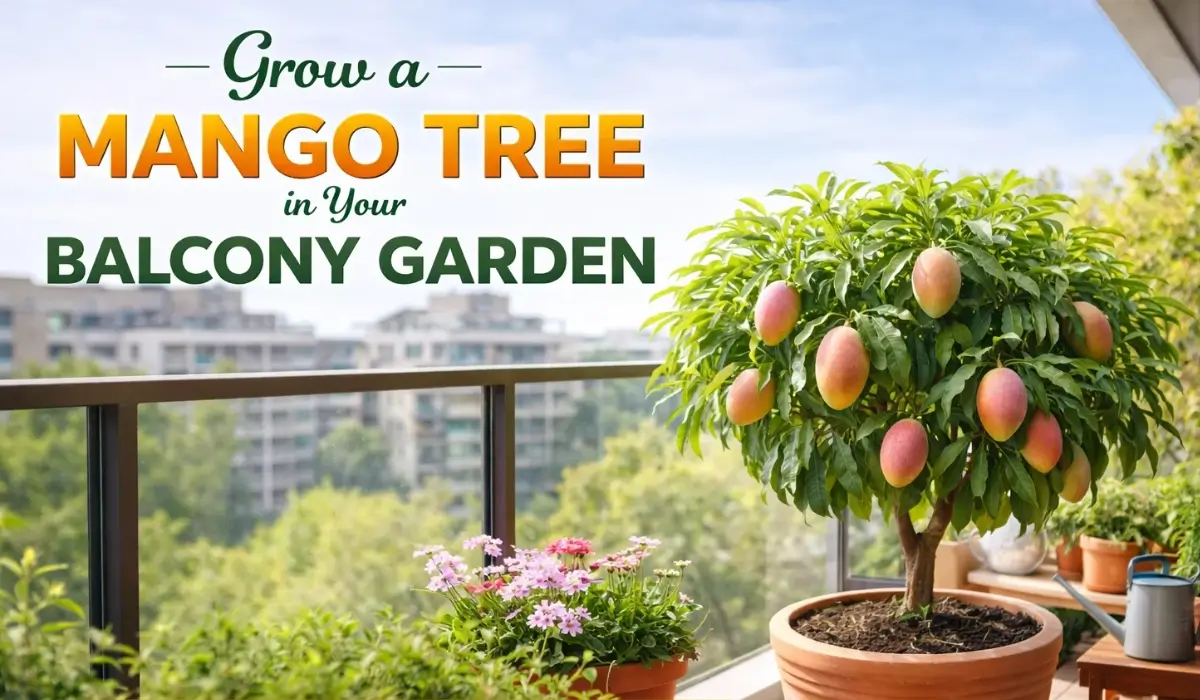
If you’ve struggled with mango or citrus in pots, pomegranate will feel way easier.
What Is the Best Pot Size for Pomegranate Trees?
Use a minimum 12–18 inch deep and wide pot with strong drainage.
Best container options
- Terracotta pots (best for airflow)
- Cement pots (stable for larger trees)
- Grow bags (budget-friendly option)
Important tip
Start smaller and repot as the plant grows instead of using a huge pot immediately.
Why this matters:
Too much soil = water retention = root rot.
How Much Sunlight Do Pomegranates Need?
Direct answer:
Pomegranates need full sun (6–8 hours daily) for proper fruiting.
Balcony placement
- South-facing → best
- West-facing → strong growth
- Partial shade → poor fruiting
Here’s the truth…
No sunlight = no fruit.
You might get leaves, but don’t expect those juicy pomegranates.
What Soil Is Best for Growing Pomegranates in Pots?
Use well-draining, slightly sandy soil.
Ideal soil mix
- 40% garden soil
- 30% compost
- 20% sand
- 10% cocopeat
What to avoid
- Heavy clay soil
- Water-retaining mixes
If your pot holds water for more than a few minutes after watering, your mix is too heavy.
How Often Should You Water a Pomegranate Plant?
Water when the top 1–2 inches of soil are dry.
Watering rule
- Young plant → more frequent watering
- Mature plant → less frequent
- Winter → minimal watering
Common mistake
Overwatering reduces fruit quality and can cause root rot.
I’ve seen plants grow well but produce bland fruit—because of too much water.
How to Prune Pomegranate Trees for More Fruit
Pruning encourages better branching and higher fruit production.
How to prune
- Remove dead or weak branches
- Trim overcrowded growth
- Shape the plant to stay compact
Golden rule
Prune after fruiting season—not during flowering.
How Long Does It Take for Pomegranates to Fruit?
- From cutting → 1–2 years
- From nursery plant → 6–12 months
- Full yield → 2–3 years
If you want faster results, always start with a grafted or nursery plant.
How to Boost Fruit Size and Sweetness
This is where most people struggle.
Simple tricks that work
- Full sunlight (non-negotiable)
- Balanced fertilizer (low nitrogen, higher potassium)
- Avoid overwatering
- Thin out excess fruits
What most people miss:
Fewer fruits = bigger, sweeter pomegranates.
Common Mistakes to Avoid
- Overwatering
- Keeping in shade
- No pruning
- Using small pots long-term
- Over-fertilizing
Mini Case Scenario
A balcony gardener tried growing pomegranate in a shaded corner.
The plant grew tall… but no fruit.
Moved it to a sunny spot → within months, flowers appeared.
Same plant. Different conditions.
That’s how important sunlight is.
People Also Ask
Can pomegranate grow in pots at home?
Yes, pomegranate grows very well in pots when given proper sunlight, drainage, and pruning.
Which pomegranate variety is best for pots?
Dwarf or compact varieties are best suited for container growing.
How big does a pomegranate tree grow in a pot?
Usually 3–6 feet tall when pruned properly.
Do pomegranates need a lot of water?
No, they prefer moderate watering and tolerate dry conditions better than excess moisture.
Can I grow pomegranate from seeds?
Yes, but fruit quality may vary. Cuttings or grafted plants are better for consistent results.
Is pomegranate suitable for beginners?
Yes, it’s one of the easiest fruit plants for beginners due to its resilience.
Can I grow it indoors?
Only if you have very bright sunlight—otherwise, outdoor balconies are better.
How often should I fertilize?
Once a month during growing season is enough.
Why are my fruits cracking?
Usually due to irregular watering.
Final Thoughts
Here’s the truth most gardening guides won’t say clearly:
Pomegranate is one of the most forgiving fruit plants you can grow.
But it has one non-negotiable rule:
Give it sun.
Everything else—watering, pruning, soil—you can adjust.
But sunlight?
That’s where the magic happens.