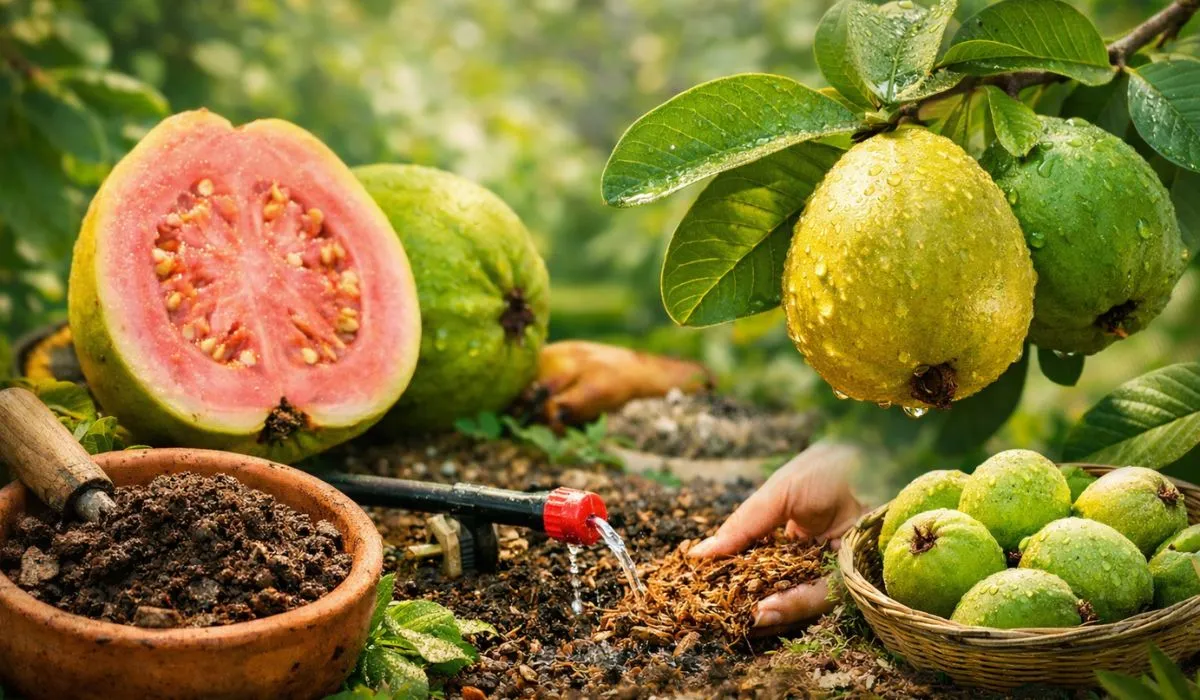
guava growing tips for 2026, focus on three essentials: consistent sunlight (6–8 hours daily), nutrient-rich but well-draining soil (pH 6.0–7.5), and deep but infrequent watering to prevent root rot. Pair that with organic compost and smart pruning to get year-round fruiting—even in changing climates.
☀️ Sunlight: 6–8 hours of direct sun; morning light preferred
🌱 Soil: Loamy, well-drained, rich in organic matter
💧 Water: Deep watering once or twice weekly; avoid overwatering
🧪 Fertilizer: Organic compost + banana peels or neem cake
✂️ Pruning: Twice a year to promote new growth and airflow
Why 2026 Is the Year of Smarter Guava Growing

Guava (Psidium guajava) has always been the hardy underdog of tropical fruits — forgiving, fast-growing, and loved for its sweet, vitamin C–rich flesh. But in 2026, climate-smart gardening means more than just planting and hoping. With unpredictable rain patterns and higher soil salinity in many regions, the key to thriving guava trees lies in smarter sunlight management, organic soil balance, and efficient water use.
I’ve seen both backyard gardeners in Texas and small farmers in Kerala struggle with the same issue — lush leaves but no fruit. The good news? You can fix that with a few simple but strategic hacks.
How Much Sun Does Guava Really Need?
Guava trees love the sun — but 2026’s stronger UV and heat waves require a bit of moderation.
Ideal sunlight:
- 6–8 hours of direct morning to mid-afternoon sunlight
- In extreme summer zones, partial shade netting (30%) helps prevent leaf burn
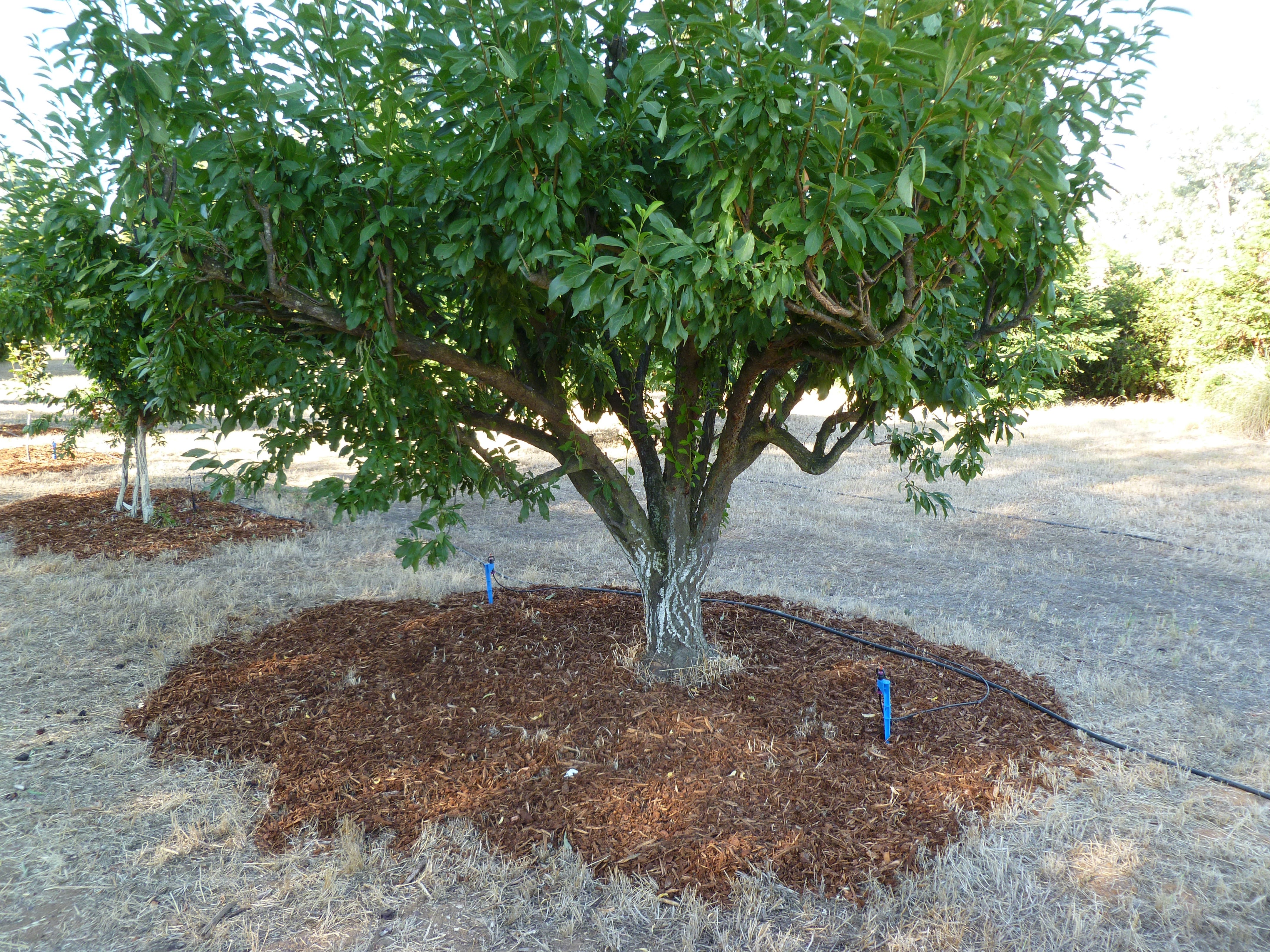
Try reflective mulching using rice straw or light-colored mulch around the base. It keeps soil cool and enhances photosynthesis without stressing the roots.
A small grower in South Texas noticed fruit drop every June. Switching to 30% shade netting and morning irrigation cut fruit loss by half and boosted yield by 22% in one season.
🌱 Soil Secrets for Healthy Roots and Heavy Fruit
Guava tolerates many soils — sandy, clay, or loamy — but it thrives when the soil breathes and drains well.
Perfect Soil Mix:
- 40% garden loam
- 30% river sand or coco peat (for drainage)
- 30% organic compost (cow dung, kitchen waste, or vermicompost)
pH Range: 6.0–7.5
If your soil’s too acidic, mix in wood ash or crushed eggshells. For alkaline soils, add compost tea or diluted vinegar.
Organic Boosters for 2026:
- Neem cake → fights nematodes & enriches soil microbes
- Banana peel compost → natural potassium source
- Seaweed extract → balances micronutrients, ideal for coastal areas
Every six months, add a 1-inch compost layer around the root zone and cover with dry mulch. It mimics the forest floor — rich, moist, and teeming with life.
Watering: The “Smart Soak” Technique
The biggest mistake? Overwatering. Guava roots hate soggy feet.
Best Practice in 2026:
- Deep soak once or twice weekly
- Water at sunrise or sunset (minimizes evaporation)
- Drip irrigation or clay pot (olla) systems save up to 50% water
Drought Season Tip:
Add 2 inches of mulch to retain moisture longer. Mulching also keeps weeds down and encourages earthworms — nature’s tillers.
In a home garden near Houston, switching from daily surface watering to twice-weekly deep watering increased fruit size by 35%. Consistency beats frequency.
Pruning and Pollination Hacks
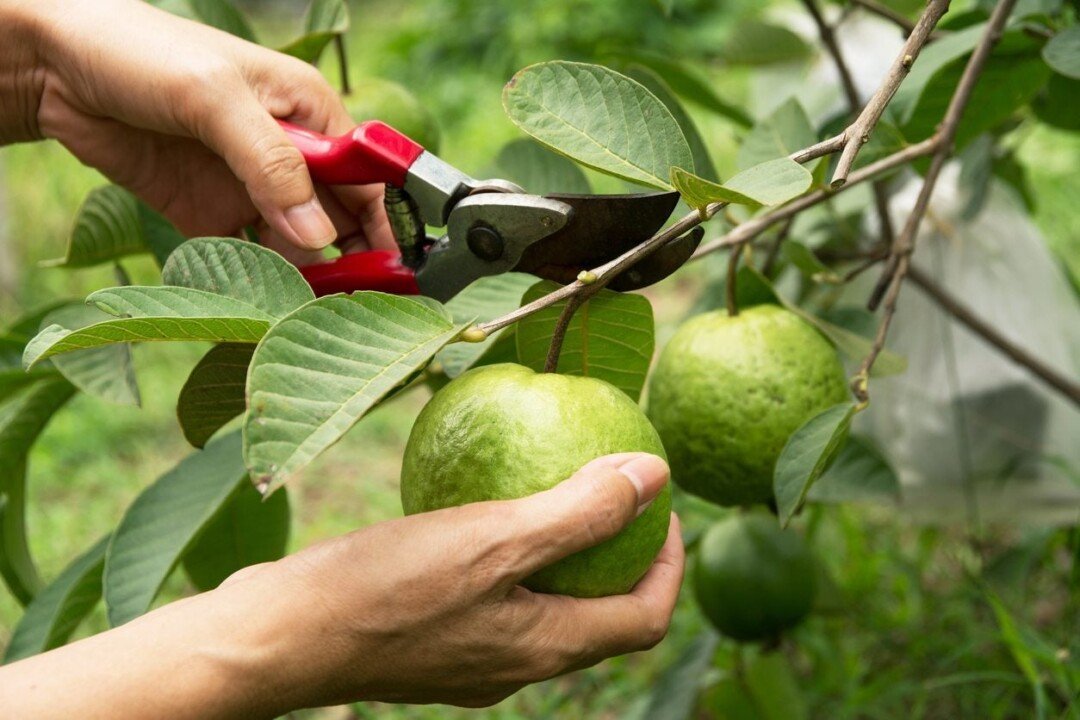
Guava bears fruit on new growth — meaning if you skip pruning, you skip the harvest.
Prune twice yearly:
- Post-harvest (late winter): Remove old, diseased, and crossing branches.
- Mid-monsoon (summer): Light prune to shape and promote airflow.
Pollination Hack:
Attract pollinators naturally using marigolds or basil near guava beds. If you’re growing in an enclosed area, hand-pollinate with a soft brush during flowering.
Yield Trick:
Remove the first flush of flowers (in very young trees) to redirect energy into stronger root and branch development. It pays off in later years with bigger, sweeter fruits.
Fertilization Schedule for 2026 (Organic Plan)
| Season | Fertilizer Type | Application Method |
|---|---|---|
| Spring (Pre-flowering) | Vermicompost + Neem cake | Mix into topsoil around root zone |
| Summer | Compost tea + Seaweed extract | Spray on leaves bi-weekly |
| Fall (Fruit setting) | Banana peel compost + Bone meal | Apply near root zone |
| Winter | Minimal feeding | Only light compost mulch |

Natural Pest & Disease Control
Guava trees are strong, but 2026’s humidity swings invite issues like fruit flies, aphids, and wilt.
Organic Defenses:
- Neem oil spray (2%) weekly during flowering
- Garlic–chili spray for aphids and whiteflies
- Trichoderma soil drench to prevent root rot
Prevention Checklist:
✅ Always remove fallen fruits/leaves
✅ Space trees for airflow
✅ Rotate crops every few years (for small farms)
Climate-Smart Growing for 2026
With climate zones shifting, guava remains a resilient crop — but you’ll want to adapt regionally.
| Region | Adjustment |
|---|---|
| Tropical (India, Philippines) | Use raised beds to prevent waterlogging |
| Semi-arid (Texas, Mexico) | Drip irrigation + mulching essential |
| Coastal zones | Add seaweed compost to counter salt buildup |
| Cool subtropics | Choose hardy varieties like ‘Allahabad Safeda’ or ‘Ruby Supreme’ |
Propagation: Simple and Successful
- From seeds: takes 2–3 years to fruit (use only from healthy mother trees)
- From cuttings or air layering: fruits in 12–18 months
- Grafting (2026 tip): Use high-yield scion on local rootstock for disease resistance and faster maturity
Common Mistakes to Avoid
| Mistake | Impact | Fix |
|---|---|---|
| Overwatering | Root rot | Deep, infrequent watering |
| Poor sunlight | Sparse fruiting | Relocate or prune nearby shade |
| No pruning | Stunted yield | Trim twice yearly |
| Ignoring soil pH | Nutrient lock | Adjust with compost or ash |
| Heavy chemical fertilizers | Burns roots | Switch to slow-release organic inputs |
Backyard Success Story (2026)
Maria, a small gardener from San Antonio, started with two guava saplings in recycled buckets. She switched from daily watering to a once-a-week deep soak, added kitchen compost, and pruned lightly in March. By October, her “seedless pink” guava trees were loaded — over 25 pounds of fruit each, all organic.
FAQs for guava growing tips for 2026
Q1: How often should I water guava plants?
Once or twice a week, depending on climate. Always water deeply and allow the topsoil to dry before the next round.
Q2: What’s the best fertilizer for guava?
Use compost, banana peel compost, or neem cake instead of chemicals. They feed the soil, not just the tree.
Q3: Can guava grow in pots?
Absolutely. Use a 15–20 gallon container, well-draining soil mix, and prune regularly to control height.
Q4: How long does guava take to fruit?
From seed: 2–3 years; from cutting or graft: about 12–18 months.
Q5: How to make guava fruit sweeter?
Maintain consistent watering, apply potassium-rich compost, and harvest when fruits turn light yellow-green.
Closing Thought
Guava is one of the most forgiving fruit trees — but it rewards those who pay attention. In 2026, when climate unpredictability challenges every gardener, sustainable methods are no longer optional. Start small, stay consistent, and nature will do the rest.