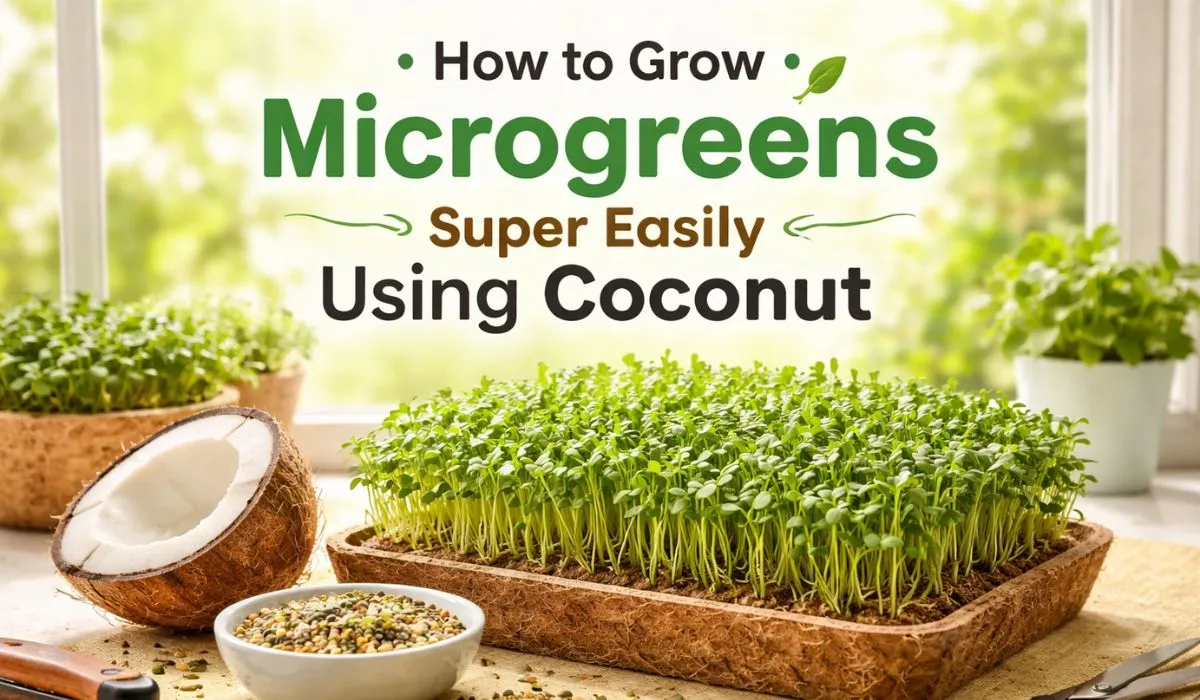
Want to grow fresh, nutritious greens right in your kitchen without soil, mess, or gardening experience? Good news: you can grow microgreens super easily using coconut coir, a natural growing medium that’s affordable, sustainable, and widely available in India.
Whether you live in an apartment or a house with a balcony, this simple method lets you harvest healthy greens in just 7–10 days.
Let’s get started.
What Are Microgreens (and Why Indians Love Them)?
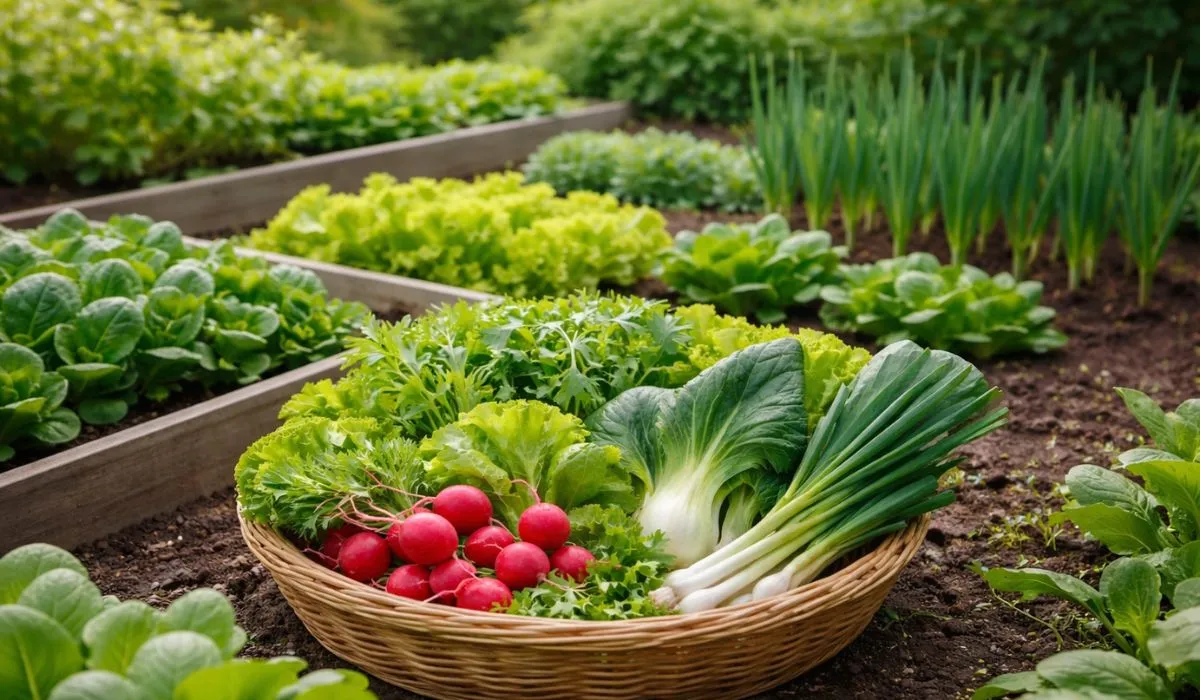
Microgreens are young vegetable greens harvested just after the first leaves appear. They’re packed with flavour and nutrients and fit beautifully into Indian meals sprinkle them on dal, add to sandwiches, mix into salads, or top your poha and upma.
Popular choices for beginners in India include:
- Methi (fenugreek)
- Mustard
- Radish
- Coriander
- Green peas
- Broccoli
They grow fast, need very little space, and don’t require any special equipment.
Why Use Coconut Coir Instead of Soil?
Coconut coir (also called coco peat) is made from coconut husk fibres. It’s an excellent alternative to soil for growing microgreens.
Here’s why it works so well:
- Naturally clean and lightweight
- Holds moisture beautifully
- Allows good air circulation to roots
- Eco-friendly and reusable
- Easily available online or at local nurseries
For Indian homes, coconut coir is especially practical because coconuts are abundant and the material is budget-friendly.
What You’ll Need
You don’t need fancy tools. Just gather:
- Coconut coir block or loose coco peat
- Microgreen seeds
- A shallow tray or container (with or without holes)
- Spray bottle
- Clean water
- A sunny window, balcony, or bright indoor spot
That’s it.
Step-by-Step: Grow Microgreens Using Coconut Coir
Step 1: Prepare the Coconut Coir
If using a compressed block, soak it in water for 10–15 minutes until it expands. Fluff it gently.
Spread 2–3 cm of moist coir evenly in your tray. Press lightly to level the surface.
Step 2: Sprinkle Seeds Generously
Scatter seeds evenly over the surface. Microgreens like to grow close together, so don’t worry about spacing too much.
Lightly press seeds into the coir.
Step 3: Mist and Cover (First 2 Days)
Spray water gently using a mist bottle.
Cover the tray with another tray or lid to create darkness. This helps seeds germinate faster.
Keep in a warm place.
Step 4: Move to Light
After 2–3 days, once sprouts appear, remove the cover and place the tray near sunlight.
Water daily with a spray bottle. Keep the coir moist, not soggy.
Step 5: Harvest in 7–10 Days
When greens reach 5–8 cm, cut them just above the coir using clean scissors.
Rinse lightly and enjoy fresh.
Common Mistakes to Avoid
- Overwatering (can cause fungus)
- Keeping trays in complete darkness too long
- Using deep containers
- Placing in harsh direct afternoon sun
Gentle light, daily misting, and patience are all you need.
Bonus Tips for Indian Weather
- In hot cities, grow indoors near a bright window
- During monsoon, ensure airflow to prevent mould
- Rinse seeds before sowing for better germination
- Start small with one tray until you get confident
Why This Method Is Perfect for Busy Homes
Growing microgreens with coconut coir takes:
- Less than 10 minutes daily care
- Zero soil mess
- Minimal space
- Very low cost
And the reward? Fresh greens whenever you want chemical-free and grown by you.
Final Thoughts
If you’ve ever wanted to start gardening but felt overwhelmed, this is your sign.
Microgreens grown in coconut coir are one of the easiest ways to bring healthy, homegrown food into your life especially for Indian kitchens where fresh ingredients matter.
Start with one tray this week. In just a few days, you’ll be harvesting your own greens and wondering why you didn’t try this sooner.
If you’d like, I can also help you choose beginner-friendly seeds, suggest easy Indian microgreen recipes, or guide you on scaling this into a small home setup just tell me.