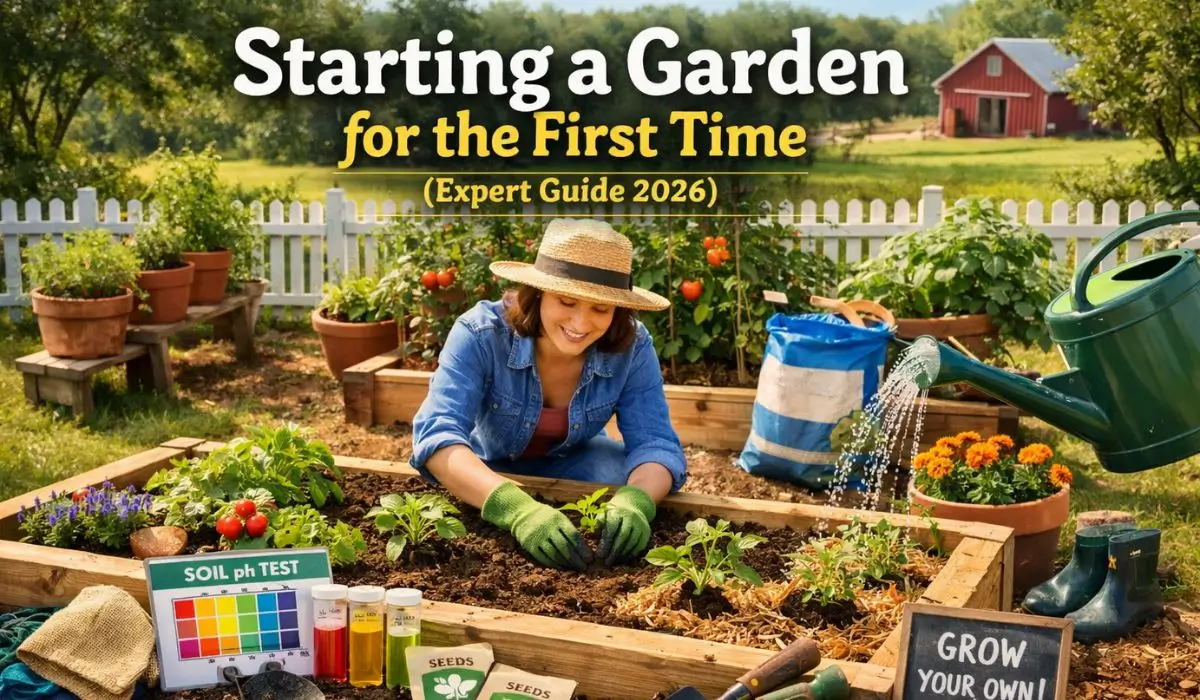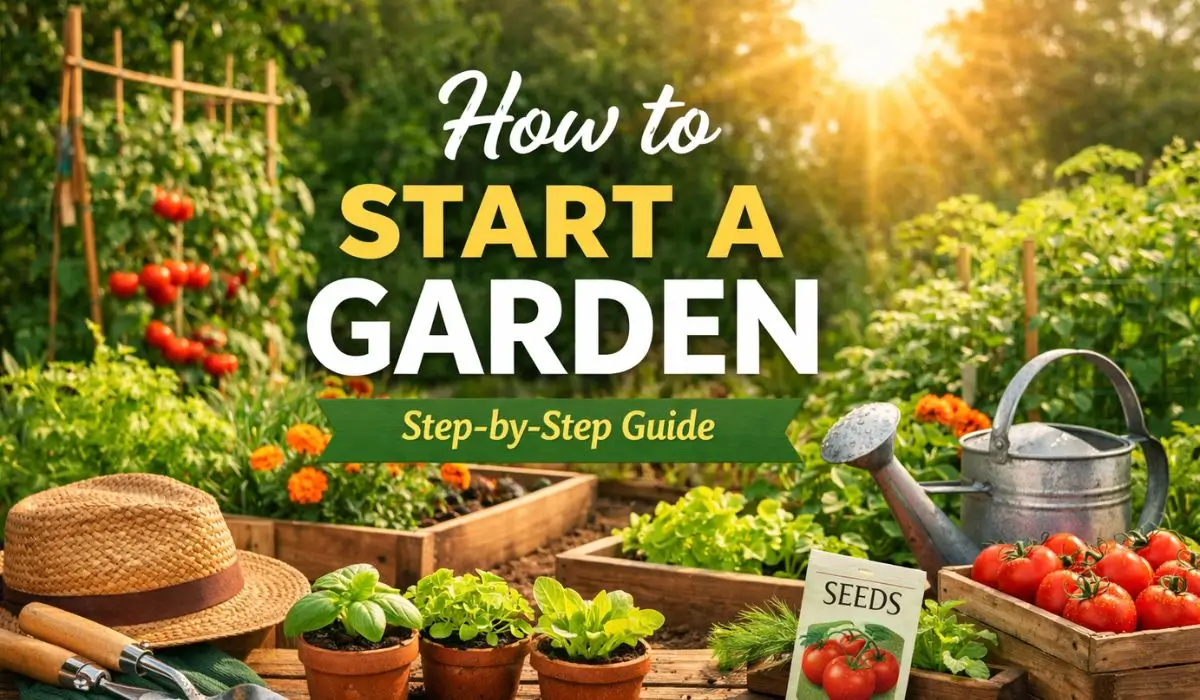
How to Start a garden, successfully begins with choosing a sunny location, preparing nutrient-rich soil, selecting beginner-friendly plants, and creating a simple care routine for watering and spacing. When these fundamentals are set up correctly, plants grow healthier, require less troubleshooting, and beginners can enjoy a productive garden even in their first season.
Quick Guide How to Start a Garden
- Choose a location with 6–8 hours of sunlight daily
- Prepare soil with compost and organic matter
- Start with easy plants like herbs, lettuce, and tomatoes
- Plan your garden layout and plant spacing
- Water deeply 1–2 times per week
A moment many new gardeners experience
A friend once told me about the first vegetable garden he planted.
He bought seedlings, planted them immediately, and waited for a harvest.
Three weeks later, half the plants were yellow.
Turns out the soil was basically dry clay with zero nutrients.
Once we added compost and organic matter, the difference was dramatic.
The lesson?
A successful garden starts before the first seed goes in the ground.
Let’s break down exactly how to do it the right way.
Why Starting a Garden the Right Way Matters
Gardening might look simple—plant seeds and wait.
But in reality, a garden works like a small ecosystem.
Plants depend on:
- soil health
- sunlight
- water balance
- airflow and spacing
If one piece is missing, plants struggle.
Getting these fundamentals right early saves beginners months of frustration.
According to horticulture guidance from the National Gardening Association, soil health and sunlight are the two biggest factors affecting plant growth. (Accessed: March 2026)
Step 1: Choose the Best Location for Your Garden
A garden’s location determines how well plants grow.
Most vegetables need full sunlight, meaning at least six hours of direct sunlight daily.
Ideal Garden Location Checklist
| Factor | What to Look For |
|---|---|
| Sunlight | 6–8 hours per day |
| Drainage | Water drains quickly |
| Protection | Shelter from strong wind |
| Water access | Close to hose or watering can |
A quick tip many gardeners overlook:
Spend one day observing your yard.
Notice where sunlight stays the longest.
That spot usually becomes your best garden location.
Step 2: Prepare Healthy Soil
Soil is the foundation of every successful garden.
Healthy soil contains:
- nutrients
- organic matter
- beneficial microbes
Without those elements, plants struggle.
Basic Soil Mix for Beginner Gardens
| Ingredient | Purpose |
|---|---|
| Topsoil | Structure for roots |
| Compost | Nutrients and microbes |
| Coco coir / peat moss | Moisture retention |
A simple beginner blend:
- 40% topsoil
- 40% compost
- 20% organic matter
Adding compost dramatically improves soil fertility and water retention.
The USDA Natural Resources Conservation Service notes that organic matter helps soil hold nutrients and improves plant growth. (Accessed: March 2026)
Step 3: Decide What Type of Garden to Build
Not every garden is planted directly in the ground.
Different gardening styles work better depending on space and soil conditions.
Common Garden Types
| Garden Type | Best For | Advantages |
|---|---|---|
| Raised Beds | Beginners | Better soil control |
| Container Garden | Small spaces | Perfect for patios |
| In-Ground Garden | Large yards | Lower setup cost |
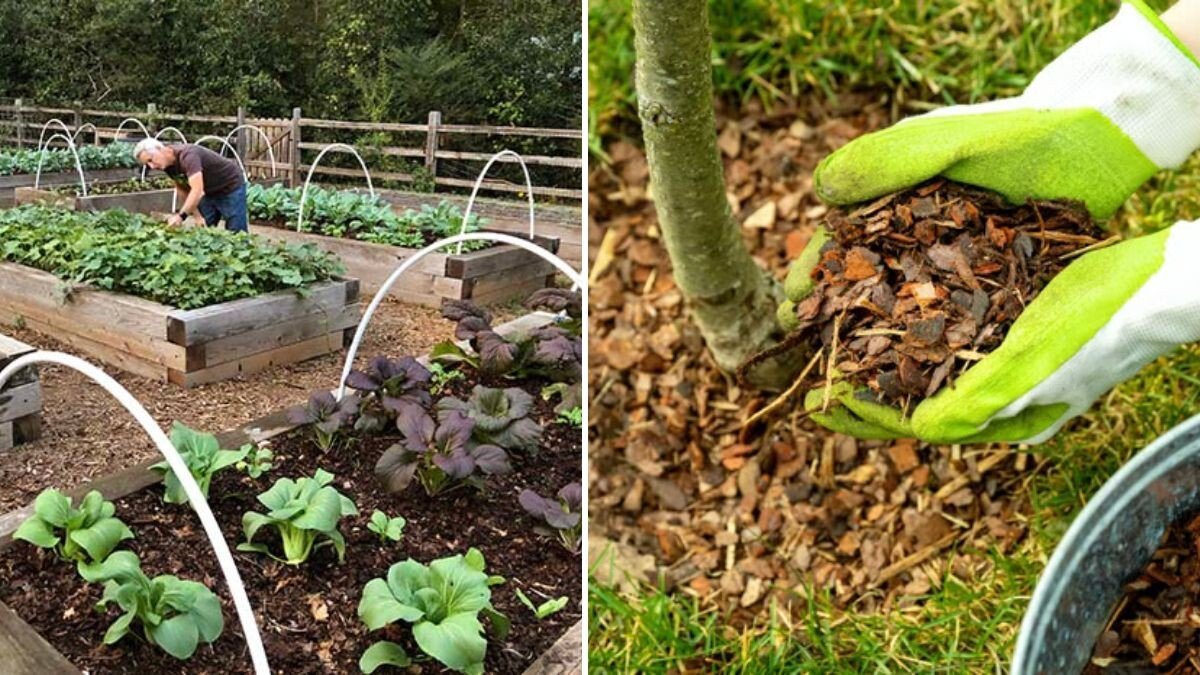
Many beginner gardeners start with raised beds because they offer better drainage and soil quality.
Step 4: Choose Easy Plants for Beginners
Starting with simple crops helps build confidence.
Beginner Vegetables
- Lettuce
- Radishes
- Tomatoes
- Green beans
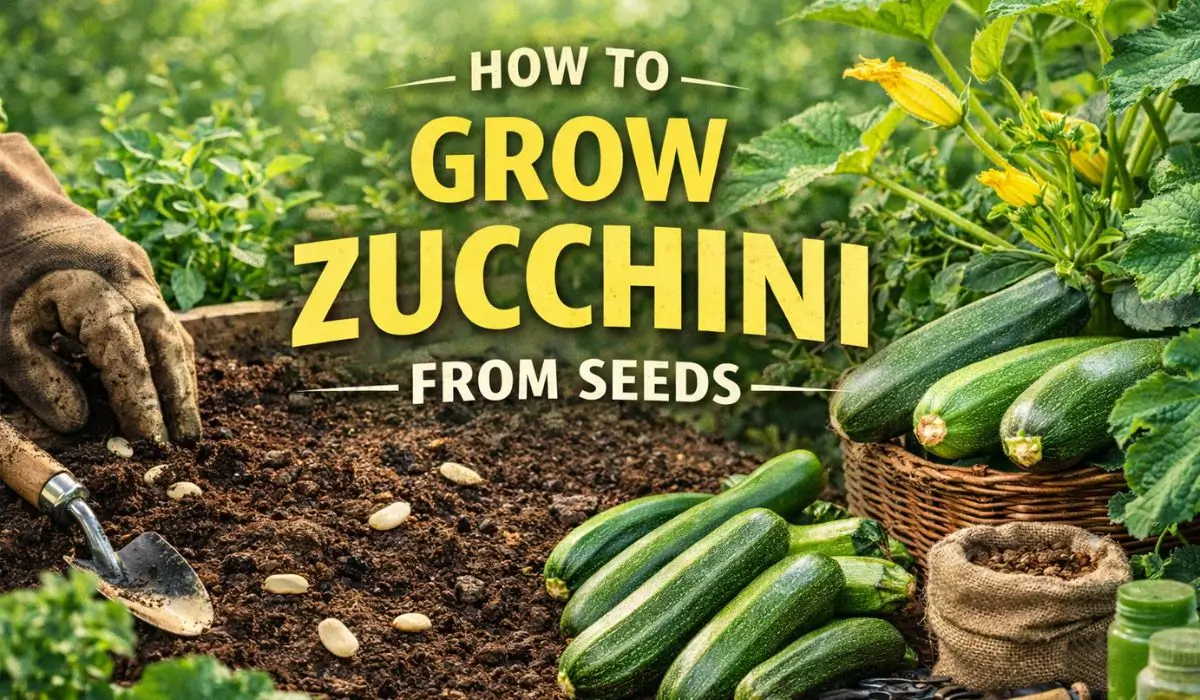
- Zucchini
Beginner Herbs
- Basil
- Mint
- Parsley
- Chives
- Cilantro
These plants grow quickly and tolerate beginner mistakes better than more delicate crops.
Step 5: Plan Your Garden Layout
Plant spacing matters more than most beginners realize.
When plants are too close together:
- airflow decreases
- diseases spread faster
- plants compete for nutrients
Simple Garden Layout Strategy
Tall plants → back of garden
Medium plants → middle
Small plants → front
This layout prevents taller plants from blocking sunlight.
Step 6: Water Your Garden Properly
Watering mistakes are extremely common for beginner gardeners.
Two problems happen most often:
- Overwatering
- Underwatering
Best Watering Practices
- Water in the morning
- Water the soil, not leaves
- Aim for 1–2 inches of water per week
Check soil moisture by inserting a finger about one inch deep.
If it feels dry, it’s time to water.
Step 7: Feed Plants With Compost or Fertilizer
Plants absorb nutrients from soil as they grow.
Over time those nutrients become depleted.
Adding organic matter replenishes the soil.
Natural Fertilizer Options
- Compost
- Worm castings
- Compost tea
- Organic vegetable fertilizer
Most gardens benefit from compost added every 3–4 weeks during the growing season.
Step 8: Prevent Common Garden Problems
Even healthy gardens occasionally face issues.
The key is catching problems early.
Common Garden Issues
| Problem | Solution |
|---|---|
| Aphids | Spray neem oil |
| Slugs | Use crushed eggshell barriers |
| Yellow leaves | Improve soil drainage |
| Slow growth | Add compost |
Checking plants weekly helps prevent larger infestations.
A Real-World Gardening Insight
One experienced gardener told me something years ago that still makes sense.
He said:
“Start with five plants you actually like eating.”
That advice seems simple—but it works.
Many beginners plant 15 or 20 crops in their first garden.
That quickly becomes overwhelming.
Instead:
- Start small.
- Learn what works.
- Then expand next season.
People Also Ask
How do beginners start a garden?
Beginners should start by choosing a sunny location, improving soil with compost, selecting beginner-friendly plants, and establishing a watering routine. Planning plant spacing and garden layout before planting also improves plant health and productivity.
What is the easiest garden to start?
Raised bed gardens and container gardens are easiest for beginners because they allow better soil control and require less digging than traditional in-ground gardens.
When should you start a garden?
Most gardens begin in early spring after the last frost. Cool-season vegetables like lettuce and spinach can be planted earlier, while warm-season crops such as tomatoes should be planted once temperatures remain consistently warm.
How much sunlight does a garden need?
Most vegetables require 6–8 hours of direct sunlight daily to produce healthy growth and harvests.
How often should you water a garden?
Most gardens require about 1–2 inches of water per week, depending on climate and soil type.
Beginner Garden Checklist
Before planting your first garden, confirm the basics:
✔ Sunny location
✔ Healthy soil with compost
✔ Beginner plants
✔ Proper spacing
✔ Watering plan
✔ Basic garden tools
Once these pieces are in place, gardening becomes much easier.
FAQs
How big should a beginner garden be?
A beginner garden should typically be 4×4 feet or 4×8 feet. Starting small allows gardeners to learn plant care and watering routines without becoming overwhelmed.
What tools do beginner gardeners need?
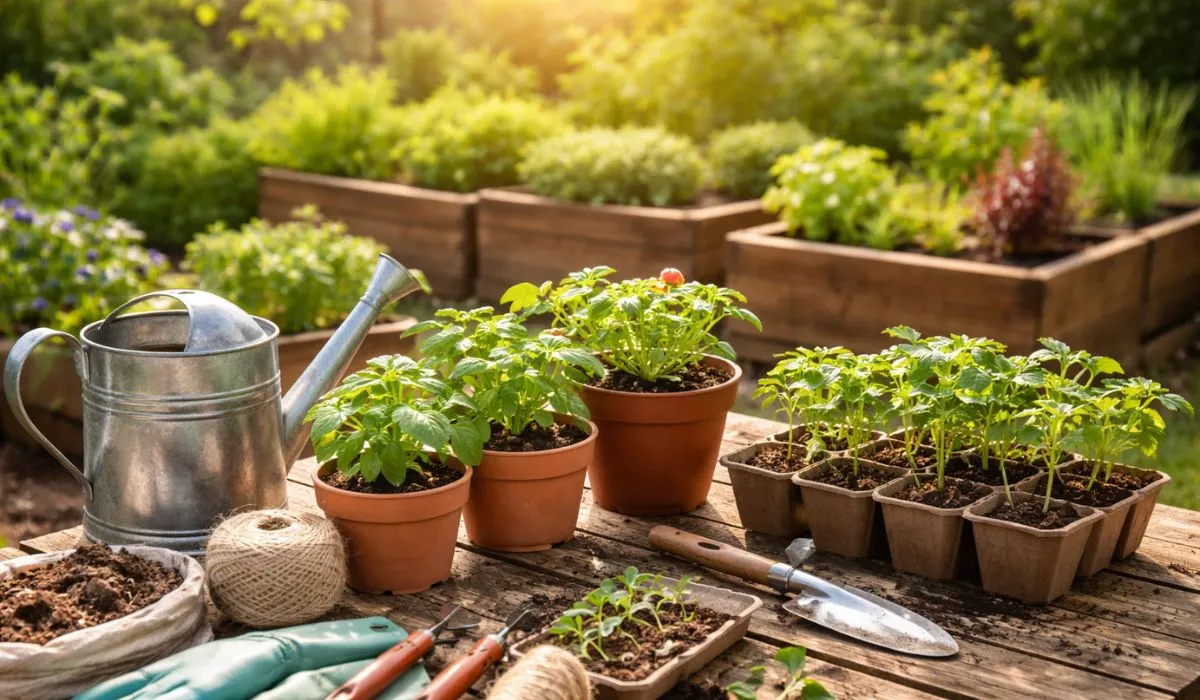
Essential tools include a hand trowel, pruning shears, watering can or hose, gardening gloves, and a rake.
Can you start a garden without a yard?
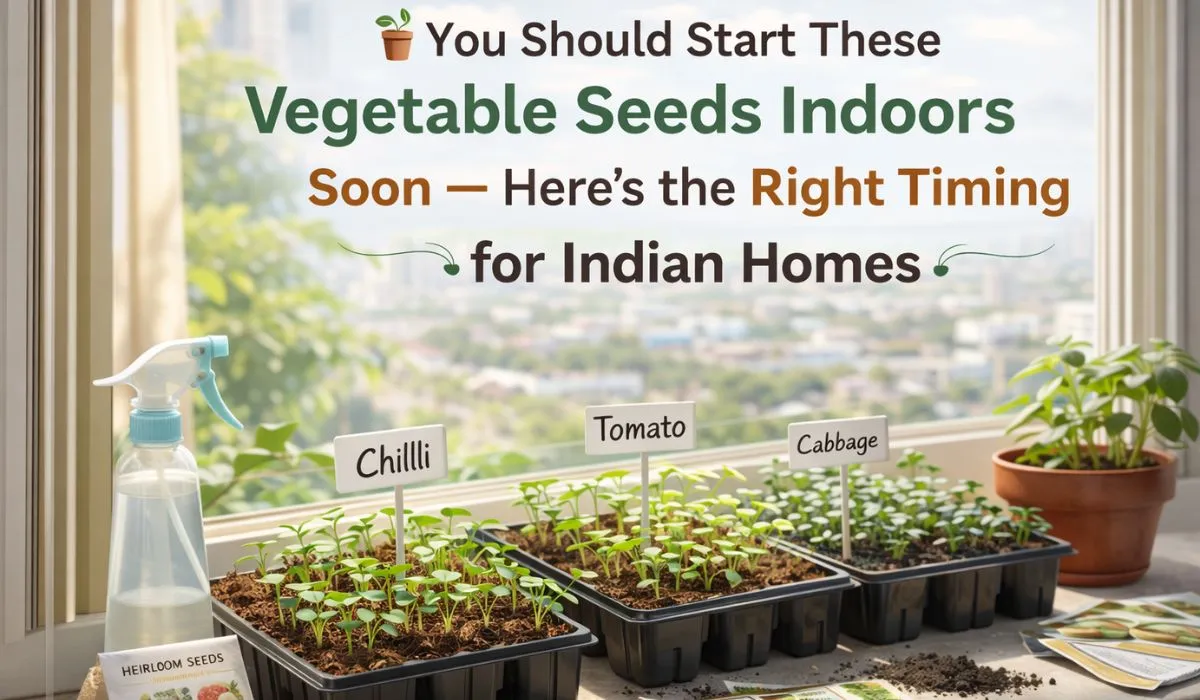
Yes. Container gardening allows vegetables, herbs, and flowers to grow on patios, balconies, or windowsills.
What vegetables grow fastest for beginners?
Radishes, lettuce, spinach, and green onions grow quickly and are ideal for first-time gardeners.
How long does it take vegetables to grow?
Fast crops like radishes can grow in 3–4 weeks, while tomatoes typically require 60–90 days from planting to harvest.