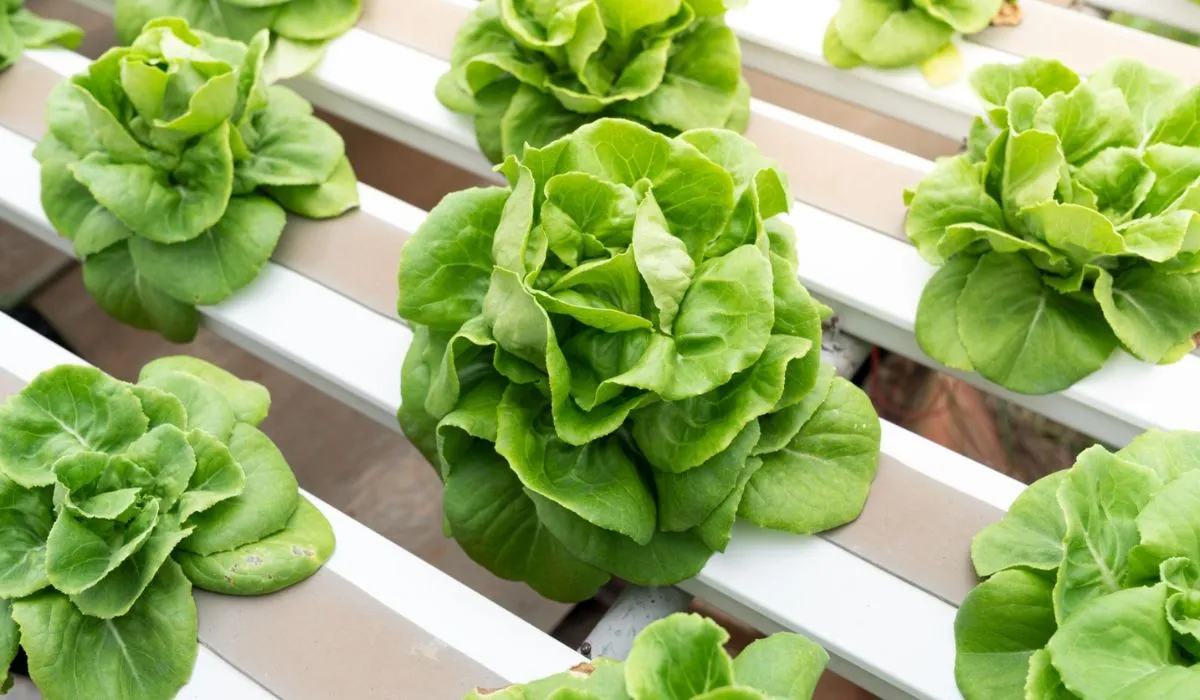
Hydroponic lettuce 2026 lets you grow clean, crisp leaves indoors without soil by feeding roots directly with nutrient-rich water. With a simple container, water pump (or passive system), and LED grow light, you can harvest fresh lettuce in 30–40 days — year-round, pest-light, and space-efficient.
Why Hydroponic Lettuce Is Exploding in 2026
- 🥬 Faster growth than soil (often 25–30% quicker)
- 🧼 Cleaner harvest — no dirt, fewer soil pests
- 🏙️ Perfect for apartments and small kitchens
- 💧 Uses less water than traditional gardening
- 🔁 Continuous harvest with staggered planting
Urban gardeners aren’t just planting anymore — they’re engineering their food.
In 2026, hydroponics has moved from commercial warehouses into kitchen corners. I’ve seen studio apartment growers in Austin pulling weekly butterhead harvests from a shelf system that takes less space than a microwave. The appeal? Control. Cleanliness. Consistency.
Let’s break this down.
What Is Hydroponic Lettuce — and Why Does It Work?
Hydroponic lettuce grows in water instead of soil. The roots sit in a nutrient solution that delivers nitrogen, potassium, calcium, and trace minerals directly — eliminating the need for dirt.
Here’s the thing most people miss:
Soil is just a delivery system for nutrients. Hydroponics removes the middleman.
Because nutrients reach roots instantly and oxygen levels are controlled, lettuce grows faster and more uniformly. According to the U.S. Department of Agriculture, hydroponic systems can significantly reduce water usage compared to conventional field production
Best Hydroponic Systems for Home Growers 2026

1. Kratky Method (No Electricity)
- Passive system — no pump needed
- Roots partially submerged
- Ideal for beginners
I’ve recommended this to first-time growers who don’t want wires or timers. A mason jar, net cup, and nutrient mix — that’s it.
2. Deep Water Culture (DWC)
- Air pump oxygenates roots
- Faster growth than Kratky
- Excellent for butterhead and romaine
Now, this is where growth gets aggressive. With proper aeration, lettuce heads can mature in under 35 days.
3. Nutrient Film Technique (NFT)
- Thin film of nutrients constantly flows past roots
- More advanced setup
- Higher yields if managed correctly
NFT is popular in commercial vertical farms — but scaled-down countertop versions are becoming common in 2026.
Step-by-Step: How to Grow Hydroponic Lettuce at Home
Start with seeds, provide 12–16 hours of LED light daily, maintain a nutrient solution with balanced pH (5.5–6.5), and monitor water levels weekly.
Simple Home Setup Checklist
| Component | What You Need |
|---|---|
| Container | Opaque bucket or bin (prevents algae) |
| Net Cups | Hold seedlings above water |
| Growing Medium | Rockwool or coco plugs |
| Nutrients | Hydroponic lettuce formula |
| Light | Full-spectrum LED grow light |
| pH Kit | Maintain 5.5–6.5 range |
The Real-World Routine
Week 1–2: Germinate seeds in damp rockwool cubes.
Week 2–3: Transfer to hydroponic system once roots show.
Week 4–6: Harvest outer leaves continuously.
And here’s the truth — lettuce doesn’t need drama. It thrives in steady, predictable conditions.
Best Lettuce Varieties for Hydroponics

| Variety | Why It Performs Well |
|---|---|
| Butterhead | Soft leaves, compact growth |
| Romaine | Upright, strong structure |
| Oakleaf | Fast regrowth after harvest |
| Loose Leaf | Best for cut-and-come-again style |
The experts at Texas A&M AgriLife Extension consistently recommend loose-leaf types for beginners due to resilience and fast turnaround (Accessed: February 2026).
Common Hydroponic Mistakes (Avoid These)
- Ignoring pH Levels – Nutrient lockout happens fast.
- Too Much Light – Lettuce bolts under excessive heat.
- Transparent Containers – Algae forms quickly.
- Overcrowding Plants – Leaves need airflow to stay crisp.
Most new growers don’t fail because hydroponics is complicated.
They fail because they skip monitoring.
Is Hydroponic Lettuce Healthier?
Short answer: It’s nutritionally comparable to soil-grown lettuce — sometimes cleaner due to reduced soil contamination.
Research supported by University of California Agriculture and Natural Resources indicates properly managed hydroponic systems can produce consistent nutrient density (Accessed: February 2026).
What changes most is freshness.
You harvest minutes before eating.
That’s unbeatable.
2026 Smart Upgrade: Sensor-Based Monitoring
Home growers are pairing systems with:
- Smart plugs
- Timed LED cycles
- Nutrient monitors like Bluelab pH Pen
This isn’t overkill. It’s control.
Urban gardening is becoming data-driven — and lettuce is leading the way.
People Also Ask
How long does hydroponic lettuce take to grow?
Most varieties are ready in 30–40 days from seed. Leaf harvesting can begin as early as week four.
Do I need special seeds for hydroponics?
No. Standard lettuce seeds work fine — just choose compact, fast-growing varieties.
Does hydroponic lettuce taste different?
It often tastes cleaner and milder because nutrient levels are controlled precisely.
Can I grow hydroponic lettuce without grow lights?
Yes, near a bright window — but yields and consistency improve significantly with LED lighting.