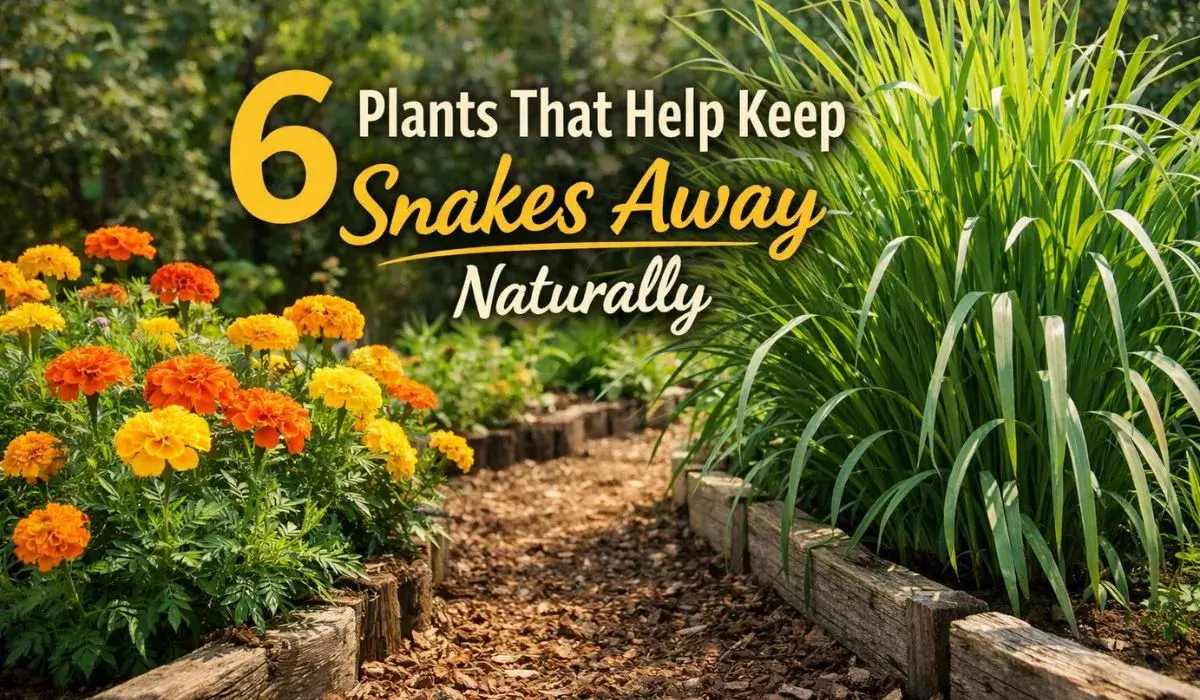
Yes — several Naturally Repel Snakes from Your Garden thanks to their strong scents and oils. The best options include marigold, lemongrass, garlic, wormwood, clove basil, and mother-in-law’s tongue (snake plant). When planted strategically, they help keep snakes from nesting or crossing your yard.
These Plants Help Naturally Repel Snakes from Your Garden
- Marigold: Strong scent and root secretions repel pests (and snakes).
- Lemongrass: Contains citronella oil — snakes dislike its citrusy aroma.
- Garlic: Powerful smell deters both snakes and rodents.
- Wormwood: Bitter aroma creates a natural “keep-out” zone.
- Clove basil: Spicy clove scent masks rodent trails.
- Snake plant: Sharp leaves and odor discourage hiding spots.
Why I Started Planting to Keep Snakes Away
I’ll be honest — the first time I saw a snake slip under my raised garden bed, my heart skipped a beat. I live in a quiet suburban neighborhood, not a wild forest, and yet there it was.
That summer, instead of reaching for chemicals or traps, I turned to plants. My grandmother always said, “Nature protects her own.” Turns out, she was right.
1. Marigold (Tagetes spp.)

The bold, spicy smell of marigold repels insects and small pests — snakes included.
I lined marigolds along the back fence and noticed far fewer slithery visitors the next spring. Their underground root secretions also discourage moles and insects — creatures that attract snakes.
Full sun, moderate watering, and replant annually for the best scent concentration.
2. Lemongrass (Cymbopogon citratus)

If I had to pick just one deterrent plant, lemongrass would win. It gives off citronella, the same compound used in mosquito repellents, and snakes dislike its citrusy punch.
You can harvest the stalks for tea or cooking.
Loves warmth, sunlight, and well-drained soil. Trim back in cooler months to prevent drying.
3. Garlic (Allium sativum)

There’s an old saying — “If you can smell it, a snake can too.” Garlic’s natural sulfur compounds release a strong odor that lingers in the soil.
Crush a few cloves and scatter them around patio edges or entry points. It’s one of the oldest farmhouse remedies, and it still works.
Garlic likes rich soil and full sun. It doubles as a natural antifungal for nearby plants.
4. Wormwood (Artemisia absinthium)

Wormwood is an old European herb with a bitter scent that discourages many animals from crossing it — snakes included. Its silvery leaves also look stunning against green foliage.
Since planting wormwood near my compost area, I’ve had fewer visits from both snakes and rodents. It seems to break their scent trails.
Care: Prefers dry, sandy soil and lots of sun. Don’t overwater — it thrives on neglect.
5. Clove Basil (Ocimum gratissimum)

Clove basil isn’t your everyday kitchen basil — it smells warm and spicy, like cloves. That aroma masks the scent of small prey, confusing snakes that rely on smell to hunt.
Many gardeners in the Caribbean and Africa use clove basil to repel both insects and reptiles naturally.
Plant in rich, well-drained soil with regular watering. Great companion for tomatoes and peppers.
6. Mother-in-Law’s Tongue (Sansevieria trifasciata)

Also called “snake plant” — ironically — this hardy houseplant doubles as a repellent outdoors. Its sharp, upright leaves and mild odor make snakes uncomfortable crawling near it.
The stiff leaves create a barrier and the soil tends to stay dry, making it less inviting for hiding.
Works beautifully near patios or garden edges where you want low maintenance but high effect.
Small Checklist — How to Use Plants as Natural Snake Barriers
| Step | Action | Why It Helps |
|---|---|---|
| 1 | Plant scented herbs and flowers around fences or paths | Creates scent barriers |
| 2 | Keep grass short and remove debris | Snakes love shade and clutter |
| 3 | Avoid overwatering | Damp areas attract prey animals |
| 4 | Mix plant varieties (e.g., lemongrass + marigold) | Increases deterrent range |
| 5 | Replant or trim seasonally | Keeps aromas strong |
Last summer, I planted lemongrass on one side of the shed and marigolds on the other. I haven’t seen a snake since. I’m not saying it’s magic — but between the scent, less clutter, and a little gardening pride, it works better than anything I’ve tried before.
FAQs — Natural Snake Control
1. Do snake-repelling plants actually work?
They can help discourage snakes by reducing their food sources and masking scents, but they’re not foolproof. Combine with regular lawn care for best results.
2. Can I grow these plants indoors?
Yes — especially snake plant and lemongrass in pots near doors or patios. The aroma still deters snakes and pests.
3. Are these plants safe for pets?
Most are safe when planted outdoors, but wormwood and snake plant can be mildly toxic if eaten.
4. How close should I plant them?
Space about 1–2 feet apart along fences, decks, or entryways. The goal is to form a “scent shield.”
5. What smell do snakes hate the most?
Citrus, sulfur, and strong herbal scents — which is why lemongrass, garlic, and clove basil top the list.
There’s something satisfying about using plants — not poison — to protect your space. Nature has its own defense system; we just have to plant it right.