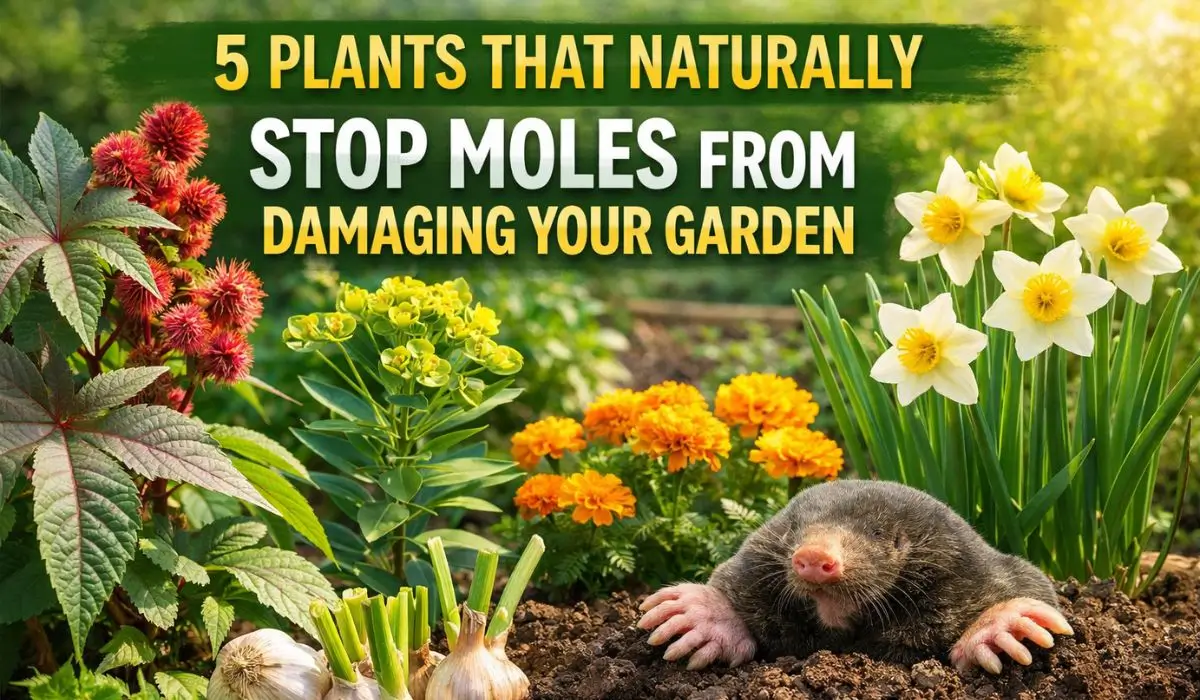
The best natural mole-repelling plants are castor beans, caper spurge (mole plant), marigolds, alliums (like garlic and onion), and daffodils. These plants release strong scents or toxins that irritate moles’ sensitive noses and keep them from tunneling through your garden.
Natural Mole Repellent Plants
- 🌱 Castor Bean (Ricinus communis): Strong odor deters burrowing pests.
- 🌿 Caper Spurge (Euphorbia lathyris): Known as the “mole plant.”
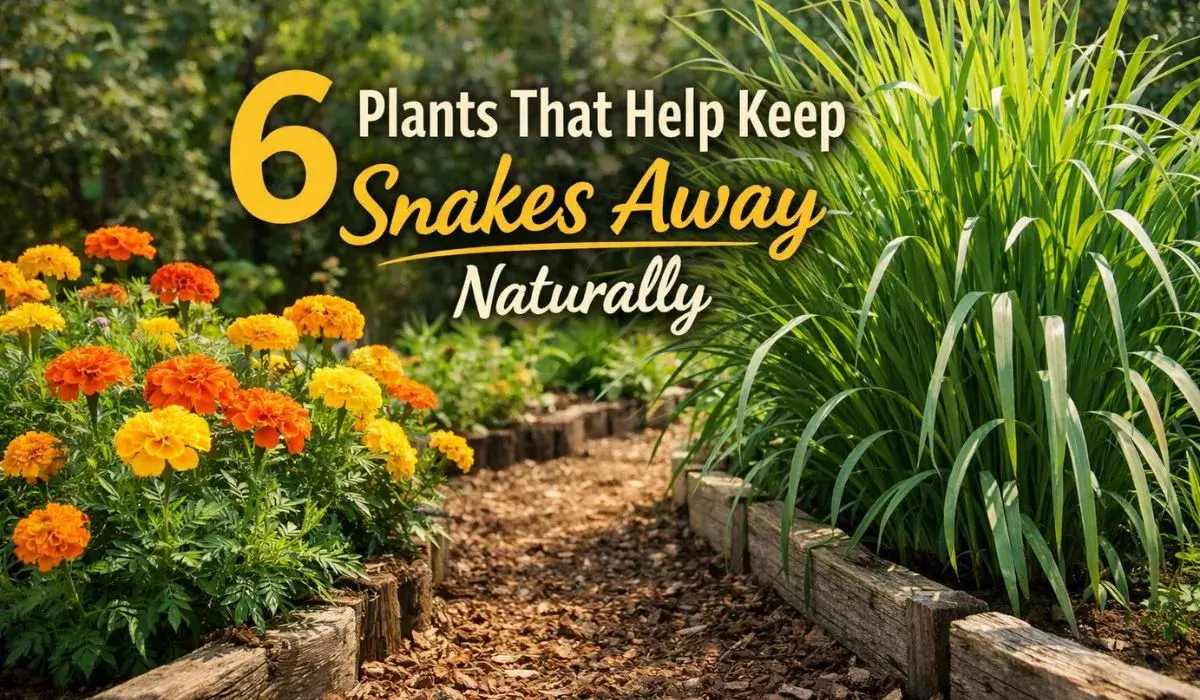
- 🌼 Marigolds: Their roots release compounds moles hate.
- 🧄 Alliums (Garlic, Onion): Sharp sulfur smell drives moles away.
- 🌸 Daffodils: Poisonous bulbs and pungent scent keep tunnels clear.
Why moles invade your garden (and why plants work)
Moles aren’t eating your plants — they’re chasing grubs and earthworms beneath your soil. But their tunnels can uproot seedlings and ruin flower beds.
By choosing the right repellent plants, you can make your garden naturally uninviting to them — no traps, no chemicals.

1. Castor Bean – The powerhouse mole deterrent
Castor bean plants emit a pungent oil that irritates moles’ skin and sense of smell, pushing them to move elsewhere.
How it helps:
- The roots and seeds release ricin, a compound toxic to moles and voles.
- Even its presence in the soil deters burrowing pests.
You can plant castor beans around the perimeter or make a homemade castor oil spray for safer use.
Castor beans are toxic to pets and humans if ingested.
2. Caper Spurge (Mole Plant) – Nature’s built-in barrier

The milky sap of caper spurge is irritating to moles, snakes, and even voles — that’s why gardeners call it the “mole plant.”
How it helps:
- Acts as a living fence when planted around vegetable patches.
- Its roots release compounds that repel underground pests.
In Texas gardens, homeowners often plant caper spurge between raised beds and turf edges to prevent mole tunnels under walkways.
3. Marigolds – Bright blooms with underground benefits

Marigolds produce a scent moles can’t stand and their roots secrete α-terthienyl, a natural pesticide.
Why it works:
- Repels moles, nematodes, and certain insects.
- Easy to interplant with vegetables or flowers.
Plant French or African marigolds in borders — they’re low-maintenance and repel more than just moles.
4. Alliums (Garlic, Onion, Chives) – The kitchen heroes

Alliums’ sulfur-rich aroma offends moles’ ultra-sensitive noses, steering them away from planted zones.
Best uses:
- Mix garlic and onion plants throughout your garden beds.
- Their bulb growth pattern also makes tunneling harder for moles.
You’ll get double-duty — pest protection and flavorful kitchen ingredients.
5. Daffodils – Pretty but poisonous to pests

Daffodils contain lycorine, a toxic alkaloid that repels moles, voles, and squirrels.
Where to plant:
- Around the perimeter of garden beds or near mole tunnels.
- They come back every spring — giving color and pest defense together.
A Houston gardener I worked with planted alternating rings of daffodils and garlic — by the next season, mole damage had completely stopped.
Mole-Repelling Plant Summary
| Plant Name | Natural Compound / Effect | Safe for Pets? | Best Use |
|---|---|---|---|
| Castor Bean | Ricin / strong odor | ❌ No | Perimeter or ornamental use |
| Caper Spurge | Milky sap deterrent | ⚠️ Use caution | Around beds, borders |
| Marigold | α-terthienyl / strong scent | ✅ Yes | Between vegetables |
| Alliums | Sulfur compounds | ✅ Yes | Edible garden rows |
| Daffodil | Lycorine toxin | ⚠️ Keep from pets | Borders, decorative |
Combine plant barriers with smart garden design
To strengthen your natural defense:
- Rotate garlic and marigolds every season.
- Add gravel trenches or hardware cloth under raised beds.
- Avoid overwatering — moist soil attracts grubs (moles’ main food).
People Also Ask
Q1: What smell do moles hate the most?
Moles dislike strong, oily scents like castor oil, garlic, and marigolds. These odors overwhelm their acute smell sensors, forcing them to relocate.
Q2: Will planting marigolds really keep moles away?
Yes — marigolds emit natural pest-repelling chemicals through their roots and flowers, making the soil unappealing to moles and other insects.
Q3: Are there plants that attract moles?
Grassy lawns rich in grubs or earthworms can attract moles — avoid over-fertilizing and keep soil balanced to reduce food sources.
Q4: How long does it take for mole-repelling plants to work?
Typically, you’ll see reduced tunneling within 2–4 weeks of planting as moles relocate to untreated areas.
Q5: Can I use castor oil spray instead of plants?
Yes. A simple mix of castor oil, water, and dish soap can coat soil tunnels and irritate moles’ skin and nose — safe for most plants.
Do daffodils, alliums, and marigolds repel moles?
Yes — daffodils, alliums, and marigolds are three of the most commonly recommended plants that repel moles naturally. They do not work like an instant chemical treatment, but they can help make parts of your garden less attractive to tunneling pests over time.
Here’s the truth: moles rely heavily on smell and on easy movement through soft, food-rich soil. Plants with strong sulfur compounds, bitter alkaloids, or pungent root activity can make that space less comfortable for them.
Do daffodils repel moles?
Yes, daffodils can help repel moles. Their bulbs contain toxic compounds such as lycorine, and their smell is unpleasant to many underground pests. That is why gardeners often plant daffodils around bed edges, fence lines, and problem spots where mole tunnels keep appearing.
Why gardeners use daffodils for mole control:
- Their bulbs are naturally unappealing to burrowing pests
- They create a strong border around flower beds
- They return each year with very little maintenance
- They may also help deter voles and squirrels in some gardens
One thing to keep in mind: daffodils are better as a preventive plant barrier than a one-day fix. If your yard already has active tunnels everywhere, they work best when combined with grub control, reduced overwatering, and physical barriers.
Do alliums repel moles?
Yes, many gardeners believe alliums repel moles because of their sharp sulfur smell. Plants in the allium family — including garlic, onion, chives, ornamental alliums, and leeks — release a strong scent that can make soil pockets less inviting to moles.
Why alliums are popular mole repellent plants:
- Strong sulfur-rich aroma
- Easy to mix into vegetable beds and borders
- Useful in both edible and ornamental gardens
- Can help discourage other pests too
Garlic and ornamental alliums are especially useful if you want a natural-looking border that does more than one job. In practical garden layouts, people often alternate alliums with marigolds or daffodils to build a layered scent barrier.
Do marigolds repel moles?
Marigolds may help repel moles, especially when planted densely around beds and pathways. They are more widely known for deterring insects and nematodes, but many gardeners also use them as part of a broader mole-repelling planting strategy.
Why marigolds are often included in mole repellent plant lists:
- Strong scent from flowers and foliage
- Roots release natural compounds into the soil
- Easy to plant between vegetables or along borders
- Helpful for general pest management, not just moles
French marigolds are usually the best choice for companion planting. They are compact, easy to maintain, and fit well between crops, raised beds, and ornamental borders.
Best plants that repel moles naturally
If you want a quick answer, these are the best-known mole repellent plants for home gardens:
- Daffodils – toxic bulbs and pungent scent
- Alliums – garlic, onions, chives, and ornamental alliums with sulfur-rich odor
- Marigolds – strong scent and root compounds
- Castor bean – powerful deterrent but highly toxic
- Caper spurge – traditional “mole plant,” but use caution because of irritating sap
This section helps you rank not only for plants that repel moles, but also for more specific searches like do daffodils repel moles, do alliums repel moles, do marigolds repel moles, and mole repellent plants.
Daffodils, alliums, and marigolds: which works best against moles?
If you are comparing daffodils, alliums, and marigolds for mole control, each one helps in a slightly different way:
| Plant | Why it may repel moles | Best place to plant |
|---|---|---|
| Daffodils | Toxic bulbs and pungent smell | Perimeter borders, tunnel zones |
| Alliums | Strong sulfur scent | Vegetable beds, mixed borders |
| Marigolds | Root compounds and bold scent | Between plants, along walkways |
In real gardens, the best results usually come from combining all three instead of relying on just one. A border of daffodils, mixed rows of garlic or chives, and pockets of marigolds can create a much less welcoming environment for moles.
How to use mole repellent plants the right way
To get better results from plants that repel moles:
- Plant them near active tunnel routes, not just randomly across the yard
- Focus on borders, raised beds, and flower bed edges
- Combine different scents and root types
- Reduce grub populations if your soil has heavy insect activity
- Avoid constantly wet soil that attracts earthworms and moles
A lot of gardeners get frustrated because they expect one plant to solve a full-blown mole problem overnight. That usually does not happen. These plants work better as part of a long-term prevention strategy.
Quick answer for search intent
Yes, daffodils, alliums, and marigolds can repel moles naturally, especially when used together as border plants in areas with repeated tunneling. They work by creating strong smells, irritating root-zone conditions, or toxic bulb barriers that make your garden less appealing to moles.
You can also add these extra FAQ entries to capture more long-tail traffic:
FAQ additions
Do daffodils and alliums repel moles together?
Yes. Many gardeners pair daffodils with garlic, onions, or ornamental alliums to create a stronger underground scent barrier. This combination can be more effective than using a single plant alone.
Are marigolds enough to keep moles away?
Marigolds can help, but they are usually most effective when combined with other mole-repelling plants like daffodils or alliums and with yard maintenance that reduces grubs.
What are the best mole repellent plants for garden borders?
Daffodils, alliums, marigolds, and caper spurge are all popular choices for borders because they are easy to space along problem areas where moles tend to tunnel.
Do mole-repelling plants harm beneficial insects?
No — plants like marigolds and alliums deter underground pests without affecting pollinators.
Are these plants safe around pets or children?
Most are, except castor bean and caper spurge, which are toxic if eaten. Always supervise pets and label plant areas.
How do I maintain these plants?
Regular watering, sunlight, and trimming of dead leaves will keep them active and releasing repellent compounds naturally.