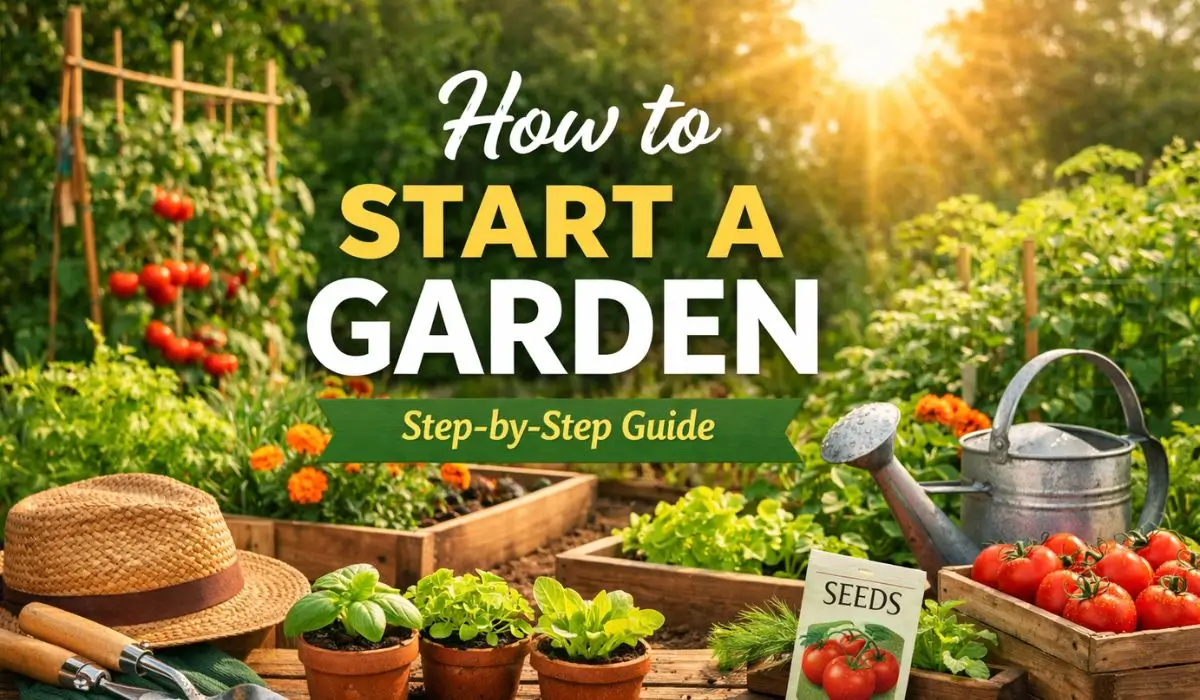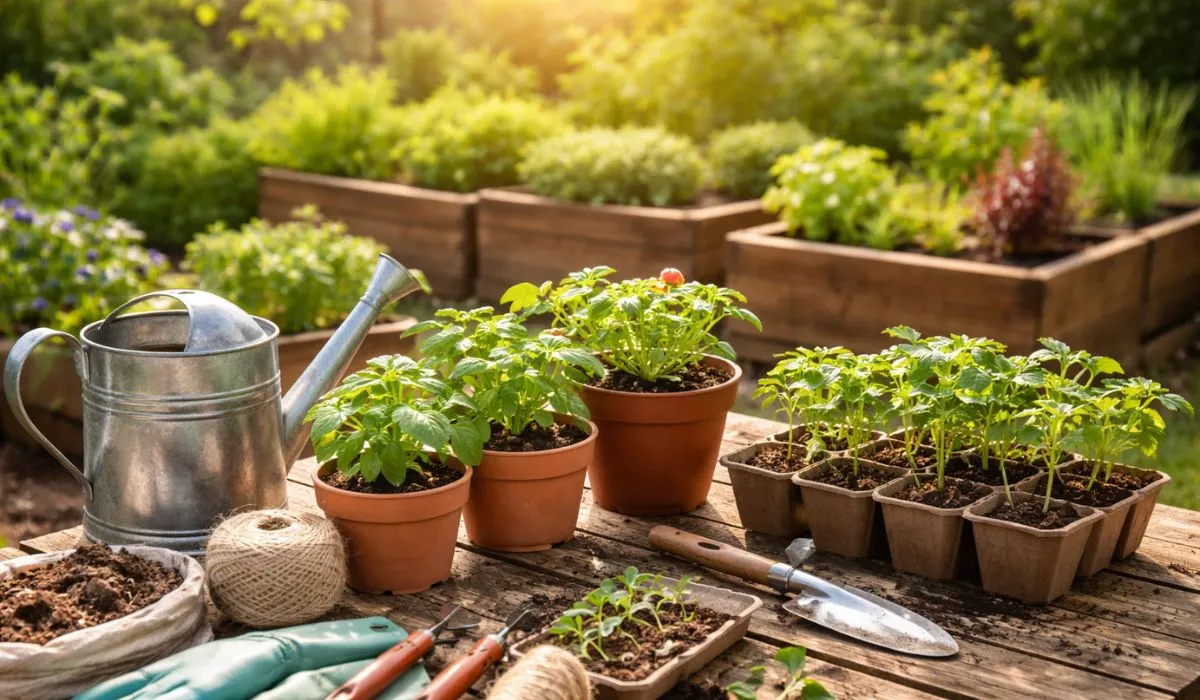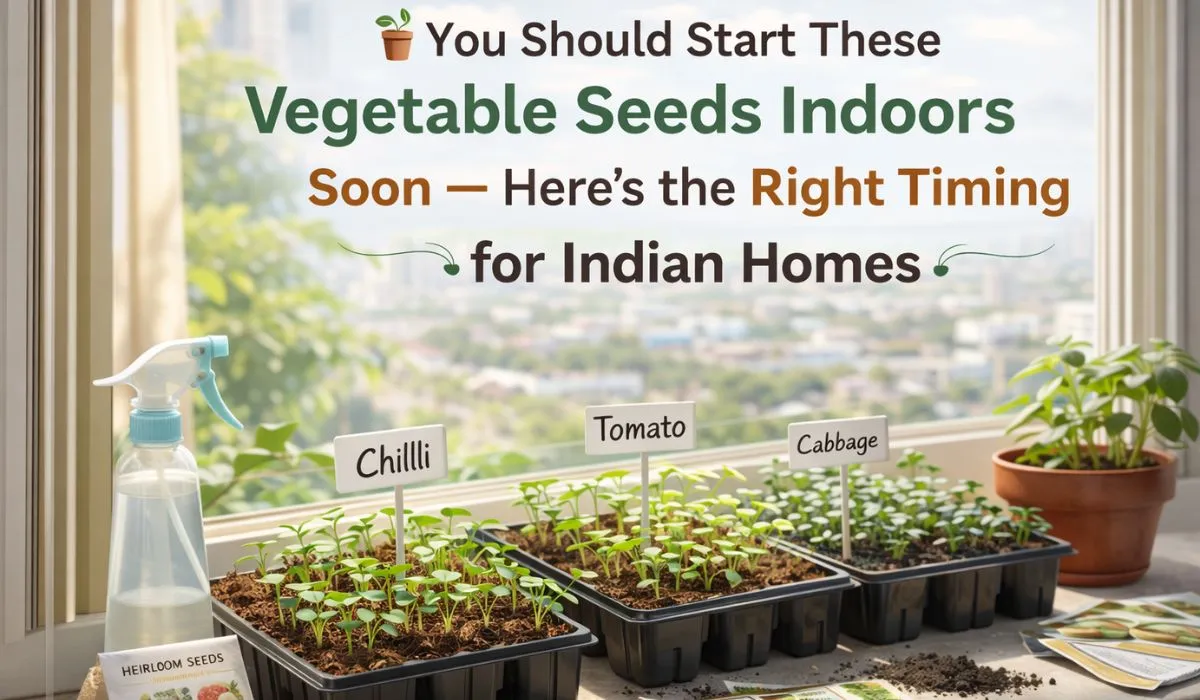
Most warm-season vegetables—like tomatoes, peppers, and basil—should be starting seeds indoors 6–8 weeks before your area’s last spring frost date. Cool-season crops (broccoli, lettuce) can begin about 4–6 weeks prior. Check your local frost chart for precision.
Why You Should Start Seeds Indoors
Starting seeds indoors gives you a jump on the season—essential for regions with shorter growing windows or unpredictable spring weather. Indoor seeding lets you control soil temperature, moisture, and light intensity so young plants are strong enough to thrive once moved outdoors.
I learned this the hard way during a cold Texas spring—store-bought transplants looked fine, but my home-started tomatoes, raised under steady light and warmth, doubled their size before the first outdoor batch even took off.
When to Start Seeds Indoors (By Crop Type)
Timing matters more than almost anything else.
Here’s a handy reference table you can pin near your planting bench:
| Crop Type | Weeks Before Last Frost | Notes |
|---|---|---|
| Tomatoes, Peppers, Eggplant | 6–8 weeks | Warm soil, steady light essential |
| Broccoli, Cabbage, Kale | 4–6 weeks | Cool-season crops; avoid overheating |
| Lettuce, Spinach | 3–4 weeks | Quick germination; transplant early |
| Herbs (Basil, Parsley) | 6–8 weeks | Keep moist and warm |
| Cucumbers, Squash, Melons | 3–4 weeks | Don’t start too early—transplant gently |
| Flowers (Marigolds, Zinnias) | 6–8 weeks | Need light to germinate |
Use your zip code and plug it into the Old Farmer’s Almanac to find your local last frost date.
How to Calculate Your Ideal Start Date
- Find your average last frost date (check the National Weather Service or almanac).
- Count backward the correct number of weeks per crop.
- Mark your calendar or garden planner.
If your last frost is April 10, and you’re growing tomatoes (8 weeks lead time), start them around February 10.
Light, Temperature, and Water: The Holy Trio
Even timing won’t help if your indoor environment’s off.
- Light: Use LED grow lights for 14–16 hours a day; windowsills usually aren’t enough.
- Heat: Keep seed trays at 70–75 °F (21–24 °C). Use a heat mat for germination.
- Moisture: Mist lightly—too much water causes damping-off disease.
One February, I skipped my heat mat to save a few bucks. Half my pepper seeds never sprouted. Lesson learned: consistent warmth beats cheap shortcuts every time.
Hardening-Off: The Step Most Gardeners Skip
Start acclimating seedlings about a week before transplanting.
- Place them outside for 1–2 hours the first day.
- Add more time daily.
- Reduce watering slightly so they toughen up.
By the end of the week, they’ll be sun-strong and wind-ready.
Houston vs. Dallas Timing
- Houston: Last frost around Feb 25 – Mar 5, so start tomatoes in early January.
- Dallas: Frost hits later (around Mar 15 – 25), so start around late January – early February.
Texas gardeners often rush the process, but soil temperature is the real decider—don’t transplant until nights stay above 50 °F (10 °C).
Quick Seed-Starting Checklist
✅ Check local frost date
✅ Choose high-quality seed starting mix
✅ Label trays clearly
✅ Provide bottom heat + consistent moisture
✅ Harden off before outdoor planting
Common Mistakes (and Fixes)
- Starting too early: Leads to root-bound, leggy plants.
→ Fix: Wait until 6–8 weeks before frost. - Low light: Causes stretching.
→ Fix: Move closer to grow lights. - Skipping hardening-off: Shocked seedlings wilt outdoors.
→ Fix: Gradual exposure for a week.
People Also Ask
When should I start tomato seeds indoors?
Start tomato seeds 6–8 weeks before your last expected frost date. For most Texas regions, that’s late January to early February.
Can I start seeds indoors without grow lights?
Yes, but growth will be slower. South-facing windows may work if they get 6+ hours of sunlight, though seedlings may stretch.
What happens if I plant seeds too early indoors?
Plants become tall, weak, and root-bound before outdoor conditions are ready. It’s better to wait than rush.
How warm should the soil be for germination?
Most vegetables sprout best at 70–75 °F (21–24 °C). Cooler temps slow germination or prevent it altogether.
When can I move seedlings outside?
After the last frost date, once nighttime lows consistently stay above 50 °F (10 °C) and seedlings are hardened-off for a week.