If you’ve noticed tiny, annoying flies hovering around your houseplants, you might be dealing with fungus gnats. While these pests don’t directly harm your plants, their larvae feed on the roots, causing damage that can stunt plant growth and make them more vulnerable to other issues.
Get rid of fungus gnats in houseplants isn’t impossible — in fact, with the right strategies, you can tackle the problem quickly and prevent future infestations. I’ve been there, and after years of trial and error, I’ve learned what works. Now, I’m here to share those tips with you, so you can get rid of fungus gnats in houseplants and keep your indoor garden thriving.
What Are Fungus Gnats?
Fungus gnats are tiny black flies that you may find swarming around the soil of your houseplants. The adults are harmless, but their larvae are the real culprits. These larvae live in the soil, feeding on decaying organic material and plant roots, which can lead to root rot and damage to your plants.
Why You Need to Get Rid of Fungus Gnats in Houseplants
While they may seem harmless at first, fungus gnats can cause several issues for your houseplants:
- Root Damage: The larvae feed on the roots, which can cause stunted growth, yellowing leaves, and overall plant stress.
- Soil Health: Fungus gnats thrive in damp, organic-rich soil, leading to mold and fungal issues that can further harm your plants.
- Vulnerability to Other Pests: A weakened plant is more susceptible to other pests and diseases.
So, if you’re seeing these gnats flying around, it’s time to take action.
How to Get Rid of Fungus Gnats in Houseplants: Step-by-Step Guide
Let’s dive into the effective ways to get rid of fungus gnats in houseplants, starting with prevention and moving on to solutions you can implement right away.
1. Let the Soil Dry Out Between Waterings
Fungus gnats love moist soil, so the first step to getting rid of them is to change your watering habits. The larvae thrive in damp conditions, so by allowing the top layer of soil to dry out between waterings, you can make your plants less appealing to gnats.
- Check the top 1-2 inches: Allow the top layer of soil to dry out completely before watering again.
- Use a moisture meter: If you’re unsure about the soil’s moisture, a moisture meter can help ensure you’re not overwatering.
2. Sticky Traps to Catch Adult Gnats
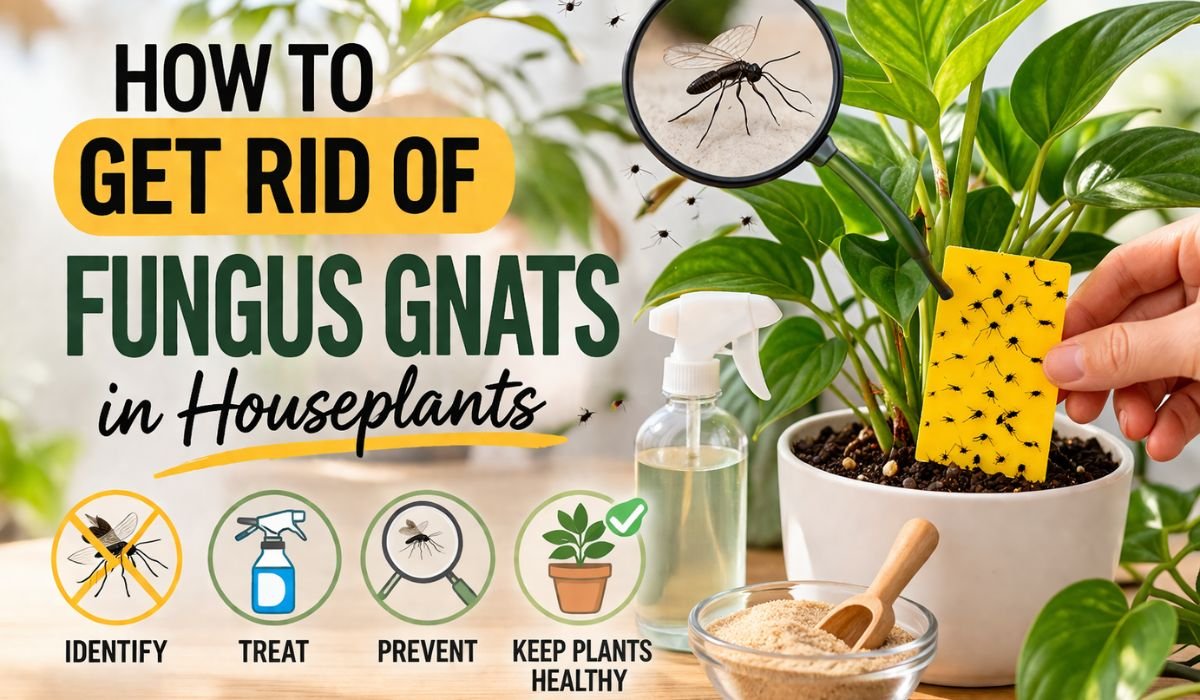
Sticky traps are a simple and effective way to reduce the number of adult fungus gnats flying around your plants. Place the traps near the soil to catch the adults and prevent them from laying more eggs.
- Position the traps just above the soil to catch flying adults.
- Replace regularly as the traps fill up with gnats.
3. Use Hydrogen Peroxide to Kill Larvae
Hydrogen peroxide is a natural, non-toxic way to kill fungus gnat larvae in the soil. Here’s how to use it:
- Mix 1 part hydrogen peroxide (3%) with 4 parts water.
- Water the soil with this solution. The hydrogen peroxide will fizz and kill the larvae without harming your plants.
- Repeat every few days until the infestation is under control.
4. Topsoil Treatments: Sand or Diatomaceous Earth
Both sand and diatomaceous earth are excellent at preventing fungus gnats from laying eggs in your soil. These materials act as physical barriers to larvae.
- Sand: Spread a thin layer on top of the soil to stop adults from laying eggs.
- Diatomaceous Earth (DE): Sprinkle a fine layer of DE over the soil. It dehydrates the larvae, preventing them from maturing.
5. Neem Oil for a Natural Insecticide
Neem oil is a great natural insecticide that can help combat both adult gnats and their larvae. Here’s how to use it:
- Mix neem oil with water according to the instructions on the bottle.
- Spray it on the soil and plant leaves. Neem oil disrupts the life cycle of the gnats, helping to eliminate the infestation.
- Repeat weekly until the problem is resolved.
6. Repot Your Plants
If your fungus gnat problem is severe, repotting may be the most effective solution. This ensures that you remove any eggs or larvae that might be lurking in the old soil.
- Remove the plant carefully from its pot and gently shake off as much old soil as possible.
- Rinse the roots with water to remove any remaining larvae.
- Repot the plant in fresh, sterile soil.
Preventing Fungus Gnats in the Future
Once you’ve gotten rid of fungus gnats in houseplants, it’s important to prevent them from returning. Here are some tips:
- Avoid overwatering: Only water when the topsoil is dry to the touch. Fungus gnats thrive in consistently moist environments.
- Improve air circulation: Fungus gnats like still, humid air. Ensure your plants are in a well-ventilated area.
- Inspect new plants: Always inspect any new plants before bringing them into your home. Check the soil for signs of pests or fungus.
Conclusion: Healthy Plants, Happy Home
Getting rid of fungus gnats in houseplants doesn’t have to be difficult. By adjusting your watering habits, using natural remedies like hydrogen peroxide and neem oil, and adding barriers like sand or diatomaceous earth, you can eliminate these pests and ensure your plants stay healthy and thriving.
Remember, the key to preventing future infestations is to maintain a healthy watering schedule, improve air circulation, and regularly check your plants for pests. With these steps, you can create a fungus-gnat-free indoor garden that will flourish for years to come.