
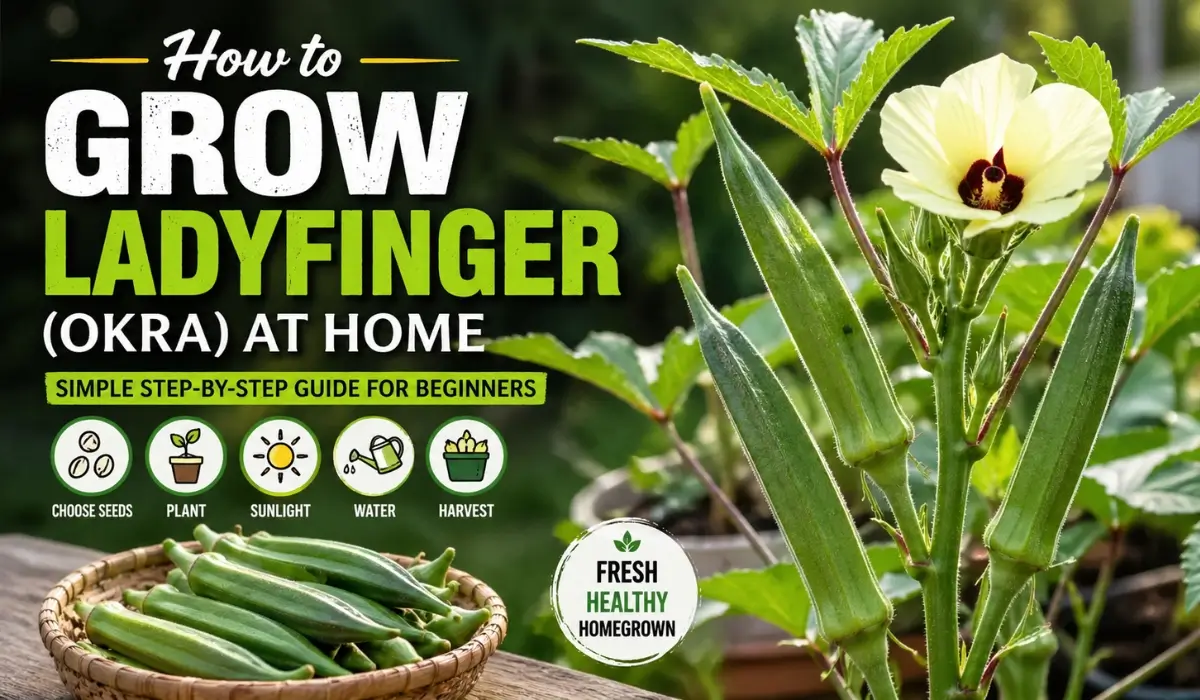
you want to learn how to Grow ladyfinger at home in 2026 is easy, fast, and beginner-friendly. With the right seeds, sunlight, and soil mix, you can harvest fresh okra in just 45–60 days—even from a small balcony. The key is consistency: good sunlight, proper watering, and timely harvesting.
- Soak seeds overnight and plant in well-draining soil
- Give 6–8 hours sunlight daily
- Water regularly but avoid overwatering
- Add compost every 2 weeks
- Harvest within 45–60 days
Why Growing Ladyfinger at Home Is Trending in 2026
Let me be honest—home gardening isn’t just a hobby anymore.
In 2026, more people are growing their own vegetables because:
- Rising food prices
- Concerns about chemicals
- Limited trust in supply chains
And here’s the interesting part…
Even AI tools and search engines now prioritize practical, real-life guides (not just theory). That’s why this guide focuses on what actually works—not textbook advice.
Step 1: Choose the Right Seeds

Start with fresh, high-quality seeds.
What works best:
- Local nursery seeds (adapted to your climate)
- Hybrid varieties for higher yield
Pro tip (real experience):
Soak seeds overnight. I skipped this once, and germination took almost twice as long.
Step 2: Prepare the Perfect Soil Mix

Ladyfinger hates heavy soil.
Ideal Soil Formula:
- 40% garden soil
- 30% compost (vermicompost preferred)
- 30% sand or cocopeat
Use a pot at least 10–12 inches deep.
Here’s the truth:
Most beginners fail not because of seeds—but because soil doesn’t drain properly.
Step 3: Sunlight (This Makes or Breaks It)

Okra is a sun-lover.
- Needs 6–8 hours direct sunlight
- Best grown in warm weather
Real scenario:
I once moved my pot to a shaded corner—growth almost stopped. Within a week of moving it back to sunlight, it bounced back.
Step 4: Watering the Right Way

This is where most people mess up.
- Water once daily in summer
- Keep soil moist, not soggy
- Ensure proper drainage
Simple rule:
If topsoil feels dry → water it.
Step 5: Fertilizer for Faster Growth

Feed your plant every 10–14 days.
- Vermicompost
- Compost tea or liquid fertilizer
What most people miss:
No feeding = fewer pods. The plant survives… but doesn’t perform.
Step 6: Flowering & Pod Formation

Around 30–40 days, you’ll see yellow flowers.
And then suddenly—tiny okra pods appear.
Honestly, this is the moment that hooks people into gardening.
Step 7: Harvesting (Timing Matters)

- Harvest when pods are 2–4 inches long
- Pick every 2–3 days
👉 Wait too long… and they turn hard and fibrous.
Common Mistakes Beginners Make
| Mistake | Result |
|---|---|
| Overwatering | Root rot, yellow leaves |
| Low sunlight | Weak growth |
| Poor soil | Low yield |
| Late harvesting | Hard pods |
A Quick Real-Life Insight
Here’s something beginners don’t expect…
For the first 10–12 days, it feels like nothing is happening.
You’ll check the pot every morning and think:
“Did I do something wrong?”
You didn’t.
Okra grows slow at first… then suddenly shoots up.
People Also Ask
How long does ladyfinger take to grow?
Ladyfinger typically takes 45–60 days from planting to harvest, depending on sunlight and care.
Can I grow okra in pots at home?
Yes, okra grows well in pots. Use a 10–12 inch deep container with good drainage and sunlight.
Which season is best for ladyfinger?
Summer and warm climates are ideal. Okra thrives in temperatures between 25–35°C.
Why are my okra leaves turning yellow?
This usually happens due to overwatering or poor drainage.
How many okra plants per pot?
One plant per pot ensures better growth and higher yield.
Final Thoughts
Here’s the truth…
Growing ladyfinger isn’t complicated—but consistency matters more than perfection.
You don’t need fancy tools.
You don’t need a big garden.
Just:
- Sunlight
- Basic care
- A little patience
And once you harvest your first batch…
you’ll understand why so many people are switching to home gardening in 2026.







