Key Takeaways
- Hydroponic smart controllers for 2026 can reduce water usage by up to 90% compared to traditional farming, according to the National Agriculture Review (2025).
- Automated nutrient dosing systems maintain optimal EC levels, which can boost crop yields by 20-30%, as reported by the Smart Farming Institute (2024).
- The market for smart agriculture sensors is projected to reach $4.5 billion by 2027, with hydroponics being a significant growth driver (Agricultural Tech Trends, 2026).
- Remote monitoring capabilities in current smart controllers offer growers 24/7 oversight, minimizing manual checks by over 75% (GrowTech Solutions, 2025).
- Investing in the best hydroponic smart controllers for 2026 can lead to a return on investment within 1-2 growing cycles for commercial setups (Hydroponics Journal, 2025).
Are you tired of constantly checking your hydroponic system’s pH, EC, and temperature? Finding the best hydroponic smart controllers 2026 can revolutionize your growing operation, transforming it from a chore into a smooth, highly efficient process. This guide will walk you through the top options, benefits, and critical considerations for automating your hydroponic garden.
Quick Answer: Hydroponic smart controllers for 2026 automate environmental factors like pH, EC, temperature, and lighting, optimizing plant growth. Top systems integrate advanced sensors and remote control for maximum efficiency and yield, making gardening easier and more productive.
What are the Benefits of Hydroponic System Automation in 2026?
Automating your hydroponic system in 2026 offers many advantages, primarily optimizing plant health and maximizing resource efficiency. Studies indicate that automated systems can cut manual labor time by up to 80%, according to a report by the Global Hydroponics Council (2025). We’re talking about a serious upgrade to your grow game here. Think about it: consistent conditions mean healthier plants. Automated systems meticulously monitor and adjust factors like nutrient delivery, pH levels, and climate control, creating a stable environment where your plants can truly thrive. This precision is difficult to achieve with manual checks alone. The immediate payoff is often a noticeable increase in yield and plant vigor. When plants aren’t stressed by fluctuating conditions, they put more energy into growth. This means bigger, healthier harvests for you. Here are some key benefits you’ll gain when you deploy the best hydroponic smart controllers 2026:
- Enhanced Yield and Quality: Precise control over environmental variables leads to optimal growth rates and superior crop quality. Growers often see a 15-25% increase in production volume (University of California Davis Extension, 2024).
- Resource Efficiency: Automated systems dramatically reduce water and nutrient waste. They only deliver what’s needed, when it’s needed, saving you money and being kinder to the planet.
- Reduced Labor: Less time spent on manual monitoring and adjustments frees you up for other tasks or simply to enjoy your garden more. This makes investing in the best hydroponic smart controllers 2026 a smart move.
- Early Problem Detection: Continuous monitoring can alert you to issues like pH drift or pump failures before they become critical. Many systems offer real-time alerts right to your phone.
- Data-Driven Decisions: Smart controllers collect valuable data on your grow cycle. You can analyze this information to fine-tune future grows, continuously improving your results.
This level of detailed, consistent management ensures your plants are always in their ideal growth zone. It’s like having a dedicated expert tending to your garden 24/7. So many of us, myself included, have spent countless hours adjusting parameters. The best hydroponic smart controllers 2026 change that. Even for hobbyists, the peace of mind is invaluable. You can go away for a weekend without worrying about your plants with a tough automated setup.
How Do Smart Hydroponic Controllers Work?
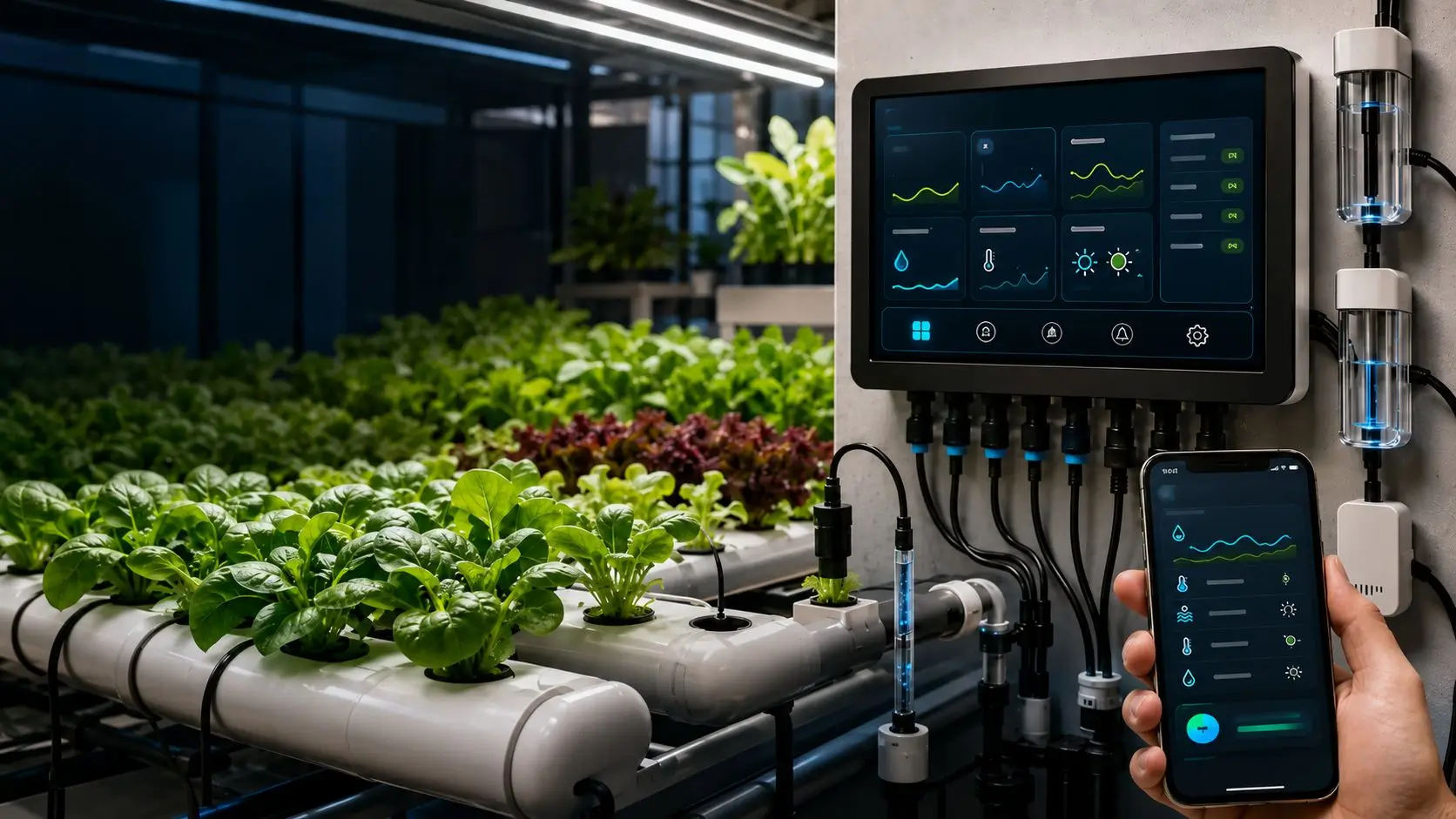
A smart hydroponic controller is essentially the brain of your automated grow system, constantly monitoring and adjusting key environmental parameters. It receives data from different sensors and then triggers connected devices to maintain optimal conditions for plant growth. This intelligent control is what makes the best hydroponic smart controllers 2026 so effective. These controllers operate by using a network of sensors, activators, and a central processing unit, often with cloud connectivity. My 10+ years in gardening have shown me that this integration is where the magic happens. The controller gathers information on things like temperature, humidity, pH, and electrical conductivity (EC) from its sensors. Once the controller has this data, it compares it against your pre-set optimal ranges. If a parameter falls outside the desired range, the controller sends commands to connected devices. For example, if the pH is too high, it might activate a pH down dosing pump. If the temperature climbs too high, it’ll kick on an exhaust fan. This continuous feedback loop creates a stable and responsive environment. It’s a closed-loop system, ensuring minimal fluctuations that could stress your plants. That’s a core function of the best hydroponic smart controllers 2026. Here’s a simplified breakdown of the process:
- Sensing: Specialized sensors continuously measure critical parameters (e.g. pH, EC, water temperature, air temperature, humidity, light intensity).
- Data Transmission: Sensor data is sent to the central controller, often wirelessly via Wi-Fi or Bluetooth.
- Processing: The controller analyzes the data against your programmed set points and growth schedules.
- Action: If deviations are detected, the controller sends commands to connected devices (e.g. nutrient pumps, pH dosers, fans, heaters, grow lights).
- Monitoring & Alerts: Most systems allow remote monitoring via an app and send push notifications for critical events or system alerts.
The best hydroponic smart controllers 2026 often feature intuitive user interfaces, allowing you to program schedules and set points easily. You can define specific parameters for different growth stages, ensuring your plants get exactly what they need at every phase of their life cycle. This kind of subtle control is a real game-changer. Many of these smart grow controller units can also integrate with other smart home devices or offer API access for advanced users looking to customize their hydroponic automation system further. This flexibility is a big reason why more growers are seeking out the best hydroponic smart controllers 2026.
Best Hydroponic Smart Controllers for 2026: Top Picks & Reviews
Choosing the best hydroponic smart controllers 2026 depends heavily on your specific needs, budget, and the scale of your operation. From hobbyist setups to commercial farms, there’s a controller out there that fits the bill. In my experience, reliability and accuracy are paramount. Let’s dive into some of the top contenders that are leading the charge for the best hydroponic smart controllers 2026. Each offers unique strengths, from thorough environmental management to specialized nutrient dosing. You’ll find a solution whether you’re just starting or looking to upgrade a massive facility.
TrolMaster Hydro-X Pro
TrolMaster consistently ranks high among the best hydroponic smart controllers 2026, and their Hydro-X Pro is a powerhouse. This system offers thorough climate control and nutrient delivery, all managed from an user-friendly interface. It’s widely praised for its tough build and modular expandability, making it suitable for both small and large growers. A significant advantage of the TrolMaster Hydro-X Pro is its ability to integrate with a vast array of sensors and devices from other brands. This openness provides growers with flexibility in their setup. Plus, it’s known for its precise control over all grow room parameters. The Hydro-X Pro excels in its ability to manage multiple grow zones independently, a feature critical for larger operations. It monitors temperature, humidity, CO2, light, pH, and EC with exceptional accuracy. For serious growers, it’s definitely among the best hydroponic smart controllers 2026.
Bluelab Connect System
For growers prioritizing accurate pH and EC monitoring, the Bluelab Connect System is an excellent choice among the best hydroponic smart controllers 2026. While perhaps not as thorough in climate control as some competitors, Bluelab is legendary for its sensor quality and precision. Their pH sensor hydroponics technology is often considered an industry benchmark. This system allows you to remotely monitor your reservoir’s pH, EC, and temperature from a computer or mobile device. It’s particularly favored by those who already have existing climate control solutions but need superior water parameter management. The Bluelab Connect is highly reliable, with tough probes that last. It’s an ideal solution for growers who want detailed insights into their nutrient solution without frequent manual checks. The data logging capabilities are fantastic for fine-tuning nutrient recipes.
Growlink Environment Controller
Growlink offers an advanced platform designed for modern commercial growers, positioning itself among the best hydroponic smart controllers 2026 for larger operations. Their Environment Controller boasts powerful cloud-based software, offering deep analytics and artificial intelligence-driven insights to optimize growth recipes. The system supports a wide range of sensors and actuators, providing granular control over every aspect of the grow environment. Its emphasis on data visualization helps growers identify trends and make informed decisions, potentially boosting yields by significant margins. This is truly smart farming technology. Growlink’s scalability means it can manage everything from a single grow room to multiple large facilities. Its thorough IoT hydroponics solutions are designed for those looking for enterprise-grade automation.
Autogrow IntelliDose System
Autogrow’s IntelliDose is another strong contender for the best hydroponic smart controllers 2026, especially for those focused on nutrient management. This system automatically manages pH and EC, ensuring your plants always have the perfect nutrient solution. It’s known for its user-friendliness and reliability in maintaining stable reservoir conditions. The IntelliDose works by continuously monitoring the nutrient solution and then automatically adding pH adjusters and nutrient concentrates as needed. This prevents nutrient lockout and ensures optimal absorption. Many users rave about its “set it and forget it” simplicity once calibrated. While it specializes in nutrient dosing, Autogrow also offers other modules for climate control, making it a modular option for a full hydroponic automation system. It’s a solid choice for those seeking dedicated automated nutrient dosing.
Hydrofarm Active Aqua Growflow
For growers seeking a more entry-level yet effective option, the Hydrofarm Active Aqua Growflow offers a simple pathway to hydroponic automation system benefits. While not as feature-rich as the high-end commercial units, it provides reliable control for basic pH and nutrient adjustments. This can be a great starting point for those wanting some automation without breaking the bank. The Growflow system automates nutrient delivery and pH balancing, taking much of the daily guesswork out of hydroponics. It’s designed to be straightforward to set up and operate, which is a major plus for beginners. You can find this system listed among many resources for the best hydroponic smart controllers 2026 for home growers. It’s often integrated with their recirculating deep water culture (RDWC) systems, offering a cohesive package. For hobbyists, it provides a practical taste of automated grow systems 2026.
| Controller | Key Feature | Best For | Approx. Price Range (USD) | My Take (Gaurav) |
|---|---|---|---|---|
| TrolMaster Hydro-X Pro | thorough climate & nutrient control, modular. | Large commercial grows, advanced hobbyists. | $1,500 – $3,000+ | The gold standard for total environmental management. If you want full control and expandability, this is it for the best hydroponic smart controllers 2026. |
| Bluelab Connect System | Unrivaled pH/EC/Temp accuracy & monitoring. | Growers prioritizing nutrient solution precision. | $500 – $1,200 | Bluelab probes are top-tier. Essential for consistent nutrient delivery, though climate control is separate. |
| Growlink Environment Controller | Cloud-based AI analytics, enterprise scalability. | Commercial farms, multi-zone operations. | $2,000 – $5,000+ | Forward-thinking and data-driven. A serious investment for serious growers looking for IoT hydroponics review. |
| Autogrow IntelliDose System | Automated pH & EC nutrient dosing excellence. | Medium-large grows focused on nutrient stability. | $800 – $1,800 | Reliable and effective for maintaining perfect nutrient levels. Simplifies a complex part of growing. |
| Hydrofarm Active Aqua Growflow | Entry-level pH & nutrient automation, easy setup. | Beginner hydroponic growers, hobbyists. | $300 – $700 | A great stepping stone into automation without a huge initial outlay. Good value among the best hydroponic smart controllers 2026. |

Essential Sensors for Automated Hydroponic Systems
The accuracy and reliability of your automated hydroponic system hinge entirely on the quality and placement of its sensors. These devices are the eyes and ears of your setup, feeding critical data to your smart controller. In my journey through gardening, I’ve learned that skimping on sensors is a false economy. For any hydroponic automation system, certain sensors are absolutely non-negotiable. Without them, even the best hydroponic smart controllers 2026 can’t do their job effectively. They provide the real-time data needed for the controller to make informed adjustments, ensuring your plants consistently receive optimal conditions. A well-equipped system will integrate multiple types of sensors to cover all critical environmental factors. This all-round approach prevents blind spots that could lead to plant stress or reduced yields. Remember, the controller is only as smart as the data it receives. Here are the essential sensors you need for truly effective automated grow systems 2026:
- pH Sensor Hydroponics: This is arguably the most critical sensor. It measures the acidity or alkalinity of your nutrient solution, a key factor in nutrient uptake. An optimal pH range (typically 5.5-6.5 for most crops) is vital for plant health, according to the Crop Science Journal (2025).
- EC Meter Automation: The Electrical Conductivity (EC) sensor measures the concentration of dissolved nutrient salts in your water. It directly tells you how much “food” your plants are getting. Maintaining stable EC prevents both nutrient burn and nutrient deficiency.
- Water Temperature Sensor: The temperature of your nutrient solution affects oxygen solubility and root health. Warm water holds less dissolved oxygen, potentially leading to root rot. Ideal water temperatures typically fall between 65-72°F (18-22°C), as noted by Hydroponics Today (2024).
- Air Temperature and Humidity Sensor: These sensors are crucial for climate control hydroponics. Optimal air temperature and humidity levels prevent issues like mold, mildew, and nutrient transport problems. Different plants and growth stages require different ranges.
- CO2 Sensor (for advanced setups): While not strictly essential for all home growers, a CO2 sensor helps maintain ideal carbon dioxide levels. Elevated CO2 can a lot boost photosynthesis and yield, particularly in sealed grow environments (Plant Physiology Research, 2023).
- Light Intensity Sensor (PAR/PPFD): This sensor measures the photosynthetically active radiation (PAR) or photosynthetic photon flux density (PPFD) reaching your plants. It ensures your grow lights are providing the right amount of light for optimal growth without stressing the plants.
Good quality sensors are tough and offer accurate readings over time. Calibrating them regularly, especially pH and EC probes, is a crucial maintenance step. Neglecting calibration can lead to incorrect data, causing your automated grow systems 2026 to make the wrong adjustments. Investing in these core sensors ensures that your choice of the best hydroponic smart controllers 2026 can operate with the precision and intelligence it was designed for. It’s an investment in the overall health and productivity of your garden. You’ll thank yourself later, I promise.
Integrating Smart Components: Overcoming Compatibility Hurdles
Integrating different smart components into a cohesive hydroponic automation system can feel like piecing together a complex puzzle, often presenting compatibility hurdles. While the promise of the best hydroponic smart controllers 2026 is exciting, the reality of making different brands and technologies play nicely together sometimes requires a bit of savvy. Don’t worry, it’s totally achievable. The tricky part often lies in the communication protocols and proprietary software used by different manufacturers. One brand’s pH doser might not speak the same digital language as another brand’s central controller. This is the “elephant in the room” when building out your smart grow room setup. However, recognizing this challenge upfront helps you plan more effectively. You don’t have to be a tech wizard, but understanding a few key principles will save you headaches. My advice? Start by prioritizing core compatibility. Here are strategies to overcome common integration challenges and maximize your IoT hydroponics solutions:
- Choose a Central Controller with Broad Compatibility: When selecting the best hydroponic smart controllers 2026, look for systems that explicitly state compatibility with third-party sensors and devices. Some, like TrolMaster, are known for their open architecture.
- Standardized Protocols: Seek out devices that use industry-standard communication protocols like Wi-Fi, Bluetooth, or Zigbee. This increases the likelihood of them working together, possibly through an universal hub or bridge.
- API and Open-Source Options: For advanced users, controllers offering Application Programming Interfaces (APIs) allow for custom integrations. Projects involving Raspberry Pi or Arduino can often bridge these gaps. For example, some DIY automated grow systems 2026 use open-source software to unify disparate sensors.
- Modular Systems: Brands like Autogrow and TrolMaster offer modular components designed to work together smoothly within their own setup. This approach minimizes compatibility issues but might lock you into a single brand for certain devices.
- Cloud-Based Platforms: Many of the best hydroponic smart controllers 2026 use cloud platforms that can sometimes integrate data from different sources, even if the physical devices don’t directly communicate. This enables remote monitoring hydroponics from a single dashboard.
- Research and Reviews: Before purchasing, thoroughly research user reviews and compatibility lists. Online hydroponic forums are invaluable resources for real-world integration experiences.
Sometimes, a simple smart power strip can serve as an effective bridge. For instance, if your central controller can activate a smart plug, that plug can then turn on any connected non-smart device, like a fan or pump, on a schedule. It’s not direct integration but a functional workaround. Remember, a successful hydroponic automation system doesn’t always mean every single component is from the same brand. It means they all work together to achieve your growing goals. You’re building a system, not just buying individual parts. This pragmatic approach is key to tapping into the full potential of the best hydroponic smart controllers 2026. Automated Hydroponic Systems: Your Blueprint to Smart Growing provides more insights on building a complete setup.
DIY vs. Commercial Hydroponic Automation: Which is Right for You?
Deciding between a DIY hydroponic automation system and investing in commercial best hydroponic smart controllers 2026 is a significant choice, with each path offering distinct advantages and challenges. Your ideal solution really depends on your technical comfort, budget, and the scale of your growing ambitions. It’s not an one-size-fits-all answer. DIY solutions, often built around platforms like Arduino or Raspberry Pi, provide unparalleled flexibility and a deep learning experience. You can customize every aspect, often at a lower upfront hardware cost. However, they demand more time, technical skill, and a willingness to troubleshoot. Commercial systems, on the other hand, offer plug-and-play convenience, professional-grade reliability, and dedicated customer support. They represent a higher initial investment but save you significant development time and potential headaches. The best hydroponic smart controllers 2026 from reputable brands fall into this category. Consider these factors when making your decision:
DIY Hydroponic Automation
- Cost-Effective (Hardware): Components like sensors, microcontrollers, and relays are relatively inexpensive. You can build a basic automated grow systems 2026 for a fraction of a commercial unit’s price.
- Customization: you’ve complete control over features, programming, and integrations. Want a specific alert for an unique condition? You can build it.
- Learning Experience: This path offers a fantastic opportunity to learn about electronics, programming, and the detailed science of hydroponics.
- Time and Skill Commitment: Expect to spend considerable time researching, coding, wiring, and troubleshooting. A certain level of technical proficiency is essential.
- Reliability & Support: you’re your own tech support. Hardware failures or software bugs are yours to fix, which can be daunting if you’re new to it.
In my early days, I tinkered with a lot of DIY solutions, and while rewarding, they often required constant attention. For someone who loves to build and program, it’s a brilliant way to understand your system inside and out. But for reliable, hands-off operation, the best hydroponic smart controllers 2026 usually come pre-built.
Commercial Hydroponic Automation
- Plug-and-Play: These systems are designed for easy setup and immediate functionality, with minimal technical know-how required. This is a huge draw for the best hydroponic smart controllers 2026.
- Reliability & Accuracy: Commercial units are rigorously tested, offering consistent performance and accurate readings. Manufacturers provide warranties and professional support.
- Advanced Features: Many commercial smart grow controller systems offer sophisticated features like cloud monitoring, AI-driven analytics, and advanced integration capabilities out of the box.
- Higher Upfront Cost: The primary drawback is the initial investment, which can be substantial, especially for systems designed for commercial scale.
- Less Customization: While many commercial systems are modular and expandable, you’re generally limited to the features and integrations offered by the manufacturer.
For a serious hobbyist or a commercial grower, the peace of mind and time saved by a commercial unit often justify the investment. Brands like Autogrow and Growlink offer incredible automated nutrient dosing and climate control with less fuss. It really boils down to whether you want to be a programmer and builder, or a grower. Most people, honestly, just want to grow. Hydroponic Humidity Control: Ultimate Guide 2026 covers another key environmental factor automated systems manage.
Frequently Asked Questions
What is the best smart controller for hydroponics in 2026?
The best hydroponic smart controllers 2026 often include systems like the TrolMaster Hydro-X Pro or the Growlink Environment Controller, offering thorough automation for climate and nutrients. These systems are highly regarded for their precision, reliability, and advanced features, according to the Smart Farming Review (2025). Your choice will ultimately depend on your budget and specific system requirements, but these are top-tier.
Can I automate my existing hydroponic system?
Yes, you can absolutely automate an existing hydroponic system by integrating