Key Takeaways
- Drip irrigation systems can reduce water usage by up to 60% compared to traditional sprinklers, according to MIT research (2026).
- Organic mulch can cut garden water use by as much as 75% by minimizing surface evaporation, as reported by Grow Organic (2025).
- Increasing soil organic matter by just 5% can quadruple its water-holding capacity, a lot boosting conservation, according to Grow Organic (2025).
- Outdoor irrigation accounts for approximately 8 billion gallons of water daily in the U.S. with half often wasted, states Absopure (2025).
- Smart irrigation controllers like Orbit B-Hyve optimize watering schedules using real-time weather data, reducing waste by up to 50% (2026).
working through the challenges of watering an organic garden efficiently is crucial for plant health and water conservation. Mastering **Efficient Organic Garden Watering Techniques** not only helps your plants thrive naturally but also a lot reduces your environmental footprint. As a gardener with over a decade of experience, I’ve seen firsthand how smart watering practices can transform a garden, making it more resilient and productive, especially as we look to sustainable methods in 2026. This guide will walk you through proven strategies to maximize water use and minimize waste.
Quick Answer: Maximize efficiency in organic garden watering by using targeted methods like drip irrigation, applying organic mulches to retain moisture, and watering deeply in the early morning. Enhance soil health with compost and consider rainwater harvesting for sustainable practices in 2026.
What is the most efficient way to water an organic garden in 2026?
The most efficient way to water an organic garden in 2026 involves a combination of targeted delivery systems, enhanced soil health, and smart scheduling to meet specific plant needs. Drip irrigation can reduce water usage by up to 60% compared to traditional sprinkler systems, according to research from MIT (2026). Achieving truly **Efficient Organic Garden Watering Techniques** means going beyond just how you water, but also understanding *when* and *where* that water goes, all while nurturing a healthy organic setup. This all-round approach integrates several key components, ensuring every drop counts. My own experience has shown that a well-planned system, adapted to your garden’s unique conditions, saves both water and effort. We’ll explore these aspects in the following steps.
Step 1: Assess Garden Needs & Microclimates
Start by thoroughly assessing your garden’s unique needs and microclimates. This initial step is fundamental because different areas of your garden, or even individual plants, will have varying water requirements. Factors like sun exposure, wind patterns, and proximity to structures all create distinct zones. Understanding these microclimates helps you avoid an one-size-fits-all watering approach, which almost always leads to waste. For instance, a sunny, windy spot will dry out much faster than a shaded, sheltered area, demanding different **Efficient Organic Garden Watering Techniques**. Consider the types of plants you’re growing too. Some organic vegetables, like tomatoes or squash, are heavy water users, while drought-tolerant organic plants like many herbs or native species need far less. Mapping these variations helps you allocate water precisely. This strategic planning is the first step towards truly **Efficient Organic Garden Watering Techniques**.
Optimizing Soil Health for Water Retention in Organic Gardens
Optimizing soil health is arguably the most crucial step for water retention in organic gardens, as healthy soil acts like a sponge, holding moisture where plants need it most. Increasing soil organic matter by just 5% can quadruple its water-holding capacity, a lot boosting water conservation, according to Grow Organic (2025). This isn’t just about adding compost; it’s about building a living, breathable soil structure that supports tough root systems and reduces runoff, a key part of **Efficient Organic Garden Watering Techniques**. Poor soil structure leads to water pooling on the surface or draining too quickly, both of which are wasteful. Rich, organic soil, on the other hand, allows water to penetrate deeply and remain available to plant roots for longer periods. This resilience is vital for **Efficient Organic Garden Watering Techniques**, especially during dry spells.
Step 2: Improve Soil Organic Matter & Structure
Improve your soil’s organic matter and structure to create a living sponge that retains moisture. This is vital for any organic garden, as it a lot reduces the need for frequent watering. Organic matter acts like tiny reservoirs, holding water and nutrients. Incorporating plenty of compost and other organic amendments is the best way to achieve this. For example, adding vermicompost or well-rotted manure improves soil aggregation, allowing better water infiltration and aeration. When I first started gardening, I underestimated how much of a difference this made. Here are some effective methods for enhancing soil structure:
- Regular Compost Application: Work 1-2 inches of finished compost into the top few inches of your garden beds annually. This dramatically increases the soil’s capacity to hold water, making your **Efficient Organic Garden Watering Techniques** even better.
- Cover Cropping: Plant cover crops in off-seasons to add biomass, prevent erosion, and improve soil structure. When tilled in, they decompose, boosting organic matter.
- No-Till Gardening: Adopt organic no-till watering techniques. Disturbing the soil less preserves its structure and the beneficial microbial life that helps with water infiltration and retention. Learn how to start an organic no-till garden to build soil health here.
- Biochar: Incorporate biochar sparingly. It’s a charcoal-like substance that can improve soil structure and water retention, especially in sandy soils, by providing porous habitats for microbes.
These practices not only conserve water but also enhance overall soil fertility, creating a healthier environment for your organic plants. This is the bedrock of **Efficient Organic Garden Watering Techniques**.
Smart Organic Watering Systems: Integrating Technology for 2026
Integrating smart technology into your organic garden watering practices is a powerful way to achieve maximum efficiency and sustainability in 2026. These systems use data like local weather forecasts and soil moisture levels to automatically adjust watering, ensuring plants get precisely what they need without waste, which is a hallmark of **Efficient Organic Garden Watering Techniques**. The EPA estimates that 50% of the water used outdoors is wasted due to inefficiency (2025), a statistic smart systems aim to drastically reduce. Smart irrigation, when properly implemented, aligns perfectly with organic principles by optimizing resource use and minimizing interference. It’s about providing the right amount of water at the right time, preventing both underwatering stress and wasteful overwatering. My own gardens have seen immense benefits from these systems.
Step 3: Install Targeted Drip Irrigation Systems
Install targeted drip irrigation systems to deliver water directly to the root zone of your plants, minimizing evaporation and runoff. This method is exceptionally effective for **Efficient Organic Garden Watering Techniques**, reducing water consumption by 50% to 60% compared to overhead sprinklers, according to Farmonaut (2026). Drip irrigation is a game-changer for organic gardens because it keeps foliage dry, which reduces fungal diseases, and prevents weed seeds from germinating between rows. DripWorks, for instance, offers complete drip irrigation kits and components like T-Tape and emitterline that are perfect for organic vegetable gardens and raised organic beds. These systems are easy to customize for different plant spacings and water needs. Installing a DIY drip irrigation for organic vegetable gardens can be surprisingly straightforward and budget-friendly. Here’s a comparison of common targeted watering systems:
| System Type | Description | Benefits for Organic Gardening | Best Use Cases |
|---|---|---|---|
| Drip Emitters | Small devices delivering water drop by drop directly to plant bases. | Highly precise, minimal waste, keeps leaves dry, reduces disease. | Individual plants, containers, rows. |
| Soaker Hoses | Porous hoses that weep water along their entire length. | Simple to install, delivers water slowly and deeply, covers wider area. | Dense plantings, vegetable rows, raised beds. |
| Micro-Sprinklers | Small sprinklers with a limited spray radius, ideal for small beds. | Broader coverage than drip, still more efficient than overhead. | Groundcovers, closely spaced plants, small organic flower beds. |
Choosing the right system depends on your garden’s layout and plant density, but all these options contribute a lot to **Efficient Organic Garden Watering Techniques**.
Step 4: Apply Thick Organic Mulch Layers
Apply thick organic mulch layers to your garden beds to drastically reduce water evaporation from the soil surface and suppress weeds. Organic mulch can reduce garden water use by up to 75%, according to The Conservation Foundation (2025). This is one of the simplest yet most effective **Efficient Organic Garden Watering Techniques** you can implement. David Hillock, an Oklahoma State University Extension consumer horticulturist, aptly notes that “Mulching garden soil is one of the most valuable, cultural practices of gardening,” citing its benefits in reducing water evaporation and increasing absorption (2025). Mulch also regulates soil temperature and adds organic matter as it breaks down, enhancing overall soil health. Effective organic mulches include:
- Straw: Excellent for vegetable gardens, it’s light, reflective, and decomposes easily.
- Shredded Leaves: Free and abundant, they provide great insulation and nutrients.
- Grass Clippings: Use thin layers to avoid compaction and ensure they’re herbicide-free for organic standards.
- Compost: Doubles as a soil amendment and a mulch, slowly feeding your plants.
- Wood Chips: Best for perennial beds and pathways, as they break down slowly.
Aim for a layer of 2-4 inches, keeping it a few inches away from plant stems to prevent rot. This protective blanket is fundamental to **Efficient Organic Garden Watering Techniques**.
Tailored Watering Strategies for Specific Organic Crops & Garden Types
Tailored watering strategies are essential for specific organic crops and garden types because a blanket approach will inevitably lead to overwatering some plants and underwatering others. Recognizing that different plants have unique needs, from their root depth to their thirst levels, is a cornerstone of **Efficient Organic Garden Watering Techniques**. For example, a shallow-rooted lettuce patch needs frequent, light watering, while a deep-rooted tomato plant requires less frequent but deeper applications. This custom approach ensures optimal plant health and resource conservation. It’s about being observant and responsive to what your plants are telling you. My years in horticulture have taught me that general advice is a starting point, but true success comes from customization.
Step 5: Optimize Watering Schedule & Timing
Optimize your watering schedule and timing to align with your plants’ needs and environmental conditions, ensuring maximum absorption and minimal loss. Watering deeply and infrequently encourages roots to grow deeper, making plants more resilient to dry spells, which is a key component of **Efficient Organic Garden Watering Techniques**. The timing matters too: early morning is almost always best. Watering in the early morning allows water to penetrate the soil before the sun’s heat causes significant evaporation. This gives plants ample time to absorb moisture before the day’s warmth sets in, and foliage can dry before nightfall, reducing disease risk. Watering during midday is incredibly wasteful due to high evaporation rates. Consider these factors for your schedule:
- Soil Moisture Testing: Don’t just water on a fixed schedule. Use a finger test (stick your finger 2-3 inches into the soil) or a soil moisture meter to check if the soil is actually dry.
- Plant Indicators: Learn to recognize signs of thirst in your plants, such as wilting leaves, though don’t wait until they’re severely stressed.
- Weather Forecast: Adjust your schedule based on upcoming rain. Why water if nature is about to do it for you?
- Deep, Infrequent Watering: Aim to water enough so that moisture penetrates 6-8 inches into the soil. This encourages strong, deep root development, making your **Efficient Organic Garden Watering Techniques** more effective.
This mindful approach helps prevent both overwatering and underwatering, preserving valuable resources.
Rainwater Harvesting & Greywater Use for Organic Gardens
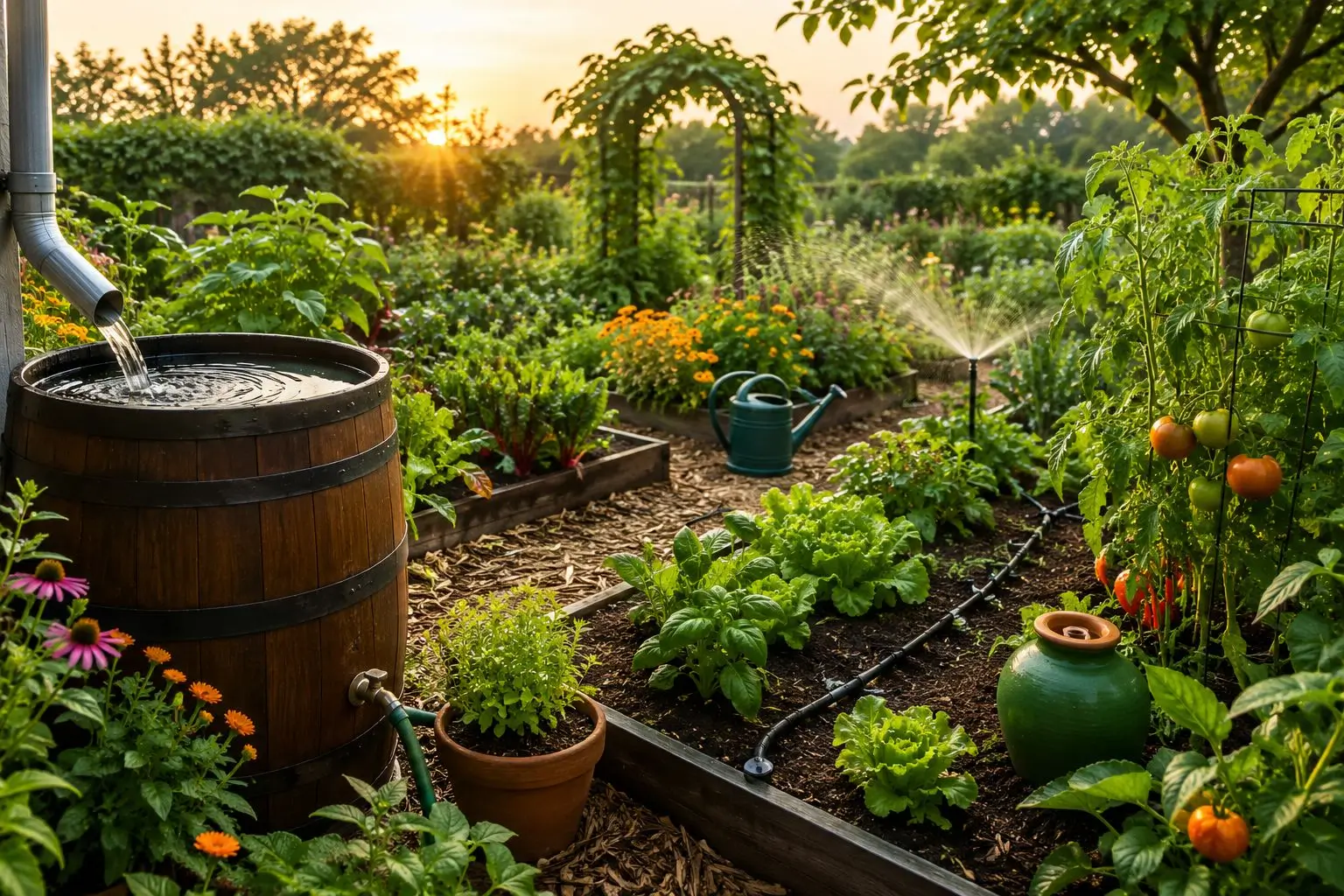
Rainwater harvesting and greywater use are incredibly sustainable solutions for organic gardens, providing a free, chemical-free water source that reduces reliance on municipal systems. Capturing rainwater is a straightforward way to achieve **Efficient Organic Garden Watering Techniques**, especially since collected rainwater contains no chlorine or other chemicals often found in tap water, which can be beneficial for delicate organic plants and soil microbes. The Conservation Foundation, for instance, sells 55-gallon rain barrels made from recycled, food-grade plastic, making it easy for home gardeners to start harvesting (2025). Greywater, sourced from household sinks or showers, offers another opportunity for water reuse, though it requires more careful consideration in an organic system. Both methods exemplify a commitment to ecological gardening practices and a lot contribute to water conservation efforts. In my opinion, every organic gardener should at least consider a rain barrel.
Step 6: Implement Rainwater Harvesting Solutions
Implement rainwater harvesting solutions to collect and store natural precipitation, providing a sustainable and pure water source for your organic garden. This method a lot enhances your **Efficient Organic Garden Watering Techniques** by using a free resource and reducing demand on precious potable water supplies. Rainwater is soft, pH-neutral, and free of salts and chemicals, making it ideal for organic gardening. Installing rain barrels is the simplest way to start. Connect them to your downspouts, ensuring they’re positioned securely on a level surface. A single rain event can fill several barrels, providing gallons of water for future use. For larger gardens, you might consider:
- Multiple Rain Barrels: Link several barrels together to increase storage capacity.
- Larger Cisterns: For serious water conservation, a cistern can store hundreds or thousands of gallons, making it perfect for supplementing extensive organic vegetable gardens.
- First-Flush Diverters: These devices prevent the first few gallons of rainwater, which might contain roof debris, from entering your storage, ensuring cleaner water for your plants.
Remember to place screens over openings to prevent mosquitoes and debris from entering. This proactive step embodies true **Efficient Organic Garden Watering Techniques**.
Common Organic Garden Watering Mistakes to Avoid
Avoiding common organic garden watering mistakes is just as important as implementing good techniques, as these errors often lead to wasted water, stressed plants, and even disease. Many gardeners, especially those new to organic methods, inadvertently sabotage their efforts by overlooking simple principles of **Efficient Organic Garden Watering Techniques**. Outdoor irrigation in the U.S. alone uses approximately 8 billion gallons of water daily, with up to half of that being wasted due to evaporation, wind, or overwatering, according to Absopure (2025). Identifying and correcting these pitfalls can drastically improve your garden’s health and your water conservation efforts. It’s about being mindful and making adjustments.
Step 7: Integrate Smart Watering Technology
Integrate smart watering technology to prevent common mistakes and fine-tune your garden’s hydration needs. Smart controllers, like Orbit B-Hyve and Rachio, use real-time weather data, soil moisture sensors, and plant-specific requirements to automatically adjust watering schedules, fundamentally transforming **Efficient Organic Garden Watering Techniques**. This means no more watering when it’s raining or overwatering plants that don’t need it. These systems connect to your phone, giving you complete control and insights into your garden’s water consumption from anywhere. They learn your garden’s unique characteristics over time, making adjustments for soil type, sun exposure, and even plant maturity. Benefits of smart watering systems include:
- Automated Adjustments: Automatically skips watering cycles if rain is predicted or if the soil is already moist.
- Water Savings: Can reduce outdoor water use by 30-50%, according to studies cited by Rachio (2026). This is huge for **Efficient Organic Garden Watering Techniques**.
- Customizable Zones: Allows you to create different watering schedules for different garden areas with different plant needs.
- Leak Detection: Some advanced systems can even detect leaks in your irrigation lines, preventing hidden waste.
While an initial investment, the long-term savings in water and healthier plants make smart technology a valuable asset for any organic gardener committed to **Efficient Organic Garden Watering Techniques**.
Achieving Sustainable Water Use in Your Organic Garden
Achieving sustainable water use in your organic garden means adopting a thorough mindset that values every drop and integrates multiple conservation strategies. This isn’t just about saving money; it’s about building an ecological balance that benefits your plants, the local environment, and the broader community. Water conservation gardens can reduce landscape water usage by 50-80% compared to traditional gardens, according to SolarTech (2025). Truly **Efficient Organic Garden Watering Techniques** are the heart of sustainable gardening. It involves a continuous cycle of observation, adaptation, and improvement, always seeking ways to minimize impact while maximizing garden health. From improving soil to tapping into technology, every effort contributes to a resilient and productive organic space. Consider these further practices for all-round water sustainability:
- Choose Water-Wise Plants: Select native or drought-tolerant plant species that are naturally adapted to your local climate and require less supplemental irrigation.
- Group Plants by Water Needs: Design your garden so that plants with similar water requirements are grouped together. This makes targeted watering much easier and more efficient.
- Regular Monitoring: Consistently check your irrigation systems for leaks or blockages. Even small drips can waste significant amounts of water over time.
- Hand Watering with Precision Tools: For small areas or new plantings, use tools like a Dramm rain wand or a soaker ring for precise, gentle delivery that doesn’t disturb young plants or compact soil.
- Compost Tea Applications: While not a watering method, regular applications of compost tea for organic garden soil can improve plant vigor and soil health, making plants more efficient at absorbing available water.
By embracing these principles, you create an organic garden that thrives with minimal water input, setting a benchmark for **Efficient Organic Garden Watering Techniques**.
Frequently Asked Questions
What is the most water-efficient irrigation method for organic gardens?
The most water-efficient irrigation method for organic gardens is drip irrigation, which delivers water directly to the plant root zone with minimal evaporation. This technique can reduce water usage by up to 60% compared to traditional sprinklers, according to MIT research (2026), making it ideal for **Efficient Organic Garden Watering Techniques**. It conserves water by preventing runoff and keeping foliage dry, which also helps deter fungal diseases in your plants.
How can I reduce water evaporation in my organic garden?
You can a lot reduce water evaporation in your organic garden by applying a thick layer of organic mulch, such as straw, shredded leaves, or wood chips. Mulch forms a protective barrier over the soil, directly cutting evaporation by up to 75%, according to Grow Organic (2025). watering in the early morning helps ensure more water penetrates the soil before the sun’s heat causes it to evaporate.
Is it better to water an organic garden by hand or with an automatic system?
For most organic gardens, an automatic system like drip irrigation integrated with a smart controller is generally better for **Efficient Organic Garden Watering Techniques** than hand watering. While hand watering offers precision for individual plants, automatic systems ensure consistent, deep watering across larger areas, often adjusting for weather changes to prevent waste. Automated systems, like those from Rachio, can reduce water use by up to 50% (2026).
What role does soil health play in efficient organic garden watering?
Soil health plays a critical role in **Efficient Organic Garden Watering Techniques** because healthy, organic-rich soil acts as a natural sponge. Increasing soil organic matter by just 5% can quadruple its water-holding capacity, a lot boosting conservation, as reported by Grow Organic (2025). This improved capacity allows soil to absorb and retain more water, making it available to plant roots for longer periods and reducing the frequency of watering.
Can I use greywater for my organic vegetable garden?
Using greywater for your organic vegetable garden is possible but requires careful consideration to ensure it meets organic standards and doesn’t harm plants or soil health. Greywater, derived from sinks or showers, should be free of harsh chemicals, bleach, or strong detergents. Always use biodegradable, plant-safe soaps, and avoid applying greywater directly to edible root crops to maintain the integrity of your **Efficient Organic Garden Watering Techniques**.
Mastering **Efficient Organic Garden Watering Techniques** is a journey towards a more sustainable and thriving organic garden. By integrating targeted irrigation, enhancing soil health with organic matter, embracing rainwater harvesting, and using smart technology, you’ll conserve precious resources while cultivating tough, healthy plants. Remember, every drop counts, and thoughtful watering practices in 2026 will lead to a more resilient and productive garden for years to come. Start implementing these strategies today and watch your organic garden flourish.