Key Takeaways
- The global indoor plant market was valued at approximately $20–21 billion in 2025, according to market projections (2025).
- Stem cuttings are the easiest method for propagating indoor plants from cuttings, especially Pothos and Tradescantia.
- Peperomia obtusifolia leaf-cuttings boast an over 85% success rate in perlite/water, rooting in 12–18 days, as observed in 2026 houseplant trend observations.
- Top rooting hormones for 2026 include Garden Safe TakeRoot and Clonex HydroDynamics.
- Modern propagation stations like the Mkono Wall Hanging Hydroponic Glass Planter enhance success rates significantly.
Are you eager to expand your indoor plant collection without breaking the bank? The art of propagating indoor plants from cuttings is not only incredibly rewarding but also a sustainable way to grow your green space. In this 2026 guide, I’ll share my 10+ years of gardening expertise, gleaned from my horticulture background, to walk you through every step of transforming a simple cutting into a thriving new plant, ensuring your success.
Quick Answer: The easiest way to propagate indoor plants from cuttings in 2026 is via stem cuttings. Take a healthy cutting with a node, then place it in water or moist perlite. Provide bright, indirect light. Pothos and Tradescantia are excellent choices.
What is the easiest way to propagate indoor plants from cuttings in 2026?
The easiest and most accessible way to propagate indoor plants from cuttings in 2026 is through stem cuttings placed in water. This method offers a clear view of root development, making it highly encouraging for beginners, and has been a staple in houseplant propagation for decades, as highlighted by resources like UF/IFAS Gardening Solutions (2024). Many common houseplants thrive with this straightforward approach, demonstrating why propagating indoor plants from cuttings remains so popular.
Propagating indoor plants from cuttings by placing them directly into water streamlines the process. You simply need a clean jar or vase, fresh water, and a healthy cutting with at least one node. This low-barrier method aligns with the “propagation-forward culture” mindset of 2026, where growers prioritize self-sustaining plant cycles, according to LifeTips (2026).
The simplicity of water propagation makes it an excellent starting point for anyone interested in propagating indoor plants from cuttings. There’s minimal equipment needed, and the visual aspect of seeing roots emerge provides instant gratification and helps build confidence.
How do you prepare and take healthy indoor plant cuttings?
To prepare and take healthy indoor plant cuttings, you must first select a vigorous parent plant and then make clean, precise cuts just below a node. This critical step ensures the cutting has the best chance for root development, as nodes contain the necessary meristematic tissue for new growth, a principle widely understood in plant propagation, according to the American Horticultural Society (2024). Successfully propagating indoor plants from cuttings begins with this careful selection and cutting technique.
Step 1: Select a Healthy Parent Plant
Choosing the right parent plant is paramount for successful propagating indoor plants from cuttings. Look for a plant that is free from pests and diseases, exhibiting strong, vibrant growth. A healthy parent plant will provide cuttings with the best genetic material and energy reserves to initiate new roots.
Always inspect the plant for any signs of stress, yellowing leaves, or stunted growth. Using a stressed plant for propagating indoor plants from cuttings will significantly reduce your success rate.
Step 2: Take the Cutting Correctly
When taking cuttings, use clean, sharp pruning shears or a knife to prevent crushing the stem and to minimize the risk of disease. For most indoor plants, aim for a stem cutting 4-6 inches long with at least 2-3 nodes. A node is where a leaf or branch attaches to the stem, and it’s where roots will emerge when propagating indoor plants from cuttings.
Make your cut at a 45-degree angle about 1/4 to 1/2 inch below a node. Remove any leaves from the bottom inch or two of the cutting to prevent them from rotting in your propagation medium. This prepares the cutting for successful rooting, which is essential for propagating indoor plants from cuttings.
What are the best mediums for propagating plant cuttings?
The best mediums for propagating plant cuttings include water, moist perlite, and a well-draining soil mix, with the choice often depending on the specific plant species and desired rooting speed. Each medium offers distinct advantages, impacting factors like aeration, moisture retention, and disease prevention, as outlined by Alameda County Master Gardeners (2024). When you’re propagating indoor plants from cuttings, selecting the right medium can significantly boost your success.
Water Propagation
Water is an excellent choice for many beginners when propagating indoor plants from cuttings because it allows you to visually monitor root growth. Simply place your prepared cuttings in a clear glass vessel filled with room-temperature water, ensuring no leaves are submerged. Change the water every few days to keep it fresh and prevent bacterial growth.
While water propagation is straightforward, water-rooted plants can sometimes experience transplant shock when moved to soil. This is a crucial consideration for long-term plant health after propagating indoor plants from cuttings.
Soil or Soilless Mixes
For propagating indoor plants from cuttings directly into a substrate, a light, well-draining mix is ideal. Options include perlite, vermiculite, sphagnum moss, or a combination of these with a small amount of potting mix. These mediums provide excellent aeration and moisture retention without becoming waterlogged, which can lead to rot. Peperomia obtusifolia leaf-cuttings show an over 85% success rate in perlite/water, rooting in 12–18 days, according to 2026 houseplant trend observations.
Using a good quality, sterile potting mix or soilless medium prevents fungal issues that can plague cuttings. This is a professional approach to propagating indoor plants from cuttings, especially for those sensitive to excessive moisture.
Step 3: Prepare Your Propagation Medium
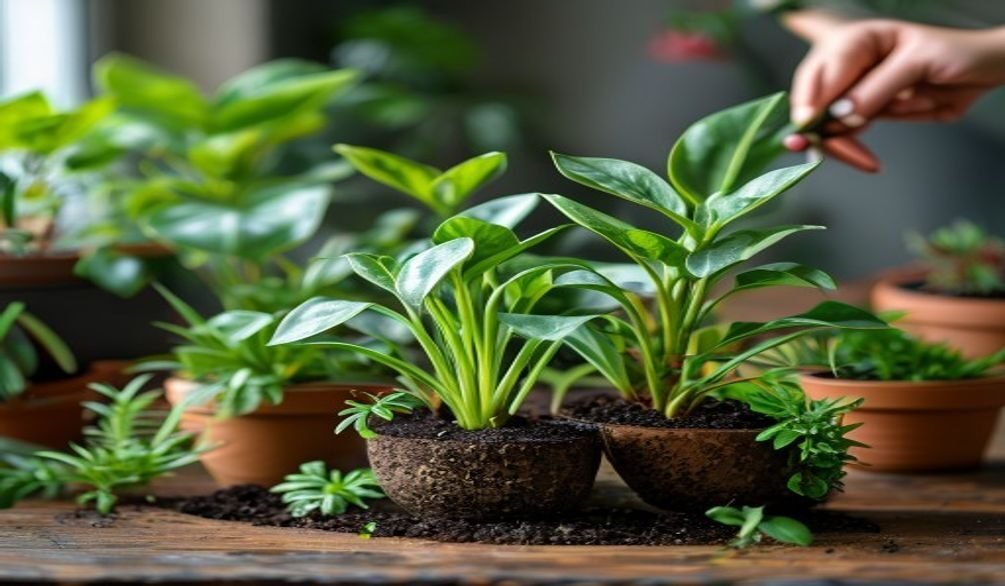
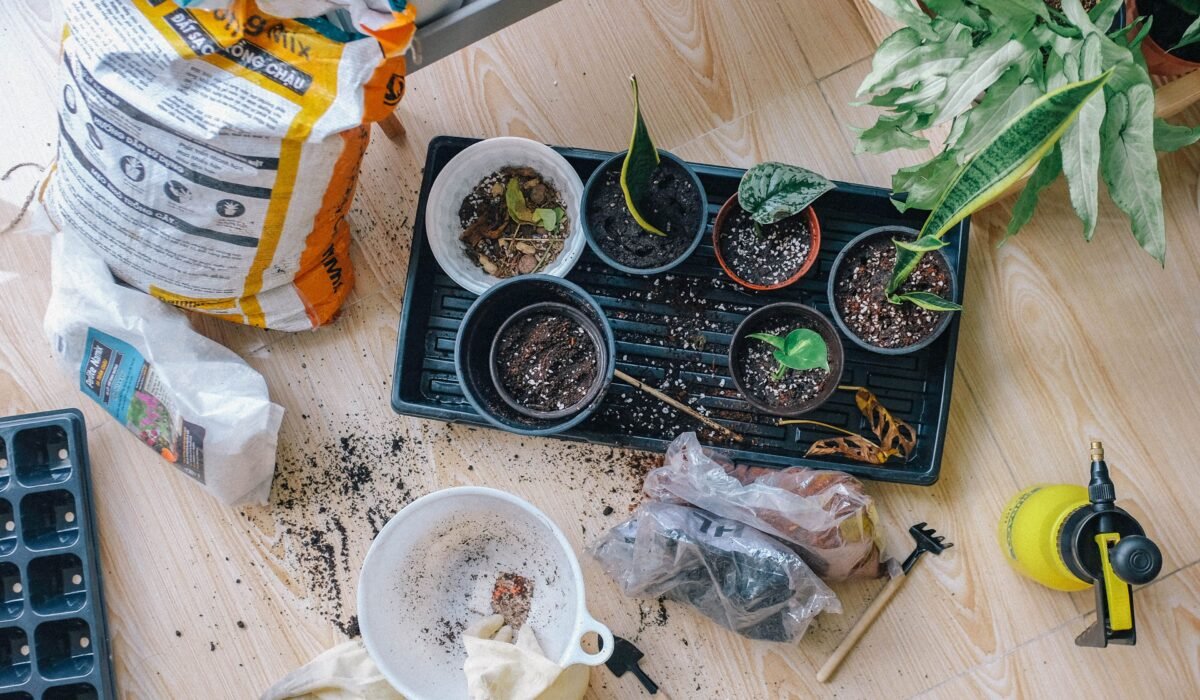
Once you have your cuttings, prepare your chosen medium. For water propagation, fill a clean glass jar with fresh, filtered water. For soil or soilless mixes, pre-moisten the medium so it’s damp but not soggy, and fill small pots or propagation trays. This ensures the cuttings have immediate access to moisture without being drowned.
Ensuring the medium is ready before you place the cuttings minimizes stress on the plant. This careful preparation is a key component of successfully propagating indoor plants from cuttings.
Step 5: Place Cuttings in Medium
Carefully insert the prepared cuttings into your chosen medium. If using water, ensure at least one node is submerged. For soil or soilless mixes, make a small hole with a pencil or finger, insert the cutting, and gently firm the medium around the base to ensure good contact. This secures the cutting and allows it to begin forming roots.
Avoid pushing cuttings too forcefully into the medium, as this can damage the delicate stem tissue. Gentle handling is crucial for increasing the success rate when propagating indoor plants from cuttings.
What modern tools and techniques can enhance 2026 plant propagation?
Modern tools and techniques in 2026 significantly enhance plant propagation by providing optimal environments and stimulating root growth, from advanced rooting hormones to specialized propagation stations. These innovations streamline the process and increase success rates, offering a fresh perspective on propagating indoor plants from cuttings. According to The Pioneer Woman (2026), there has been a resurgence in plant propagation, partly driven by influencers showcasing easy techniques on social media.
Rooting Hormones
Rooting hormones, available as powders, gels, or liquids, contain auxins that stimulate root development. Products like Garden Safe TakeRoot Rooting Hormone (a powdered IBA formula) and Clonex HydroDynamics Rooting Gel (an IBA-based gel that seals cuttings) are top performers in 2026, according to expert recommendations. They can significantly increase the success rate and speed of rooting, especially for more challenging plants.
While not always necessary for easy-to-root plants, rooting hormones are a valuable tool for propagating indoor plants from cuttings that are typically slower or more difficult to establish. Robert Pavlis of Garden Myths (2026) notes that most commercial rooting hormones do not contain fungicides, as fungal infection is usually not an issue if cuttings are kept clean.
Step 4: Apply Rooting Hormone (Optional)
If using rooting hormone, dip the cut end of your stem cutting into the powder or gel, shaking off any excess. This ensures the hormone is concentrated at the site of root formation. Applying rooting hormone can significantly accelerate the process of propagating indoor plants from cuttings, particularly for species that are slower to root naturally.
Always follow the product instructions carefully when using rooting hormones. Over-application can sometimes hinder rather than help root development, so a light, even coating is best for propagating indoor plants from cuttings.
Propagation Stations and Humidity Domes
Dedicated propagation stations provide controlled environments for cuttings, often featuring multiple glass vials for water propagation or trays with clear humidity domes. The Mkono Wall Hanging Hydroponic Glass Planter, for instance, is a popular choice for 2026, housing five propagates in a versatile design. These setups help maintain consistent humidity levels, which is crucial for reducing stress on cuttings as they develop roots.
Humidity domes create a mini-greenhouse effect, preventing cuttings from drying out before they can absorb water through new roots. This controlled environment is a game-changer for propagating indoor plants from cuttings, especially in drier indoor climates.

Comparison of Rooting Hormones for Propagating Indoor Plants from Cuttings
| Product Name | Type | Key Ingredient | Primary Benefit |
|---|---|---|---|
| Garden Safe TakeRoot Rooting Hormone | Powder | Indole-3-butyric acid (IBA) | Easy application, broad spectrum for various cuttings |
| Clonex HydroDynamics Rooting Gel | Gel | Indole-3-butyric acid (IBA) | Seals cutting, prevents infection, consistent hormone delivery |
| Bonide 925 Bontone Rooting Powder | Powder | Indole-3-butyric acid (IBA) | Versatile for multiple plant types, cost-effective |
How long does it take for indoor plant cuttings to root?
The time it takes for indoor plant cuttings to root varies significantly depending on the plant species, environmental conditions, and the propagation method used, generally ranging from one to several weeks. Some fast-growing plants like Tradescantia zebrina can show roots in as little as 5–7 days, as observed in 2026 houseplant trend reports. Understanding these timelines helps manage expectations when propagating indoor plants from cuttings.
Factors Affecting Rooting Time
Several factors influence how quickly your cuttings will establish roots. These include the plant’s natural growth rate, the age and health of the parent plant, the temperature and humidity of the propagation environment, and the presence of rooting hormone. Warmer temperatures (around 70-75°F or 21-24°C) often accelerate root development when propagating indoor plants from cuttings.
Providing consistent, bright indirect light is also crucial for photosynthesis, which fuels the cutting’s energy for root production. Without adequate light, the cutting may struggle to allocate resources towards rooting, slowing down the process of propagating indoor plants from cuttings.
Step 6: Provide Ideal Growing Conditions
Place your cuttings in a location that receives bright, indirect light. Avoid direct sunlight, which can scorch tender cuttings. Maintain consistent temperatures, ideally between 70-75°F (21-24°C). If using a humidity dome or propagation station, ensure the air inside remains moist but not overly wet. This creates an optimal microclimate for rooting.
Regularly misting cuttings, especially those in soil, can help maintain humidity. This attention to environmental detail is crucial for the successful process of propagating indoor plants from cuttings.
Step 7: Monitor for Root Development
Regularly check your cuttings for signs of root growth. For water propagation, you’ll see small white roots emerging from the nodes. For soil propagation, gently tug on the cutting; if you feel resistance, roots have likely formed. This monitoring helps you determine when the cutting is ready for the next stage of growth, moving towards successful propagating indoor plants from cuttings.
Patience is a virtue when propagating indoor plants from cuttings. While some plants root quickly, others may take several weeks or even months. Don’t be discouraged by slower progress.
What are common mistakes when propagating indoor plants and how to troubleshoot?
Common mistakes when propagating indoor plants from cuttings often include overwatering, using dull tools, insufficient light, and taking unhealthy cuttings, all of which can hinder root development or lead to rot. Troubleshooting these issues involves adjusting your environment and technique to provide optimal conditions for success, a lesson I’ve learned many times in my 10+ years of gardening. Addressing these pitfalls is key to successfully propagating indoor plants from cuttings.
Overwatering and Rot
One of the most frequent issues is keeping the propagation medium too wet, especially when propagating indoor plants from cuttings in soil. This can lead to fungal infections and stem rot, often appearing as black or mushy spots on the cutting. To troubleshoot, ensure your soil mix is well-draining, and allow the top layer to dry slightly between waterings. For water propagation, change the water every few days to prevent stagnation and bacterial buildup.
Good air circulation around your cuttings can also help prevent fungal issues. Consider using a small fan on a low setting if you’re propagating indoor plants from cuttings in an enclosed space with high humidity.
Poor Cutting Selection and Preparation
Using a cutting from an unhealthy or diseased parent plant, or making an unclean cut, significantly reduces the chances of success. A dull tool can crush the stem, damaging the vascular tissue and preventing water uptake. Always use sterilized, sharp tools when propagating indoor plants from cuttings to make clean cuts.
Ensure your cutting includes at least one node, as this is where the magic of root formation happens. Without a node, propagating indoor plants from cuttings is often futile.
Insufficient Light or Incorrect Temperature
Cuttings need bright, indirect light to photosynthesize and generate energy for root growth, but direct sun can be too intense. Similarly, extreme temperatures—too cold or too hot—can stress the cutting. Troubleshooting involves moving your propagation station to a brighter, indirectly lit spot and maintaining a consistent room temperature, ideally 70-75°F (21-24°C).
Consider using a grow light on a timer if natural light is insufficient. This ensures consistent light exposure, vital for propagating indoor plants from cuttings during darker months.
Which indoor plants are easiest to propagate from cuttings?
Many indoor plants are incredibly easy to propagate from cuttings, making them perfect for beginners eager to expand their collection or share with friends. Pothos (Devil’s Ivy) and Philodendron are consistently cited as the easiest to propagate from stem cuttings in water or soil, according to sources like lovethatleaf (2024). These plants offer high success rates, encouraging more people to try propagating indoor plants from cuttings.
Top Easy-to-Propagate Plants
- Pothos (Epipremnum aureum): Known for its resilience, Pothos readily roots in water from stem cuttings containing at least one node. It’s an ideal starting point for propagating indoor plants from cuttings.
- Philodendron (various species): Similar to Pothos, many Philodendron varieties, such as Heartleaf Philodendron, are exceptionally easy to root from stem cuttings in water.
- Tradescantia (various species, e.g., Tradescantia zebrina): These vibrant plants are incredibly fast rooters; Tradescantia zebrina stem nodes can root in water in as little as 5–7 days, as observed in 2026 houseplant trend reports. Propagating indoor plants from cuttings like Tradescantia is almost foolproof.
- Spider Plant (Chlorophytum comosum): These plants produce “spiderettes” or plantlets that can be easily snipped off and placed in water or soil to root, offering a fun and simple way of propagating indoor plants from cuttings.
- Peperomia (various species, e.g., Peperomia obtusifolia): While often propagated from leaf cuttings, Peperomia obtusifolia leaf-cuttings show an over 85% success rate in perlite/water, rooting in 12–18 days, according to 2026 houseplant trend observations.
- Basil and Mint: These herbs are not just for the garden; they are remarkably easy to propagate from cuttings in water, providing fresh herbs for your kitchen.
These plants are forgiving and provide quick results, building confidence for more ambitious propagation projects. They truly embody the joy of propagating indoor plants from cuttings.
Challenging Plants for Cuttings
While many plants are easy, some present a greater challenge when propagating indoor plants from cuttings. Plants like Lemon Myrtle (Backhousia citriodora) are notoriously difficult with low success rates, as noted in a personal account from 2022. Other variegated or rare plants, such as Monstera standala elbow varata, can also be tricky due to their specific needs for high humidity and consistent warmth.
For these more difficult species, using rooting hormone, maintaining a highly controlled environment with consistent humidity, and having patience are even more critical. Propagating indoor plants from cuttings that are challenging often requires more advanced techniques.
How do you transition rooted cuttings to soil and ensure long-term care?
Transitioning rooted cuttings to soil and ensuring long-term care involves a careful acclimatization process to minimize transplant shock and promote robust growth in their new environment. This delicate stage is crucial for the survival and flourishing of your new plants after successfully propagating indoor plants from cuttings. Lindsay Sisti, a 2025 American Horticultural Society Book Award Winner and author of “The Ultimate Guide to Houseplant Propagation,” emphasizes the importance of gradual transitions.
Step 8: Transition New Plants to Soil
Once your cuttings have developed a healthy root system—typically roots that are at least 1-2 inches long and branched—they are ready for potting. Choose a small pot (3-4 inches) with drainage holes and fill it with a high-quality, well-draining potting mix. Gently plant the rooted cutting, being careful not to damage the new roots. Water thoroughly to settle the soil around the roots.
Acclimatize your newly potted plants gradually. If they were rooting in water, keep the soil consistently moist for the first few weeks to help them adjust to a soil environment. This process is vital for the long-term success of propagating indoor plants from cuttings.
For more insights on soil compositions, you might find our “Understanding Soil Types for Beginners: Simple 2026 Guide” helpful.
Initial Post-Transplant Care
After potting, place your new plants in a spot with bright, indirect light, similar to their propagation environment. Avoid direct sunlight immediately after transplanting, as this can be too harsh for newly established roots. Maintain consistent moisture in the soil, but do not overwater. The goal is to ease them into their new home without stress.
Consider placing the newly potted plant under a humidity dome or in a clear plastic bag for the first few days to maintain high humidity levels, especially if they were water-rooted. This helps prevent wilting and supports the transition after propagating indoor plants from cuttings.
Long-Term Care and Growth
As your new plants grow, gradually introduce them to slightly brighter light conditions and adjust your watering schedule as they mature. Fertilize sparingly, if at all, during the first few months, as the potting mix usually contains sufficient nutrients. Monitor for pests and diseases, and provide appropriate support as needed.
Regularly rotating your plants ensures even growth and prevents them from leaning towards the light source. Consistent care is the reward for your efforts in propagating indoor plants from cuttings.
Our “How to Water Indoor Plants: Ultimate 2026 Guide” can provide further detailed advice on proper watering techniques for your growing collection.
Frequently Asked Questions
What is the fastest way to propagate plant cuttings?
The fastest way to propagate plant cuttings is often through water propagation for many common houseplants, especially those with readily available nodes. Tradescantia zebrina stem nodes can root in water in as little as 5–7 days, as observed in 2026 houseplant trend reports. Using a rooting hormone like Clonex HydroDynamics Rooting Gel can further accelerate this process.
What is the best time of year for propagating plants?
The best time of year for propagating plants is typically spring or early summer, during the plant’s active growing season. This ensures the parent plant is vigorous and the cuttings have ample light and warmth to stimulate root development, maximizing success when propagating indoor plants from cuttings. Google search interest in houseplants saw a significant spike in January 2026, indicating renewed interest in indoor gardening activities.
How do you propagate plants in water successfully?
To propagate plants in water successfully, choose healthy stem cuttings with at least one node, remove lower leaves, and place the cutting in a clean jar of fresh water. Change the water every few days to prevent bacterial growth and ensure the cutting receives bright, indirect light. This simple method is highly effective for propagating indoor plants from cuttings.
Can you propagate indoor plants from cuttings without rooting hormone?
Yes, you can absolutely propagate indoor plants from cuttings without rooting hormone, especially for easy-to-root species like Pothos, Philodendron, and Tradescantia. Peperomia obtusifolia leaf-cuttings show an over 85% success rate in perlite/water without rooting hormone, according to 2026 houseplant trend observations. While rooting hormone can accelerate the process, many plants will root naturally with proper care.
What kind of containers are best for propagating indoor plants?
Clear glass containers are best for propagating indoor plants in water, as they allow you to easily monitor root development. For soil or soilless mediums, small plastic nursery pots or propagation trays with good drainage are ideal. The Mkono Wall Hanging Hydroponic Glass Planter is a popular and effective choice for water propagation in 2026.
Mastering the skill of propagating indoor plants from cuttings is a truly rewarding aspect of indoor gardening, transforming a simple snip into a vibrant new life. By following these expert-vetted steps for 2026, from selecting healthy cuttings to providing optimal post-transplant care, you’ll unlock a sustainable way to expand your plant collection and share the joy of greenery. Don’t hesitate to experiment with different plants and methods; the satisfaction of growing a new plant from scratch is unparalleled. Get started today and watch your indoor garden flourish!