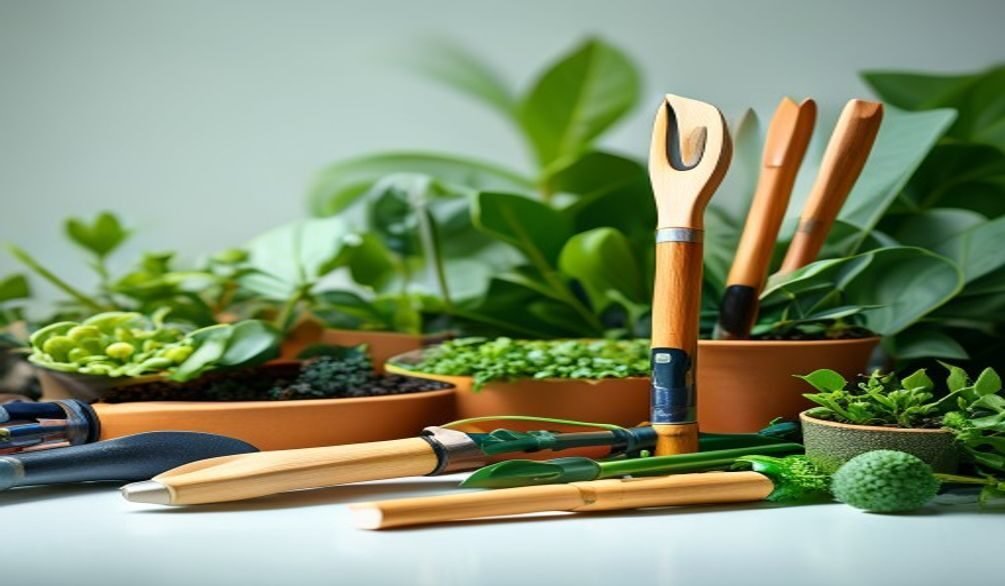
Key Takeaways
- The global gardening tools market was valued at USD 98 billion in 2025, according to market estimates.
- 55% of American households engaged in gardening activities in 2025, totaling 71.5 million households.
- U.S. organic sales reached $76.6 billion in 2025, growing at 6.8%, according to industry reports.
- Gen Y and Gen Z spent more time gardening in 2025 compared to Gen X, at 66.7% and 63.8% respectively.
- A 2025 USDA study found organically managed corn-soybean-oat systems reduce nitrogen loads by 50 percent.
Are you struggling to find the right equipment that aligns with your sustainable values? Choosing the best eco-friendly organic gardening tools is key to cultivating a thriving garden without harming the planet. This guide will walk you through essential selections and what truly makes a gardening tool environmentally responsible, drawing from my 10+ years in horticulture.
Quick Answer: Essential eco-friendly organic gardening tools include durable hand tools like trowels, pruners, hoes, and spades made from sustainable materials such as recycled steel, FSC-certified wood, or bamboo, prioritizing longevity and repairability to reduce environmental impact.
What tools do you need for an organic garden?
For an organic garden, you primarily need tools that facilitate soil health, precise planting, and careful maintenance, minimizing disturbance and reliance on chemicals. In 2025, 55% of American households were engaged in gardening activities, indicating a widespread need for effective tools, according to industry data. The core principle of organic gardening is working with nature, not against it. This means your tools should support gentle soil cultivation, efficient composting, and targeted weeding.
What most people miss is that the “best” tools aren’t always the most high-tech. Often, simple, well-made hand tools are far more effective for organic methods than power tools that can compact soil or disturb delicate microbial life. From my experience, a good set of hand tools makes all the difference.
Here are the fundamental categories:
- Soil Preparation: Spades, broadforks, and hoes are crucial for preparing beds without excessive tilling.
- Planting: Trowels and dibbers ensure accurate and gentle planting of seeds and seedlings.
- Maintenance: Pruners, weeding forks, and cultivators help keep your plants healthy and free from competition.
- Composting: A sturdy pitchfork and compost aerator are indispensable for turning and maintaining your compost pile.
What makes a gardening tool truly eco-friendly?
A gardening tool earns the “eco-friendly” label by minimizing its environmental footprint throughout its entire lifecycle—from manufacturing to disposal. Valeria Nyman, a Gardening Expert, stated in November 2024 that “Plastic tools are like fast food for your garden – convenient but with hidden costs,” highlighting the long-term environmental issues associated with non-sustainable materials. This isn’t just about what a tool is made of, but how it’s made, how long it lasts, and what happens when it’s no longer usable.
When I look at eco-friendly organic gardening tools, I consider several factors:
- Sustainable Materials: Are they made from recycled content, sustainably harvested wood (like FSC-certified), or rapidly renewable resources like bamboo?
- Durability and Longevity: Can the tool withstand years of use? A long-lasting tool reduces the need for frequent replacements, thus lowering resource consumption.
- Repairability: Can parts be replaced or repaired, extending the tool’s life even further? This is a key aspect of circular economy models.
- Manufacturing Process: Does the company use green energy or minimize waste during production? Elho, for example, creates plant pots from recycled plastic using only green energy.
- Ethical Sourcing: Are the materials sourced responsibly, ensuring fair labor practices and minimal ecological damage?
- Recyclability/Biodegradability: What happens at the end of the tool’s life? Can it be recycled or will it naturally break down?
This holistic view is what truly defines sustainable gardening tools.
7 essential eco-friendly organic gardening tools
Equipping your garden with the right eco-friendly organic gardening tools is a smart investment for both your plants and the planet. This selection focuses on durability, sustainable materials, and practical application for organic practices.
Here are my top 7 picks for essential eco-friendly organic gardening tools:
- Durable Hand Trowel: A well-made trowel with a recycled steel or copper head and an FSC-certified wooden handle is indispensable for planting, transplanting, and weeding. Copper tools, in particular, are gaining popularity for their purported benefits to soil health.
- High-Quality Pruning Shears (Secateurs): Look for shears like those from FELCO or Fiskars, which offer replaceable parts and are built to last a lifetime. Recycled steel blades with ergonomic, repairable handles are ideal. These are crucial for maintaining plant health.
- Sturdy Broadfork: For aerating and loosening soil without inverting layers, a broadfork is a no-till gardener’s best friend. Meadow Creature Broadforks are highly praised for their sturdiness and come with a lifetime guarantee, making them excellent sustainable gardening tools.
- Long-Handled Hoe (e.g., Stirrup Hoe): Essential for efficient weeding with minimal bending. Choose one with a durable head and a sustainably sourced wooden handle. This helps manage weeds organically without chemicals.
- Garden Fork/Pitchfork: A robust garden fork, ideally with a forged steel head and a strong ash handle, is perfect for turning compost, breaking up soil clumps, and moving mulch. Bulldog, a UK brand, offers heavy-duty, one-piece steel tools with sustainable ash handles and a lifetime guarantee since 1780.
- Weeding Fork/Hand Weeder: For precise weeding in tight spaces, a small, durable weeding fork made from recycled metal is invaluable. It targets weeds without disturbing nearby plants.
- Natural Fiber Garden Gloves: Protecting your hands is important. Opt for gloves made from sustainable materials like bamboo, organic cotton, or hemp, which are breathable and biodegradable.
How do sustainable gardening tools aid organic practices?
Sustainable gardening tools are more than just environmentally friendly; they actively support and enhance organic practices by promoting soil health, reducing waste, and minimizing ecological disruption. A groundbreaking study published in 2025 in the Journal of Environmental Quality, led by researchers at the U.S. Department of Agriculture (USDA), reported that a 4-year organically managed corn-soybean-oat system reduces nitrogen (N) loads by 50 percent, illustrating the tangible benefits of organic methods. The right eco-friendly organic gardening tools are extensions of this philosophy.
In practice, using tools like a broadfork instead of a rototiller helps preserve the soil structure and microbial life, which are cornerstones of organic gardening. Tools that are built to last mean less waste going to landfills, aligning with the organic principle of closed-loop systems. And, frankly, when you invest in high-quality, durable tools, you tend to take better care of them, fostering a more mindful approach to your gardening.
Here’s how specific tools contribute:
- No-Till Tools: Broadforks and digging forks aerate soil without disturbing beneficial fungi and bacteria.
- Hand Weeding Tools: Targeted weeding forks reduce the need for herbicides.
- Durable Materials: Long-lasting tools, often made from recycled or natural materials, reduce demand for new resources.
- Compost Tools: Pitchforks and aerators aid in creating nutrient-rich compost, a key organic fertilizer.
Choosing durable and repairable eco-friendly tools
When it comes to selecting eco-friendly organic gardening tools, durability and repairability are paramount because they directly impact the tool’s lifespan and environmental footprint. What most people miss is that a cheap tool, even if made from “sustainable” materials, isn’t truly eco-friendly if it breaks after a season and ends up in the landfill. The global gardening tools market was estimated at USD 98 billion in 2025, according to market data, highlighting the sheer volume of tools produced and consumed. This makes mindful purchasing even more critical.
From my experience, paying a little more upfront for a tool that can be repaired or has a lifetime guarantee is always the better choice. It might sound simple, but resisting the urge to buy the cheapest option can be hard. Look for brands that offer replacement parts, sharpening services, or clear instructions on how to maintain and repair their products. This extends the life of your tools significantly and reduces waste.
Consider these aspects:
- Material Quality: Look for high-carbon steel, forged steel, or copper for metal parts. Handles should be made from dense, strong woods like ash or hickory, ideally FSC-certified.
- Construction: Tools with full tang construction (where the metal extends through the handle) or one-piece forged designs are generally more durable.
- Warranty & Guarantees: A strong warranty often indicates a manufacturer’s confidence in their product’s longevity.
- Replaceable Components: Can you replace a broken handle, a worn blade, or a spring? Brands like FELCO are excellent examples, offering nearly every part as a replacement.
What are the best eco-friendly gardening tool brands?
Identifying the best brands for eco-friendly organic gardening tools involves looking for companies committed to sustainable materials, ethical manufacturing, and product longevity. North America is the largest market for gardening tools, holding approximately 40% of the global share, driven by increasing home gardening trends and a focus on sustainable practices, as reported in March 2026. This growth fuels the need for responsible manufacturers.
Here’s the thing: many companies claim to be “green,” but a few truly stand out for their commitment to creating quality, sustainable gardening tools. These are the brands I often recommend to fellow gardeners because they deliver on both performance and environmental responsibility.
Let’s compare some leading brands and their eco-friendly aspects:
| Brand Name | Key Eco-Friendly Features | Product Focus |
|---|---|---|
| Fiskars | Recycled/sustainably sourced materials, repair parts available, durable. | Pruning shears, loppers, axes. |
| FELCO | High-quality, durable, replaceable parts, long lifespan, sustainable practices. | Pruning shears, loppers, cable cutters. |
| Bulldog | Heavy-duty, one-piece steel tools, sustainable ash handles, lifetime guarantee. | Spades, forks, hoes. |
| Meadow Creature | Sturdy broadforks, lifetime guarantee, made for no-till gardening. | Broadforks. |
| Elho | Plant pots made from recycled plastic using green energy, 100% recyclable. | Plant pots, planters. |
These brands exemplify what it means to create truly environmentally friendly garden tools.
Beyond tools: other eco-friendly gardening essentials
While having the right eco-friendly organic gardening tools is fundamental, a truly sustainable garden requires attention to other essentials that complement your commitment to the environment. U.S. organic sales reached $76.6 billion in 2025, growing at a pace of 6.8%, which is double that of the overall marketplace, demonstrating a significant consumer shift towards organic products. This trend extends beyond just food to include gardening supplies.
What most guides stop at is just the tools. But for me, as someone who’s gardened for over a decade, it’s about the entire ecosystem you create. Thinking holistically about your garden means considering everything from your plant containers to your pest control methods.
Here are some other important eco-friendly gardening essentials:
- Compostable Seedling Pots: Ditch plastic trays for pots made from peat, coir, or recycled paper. These can be planted directly into the ground, reducing transplant shock and plastic waste.
- Organic Fertilizers and Soil Amendments: Focus on compost, worm castings, and other natural, slow-release options. The Organic Farming Research Foundation (OFRF) states that organic agriculture is a proven solution to many challenges facing U.S. agriculture, reducing dependence on synthetic inputs.
- Natural Pest Control: Instead of chemical pesticides, use beneficial insects, companion planting, or homemade organic sprays. Identifying and treating thrips, for example, can be done with effective garden solutions that are eco-friendly.
- Watering Systems: Consider drip irrigation or soaker hoses to conserve water, especially for a balcony garden. Setting up balcony garden drip irrigation is an easy step towards sustainability.
- Rain Barrels: Collect rainwater for irrigation, reducing your reliance on municipal water supplies.
- Recycled or Upcycled Containers: If you’re container gardening, use pots made from recycled plastic (like Elho products) or repurpose old items.
Frequently asked questions
What tools do you need for an organic garden?
For an organic garden, you need basic hand tools like trowels, pruners, hoes, and spades, along with specialized items like a broadfork and compost fork. These tools support gentle soil cultivation and chemical-free maintenance, crucial for healthy plant growth.
What tools are used in sustainable gardening?
Sustainable gardening tools are typically durable, made from recycled or sustainably sourced materials like FSC-certified wood or recycled steel, and are often repairable. Examples include long-lasting pruners, broadforks for no-till gardening, and hand weeders that reduce reliance on chemicals.
What is the most eco-friendly garden tool?
The most eco-friendly garden tool is often one that is highly durable, repairable, and made from sustainably sourced or recycled materials, minimizing its lifecycle environmental impact. For instance, a high-quality, repairable pruning shear from brands like FELCO, known for their longevity and replaceable parts, could be considered among the most eco-friendly.
What are the 5 basic gardening tools?
The 5 basic gardening tools essential for most tasks are a hand trowel, pruning shears, a garden fork (or spade), a hoe, and garden gloves. These tools cover planting, digging, weeding, pruning, and hand protection, making them fundamental for any gardener.
What materials are used for eco-friendly gardening tools?
Eco-friendly gardening tools commonly use materials such as recycled steel, stainless steel, FSC-certified wood (like ash or bamboo), and copper. These materials prioritize durability, sustainability, and sometimes offer benefits to soil health, reducing the need for frequent replacements.
Investing in eco-friendly organic gardening tools is more than just a purchase; it’s a commitment to a healthier planet and a more productive garden. By choosing durable, repairable tools made from sustainable materials, you’re not only making your gardening tasks easier but also actively contributing to a greener future. Remember, every choice, from your trowel to your watering can, can have a positive impact. So, go ahead and equip your garden with tools that truly reflect your organic values.