
Key Takeaways
- 64% of respondents plan to expand their gardens, indicating a growing interest in green spaces, according to Axiom (2026).
- Native plants reduce water and maintenance needs by 60% to 80% once established, compared to traditional landscapes.
- Urban gardeners show a 72% participation rate in planned food gardening for 2025, nearly matching rural engagement.
- Millennials increased their gardening spending by 61.1% in 2025, highlighting a significant investment in home gardens.
- Repetition and planting in large groups create a cohesive look in small garden spaces, advises Pearce Butcher.
Most urban Indian gardeners know the struggle: you look at your small balcony or terrace, dreaming of lush greenery, but then wonder how to even begin a proper small terrace garden design that doesn’t feel cramped. It’s tough to make a limited outdoor area both beautiful and functional, especially with our intense summers and heavy monsoons. This guide will walk you through five easy layouts to transform your urban space into a thriving garden.
Quick Answer: Terrace garden design for small spaces focuses on maximizing verticality, choosing compact plants, and using multi-functional furniture. Strategic layouts create illusions of larger, more functional outdoor areas, transforming limited space into a beautiful urban oasis.
How do you set up a small terrace garden?
Setting up a small terrace garden effectively means focusing on space-saving techniques and smart planning right from the start. Urban gardeners are increasingly adopting container and raised bed gardening, with a 72% participation rate in planned food gardening for 2025, according to Axiom. You’ll want to assess your terrace for sun exposure, wind patterns, and weight capacity before bringing in any soil or planters.
First, consider the sun. Is it a scorching south-facing terrace in Delhi, or a milder, partly shaded spot in Bangalore? This dictates your plant choices. Next, think about wind – especially on higher floors. Strong winds can dehydrate plants quickly and even knock over pots. I’ve seen many plants struggle on exposed Mumbai balconies during pre-monsoon winds. Finally, be mindful of weight; heavy ceramic pots and saturated soil can add up, so check with your building management if you’re planning a large-scale setup.
Here are some key steps for setting up your small terrace garden design:
- Clear and Clean: Remove any clutter and clean the space thoroughly. A fresh start makes a big difference.
- Assess Conditions: Observe sun exposure throughout the day, notice wind patterns, and identify any drainage issues.
- Plan Your Layout: Sketch out where you want planters, seating, and any vertical elements. Visualizing helps prevent mistakes.
- Choose Containers Wisely: Opt for lightweight yet sturdy pots made from fiberglass, plastic, or grow bags. Ensure they have good drainage holes.
- Prepare Your Soil Mix: A good potting mix is crucial. I tested cocopeat from three different brands in 2023—COCO COIR, Royal, and a local loose brand from the nursery. The loose brand had salt residue that burned my seedling roots. Washed it 4 times before it was safe to use. Branded cocopeat costs ₹80–120 more per block but saves a ruined batch.
- Install Irrigation (Optional but Recommended): For busy gardeners, a drip irrigation system can be a lifesaver, especially during the Indian summer heat when plants need watering twice a day.
What are the best plants for a small terrace garden?
The best plants for a small terrace garden are compact, resilient, and offer a good return on your limited space, whether that’s through beauty or edibles. Native plants, for instance, typically require 60% to 80% less water and maintenance once established than traditional landscapes. You might have heard beginners should start with “easy” plants – but honestly, easy is relative to your specific balcony conditions. A north-facing balcony in Bangalore and a south-facing terrace in Delhi need completely different starter plants. Location matters more than a generic difficulty rating.
For sunny terraces, Thomas Little, Principle Designer at Urbangreen Gardens NYC, recommends choosing dwarf varieties and plants that can withstand intense sun and wind, such as Russian Sage, Salvia Indigo Spires, and Lavender. For Indian conditions, consider these:
| Plant Type | Recommended Varieties for Small Spaces | Growing Tips for Terrace |
|---|---|---|
| Herbs | Pudina (mint), Dhania (coriander), Tulsi (holy basil), Lal Mirch (chili), Methi (fenugreek) | Grow in individual pots to prevent spreading; ensure good drainage. My friend once tried growing methi from kirana store seeds and got only 15% germination; switching to Sarpan or Indo-American seeds gave 80%+ – cooking seeds aren’t garden seeds! |
| Vegetables | Cherry tomatoes (e.g., Pusa Ruby), Bhindi (okra – dwarf varieties), Bush beans, Radish, Dwarf brinjal | Use larger pots (10-12 inches deep) for fruiting veggies. Support with stakes or cages. |
| Flowers | Portulaca, Marigold, Petunia, Dwarf Hibiscus, Bougainvillea (dwarf) | Choose varieties with long blooming periods for continuous color. Prune regularly for bushy growth. |
| Climbers/Vines | Money Plant, Jasmine, Passionflower, Bottle Gourd (dwarf) | Perfect for vertical growth; provide a trellis or support structure. |
Remember, even if a plant is generally considered “easy,” a south-facing terrace in Chennai during May will challenge even the hardiest plant. Always factor in your specific climate and sun exposure for a successful small terrace garden design.
How do you style a small terrace for maximum impact?
Styling a small terrace for maximum impact involves strategic placement, smart material choices, and creating visual interest to make the space feel larger and more inviting. Julie Farris, founder of XS Space, emphasizes that “Less really is more” in narrow gardens, suggesting fewer elements but maximizing their form and function. You’re not alone in finding this hard; it’s tempting to cram in too much!
Here’s how to make your small terrace garden design pop:
- Verticality is Your Friend: Use wall planters, hanging baskets, and trellises to draw the eye upwards. This frees up floor space and adds layers of greenery without clutter.
- Multi-functional Furniture: Opt for benches with storage, foldable tables, or ottomans that double as extra seating. Every piece should earn its spot.
- Mirrors: A strategically placed outdoor mirror can create the illusion of a larger space by reflecting light and greenery.
- Lighting: String lights, solar lanterns, or small spotlights can dramatically enhance the ambiance in the evenings, turning your terrace into a cozy retreat.
- Limited Color Palette: Pearce Butcher of Pearce B Designs advises planting in large groups and using repetition for a simple, cohesive look. Stick to 2-3 main colors for your pots and furniture to avoid a chaotic feel.
- Defined Zones: Even in a tiny space, you can create “zones” – a reading nook, a small dining area, a plant display. Rugs or different flooring materials can help delineate these areas.
A well-styled small terrace garden design is about thoughtful curation, not accumulation. It’s about creating a harmonious outdoor extension of your home.
Layout 1: the vertical green wall design
The Vertical Green Wall Design is ideal for terraces with minimal floor space but ample wall area, turning a blank wall into a living masterpiece. This layout maximizes planting opportunities upwards, leaving the precious floor area open for movement or a small seating arrangement. It’s a fantastic solution for a truly compact small terrace garden design.
To implement this, you’ll need sturdy vertical planters, pocket systems, or even DIY solutions using old plastic bottles. Choose plants that thrive in vertical conditions and don’t require deep roots, like money plants, ferns, or various herbs like pudina and coriander. Ensure your wall can handle the weight and consider an integrated drip irrigation system for easy watering, especially during the pre-monsoon heat. This design creates an immediate visual impact, making your terrace feel lush and private.
Layout 2: the multi-zone retreat
The Multi-Zone Retreat cleverly divides a small terrace into distinct functional areas, offering versatility and the feeling of a larger, more comprehensive outdoor living space. Even if your terrace is just 8×10 feet, you can carve out a cozy reading nook and a small plant display by using smart furniture and plant placement. This approach makes your small terrace garden design incredibly dynamic.
To achieve this, use low, modular furniture that can be rearranged or serve multiple purposes. A small rug can define a seating zone, while a tall, slender planter can act as a natural divider for a separate gardening area. For example, you might have a corner with a comfortable chair and a small side table for your morning chai, and another section dedicated to vibrant marigolds and a bhindi plant. The key is to keep pathways clear and avoid overcrowding each zone.
Layout 3: the minimalist oasis
A Minimalist Oasis focuses on clean lines, a limited plant palette, and open space, creating a serene and uncluttered environment perfect for relaxation. This design philosophy embraces Julie Farris’s “less is more” principle, allowing a few key elements to shine without overwhelming the senses. It’s a great option for those who want a tranquil small terrace garden design with low maintenance.
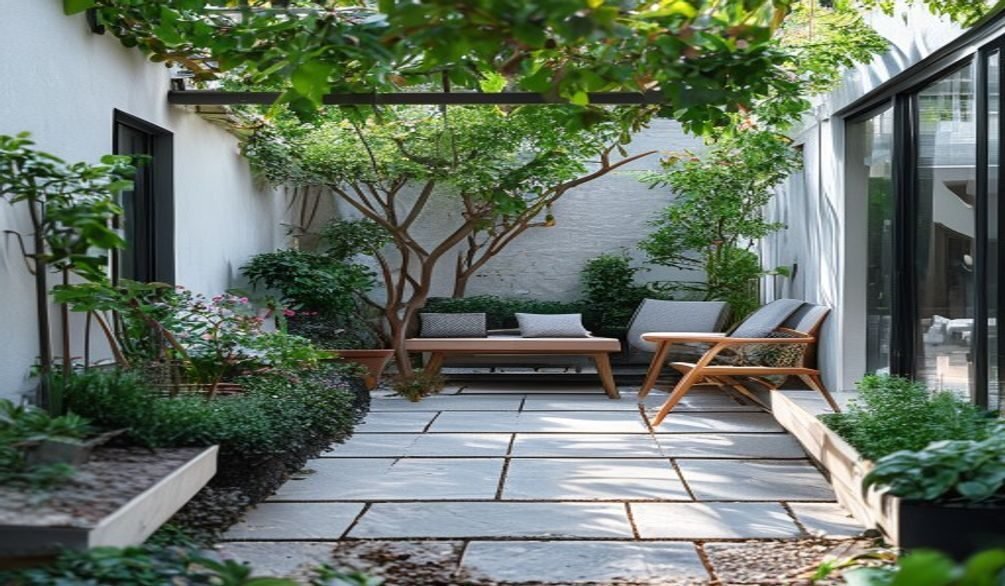
Choose a few statement plants in elegant, neutral-colored pots – perhaps a dwarf hibiscus or a striking snake plant. Incorporate natural materials like stone or wood for flooring or a simple bench. Keep the decor sparse, perhaps just a few lanterns or a small water feature to add to the calming ambiance. The goal is to create a peaceful sanctuary where every element serves a purpose, offering a visual break from the urban chaos.
Layout 4: the dining & herb haven
The Dining & Herb Haven transforms your small terrace into a functional outdoor kitchen and dining area, complete with fresh ingredients just steps away. This layout is perfect for those who love to cook and entertain, making the most of a compact space for both culinary and social activities. It’s a deliciously practical small terrace garden design.
Focus on a compact dining set – think a bistro table and two chairs – that can be folded away when not in use. Then, integrate your herb garden directly around it. Wall-mounted planters or tiered racks are excellent for growing pudina, dhania, tulsi, and lal mirch within easy reach. You could even add a small bhindi or cherry tomato plant in a corner. This design not only provides fresh produce but also infuses your dining experience with delightful aromas.
Layout 5: the serene seating nook
The Serene Seating Nook creates an intimate and comfortable corner on your terrace, dedicated solely to relaxation and enjoying your garden. This layout prioritizes comfort and tranquility, offering a personal escape from the daily grind. It’s an inviting small terrace garden design for unwinding.
Start with a comfortable bench or a couple of lounge chairs, perhaps with some soft cushions. Surround this area with lush, fragrant plants that create a sense of enclosure and privacy. Think jasmine climbers on a trellis, or potted frangipani. Ambient lighting, like string lights or floor lanterns, can enhance the cozy atmosphere in the evenings. The idea is to craft a peaceful retreat where you can read, meditate, or simply enjoy the greenery you’ve cultivated.
Frequently asked questions
How do you make a small terrace look good?
You can make a small terrace look good by focusing on vertical gardening, using multi-functional furniture, and employing a cohesive design palette. Strategic lighting and mirrors can also create the illusion of more space and enhance the ambiance, making your small terrace garden design feel larger and more inviting.
What are some popular small balcony garden ideas?
Popular small balcony garden ideas include vertical herb gardens, hanging flower baskets, and compact seating arrangements with foldable furniture. Many urban gardeners are embracing container gardening, with 72% planning to engage in food gardening in 2025, according to Axiom (2025). Consider dwarf fruit trees or a small water feature for added appeal.
How do i make my terrace look attractive?
To make your terrace attractive, incorporate a variety of plant textures and colors, add mood lighting like string lights, and use decorative elements such as colorful cushions or art. Defining distinct zones, even in a small space, can also enhance its appeal and functionality, transforming your small terrace garden design into a charming oasis.
What plants are best for a small terrace?
The best plants for a small terrace are compact varieties like dwarf hibiscus, cherry tomatoes, pudina, and money plants that can thrive in containers. Selecting native plants can reduce maintenance and water needs by 60% to 80% once established, making them an excellent sustainable choice for your small terrace garden design.
How can i get privacy on my terrace?
You can get privacy on your terrace by installing trellises with fast-growing climbers like jasmine or passionflower, using tall, slender planters with bushy plants, or adding privacy screens. Strategically placed evergreens or bamboo in large pots can also create a natural barrier, offering seclusion for your small terrace garden design.
Designing a successful small terrace garden design doesn’t have to be overwhelming. By focusing on smart layouts, choosing the right plants for your specific climate, and embracing verticality, you can transform even the most compact urban space into a beautiful and functional green retreat. Remember, 64% of gardeners plan to expand their gardens in 2026, according to Axiom (2026), so you’re part of a growing movement. Take these ideas, assess your unique terrace, and start building your own urban oasis today!







