
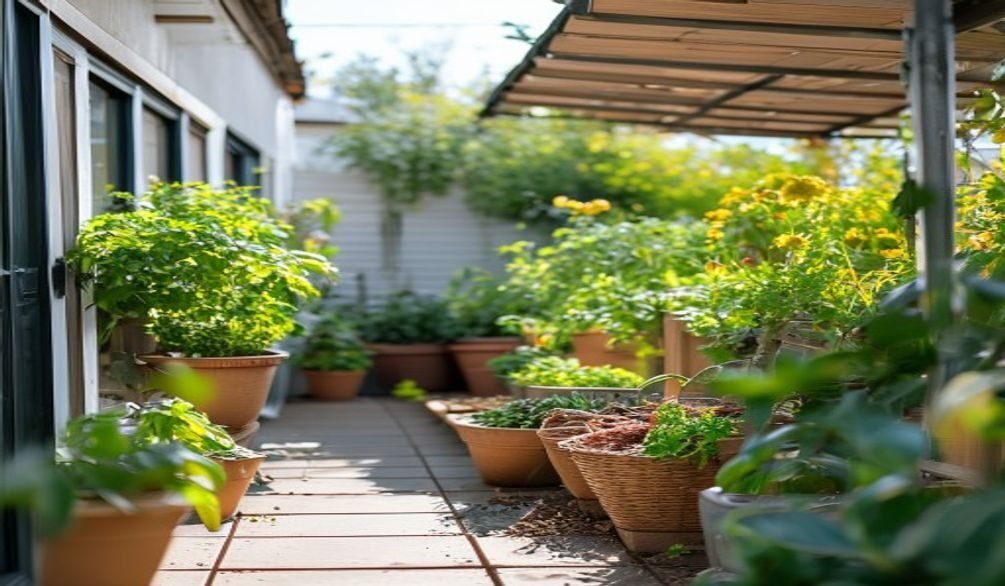
Key Takeaways
- Urban gardening participation reached nearly 49% across Asia-Pacific in 2026, with rooftop and terrace gardens driving significant demand.
- The vertical garden construction market is projected to grow at a 6.4% CAGR from 2025 to 2035.
- Determinate cherry tomato varieties like ‘Tumbling Tom’ are recommended for high yields in terrace garden containers, according to BigHaat.
- The home gardening market is projected to reach approximately USD 16.71 billion in 2026.
- Black plastic pots can heat up to 55°C in direct sun, cooking roots and hindering plant growth, based on personal experience.
Most Mumbai balcony gardeners lose their tomato plants every May — not from pests, but from the scorching 40°C pre-monsoon heat. It’s frustrating when you put in all that effort only to see plants struggle, isn’t it? But you can definitely learn to **maximize terrace garden harvests** even with these challenges, transforming your urban space into a thriving, productive green haven. This guide will walk you through proven strategies to boost your yields, ensuring you get more fresh vegetables and herbs from your containers.
Quick Answer: Maximize terrace garden harvests by optimizing vertical space, selecting high-yield container-friendly crops, implementing succession planting, using efficient irrigation, improving soil health, and practicing smart pest control.
What vegetables grow well in a terrace garden for high yields?
For a productive terrace garden, you’ll want to choose compact, high-yielding vegetables that thrive in containers. BigHaat, an online platform for gardening, recommends several varieties known for their suitability and generous harvests in limited spaces. These aren’t just easy-to-grow plants; they’re ones that genuinely help you **maximize terrace garden harvests** by giving you more bang for your buck, or rather, more bhindi for your balcony.
Honestly, everyone tells beginners to start with easy plants — but “easy” is super relative to your specific balcony conditions. A north-facing balcony in Bangalore with its mild climate and a south-facing terrace in Delhi enduring intense summers need completely different starter plants. Location matters way more than just a general “difficulty rating.” For instance, leafy greens like palak and methi are generally forgiving, but they’ll bolt fast in Delhi’s summer heat if not given afternoon shade.
Here are some top picks that perform well in Indian terrace gardens:
- Cherry Tomatoes (Determinate Varieties): Varieties like ‘Tumbling Tom’ are compact and produce a continuous flush of small, sweet tomatoes, perfect for containers. They don’t need as much staking as their indeterminate cousins.
- Bush Beans: Compact bush bean varieties such as ‘Provider’ or ‘Royal Burgundy’ don’t require trellises and offer good yields from a small footprint.
- Leaf Lettuce & Spinach (Palak): These cool-season crops are fantastic for cut-and-come-again harvesting, providing multiple yields from a single planting.
- Radishes: Quick to mature, radishes can be harvested in as little as 3-4 weeks, making them ideal for succession planting.
- Peppers (Capsicum & Lal Mirch): Both sweet peppers (capsicum) and hot peppers (lal mirch) do wonderfully in pots, especially if given consistent warmth and sunlight.
- Herbs: Pudina, dhania, and tulsi are absolute must-haves. They grow quickly, are used frequently in Indian cooking, and can be harvested regularly without damaging the plant.
Choosing the right varieties is the first big step to ensure you can truly maximize terrace garden harvests, so pick wisely based on your local climate and container size.
How do you maximize space in a small terrace garden?
Maximizing space in a small terrace garden primarily involves thinking vertically and using clever container arrangements. The vertical garden construction market is experiencing significant growth, projected at a 6.4% CAGR from 2025 to 2035, highlighting the effectiveness of this approach. This isn’t just about fitting more plants; it’s about creating an environment where every square inch contributes to helping you **maximize terrace garden harvests**.
Think about it: your terrace isn’t just a flat surface; it has walls, railings, and even unused corners. Here’s how to turn those into productive zones:
- Vertical Planters and Tiered Stands: Organic gardening expert Anne Gibson uses tiered stands and self-watering planters to utilize vertical space for shallow-rooted plants like salad greens and herbs. These structures allow you to grow multiple layers of plants in the footprint of one.
- Hanging Baskets: Ideal for trailing plants like cherry tomatoes (specifically determinate varieties), strawberries, or even small gourds. Just make sure your railing or ceiling can support the weight of wet soil.
- Wall-Mounted Pockets or Shelves: Fabric grow bags with pockets or simple wooden shelves can turn a blank wall into a productive garden. These are perfect for herbs, leafy greens, and even small flowering plants that attract pollinators.
- Stackable Planters: These ingenious pots fit together, creating a multi-level planter that takes up minimal ground space. They’re great for herbs or strawberries.
You might have heard that any pot will do as long as it has drainage. In practice, the material of your pot matters a lot, especially in India’s intense summers. My neighbour grew tomatoes in a black plastic pot on her Mumbai terrace and got nothing two summers in a row. It was a classic case of cooked roots. Black plastic heats up to 55°C in direct sun — it silently cooks the roots, stressing the plant beyond recovery. We switched her to a terracotta pot with the same soil mix, and she got her first harvest in 8 weeks. Terracotta breathes and keeps roots cooler, making a huge difference in yield.
What are the benefits of maximizing terrace garden harvests?
Maximizing your terrace garden harvests offers a multitude of benefits, from fresher food on your plate to a more sustainable lifestyle. Urban gardening participation stands at nearly 49% across Asia-Pacific in 2026, with rooftop and terrace gardening trends fueling significant demand, which tells you just how many people are already reaping these rewards. It’s not just a hobby; it’s a smart move for your health, your wallet, and the environment.
When you focus on increasing your yield, you’re essentially making your garden work harder for you. This means:
- Fresh, Organic Produce: You get access to vegetables and herbs that are often fresher and more nutritious than what you find at the sabziwala, free from pesticides.
- Cost Savings: Growing your own food significantly reduces your grocery bill. Imagine not having to buy dhania or pudina every week!
- Reduced Environmental Impact: Less transportation means a smaller carbon footprint. Plus, green spaces help cool urban environments.
- Stress Relief & Well-being: Gardening is incredibly therapeutic. Spending time with your plants can reduce stress and improve mental health.
- Food Security: Having a consistent supply of home-grown food provides a sense of self-sufficiency, which is always a good thing.
The balcony & terrace gardens segment alone generated a revenue of USD 8.7 billion in 2025 and is anticipated to grow at a CAGR of 9% from 2026 to 2035. This growth isn’t just about aesthetics; it’s driven by the tangible benefits people experience when they truly **maximize terrace garden harvests**.
How can you start a high-yield terrace garden from scratch?
Starting a high-yield terrace garden from scratch begins with careful planning and choosing the right foundation elements. The home gardening market is projected to reach approximately USD 16.71 billion in 2026, indicating a strong interest in getting these gardens off the ground successfully. You don’t need a huge budget or vast experience, but you do need a solid plan to truly **maximize terrace garden harvests** from day one.
Here’s a practical step-by-step guide:
- Assess Your Space: Observe sunlight patterns throughout the day. Most vegetables need 6-8 hours of direct sun. Also, check for wind exposure and water access.
- Choose the Right Containers: Select pots based on plant needs. A 12-inch pot is a good minimum for most vegetables. Remember my bougainvillea failure? I planted one in a 6-inch pot thinking I would repot later. It became root-bound in 6 weeks, started dropping leaves, and took 4 months to recover after I moved it to a 12-inch container. Bougainvillea needs at least a 12-inch pot from day one or it stalls.
- Prepare Your Soil Mix: Don’t just use garden soil. A good container mix is crucial. More on this in the next section!
- Select High-Yield Crops: Refer back to our list of recommended vegetables. Start with a few that you love to eat and are known to perform well in containers.
- Plan for Irrigation: Consistent watering is key. Consider drip irrigation for efficiency, especially during the Indian summer heat.
- Start Small, Learn, Then Expand: Don’t try to grow everything at once. Pick 3-4 plants, master their care, and then gradually expand your garden. This approach helps build confidence and ensures sustained yields.
What is the best soil for maximizing terrace garden production?
The best soil for maximizing terrace garden production isn’t garden soil from the ground; it’s a specialized potting mix designed for containers. This mix needs to offer excellent drainage, aeration, and nutrient retention, all while remaining light enough for your terrace. Without the right foundation, even the best plants will struggle to truly **maximize terrace garden harvests**.
A high-quality potting mix is crucial because container plants can’t send roots deep into the earth for nutrients and moisture. Here’s what makes a great mix:
- Cocopeat (Coir): This is your base. It retains moisture incredibly well while still allowing for good aeration. Look for good quality Cocogreen cocopeat bricks at your local nursery.
- Compost/Vermicompost: This provides essential nutrients and improves soil structure. Aim for well-rotted compost; fresh compost can burn roots.
- Perlite or Vermiculite: These lightweight materials improve drainage and aeration, preventing compaction which is a common issue in pots.
- Neem Cake Powder: A fantastic organic addition that acts as a slow-release fertilizer and helps deter soil-borne pests.
I usually mix my own, aiming for about 40% cocopeat, 40% vermicompost, and 20% perlite, with a handful of neem cake powder. This blend works wonders across various plants and helps retain moisture during the pre-monsoon heat while still draining well during the monsoons. Don’t use heavy garden soil alone; it compacts quickly in pots, leading to waterlogging and root rot — a quick way to kill your plants and severely limit your ability to maximize terrace garden harvests.
How do smart technologies enhance terrace garden harvests?
Smart technologies are increasingly enhancing terrace garden harvests by automating routine tasks and providing data-driven insights, making gardening more efficient and less prone to human error. The vertical garden construction market, for instance, is seeing increased adoption of innovations like automated irrigation systems and smart sensors to optimize plant growth. These tools aren’t just gadgets; they’re genuine helpers that can significantly **maximize terrace garden harvests**.
Here’s how they can help:
| Technology | Benefit for Terrace Gardens | Impact on Harvests |
|---|---|---|
| Automated Drip Irrigation Systems | Delivers precise amounts of water directly to plant roots, reducing waste. | Ensures consistent moisture, preventing stress and promoting continuous growth, leading to higher yields. |
| Smart Soil Sensors | Monitors soil moisture, nutrient levels, and pH in real-time. | Allows for targeted watering and fertilization, preventing over/under-watering and nutrient deficiencies, crucial to maximize terrace garden harvests. |
| Self-Watering Planters | Reservoir at the bottom provides water as needed, reducing watering frequency. | Maintains optimal moisture levels, especially beneficial during busy periods or short trips, ensuring plants don’t dry out. |
| Grow Lights (for shaded areas) | Provides supplemental light where natural sunlight is insufficient. | Extends growing seasons and allows light-hungry plants to thrive in less-than-ideal spots, boosting production. |
These technologies are becoming more accessible, with many options available online on platforms like Ugaoo or Nurserylive, making it easier for urban gardeners to adopt them.
Are there specific crop rotation plans for container gardens?
Yes, specific crop rotation plans are beneficial even for container gardens, though they differ slightly from in-ground rotation due to the confined space and controlled soil environment. While you don’t have large beds to rotate, the principle of not planting the same crop or crop family in the same pot repeatedly remains important to maintain soil health and to **maximize terrace garden harvests**.
The main goal is to prevent nutrient depletion and the buildup of specific pests and diseases associated with certain plant families.
Here’s a simplified approach for containers:
- Change the Crop Family: After harvesting a crop, plant something from a different botanical family in that same pot. For example, if you grew tomatoes (solanaceae), follow it with beans (legumes) or leafy greens (brassicaceae).
- Replenish Soil: Critically, always refresh or amend the potting mix between plantings. Remove the old plant, loosen the soil, and mix in fresh vermicompost and a handful of neem cake. This replaces lost nutrients.
- Rest Pots: If possible, let a pot “rest” for a cycle, or plant a cover crop like a quick-growing mustard that you can then chop and mix back into the soil before planting your next vegetable.
It’s tempting to just pull out a plant and put the same one back in, especially if it did well. But this can quickly deplete specific nutrients and invite the same pests back. For example, if you keep growing bhindi in the same pot, you’re essentially setting up a welcome mat for specific bhindi pests. Rotating helps break this cycle, making it easier to naturally **maximize terrace garden harvests** year after year.
What are advanced companion planting strategies for terraces?
Advanced companion planting strategies for terraces involve pairing specific plants to enhance growth, deter pests, and attract beneficial insects, creating a mini-ecosystem that works together. This isn’t just about putting pretty flowers next to your vegetables; it’s a strategic approach to **maximize terrace garden harvests** by leveraging natural interactions.
Here are some effective pairings I’ve found work well in urban Indian settings:
- Tomatoes & Basil (Tulsi): Planting basil near tomatoes is believed to improve the flavor of tomatoes and deter tomato hornworms. Tulsi, a common Indian herb, also has strong repellent properties against many insects.
- Beans & Corn/Sunflower: While corn might be too large for many terraces, sunflowers can act as a natural trellis for bush beans. The beans fix nitrogen, benefiting the sunflower, and the sunflower provides shade in intense afternoon sun, which can protect delicate bean plants.
- Marigolds (Genda) & Almost Everything: Marigolds, especially French marigolds, are fantastic for deterring nematodes and other soil-borne pests. They also attract beneficial insects, making them a must-have in your container garden to protect your precious plants.
- Pudina & Cabbage/Cauliflower: The strong scent of pudina can confuse cabbage worms and other pests that target brassicas. Just be sure to keep pudina in its own pot, as it can be very invasive.
These pairings help create a healthier environment for your plants, reducing the need for chemical interventions. They’re a natural way to boost your garden’s resilience and help you **maximize terrace garden harvests** organically.
Frequently asked questions
What is the best way to water a terrace garden?
The best way to water a terrace garden is with a drip irrigation system or by hand using a watering can with a fine rose. Automated drip irrigation ensures consistent moisture delivery directly to the roots, preventing both over and under-watering, according to the increased adoption of such systems in the vertical garden construction market (2025-2035). This method is especially efficient in conserving water and promoting healthy plant growth.
How can i protect my terrace garden from pests naturally?
You can protect your terrace garden from pests naturally by using neem oil sprays, introducing beneficial insects, and practicing companion planting. Neem oil is a popular organic pesticide in India, effective against a wide range of pests without harming beneficial insects. Regularly inspecting your plants and hand-picking larger pests also helps control infestations.
Is it safe to grow food on the roof?
Yes, it is generally safe to grow food on the roof, provided your building structure can support the weight of wet soil and containers. Many urban gardening initiatives, like Singapore’s Green Building Council’s $300 million initiative, actively promote rooftop gardening for food production and environmental benefits. Always consult with a structural engineer if you have concerns about weight bearing capacity.
What are the benefits of organic terrace farming?
The benefits of organic terrace farming include healthier, pesticide-free produce, improved soil fertility, and reduced environmental impact. Organic methods foster a living soil ecosystem, which is more resilient to pests and diseases and contributes to long-term sustainability. Growing organically also aligns with a more natural and holistic approach to food production.
How often should i fertilize my container plants?
You should fertilize your container plants every 2-4 weeks during their active growing season, as nutrients leach out of pots more quickly than from in-ground gardens. Using a balanced organic liquid fertilizer or slow-release granular organic options like bone meal or mustard cake can provide a steady supply of nutrients. Always follow product instructions and observe your plants for signs of nutrient deficiency or excess.
There you have it — a comprehensive guide to help you truly **maximize terrace garden harvests**. From picking the right plants and containers to smart watering, soil care, and clever planting strategies, every step contributes to a more abundant yield. Don’t let limited space deter you; with these proven methods, you can transform your terrace into a bountiful producer of fresh, organic food. So go ahead, get your hands dirty, and watch your urban garden thrive!







