
Key Takeaways
- The global vertical garden system market is projected to reach $4.2 billion by 2034, growing at an 11.2% CAGR, according to market analysis.
- Automated irrigation for vertical gardens can reduce water consumption by 44% and operational costs by 90%, based on industry data.
- Hydroponic systems accounted for 60.36% of the vertical farming revenue share in 2025, highlighting their dominance, according to market reports.
- Drip irrigation can reduce water usage by up to 80% compared to traditional watering methods, states Rain Bird.
- Self-watering systems like those with sub-irrigation are often superior to gravity-fed systems for consistent plant hydration, notes Homestead Brooklyn.
Most Mumbai balcony gardeners often struggle to keep their greens thriving through the intense pre-monsoon heat, and the right **vertical garden irrigation systems** can make all the difference. You’re not alone if you’ve seen your tulsi or dhania wilt despite your best efforts; often, it’s not about how much you water, but *how* you water. This guide will walk you through the 7 best vertical garden irrigation systems to ensure your plants stay lush and healthy, even in challenging Indian climates.
Quick Answer: The best vertical garden irrigation systems are typically drip irrigation for precise delivery, self-watering reservoirs for consistent moisture, or hydroponic recirculating systems for nutrient-rich watering, all ensuring efficient water use and optimal plant health.
What is the best way to water a vertical garden?
The best way to water a vertical garden is through targeted, efficient methods like drip irrigation, self-watering systems, or hydroponic setups, which ensure consistent moisture without waste. Vertical gardens tend to dry out faster than traditional ground gardens, according to Laura Irish Hanson, a horticulture extension educator at the University of Minnesota Arboretum. This means you need a system that can deliver water directly to the roots and maintain those consistent moisture levels.
Think about it: when you hand-water a vertical planter, a lot of water often runs off the sides or evaporates before it even reaches the roots, especially during the Indian summer heat. That’s why I always recommend vertical garden irrigation systems that are designed to minimize this runoff and evaporation. For instance, a simple drip system can ensure every drop counts for your lal mirch or pudina plants.
Do vertical gardens need a lot of water?
Vertical gardens often require less overall water than traditional gardens if an efficient irrigation system is in place, but they need more frequent watering due to increased exposure to air and sun. Automated irrigation systems for vertical gardens can lead to a 44% decrease in water consumption, while also reducing operational costs by 90%, according to industry data. It’s a common misconception that because they’re exposed, they’ll guzzle water.
The truth is, while they might dry out faster, the right vertical garden irrigation systems focus on precision, meaning less water is wasted. In my 10 years of experience, I’ve seen many folks assume their container plants on covered balconies get enough rain during monsoon, only to find the soil bone dry. My neighbor once lost a whole container plant in July because her balcony roof blocked all the rain, even though the ground below was soaked. So, while they need attention, they don’t necessarily need *more* water, just smarter watering.
How do automated vertical garden irrigation systems work?
Automated vertical garden irrigation systems work by using timers, pumps, and delivery lines to provide water and nutrients to plants at predetermined intervals or based on sensor readings. These systems significantly streamline the watering process, making vertical gardening much more manageable for busy individuals. For example, the Gardyn Studio Hydroponics Growing System Kit uses smart irrigation technology to adjust water delivery automatically based on specific plant needs, aiming to prevent both overwatering and underwatering.
Most of these smart vertical garden irrigation solutions involve a reservoir that holds water (and often nutrients), a pump to move the water, and a network of tubes or wicks that deliver it to each plant. You set a timer, and the system does the rest. It’s like having a personal gardener who never forgets to water your methi or bhindi! This kind of setup is especially useful for those of us in urban areas with limited time, and it ensures consistent moisture, which is key for plant health.
What factors should you consider when choosing an irrigation system?
Choosing the right vertical garden irrigation systems involves evaluating several key factors, including the type of plants you’re growing, your garden’s size and location, your budget, and your desired level of automation. It’s not a one-size-fits-all situation. You might have heard that any system will do, but in practice, choosing one that matches your specific needs will prevent a lot of frustration.
Here’s a quick breakdown of what I usually consider:
- Plant Type: Are you growing thirsty leafy greens like palak, or drought-tolerant succulents? This dictates how much water and how often your plants need it.
- Garden Size & Structure: A small DIY setup might be fine with a simple self-watering pot, but a large living wall needs a more robust drip or hydroponic system.
- Location & Climate: Balcony gardens in Delhi’s intense summers will dry out much faster than a shaded terrace garden in Bangalore, influencing the system’s capacity and frequency.
- Budget: Basic drip kits can be quite affordable (starting around ₹500–₹1500), while advanced hydroponic vertical garden systems can run into several thousands.
- Desired Automation: Do you want a set-it-and-forget-it system, or are you happy to do some manual top-ups?
Honestly, most people give up on gardening after one failed crop and blame themselves — but 80% of first failures are caused by wrong pot size, wrong season, or wrong soil mix, not wrong technique. Get those three right, and almost any plant becomes easy to grow. The irrigation system is part of that “right” setup.
Drip irrigation systems: precision watering for vertical gardens
Drip irrigation systems are an excellent choice for vertical gardens because they deliver water directly to the plant roots, minimizing waste and evaporation. Rain Bird, a leading irrigation product manufacturer, states that drip irrigation can reduce water usage by up to 80% compared to traditional watering methods, making it a highly sustainable option. This means your plants get exactly what they need, where they need it, without soaking the entire structure or losing water to the wind.
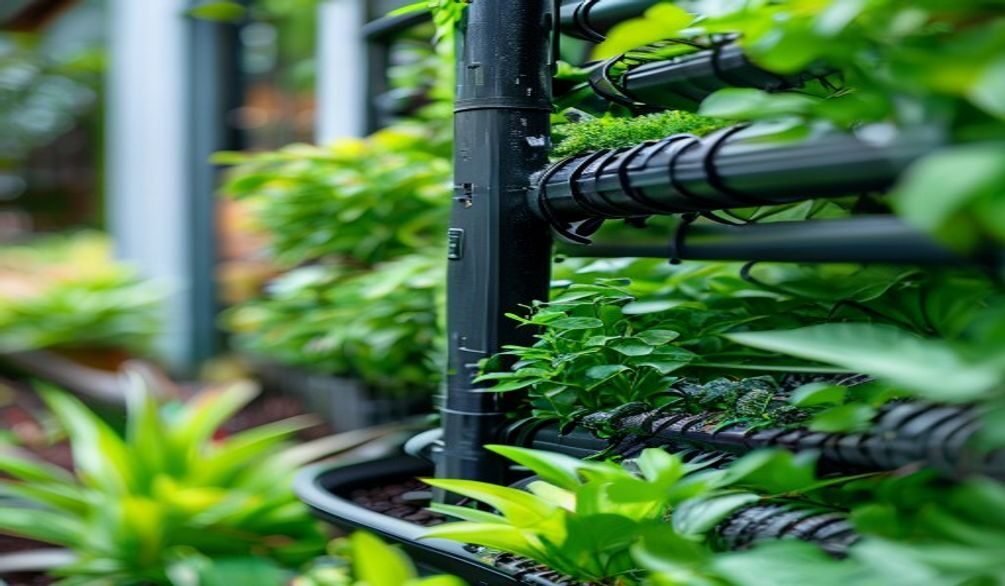
A typical drip vertical garden irrigation setup involves a main water line, smaller tubing with emitters for each plant, and usually a timer. The Watex Green Living Expandable Green Wall Vertical Garden Kit, for instance, includes 1/4″ pipes pre-installed behind the panels to deliver water accurately to each pot. This targeted approach is especially crucial for plants like cherry tomatoes (Pusa Ruby variety works well in containers) where inconsistent watering can lead to problems like blossom end rot.
| Benefit | Description |
|---|---|
| Water Efficiency | Delivers water directly to the root zone, significantly reducing runoff and evaporation. |
| Nutrient Delivery | Allows for fertigation (mixing nutrients with water), ensuring precise feeding. |
| Reduced Disease | Keeps foliage dry, which helps prevent fungal diseases common in humid climates like Mumbai. |
| Automation Potential | Easily integrates with timers for automated watering schedules. |
Self-watering and sub-irrigation systems explained
Self-watering and sub-irrigation systems keep vertical garden plants consistently hydrated by drawing water from a reservoir located beneath the growing medium, allowing plants to absorb moisture as needed. Homestead Brooklyn highlights that sub-irrigation systems are often superior to gravity-fed systems because they water plants below the roots, letting them ‘sip’ water instead of being force-fed from the top. This method is brilliant for preventing both overwatering and underwatering, a common challenge for new gardeners.
These vertical garden irrigation systems usually consist of a planter with a water reservoir at the bottom and a wicking element (like a fabric strip or a soil column) that draws water up into the soil. The GreenStalk Vertical Garden Kit uses a patented internal watering system that delivers water from a top reservoir down through each tier via slow-drip watering disks, ensuring even distribution across all pots. I’ve found these particularly useful for busy households or when you’re away for a few days, as they significantly extend the time between manual refills. Just make sure to regularly check the reservoir, especially during peak Indian summer heat.
Hydroponic vertical garden systems: nutrient-rich solutions
Hydroponic vertical garden systems provide plants with nutrient-rich water directly to their roots, eliminating the need for soil and often accelerating growth. Hydroponics, as a common growth mechanism in vertical farming, held a significant 60.36% revenue share in 2025, according to market reports, showcasing its widespread adoption. These systems are highly efficient and can be incredibly productive, especially for leafy greens like lettuce, spinach, and herbs like tulsi.
In these vertical garden irrigation systems, plants are typically held in inert growing mediums (like rockwool or coco coir) and a pump circulates a nutrient-rich water solution from a reservoir through the system, bathing the roots. The Gardyn Studio system, for example, is an intelligent hydroponic setup that leverages smart technology for optimal plant health. While the initial setup might seem more complex and potentially more expensive (a basic kit might start from ₹5,000–₹10,000), the long-term benefits in terms of growth rate, water efficiency, and pest control can be substantial. Just remember to avoid common hydroponic mistakes like nutrient imbalances, which can quickly derail your harvest.
Tips for installing and maintaining your vertical garden irrigation
Proper installation and consistent maintenance are crucial for the longevity and effectiveness of your vertical garden irrigation systems. Skipping these steps can lead to frustrating issues down the line, trust me. You want your system to run smoothly, not clog up or leak.
Here are some tips I’ve picked up over the years:
- Plan Your Layout: Before installing, map out where your water source is, how the tubing will run, and where each emitter will be placed. Consider the sun exposure for different sections of your wall, as some plants will need more water than others.
- Use a Filter: Especially if you’re using tap water or rainwater, a small filter at the start of your drip system can prevent clogs in emitters. This is a common oversight that causes many headaches.
- Check for Leaks Regularly: After installation and periodically thereafter, run the system and check for any drips or puddles where they shouldn’t be. A small leak can waste a lot of water and reduce pressure for other plants.
- Adjust Emitters for Plant Needs: As plants grow, their water requirements change. Be ready to adjust emitter flow rates or even add/remove emitters to match individual plant needs. For instance, a mature brinjal plant will need more water than a small pudina plant.
- Clean Your System Annually: Flush your lines with plain water or a mild cleaning solution to remove mineral buildup and algae. This is especially important for hydroponic vertical garden watering systems.
- Monitor Soil Moisture: Even with automated systems, occasionally check the soil moisture with your finger or a moisture meter. Sometimes, a clogged emitter or strong winds can mean a plant isn’t getting enough water.
My neighbour grew tomatoes in a black plastic pot on her Mumbai terrace and got nothing two summers in a row. She switched to a terracotta pot with the same soil mix and got her first harvest in 8 weeks. The black plastic heated up to 55°C in direct sun, silently cooking the roots. The pot material impacts heat absorption, which in turn affects how quickly the soil dries out and how hard your vertical garden irrigation systems have to work.
Frequently asked questions
What is the most efficient way to water plants in a vertical garden?
The most efficient way to water plants in a vertical garden is typically through drip irrigation, which delivers water directly to the root zone, minimizing waste. Drip irrigation can reduce water usage by up to 80% compared to traditional methods, according to Rain Bird. This precision ensures every drop contributes to plant health, making it ideal for water conservation.
Can you automate watering for a living wall?
Yes, you can absolutely automate watering for a living wall using various vertical garden irrigation systems like drip lines connected to timers or recirculating hydroponic setups. Automated systems can decrease water consumption by 44% and operational costs by 90%, based on industry data. Setting up an automated system saves time and ensures consistent moisture, which is vital for living wall health.
How often should a vertical garden be watered?
The frequency of watering for a vertical garden depends on factors like plant type, climate, and the specific irrigation system used, but generally, they need more frequent watering than ground gardens. Laura Irish Hanson of the University of Minnesota Arboretum advises that vertical gardens may dry out faster. Always monitor soil moisture and adjust your schedule, especially during hot Indian summers or windy conditions.
What kind of pump do i need for vertical garden irrigation?
For vertical garden irrigation systems, you typically need a submersible pump for hydroponic setups or a small inline pump for drip systems, chosen based on the garden’s size and vertical lift required. Pumps for residential vertical gardens are usually low-flow and low-pressure, ensuring gentle, consistent water delivery. Always check the flow rate and head height specifications to match your system’s needs.
Are self-watering vertical planters effective?
Yes, self-watering vertical planters are highly effective, especially for maintaining consistent moisture levels and reducing the frequency of manual watering. Homestead Brooklyn notes that sub-irrigation systems are often superior because plants can ‘sip’ water when needed. They are a great choice for busy gardeners or those looking for a low-maintenance vertical garden watering solution.
Choosing the right vertical garden irrigation systems can truly transform your urban gardening experience, whether you’re growing vibrant tulsi, juicy cherry tomatoes, or crisp lettuce. From efficient drip setups to advanced hydroponic systems, there’s a solution that fits your needs and budget. By investing in smart vertical garden watering solutions, you’re not just watering plants; you’re building a thriving, sustainable green space that brings joy and fresh produce to your home. So, pick the system that calls to you, set it up, and watch your balcony or terrace garden flourish!







