Key Takeaways
- Hydroponic farming can reduce water usage by up to 90% compared to traditional soil methods, according to Earth.Org (2023).
- The global hydroponics market was valued at USD 12.24 billion in 2025, according to Intellectual Market Insights Research (2026).
- Leafy greens accounted for 47.2% of the hydroponics market by crop type in 2025, according to Mordor Intelligence (2026).
- Hydroponics allows year-round growing, offering fresh produce even in off-seasons.
- Specific home systems like AeroGarden and Click & Grow make indoor hydroponics accessible for beginners.
Most Mumbai balcony gardeners lose their tomato plants every May — not from pests, but from the brutal 40°C+ pre-monsoon heat. It’s frustrating, right? But what if you could grow fresh, healthy produce year-round, regardless of the weather or limited space? This is exactly where **hydroponics benefits home gardeners**, offering a smart, efficient way to cultivate plants without soil, providing a reliable harvest even in challenging Indian urban environments.
Quick Answer: Hydroponics offers home gardeners numerous benefits, including up to 90% less water usage, faster plant growth, higher yields, and the ability to grow year-round in limited spaces without soil, pests, or weeds.
What are the benefits of hydroponics for home use?
Hydroponics offers a wealth of advantages for home gardeners, transforming how and where you can grow plants. This soilless method provides a controlled environment, leading to healthier plants and more consistent harvests, according to Earth.Org (2023). Honestly, after a decade of growing everything from bhindi to pudina on my own balcony, I’ve seen firsthand how unpredictable traditional gardening can be with our Indian climate.
The primary **hydroponics benefits home gardeners** by eliminating many common problems. You’re not dealing with poor soil quality, inconsistent watering, or the sheer struggle of keeping plants alive during a scorching Delhi summer or a relentless Mumbai monsoon. Instead, you’re giving your plants exactly what they need, when they need it, directly to their roots. This precision means less waste and better growth, making it a fantastic option for anyone with limited space or challenging outdoor conditions.
Year-round growing and space efficiency
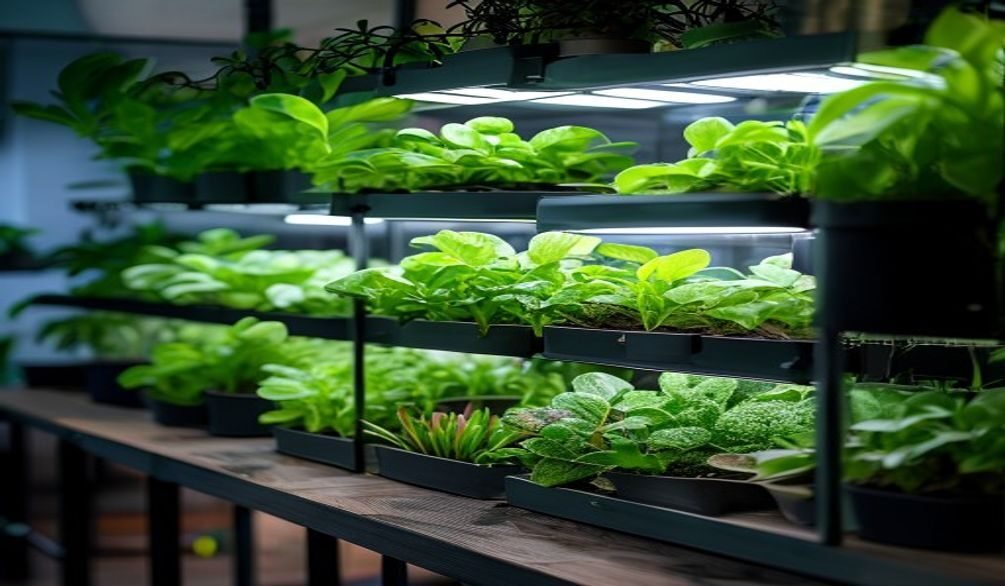
One of the biggest advantages is the ability to grow year-round, regardless of season or climate. This means you can have fresh lal mirch or tulsi even in the peak of summer, or enjoy dhania when it’s usually expensive at the sabziwala. Systems like AeroGarden, Click & Grow, or Rise Garden are fantastic examples of compact units that make indoor hydroponic growing accessible, even in a small kitchen. You can stack them vertically, maximizing your harvest in minimal space – a real boon for urban dwellers.
Reduced pests and diseases
Since there’s no soil, many common soil-borne pests and diseases are simply out of the picture. This significantly reduces the need for pesticides, which is great for your health and the environment. I’ve often seen powdery mildew decimate a batch of methi in my soil garden, but in a controlled hydroponic setup, such issues are far less common. This offers significant **hydroponics benefits home gardeners** who want to avoid chemical sprays.
How does hydroponics reduce water usage in home gardening?
Hydroponics dramatically reduces water usage in home gardening by recirculating water, allowing plants to absorb what they need and then capturing the rest. This efficiency can lead to a reduction in water consumption by up to 90% compared to conventional soil-based farming, according to Earth.Org (2023). When you consider the water scarcity issues many Indian cities face, this is a huge advantage.
In traditional soil gardening, a lot of water is lost to evaporation, runoff, and deep percolation beyond the plant’s root zone. Think about watering your terrace garden on a hot Bangalore afternoon – much of that water simply evaporates before the plant can use it. With hydroponic systems, especially closed-loop ones, the nutrient-rich water is contained and reused. This means every drop is put to good use, making it incredibly sustainable. For example, a simple Kratky method setup for lettuce uses a static nutrient solution that the plant consumes, but even that is more efficient than constant soil watering. This aspect of **hydroponics benefits home gardeners** by saving resources and reducing water bills.
Can hydroponics lead to faster growth and higher yields?
Yes, hydroponics absolutely can lead to faster growth and higher yields compared to traditional soil gardening, because plants in a hydroponic system receive nutrients directly and efficiently. Plants don’t have to expend energy searching for water and nutrients in the soil; instead, these are delivered right to their roots, promoting rapid development. Advanced Nutrients (2014) highlights that hydroponics allows total control over the growing environment and plant nutrition, often resulting in a higher yield of better quality produce.
The controlled environment of hydroponics means you can optimize factors like light, temperature, and nutrient delivery for specific plants. This allows plants to grow continuously without the stresses often found in soil, such as nutrient deficiencies or competition from weeds. For instance, leafy greens like spinach or lettuce mature much quicker in a hydroponic system, often ready for harvest in just a few weeks. This is why leafy greens captured 47.2% of the value in the hydroponics market by crop type in 2025, according to Mordor Intelligence (2026). This benefit of **hydroponics benefits home gardeners** by providing a quicker turnaround on fresh produce.
What are the advantages of hydroponics over traditional farming?
Hydroponics offers several distinct advantages over traditional soil-based farming, primarily through its efficiency, environmental control, and space-saving capabilities. It allows for optimized growth conditions that are simply not possible outdoors, leading to more predictable and often superior results. Bruce Dunn, an OSU professor of horticulture and landscape architecture, notes that “the benefit of hydroponics production in a greenhouse is that you can schedule the harvest of fresh produce” (2021).
Here are some key advantages that highlight why hydroponics is good:
- No Soil Needed: This eliminates soil-borne pests, diseases, and the need for weeding, making gardening less labor-intensive. You don’t have to worry about buying specific soil mixes from the nursery or dealing with heavy bags of potting mix.
- Better Nutrient Control: You can precisely tailor nutrient solutions to the specific needs of your plants, ensuring optimal growth and health. Brands like Advanced Nutrients offer specialized formulas that boost plant development.
- Space Efficiency: Hydroponic systems can be stacked vertically, making them ideal for urban spaces like balconies, terraces, or even indoors. This is a game-changer for someone like me, who’s always trying to squeeze one more plant into a small area. For more ideas on maximizing space, check out our guide on hydroponic plants for small spaces.
- Faster Growth and Higher Yields: As discussed, plants grow faster and often produce more because they’re in an ideal environment.
- Year-Round Production: You’re no longer limited by seasons. Grow whatever you want, whenever you want, even during the peak Indian summer heat or chilly North Indian winters.
These hydroponic gardening advantages make it a compelling alternative for home growers seeking consistency and control.
Does hydroponics eliminate pests and weeds for home gardeners?
Yes, hydroponics largely eliminates issues with soil-borne pests and weeds for home gardeners because there is no soil for them to thrive in. Since plants are grown in an inert medium or directly in water, the common habitats for many garden pests and weed seeds are removed. This significantly reduces the need for constant weeding and pesticide applications, which is a big relief for any gardener.
While hydroponics drastically cuts down on these issues, it doesn’t make your garden entirely pest-proof. Airborne pests like aphids or fungus gnats can still find their way in, especially if you’re growing indoors and introducing new plants or have open windows. However, managing these few pests is far easier than battling the myriad of issues that come with soil. This is a major benefit of soilless gardening and certainly among the top **hydroponics benefits home gardeners** can experience.
What are the disadvantages of hydroponics for home growers?
While hydroponics offers many fantastic benefits, it does come with its own set of disadvantages for home growers, primarily related to initial setup costs, technical knowledge, and potential for rapid system failure. You might have heard that hydroponics is always easy – in practice, it requires a bit more upfront learning and investment than simply sticking a seed in the ground. Bruce Dunn of OSU Extension (2021) emphasizes that “you have to be a great horticulturalist and skilled business person to handle the logistical challenges of growing food in a controlled indoor environment.”
Here are some common drawbacks:
| Disadvantage | Explanation for Home Gardeners |
|---|---|
| Initial Cost | Setting up a good hydroponic system can be more expensive than buying a few pots and soil. While the Kratky method is cheap, automated systems like AeroGarden or Rise Garden require an initial investment, often ranging from ₹5,000 to ₹30,000+. |
| Technical Knowledge | You need to understand nutrient solutions, pH levels, and plant specific needs. It’s not rocket science, but it’s more involved than just watering. |
| Power Dependency | Many systems rely on pumps and lights. A power cut, common in many parts of India, can quickly stress or kill your plants if it lasts too long. |
| Disease Spread | If a water-borne disease or pathogen gets into your system, it can spread rapidly to all connected plants. This is why proper sanitation is crucial. |
| System Failure Risk | Pump failures or nutrient imbalances can quickly lead to plant death, as plants are entirely dependent on the system. |
Honestly, I’ve seen friends give up on gardening after one failed crop and blame themselves – but 80% of first failures are caused by wrong pot size, wrong season, or wrong soil mix, not wrong technique. With hydroponics, it’s often about getting the initial setup and nutrient balance right. Once you nail those, almost any plant becomes easy to grow.
Is hydroponics cost-effective for home gardeners?
Hydroponics can indeed be cost-effective for home gardeners over the long term, especially when considering the savings on groceries and the ability to grow specialty crops. While the initial setup cost can be higher than traditional gardening, the reduced water usage, faster growth, and higher yields can offset these expenses. The global hydroponics market, valued at USD 12.24 billion in 2025, is projected to reach USD 30.79 billion by 2034, indicating a growing economic viability, according to Intellectual Market Insights Research (2026).
Think about it: consistently growing expensive herbs like basil or exotic lettuce varieties at home means fewer trips to the store and less money spent. Plus, you’re getting fresher, often organic produce. For example, a good quality LED grow light like the Treegers GB30W can last for years, providing consistent light for your plants, and over time, the cost per harvest decreases significantly. While you’ll need to buy nutrient solutions like Mills Basis A+B Nutrient Set, these are usually concentrated and last a while. The long-term **hydroponics benefits home gardeners** by providing fresh food at a lower cost per yield.
Getting started with home hydroponics systems
Starting with home hydroponics doesn’t have to be complicated or expensive; there are many options suitable for beginners. The key is to start simple, understand the basics, and gradually expand your system as you gain experience. I always tell new gardeners, don’t jump into complex setups right away – try something manageable first.
For beginners, the **Kratky method** is incredibly forgiving and requires no electricity if you have natural light. You just set up your plant in a net pot with a growing medium (like coco peat or rockwool) and suspend it over a nutrient solution. As the plant grows, it consumes the water, and its roots extend into the diminishing solution. It’s perfect for leafy greens like lettuce or spinach.
Another easy entry point is an all-in-one system like an AeroGarden or Click & Grow. These systems come with everything you need, including pre-seeded pods and automated lighting schedules, making them super user-friendly. They might cost a bit more upfront, but they remove much of the guesswork.
Here’s a quick guide to kick off your hydroponic journey:
- Choose Your System: Start with a simple Kratky setup or an entry-level automated unit.
- Select Your Plants: Begin with easy-to-grow plants like lettuce, spinach, pudina, or other leafy greens. Cherry tomatoes like Pusa Ruby also do well in hydroponic systems designed for fruiting plants.
- Get Your Nutrients: Invest in a good quality hydroponic nutrient solution. Advanced Nutrients is a popular choice, but many local nurseries also stock suitable options.
- Monitor pH: This is crucial. A simple pH testing kit is inexpensive and will help you keep your nutrient solution in the optimal range (usually 5.5-6.5).
- Provide Light: If growing indoors, a good grow light is essential. Even a simple LED grow bulb in a household fitting can work for herbs.
One common mistake I’ve seen (and made myself!) is trying to use vermicompost directly in a seed-starting tray. I once mixed vermicompost at a 30% ratio for my methi seeds – burned every single seedling within five days because the nutrients were far too concentrated for delicate young roots. Vermicompost is fantastic, but it’s for established plants, not for germination. Always use a sterile, inert medium for sprouting in hydroponics.
Resources for home hydroponics
For more in-depth knowledge, look for resources from institutions like OSU Extension – they often have detailed guides on various hydroponic techniques. Online stores like Ugaoo or Nurserylive also offer a range of hydroponic supplies, from grow lights to nutrient solutions, making it easier for Indian home gardeners to source what they need.
Frequently asked questions
What are the disadvantages of hydroponics?
The main disadvantages of hydroponics include higher initial setup costs, a steeper learning curve for nutrient management, reliance on electricity for many systems, and a risk of rapid disease spread if a pathogen enters the closed system. For instance, automated systems like Rise Garden can range from ₹15,000 to ₹50,000, a significant upfront investment.
What are 5 advantages of hydroponics?
Five key advantages of hydroponics are up to 90% less water usage, faster plant growth, higher yields, the ability to grow year-round indoors, and the elimination of soil-borne pests and weeds. The global hydroponics market is projected to reach USD 30.79 billion by 2034, according to Intellectual Market Insights Research (2026), reflecting these significant benefits.
What are the benefits of hydroponics over traditional farming?
Hydroponics offers benefits over traditional farming by allowing precise control over nutrients, significantly reducing water consumption, eliminating soil-borne issues, enabling year-round cultivation in any climate, and requiring less physical space. This efficiency helps maximize harvests in urban settings.
Is hydroponics good for home use?
Yes, hydroponics is excellent for home use, especially for urban gardeners with limited space or those facing challenging weather conditions, as it allows for consistent, fresh produce year-round with less water and fewer pests. Systems like AeroGarden make it accessible for beginners to enjoy the **hydroponics benefits home gardeners** are seeking.
How much faster do plants grow in hydroponics?
Plants can grow 30-50% faster in hydroponic systems compared to traditional soil gardening due to optimal nutrient delivery, consistent water access, and controlled environmental conditions. This accelerated growth means quicker harvests and more frequent crop cycles.
So, if you’re tired of battling the elements or struggling with limited space, exploring hydroponics could be your next big gardening win. The **hydroponics benefits home gardeners** by offering a controlled, efficient, and rewarding way to grow fresh produce right in your home, regardless of the season outside. Why not give it a try and see how much more you can grow?