Key Takeaways
- The global vertical garden system market reached $1.8 billion in 2025, according to market projections.
- Asia Pacific accounted for 42.3% of global vertical garden system revenue in 2025, generating approximately $761 million.
- Vertical gardening can increase yields and simplify maintenance, making it ideal for urban spaces, according to Mother Earth Living.
- Choosing the right pot size, season, and soil mix prevents 80% of first-time gardening failures, based on Gaurav’s 10+ years of experience.
- The vertical farming market is predicted to reach USD 60.40 billion by 2035, growing at a 22.0% CAGR from 2026, according to industry valuations.
Most Mumbai balcony gardeners lose their pudina plants every May — not from pests, but from the scorching 40°C heat before the monsoon arrives, leaving them wondering about more efficient ways to grow. If you’re looking for vertical gardening fast ways to maximize your green space, you’re in the right place; we’ll explore quick and effective methods to cultivate more plants even in limited urban footprints.
Quick Answer: Vertical gardening quickly maximizes growing space by utilizing vertical structures like trellises, walls, or stacked planters, allowing you to cultivate more plants in a smaller footprint with easier access and improved plant health.
What is vertical gardening and why go vertical?
Vertical gardening is a smart, space-saving technique that allows plants to grow upwards, making use of various structures like walls, fences, or stacked containers. The global vertical garden system market reached $1.8 billion in 2025, according to market projections, showing just how popular this approach has become. For urban dwellers in cities like Bangalore or Pune, where space is a luxury, vertical gardening offers a fantastic solution to cultivate fresh produce and beautiful flowers.
It’s more than just saving space, though. Vertical gardens can significantly increase your yield, making your small balcony feel like a mini-farm. David Hillock, an Oklahoma State University Cooperative Extension consumer horticulturist, notes that “Vertical gardening is a great way to take advantage of empty vertical space such as walls or fences.” This method also makes gardening easier on your back, eliminating much of the bending and extensive work that traditional ground-level beds require, which is a huge plus for senior citizens or anyone with mobility limitations. Plus, it adds a unique visual interest to your home.
5 fast ways to implement vertical gardening at home
Implementing vertical gardening fast ways at home doesn’t require a massive overhaul; many solutions are quick, affordable, and use materials you might already have. These space-saving gardening techniques are perfect for anyone wanting to get started without delay.
Here are five methods that I’ve found work brilliantly, even in the humid Mumbai climate:
- Repurposed Pallet Gardens: Wooden pallets are readily available and can be transformed into a multi-tiered planter in just a few hours. Just line the inside with landscape fabric or thick plastic sheeting, fill with a good soil mix (I prefer a blend of cocopeat, compost, and neem cake), and plant your herbs like pudina, dhania, or small leafy greens. You can find pallets for free or at a low cost from local businesses.
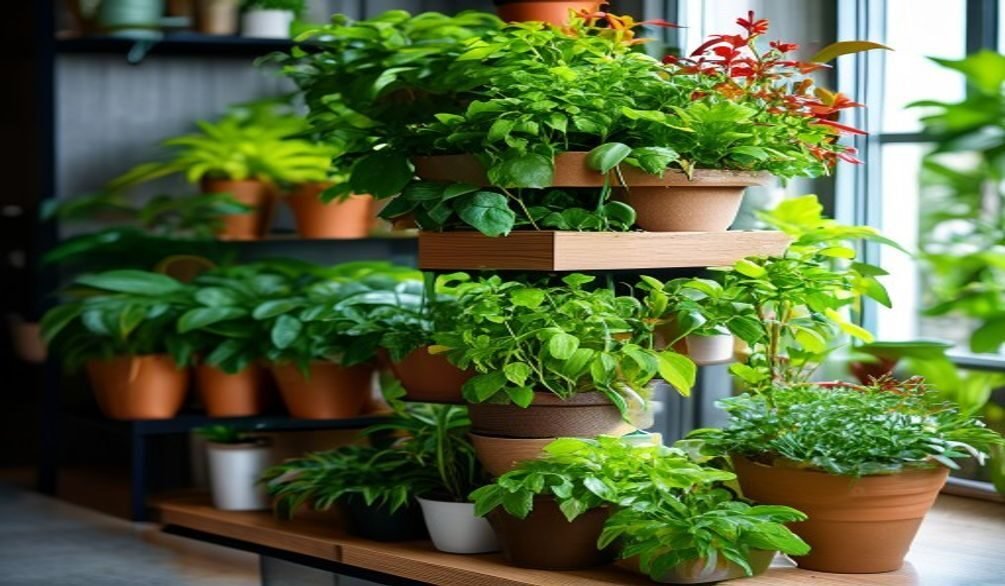
- Stackable Planters: These are probably the quickest setup. Companies like Amazing Creation offer stackable planters that come with a self-watering system, making them incredibly convenient. You just stack them up, fill with soil, and plant. They’re great for strawberries, small flowers, or even bhindi if you choose a dwarf variety.
- Trellises and Arbors: For climbing plants, a simple trellis offers an immediate vertical solution. You can buy ready-made bamboo trellises for ₹150–₹300 at any local nursery or even DIY one with sturdy 2x4s and hardware cloth. These are ideal for fast-growing climbers like cucumbers (try ‘Pusa Sanyog’), peas, or even small gourds.
- Hanging Baskets and Pockets: If you have a sturdy railing or ceiling hook, hanging baskets are an instant vertical garden. Use them for cascading plants like petunias, money plants, or even cherry tomatoes. Fabric shoe organizers with pockets can also be repurposed – just hang them on a wall or fence and fill each pocket with soil for herbs or small flowers.
- Rain Gutter Planters: Old rain gutters can be cleaned, sealed at the ends, and hung horizontally in tiers along a wall or fence. They’re shallow, so they work best for shallow-rooted plants like lettuce, spinach, or methi. This is a very budget-friendly DIY vertical garden idea that looks surprisingly neat.
Repurposed materials for vertical gardening fast ways
When it comes to vertical gardening fast ways, using repurposed materials is not only economical but also incredibly eco-friendly. I’ve often seen people throw out perfectly good items that could easily become part of a thriving vertical garden. Think about old plastic bottles cut in half, painted, and hung from a frame, or even broken terracotta pots stacked creatively. The key is to ensure they have proper drainage holes, which is something many DIY guides overlook.
How do you make a simple vertical garden quickly?
Making a simple vertical garden quickly often involves leveraging ready-made components or materials that require minimal modification. The fastest approach usually involves stackable planters or a pre-fabricated vertical garden kit. A study by Michigan State University Extension (2018) highlighted that modular systems significantly reduce setup time for urban gardeners.
Here’s a quick step-by-step for a basic, fast setup using stackable planters:
- Choose Your Spot: Pick an area on your balcony or terrace that gets at least 6-8 hours of sunlight daily. Consider the weight once filled with soil and plants.
- Assemble Your Planter: Most stackable planters, like those from GreenStalk, simply click or twist together. It’s usually a 5-10 minute job.
- Prepare Your Soil: Use a high-quality, lightweight potting mix. In my 10 years of experience, a good mix of cocopeat (from brands like Cocogreen), vermicompost, and perlite works wonders for drainage and aeration, especially for container plants in Indian summer heat.
- Plant Your Greens: Fill each tier with soil and plant your chosen herbs or leafy greens. For example, tulsi, dhania, and lal mirch plants thrive in these setups.
- Water Thoroughly: Water until you see drainage from the bottom. These systems are designed for efficient watering, but don’t assume the top tiers will water the bottom perfectly every time.
Honestly, the biggest mistake I see beginners make is using heavy garden soil from the ground instead of a proper potting mix for containers. That’s a recipe for compacted roots and poor drainage, especially in a vertical setup. You might have heard that “any soil will do,” but in practice, dense garden soil compacts quickly in pots, suffocating roots and leading to plant failure — a quality, well-draining potting mix actually works instead.
What are the fastest growing plants for vertical gardens?
The fastest-growing plants for vertical gardens are typically leafy greens, herbs, and certain climbing vegetables that mature quickly and thrive in limited root space. These plants are ideal for anyone looking for vertical gardening fast ways to see results.
Here’s a table of some excellent choices, perfect for Indian climates:
| Plant Type | Specific Variety | Growth Time (Approx.) | Notes for Vertical Setup |
|---|---|---|---|
| Leafy Greens | Palak (Spinach) | 30-45 days | Shallow roots, tolerates partial shade. Harvest outer leaves for continuous yield. |
| Leafy Greens | Lettuce (Loose-leaf) | 30-50 days | Prefers cooler temps, good for winter in North India or shaded spots in South. |
| Herbs | Pudina (Mint) | 20-30 days (for harvest) | Very vigorous, can spread; ideal for individual pockets or containers to manage growth. |
| Herbs | Dhania (Coriander) | 30-45 days | Needs consistent moisture, good for cooler seasons. Sow seeds directly. |
| Herbs | Methi (Fenugreek) | 20-30 days | Quickest leafy green, excellent for shallow trays or pockets. |
| Climbers | Bush Beans (e.g., French Beans) | 50-60 days | Compact, but still benefits from a small trellis or support in vertical pockets. |
| Climbers | Cherry Tomatoes (e.g., Pusa Ruby) | 60-70 days | Needs sturdy support (trellis/cage) and consistent watering. Smaller varieties are best. |
The key to success with these fast growers is consistent watering and adequate sunlight. I remember losing a container plant one July during monsoon because I assumed the rain was enough. My balcony roof blocked all the rain, and the soil was bone dry while the ground around it was soaked. It taught me that container plants on covered balconies still need watering in monsoon. Don’t make that mistake!
What are the disadvantages of vertical gardening?
While vertical gardening offers numerous benefits, it does come with its own set of challenges, primarily related to watering, nutrient management, and initial setup costs. It’s not always a magic bullet, especially if you’re not prepared for these specific considerations.
Here are some common drawbacks:
* Increased Watering Frequency: Plants in vertical setups, especially those in smaller pockets or exposed to more air circulation, tend to dry out faster than ground-level plants. This is particularly true during the Indian summer heat (40°C+). You might need to water daily, or even twice a day, which can be time-consuming.
* Nutrient Depletion: With frequent watering, nutrients can leach out of the smaller soil volumes more quickly. This means you’ll need to fertilize more regularly, perhaps every 2-3 weeks, using a balanced liquid fertilizer.
* Initial Cost: While DIY options can be cheap, purchasing ready-made vertical garden systems, especially those with irrigation, can be a significant upfront investment. For instance, a quality stackable planter system might cost anywhere from ₹2,000 to ₹8,000, depending on size and features.
* Limited Plant Choices: Not all plants are suitable for vertical gardens. Deep-rooted vegetables like potatoes or large gourds often struggle in the restricted space, though some vining gourds can be trained upwards with strong support.
* Sunlight Distribution: Depending on the structure, plants on lower tiers might receive less sunlight, impacting their growth. This is a common issue with wall-mounted systems in a single direction.
* Wind Exposure: Elevated plants can be more exposed to strong winds, especially in high-rise apartments in cities like Chennai, which can cause physical damage or increased water loss.
Tips for maintaining your fast vertical garden
Maintaining your vertical gardening fast ways setup is crucial for its long-term success, and it often boils down to consistent care and smart choices. Small space gardening requires a bit more attention to detail, but it’s totally manageable.
Here are some tips I’ve picked up over the years:
* Consistent Watering is Key: As mentioned, vertical gardens dry out quickly. Invest in a small watering can with a long spout or even a drip irrigation kit (available online for ₹800–₹1500) for larger setups to ensure even moisture. Check soil moisture daily by sticking your finger an inch deep.
* Regular Feeding: Since nutrients wash out faster, feed your plants every 2-3 weeks with a balanced liquid fertilizer. Organic options like diluted Jeevamrut or compost tea work wonderfully.
* Pruning for Production: Don’t be afraid to prune! Regular pruning encourages bushier growth and higher yields, especially for herbs like pudina and tulsi. It also helps manage plant size in limited spaces.
* Pest and Disease Watch: Keep a close eye on your plants. Pests can spread quickly in closely packed vertical gardens. Neem oil spray (available for ₹200–₹400) is an excellent organic solution for common pests like aphids or mealybugs, which I’ve found very effective in Pune’s mild climate.
* Rotate and Replenish Soil: After a few seasons, the soil in your vertical garden can become depleted. It’s a good practice to refresh it by adding fresh compost or replacing a portion of the old soil to ensure continued plant health.
* Choose the Right Pots: This is a big one. I once bought a “grow bag” online advertised as 15 litres — it held only 9 litres when filled properly because the sides were too thin to stand upright. I wasted an entire season of tomatoes because the root volume was not enough. Now I only buy grow bags from physical nurseries where I can check the material thickness. This might sound like a small detail, but getting the pot size right is one of the most important things you can do for your plants.
Innovations in vertical gardening systems
The world of vertical gardening is constantly evolving, with exciting innovations making these systems more efficient, accessible, and productive for home gardeners and commercial operations alike. These advancements are truly propelling vertical gardening fast ways into the future.
One significant area of growth is in smart vertical garden systems that integrate technology. Companies like Verti-Gro offer self-watering vertical gardens, and we’re seeing more systems with automated timers, nutrient delivery, and even LED grow lights for indoor setups. This is particularly beneficial for urban gardening solutions where natural light might be scarce or inconsistent. The vertical farming market size is valued at USD 8.35 billion in 2025 and is predicted to reach USD 60.40 billion by 2035, growing at a 22.0% CAGR from 2026 to 2035, according to industry valuations, underscoring the rapid innovation in this sector.
Another innovation is the focus on sustainable and aesthetic designs. H. Potter, a company with over 25 years in garden design, emphasizes that “vertical gardening has emerged as a captivating trend that not only maximizes space it also adds a touch of elegance to any environment.” We’re seeing more modular living wall systems that are not just functional but also beautiful, integrating seamlessly into modern home and office decor. Materials are also improving, with more durable, food-grade plastics and recycled components being used.
Lastly, the rise of hydroponic and aeroponic vertical systems for home use is making gardening even more efficient. While traditionally seen in large-scale commercial vertical farms like those by CubicFarm Systems, smaller, user-friendly hydroponic setups are becoming available for home users, allowing for faster growth and significant water savings. These systems remove the need for soil, reducing mess and pest issues, making them a very clean option for vertical gardening fast ways indoors.
Frequently asked questions
What are the 5 methods of vertical gardening?
The five common methods of vertical gardening include trellises, stackable planters, hanging systems, pocket planters, and repurposed material structures like pallet gardens. These methods allow gardeners to maximize space and grow a variety of plants upwards, according to Oklahoma State University Cooperative Extension. Each offers unique benefits for different types of plants and available space.
What are the fastest growing vertical plants?
The fastest growing vertical plants generally include leafy greens like palak (spinach) and methi (fenugreek), and herbs such as pudina (mint) and dhania (coriander). These plants can often be harvested within 3-6 weeks, making them ideal for quick yields in vertical gardening fast ways. Choosing these varieties ensures a rapid and satisfying harvest.
How do you make a simple vertical garden quickly?
To make a simple vertical garden quickly, use ready-made stackable planters or repurpose materials like old pallets or fabric shoe organizers. These setups require minimal assembly and can be filled with lightweight potting mix and planted within an hour, according to gardening experts. This approach saves time and allows for immediate planting.
What are the disadvantages of vertical gardening?
Disadvantages of vertical gardening include increased watering frequency due to faster drying, higher nutrient depletion requiring more frequent fertilization, and potentially higher initial setup costs for specialized systems. Plants in vertical gardens might also experience uneven sunlight distribution, according to Mother Earth Living. Understanding these challenges helps in better planning and maintenance.
What are the benefits of vertical gardening?
Vertical gardening offers significant benefits such as maximizing growing space in urban areas, increasing plant yields, and simplifying maintenance by reducing bending. It also adds aesthetic value and can improve air quality, according to H. Potter, a garden design company. The global vertical garden system market is projected to expand to $4.2 billion by 2034, demonstrating its growing popularity and recognized advantages.
Ultimately, embracing vertical gardening fast ways can truly transform your small urban space into a thriving green oasis, allowing you to grow more of what you love. Remember my rule: most people give up on gardening after one failed crop and blame themselves — but 80% of first failures are caused by wrong pot size, wrong season, or wrong soil mix, not wrong technique. Get those three right, and almost any plant becomes easy to grow, whether it’s tulsi for your morning tea or bhindi for your sabzi. So, pick one of these vertical gardening fast ways, get your hands dirty, and enjoy the bounty!