Key Takeaways
- 42% of Europeans aged 25-34 actively engage in balcony gardening, according to Gitnux (2026).
- 78% of U.S. gardeners adopted container gardening post-2020, indicating a shift towards small-space growing, according to Gitnux (2026).
- Fabric grow bags can increase nutrient uptake efficiency by up to 41%, according to Cornell Cooperative Extension (2021), cited by LifeTips (2026).
- Vertical gardening systems, like wall trellises, can support 12–15 lbs of produce per square foot, according to Gardener’s Supply Co.
- Dwarf tomato varieties like ‘Patio Snacker’ are recommended for containers, yielding better harvests in limited balcony spaces.
Most Bangalore balcony gardeners dream of a lush harvest, but often struggle to get more than a few tomatoes or some pudina from their limited space. It’s frustrating to put in all that effort and not see a bountiful return, isn’t it? If you’re looking to significantly boost balcony garden yield, you’re in the right place. We’ll explore seven proven strategies that will help you maximize every inch and get more vegetables from your small garden.
Quick Answer: To boost balcony garden yield, prioritize vertical growing, select compact plant varieties, use breathable fabric grow bags for optimal root health, maximize sunlight exposure, and maintain consistent watering and organic fertilization.
How do i maximize my small balcony garden space?
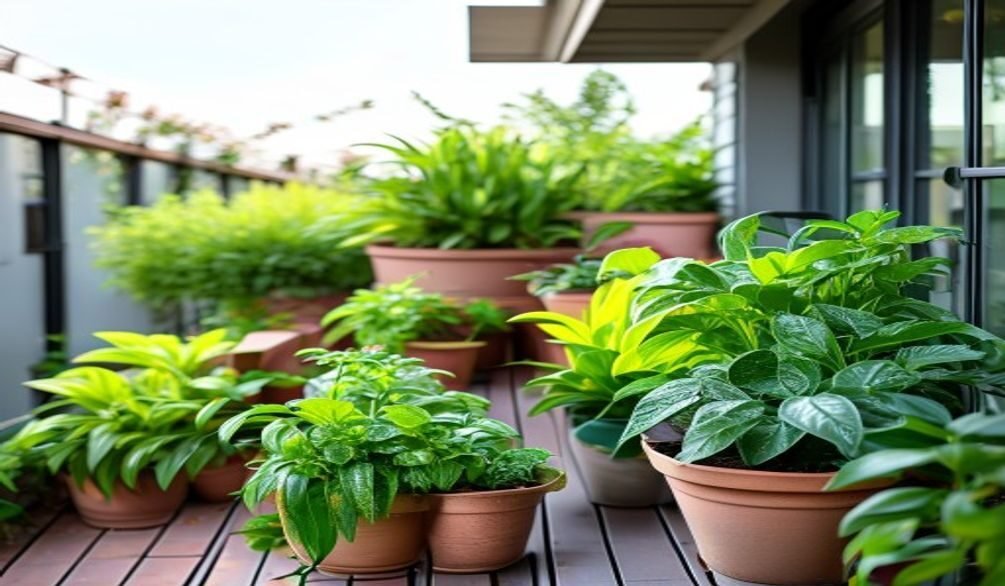
You can maximize your small balcony garden space by treating it as a three-dimensional growing zone, focusing on vertical layering and understanding your specific balcony’s microclimate. This approach helps utilize every available surface, not just the floor, which is crucial for urban gardeners. In fact, 42% of Europeans aged 25-34 engage in balcony gardening, highlighting the widespread need for efficient small-space techniques, according to Gitnux (2026).
The first step is to assess your balcony’s unique conditions. Honestly, skipping this initial assessment of sunlight, wind, and available space is the number one reason new balcony gardeners get discouraged, according to Home Food Harvest (2025). You need to know exactly how many hours of direct sun your balcony gets, which direction the prevailing winds come from, and where the shadiest spots are. This helps you map out where sun-loving plants like tomatoes will thrive and where shade-tolerant pudina or tulsi might be happier.
Here are a few ways to really make the most of your balcony’s footprint:
- Vertical Gardening: Install wall-mounted trellises, hanging planters, or tiered shelving. We’ll dive deeper into this soon, but it’s a game-changer for maximizing small garden space.
- Microclimate Mapping: Observe your balcony throughout the day and across seasons. Where does the sun hit strongest? Which corners stay cooler? This insight lets you strategically place plants where they’ll naturally thrive, helping to boost balcony garden yield.
- Consider Underneath: Don’t forget the space under tables or benches. You can often tuck in shallow trays of microgreens or mushroom growing kits in these cooler, shadier spots.
What are the most successful ways to grow vegetables on a balcony?
The most successful ways to grow vegetables on a balcony involve smart plant selection, effective container choices, and consistent care tailored to your specific microclimate. This includes methods like succession planting, which allows you to harvest continuously. One way to maximize your harvest is to grow plants that mature quickly, harvest them, and then plant more, according to The Associated Press (2026).
You’re essentially creating a mini-farm in a confined space, so every decision matters. For instance, my neighbor grew tomatoes in a black plastic pot on her Mumbai terrace and got nothing two summers in a row. The black plastic heats up to 55°C in direct sun, silently cooking the roots. Switched her to a terracotta pot with the same soil mix and she got her first harvest in 8 weeks. It really shows how much container choice impacts root health and overall plant vigor.
Here are some key strategies to boost balcony garden yield:
- Choose Compact Varieties: Opt for dwarf or determinate plant types designed for containers.
- Use Breathable Containers: Fabric grow bags or terracotta pots promote better root health than plastic.
- Succession Planting: Plant small batches of quick-growing vegetables like radishes or methi every 2-3 weeks for a continuous harvest.
- Optimize Sunlight: Position plants to get maximum sun exposure, rotating them if necessary.
- Regular Feeding: Container plants exhaust nutrients faster, so consistent organic fertilization is key.
Which plants give the highest yield in balcony pots?
Plants that give the highest yield in balcony pots are typically compact, quick-maturing varieties that produce continuously or have a high fruit-to-plant ratio. Think about plants that don’t need a huge root run and can handle a bit of stress. For example, ‘Patio Snacker’ cucumbers and ‘Littletom’ cherry tomatoes are specific dwarf cultivars recommended for containers because of their high yield potential in small spaces.
It’s all about choosing smart. You don’t want a sprawling pumpkin vine taking over your entire balcony when you could have several rounds of bhindi or lal mirch instead. My 10 years of experience growing on Indian balconies has taught me that smaller, faster-producing plants often give you more bang for your buck, especially when you’re trying to boost balcony garden yield.
Here’s a table of high-yield container plants perfect for your balcony:
| Plant Type | Recommended Variety for Balcony | Why it’s High-Yield |
|---|---|---|
| Tomatoes | ‘Patio Snacker’, ‘Littletom’, Pusa Ruby | Dwarf, determinate, continuous fruiting |
| Cucumbers | ‘Spacemaster’, ‘Bush Crop’ | Compact vines, good fruit production |
| Bhindi (Okra) | ‘Pusa Sawani’ | Upright growth, continuous harvest |
| Chilies (Lal Mirch) | ‘Jwala’ (small hot types) | Bushy, prolific fruiting over months |
| Leafy Greens | Palak (Spinach), Methi (Fenugreek), Pudina (Mint) | Quick regrowth after cutting, multiple harvests |
| Beans | Bush Beans (e.g., ‘Contender’) | Compact, high pod count |
Remember, even high-yield plants need consistent care. Don’t let them dry out or starve, or your efforts to boost balcony garden yield will fall short.
How can container choice impact balcony garden yield?
Your choice of container significantly impacts balcony garden yield by affecting root health, nutrient availability, and soil temperature. The right container prevents root rot and allows for better air circulation, which is vital for plant vigor. Fabric grow bags, for instance, can increase nutrient uptake efficiency by up to 41% compared to traditional pots, according to Cornell Cooperative Extension (2021), cited by LifeTips (2026).
This isn’t just about aesthetics; it’s about creating the best environment for your plant’s roots. Plastic pots, especially dark-colored ones, can heat up dramatically in the Indian summer sun, literally cooking the roots. That’s a silent killer for many balcony plants. Terracotta pots breathe better but dry out faster, requiring more frequent watering.
Here’s a quick comparison of popular container types:
- Fabric Grow Bags (e.g., Smart Pot, Root Pouch): These are fantastic. They promote “air-pruning,” which encourages lateral root branching instead of circling, leading to a denser, healthier root ball. This directly helps to boost balcony garden yield. A 7-gallon fabric grow bag can yield 8–12 lbs of tomatoes per bag, which is double the yield of ground-planted equivalents in the same footprint. You can find these online on Ugaoo or Nurserylive for ₹150–300.
- Terracotta Pots: They’re breathable and look great, preventing root rot. The downside is they dry out quickly, especially in Delhi’s dry summers, so you’ll need to water more often.
- Plastic Pots: Affordable and lightweight, but they don’t breathe. In direct sun, they can overheat the roots. If you use them, choose lighter colors and consider insulating them with a larger, decorative pot.
- Self-Watering Planters: These have a water reservoir at the bottom, reducing watering frequency. They’re great for busy gardeners but can be pricier.
What is vertical gardening and how does it boost yield?
Vertical gardening is a method of growing plants upward rather than outward, using structures like trellises, stacked planters, or wall-mounted systems, and it drastically helps to boost balcony garden yield by maximizing limited space. This technique transforms your balcony from a flat surface into a multi-tiered growing area, making use of air space. As LifeTips (2026) puts it, you must treat your balcony not as a flat surface but as a three-dimensional growing zone.
It’s about thinking creatively about how you use your walls, railings, and even the ceiling. Instead of just having pots on the floor, you can have plants at different heights, creating a lush, productive green wall. This is especially useful in cities where horizontal space is a luxury.
Effective vertical gardening options to boost balcony garden yield:
- Trellises and Arbors: Perfect for climbing plants like cucumbers (‘Spacemaster’), beans, or even small gourds. A Gardener’s Supply Co. Wall Trellis, for example, can support 12–15 lbs of produce per square foot and reduces rot risk by keeping plants off the ground.
- Stacked Planters: Modular systems like Stackables by Gardener’s Edge or Lechuza Cascada allow you to grow multiple plants in a small footprint. Just make sure the design prevents lower layers from being shaded out.
- Pocket Planters: While popular, be cautious with felt pocket planters. In my experience, they often degrade quickly in the harsh Indian sun and dry out too fast, making it hard to maintain consistent moisture. They’re better for short-term herbs or succulents in shadier spots.
- Hanging Baskets: Excellent for trailing plants like cherry tomatoes (‘Littletom’), strawberries, or ornamental flowers, freeing up floor space.
By going vertical, you’re not just adding more plants; you’re also improving air circulation around them, which can reduce pest and disease issues.
How do i get more vegetables from my small balcony garden?
To get more vegetables from your small balcony garden, focus on intensive planting, succession planting, and optimal plant care, ensuring every plant is performing at its peak. This means choosing plants wisely and giving them precisely what they need, when they need it. A substantial 63.6% of gardeners plan to expand their gardens and plant more, showing a strong desire to increase yields, according to Axiom Marketing (2025).
It’s easy to feel limited by space, but with smart planning, you can significantly boost balcony garden yield. Think about maximizing the life cycle of each plant and the space it occupies. This isn’t just about packing in more plants; it’s about making each plant incredibly productive.
Strategies for getting more vegetables:
- Intensive Planting: Plant crops closer together than traditional garden spacing, especially for leafy greens or radishes. Just ensure there’s still enough air circulation.
- Succession Planting: As soon as one crop finishes, plant another. For example, once your methi is harvested, immediately sow some palak seeds. This ensures your containers are always producing.
- Pruning for Production: Regularly prune indeterminate tomatoes or bhindi to encourage more fruit production rather than just leafy growth. Remove spent flowers or fruits to signal the plant to produce more.
- Companion Planting: Pair plants that benefit each other. Marigolds can deter pests, while basil planted near tomatoes is said to improve flavor and growth.
- Regular Harvesting: The more you pick, the more the plant produces. Don’t let vegetables over-ripen on the plant; harvest them promptly to encourage new growth and help boost balcony garden yield.
Optimizing watering and feeding for maximum balcony harvest
Optimizing watering and feeding is absolutely critical for a maximum balcony harvest, as container plants have limited access to water and nutrients compared to in-ground gardens. Consistent moisture and a steady supply of balanced nutrients are non-negotiable for healthy, productive plants. My own experience taught me this the hard way: I once over-watered a curry leaf plant for three weeks straight because I was following a fixed schedule instead of checking the soil. By the time the leaves started yellowing, it was already too late – roots had rotted. Now I always push my finger 2 inches into the soil before watering anything, and it’s a simple trick that helps boost balcony garden yield.
The soil volume in a 12-inch pot is too small for slow-release organic nutrients to work the way they do in ground soil. Honestly, organic fertilizers are overrated for small container gardens. Liquid fertilizers like diluted jeevamrit or seaweed extract work faster and are easier to control in pots. They provide that immediate boost your plants need.
Here’s how to get it right:
- Watering Wisdom:
- Check Before You Water: Always feel the soil. If the top inch or two feels dry, it’s time to water. This is especially true for monsoon gardening in Mumbai, where overwatering can be a huge issue.
- Water Deeply: Water until it drains from the bottom. This encourages roots to grow deeper.
- Consistency is Key: Avoid letting plants wilt dramatically between waterings, as this stresses them and reduces yield.
- Nutrient Battery System & Feeding:
- Start Strong: Begin with a good quality potting mix enriched with compost. For Indian conditions, a mix of cocopeat, compost, and perlite works wonders for drainage and water retention.
- Regular Liquid Feeds: Since container nutrients deplete fast, especially with frequent watering, regular liquid feeding is crucial. Diluted fish emulsion and liquid kelp are excellent organic options for a consistent boost during the growing season. Apply every 2-3 weeks.
- Top-Dressing: Every few months, add a layer of fresh compost to the top of your pots. As you water, nutrients will slowly leach into the soil.
- Micronutrients: Don’t forget trace elements! Sometimes a plant just needs a little iron or magnesium. A good organic liquid fertilizer usually covers this, helping to boost balcony garden yield.
Frequently asked questions
How do i maximize my small balcony garden?
You maximize your small balcony garden by utilizing vertical space with trellises and hanging planters, selecting compact plant varieties, and implementing succession planting for continuous harvests. 78% of U.S. gardeners adopted container gardening post-2020, highlighting the shift towards making the most of limited spaces, according to Gitnux (2026). Always assess your balcony’s sunlight and wind patterns to place plants optimally.
What is the most successful way to grow vegetables on a balcony?
The most successful way to grow vegetables on a balcony is through a combination of smart plant selection, using breathable containers like fabric grow bags, and consistent care, including proper watering and feeding. Hydroponic home systems usage is up 45% globally since 2021, showing a growing interest in high-yield methods for compact areas, according to Gitnux (2026). Focus on creating a stable microclimate for your plants.
What vegetables give the highest yield in pots?
Vegetables that give the highest yield in pots are typically compact, determinate varieties like ‘Patio Snacker’ tomatoes, ‘Spacemaster’ cucumbers, bush beans, and prolific leafy greens such as palak and methi. These plants are bred to produce well in confined spaces and often offer continuous harvests. Regular harvesting of these plants encourages further production.
How do i get more vegetables from my small garden?
You get more vegetables from your small garden by practicing intensive planting, succession planting (planting new crops as old ones finish), and choosing high-yielding, compact varieties. Regular pruning and timely harvesting also signal plants to produce more, helping to boost balcony garden yield. Ensure your plants receive adequate sunlight and nutrients for optimal growth.
How can container choice impact balcony garden yield?
Container choice significantly impacts balcony garden yield by influencing root health, soil temperature, and nutrient retention. Fabric grow bags, for example, promote air-pruning for healthier roots and can increase nutrient uptake efficiency by up to 41%, according to Cornell Cooperative Extension (2021), cited by LifeTips (2026). Avoid dark plastic pots in direct sun as they can overheat roots and stunt growth.
Achieving a thriving, productive balcony garden is absolutely within reach, even with limited space. By strategically implementing vertical growing, choosing the right compact plant varieties, opting for breathable containers, and mastering your watering and feeding routines, you can dramatically boost balcony garden yield. Don’t be afraid to experiment with succession planting and keep a close eye on your balcony’s unique microclimate. With these proven strategies, you’ll be enjoying a bountiful harvest from your small urban oasis in no time. So, grab your gardening gloves and let’s get planting to truly boost balcony garden yield!