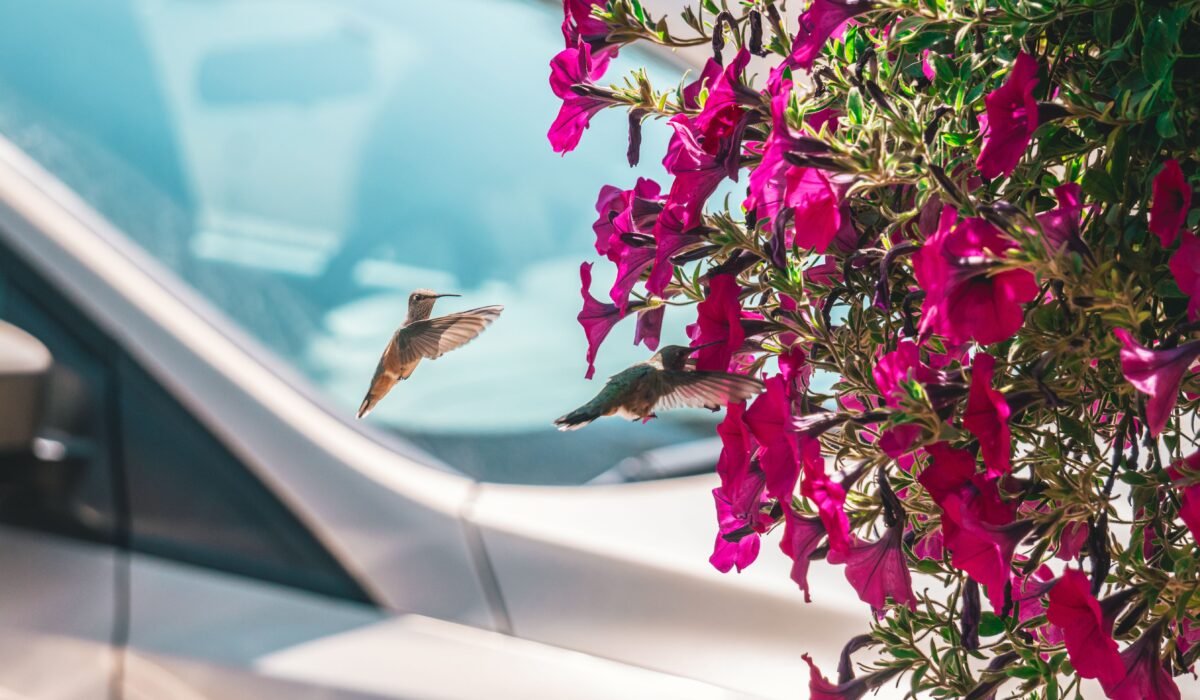
Key Takeaways
- Hummingbirds feed every 10 to 15 minutes, visiting 1,000 to 2,000 flowers daily, according to the National Audubon Society (2025).
- Planting nectar-rich, tubular flowers, especially in red, orange, and pink, is highly effective to attract hummingbirds to your garden.
- Allen’s hummingbird populations decreased by 80% between 1968 and 2019, highlighting the importance of habitat support, according to the 2025 U.S. State of the Birds Report.
- Clean sugar-water feeders, refreshed every 2-3 days, provide a vital energy source for these active birds.
- A hummingbird’s heart can beat up to 1,260 times a minute during migration, emphasizing their need for consistent high-energy food sources, according to Hummingbird Central (2025).
Are you eager to witness the dazzling aerial acrobatics of hummingbirds right in your backyard? As a gardener with over a decade of experience, I can tell you that the secret to how to Attract Hummingbirds to Your Garden lies in creating a holistic, inviting habitat. This guide will walk you through seven proven ways to transform your outdoor space into a vibrant haven that these tiny, energetic birds will adore.
Quick Answer: Attract hummingbirds by planting nectar-rich, tubular flowers (red, orange, pink), providing clean sugar-water feeders, shallow water sources, and perching spots. Ensure your garden is pesticide-free to support their insect diet and overall health.
What Attracts Hummingbirds the Most?
The single most powerful element to attract hummingbirds to your garden is a consistent, abundant supply of nectar-rich flowers. These tiny birds possess an incredibly high metabolism, demanding frequent feeding throughout the day to sustain their energy, visiting 1,000 to 2,000 flowers daily, according to the National Audubon Society (2025). Creating a reliable food source is paramount if you truly want to attract hummingbirds to your garden.
They are particularly drawn to tubular flowers that are rich in nectar, as their long beaks and tongues are perfectly adapted for accessing this sugary fuel. What most people miss is that hummingbirds also require protein, obtained from small insects, making a pesticide-free environment crucial. Wayne Klockner, executive director of the American Birding Association, explains that “Hummingbirds have the most super-charged metabolism of all birds due to their tiny size and long distance migrations — it takes a lot of energy to keep a hummingbird going and allow it to fly in its unique way.” This constant energy demand drives their attraction to reliable nectar sources.
What are the Best Flowers to Attract Hummingbirds?
The best flowers to attract hummingbirds are those that are nectar-rich, tubular, and often brightly colored, especially in shades of red, orange, and pink. Selecting the right plants is the cornerstone of any effort to attract hummingbirds to your garden. From my experience, a diverse planting strategy ensures a continuous bloom cycle, providing food throughout the season.

Here are some top plant choices that will help you attract hummingbirds to your garden:
- Salvias: Many varieties, particularly Salvia ‘Black and Blue’, are exceptional hummingbird magnets. These vibrant blooms are consistently appealing.
- Cuphea: Vermillionaire Cuphea, also known as the cigar plant, is another powerhouse for attracting hummingbirds to your garden, especially on patios or decks.
- Bee Balm (Monarda): A native plant that offers a robust nectar source and beautiful, unique flowers.
- Trumpet Vine (Campsis radicans): While vigorous, its large, tubular orange flowers are irresistible to hummingbirds.
- Honeysuckle (Lonicera sempervirens): Choose native, non-invasive varieties with tubular flowers.
- Cardinal Flower (Lobelia cardinalis): Its striking red spires are a surefire way to attract hummingbirds to your garden.
Noah Perlut, an ornithologist and professor at the University of New England, advises to “Plan your garden so that different species of flowers open asynchronously across the growing season” to provide a consistent food source. This strategy ensures that your garden remains a reliable dining spot for these birds. For those with limited space, Proven Winners offers many compact varieties suitable for containers, making it easier to attract hummingbirds to your garden even on a balcony. You can also explore options for best flowering plants for balcony gardens to find suitable container choices.
What Color Do Hummingbirds Like Best?
Hummingbirds are most strongly attracted to red and orange, but they also readily visit pink, purple, and even yellow flowers. This preference isn’t just an aesthetic choice; it’s an evolutionary adaptation. Their eyes are particularly sensitive to these wavelengths, making red and orange flowers highly visible against green foliage.
While red is often considered the ultimate hummingbird magnet, it is a common misconception that they *only* visit red flowers. In reality, they are drawn to a spectrum of bright colors, and the presence of nectar is the primary driver. Royal Catchfly (Silene regia), for example, is a native plant that is highly effective at attracting hummingbirds to your garden, despite not being a universally recognized red. The key is visibility and nectar availability, not solely the color red.
How to Create a Hummingbird-Friendly Garden?
To create a hummingbird-friendly garden, you need to establish a layered habitat that offers continuous food, water, shelter, and nesting sites, going beyond just planting flowers. This holistic approach significantly increases your chances to attract hummingbirds to your garden and encourage them to stay. My years of gardening have shown me that a diverse, thriving ecosystem is far more effective than a few isolated plants.
Step 1: Plant Nectar-Rich Flowers
Planting a variety of nectar-rich flowers is the foundational step to attract hummingbirds to your garden. By doing so, you provide their primary food source, which is essential for their high metabolic rate. Focus on species known for their tubular blooms and rich nectar content. For example, Firebush (Hamelia patens), a native shrub with orange-red tubular flowers, is consistently appealing to hummingbirds and also attracts songbirds and butterflies.
Step 2: Provide Clean Hummingbird Feeders
Supplementing your garden with clean hummingbird feeders offers an additional, reliable source of energy, especially during migration or when flowers are scarce. To make effective hummingbird feeder recipes, use a simple solution of one part refined white sugar to four parts water, boiled briefly and cooled. It is critical to avoid red dye, which can be harmful to the birds.
Always keep feeders meticulously clean; moldy sugar water can be harmful and even fatal for hummingbirds, according to McGuinness (2026). Change the solution every 2-3 days, more frequently in hot weather, and clean the feeder thoroughly with hot water and a brush. This commitment to hygiene is vital if you want to successfully attract hummingbirds to your garden with feeders.
Beyond Flowers: Essential Elements for Your Hummingbird Garden
Beyond providing nectar-rich flowers, a truly effective hummingbird garden incorporates water sources, safe perching spots, and a pesticide-free environment to support their full life cycle. These additional elements are crucial for creating a comprehensive habitat that encourages hummingbirds to not only visit but also to nest and thrive. Understanding hummingbird behavior ecology reveals their need for a multifaceted environment.
Step 3: Offer Shallow Water Sources
Hummingbirds need water for drinking and bathing, making shallow water sources an important addition to your garden. Unlike larger birds, they prefer misters, drippers, or very shallow baths that allow them to hover and dip. A simple bird bath with a few rocks for perching or a solar-powered fountain with a gentle spray can be highly effective.
A constant drip or fine mist can attract hummingbirds to your garden, providing them with essential hydration and a place to preen their feathers. Ensuring the water is fresh and clean daily will make your garden even more appealing.
Step 4: Create Safe Perching Spots
Providing safe perching spots allows hummingbirds to rest, survey their territory, and guard nectar sources, which is vital for their energy conservation. Small, bare branches on trees or shrubs, clotheslines, or even designated perches near feeders offer ideal resting places. They often choose elevated spots that give them a good vantage point over the garden.
These perches are not just for resting; hummingbirds also use them to digest their food and watch for predators or competitors. By strategically placing perches, you create an environment where hummingbirds feel secure and comfortable enough to frequent your garden.
Common Misconceptions About Attracting Hummingbirds
Several common misconceptions often hinder efforts to attract hummingbirds to your garden, such as the necessity of red dye in feeders or the idea that feeders replace natural food sources. Dispelling these myths is crucial for creating a genuinely beneficial habitat. For instance, the belief that red dye is essential in nectar feeders is incorrect and potentially harmful to hummingbirds.
Here are some common myths and the truth behind them:
- Myth: Red dye is needed in feeders.
Truth: Hummingbirds are attracted to the color red on the feeder itself, but adding red dye to the sugar-water solution is unnecessary and can be detrimental to their health. - Myth: Feeders replace flowers.
Truth: Feeders are supplements; nectar-rich flowers provide a broader range of nutrients and attract beneficial insects, which are a vital protein source for hummingbirds. - Myth: Hummingbirds only eat nectar.
Truth: While nectar is their primary fuel, an adult female hummingbird can consume up to 2,000 insects per day, which are a crucial source of protein, especially during nesting and feeding of young, according to the MU Extension. - Myth: You shouldn’t put feeders out too early/late.
Truth: It’s always best to have feeders ready well before their expected arrival and to keep them up for a few weeks after you last see birds to assist late migrants.
Understanding these facts helps you provide the best possible environment to attract hummingbirds to your garden.
Hummingbird Migration 2026: When to Expect Them
Hummingbird migration in 2026 is showing signs of being slightly ahead of schedule, meaning gardeners should prepare their habitats and feeders earlier than usual. Knowing when to expect these tiny travelers is key to being ready to attract hummingbirds to your garden. In my region, I always aim to have my feeders and early-blooming flowers ready by mid-April.
Step 5: Understand Migration Timelines
Understanding local migration timelines helps you prepare your garden and feeders precisely when hummingbirds need them most, maximizing your chances to attract hummingbirds to your garden. Ruby-throated hummingbirds, the most common species east of the Mississippi, are expected to begin arriving in the Mid-Atlantic, including New Jersey, towards the end of April 2026, with numbers increasing quickly into May. Chad Witko, Specialist in Avian Biology at the National Audubon Society, notes that “The Ruby-throated Hummingbird is the only regular breeding species and the expected hummingbird in spring and summer” east of the Mississippi.
For gardeners in Illinois, Ruby-throated hummingbirds typically begin arriving in mid to late April, though timing can vary from year to year; they are arriving early in 2026. Sean Graesser, a biologist and director of Wild Bird Research Group, mentions that in places like Florida, Louisiana, and the Gulf Coast, Ruby-throated Hummingbirds can start appearing as early as around March 1st. In 2026, birds are running slightly ahead of schedule, so getting a feeder up before you think you need it is a smart move, according to Wild Bird Research Group Director Sean Graesser. A hummingbird’s heart can beat up to 1,260 times a minute during migration, according to Hummingbird Central (2025), underscoring their immense energy needs.
Integrated Pest Management for a Healthy Hummingbird Haven
Implementing integrated pest management (IPM) practices is essential for cultivating a healthy, chemical-free environment that supports not only nectar-feeding hummingbirds but also their crucial insect diet. This approach is fundamental to successfully attract hummingbirds to your garden and keep them healthy. Avoidance of synthetic pesticides is paramount.
Step 6: Go Pesticide-Free
Eliminating pesticides from your garden creates a safe foraging ground for hummingbirds, as they rely on small insects as a vital protein source. Pesticides can directly harm hummingbirds or reduce their food supply by killing the insects they need. Opt for organic gardening practices and natural pest control methods.
This includes encouraging beneficial insects that prey on garden pests, fostering a balanced ecosystem. A pesticide-free environment ensures that when hummingbirds visit your garden for nectar, they also find a safe and nutritious source of protein, making it more appealing for them to stay and thrive. This holistic approach is key to attract hummingbirds to your garden long-term.
Step 7: Research Native Plants
Researching and planting native plants specific to your region is one of the most effective ways to sustainably attract hummingbirds to your garden, as these plants are naturally adapted to local conditions and provide optimal food sources. Native plants often have co-evolved with local wildlife, offering the best nectar and insect support. For instance, the USDA Forest Service emphasizes the importance of native plants in supporting local ecosystems.
Here’s why native plants are superior for attracting hummingbirds:
| Aspect | Native Plants | Non-Native Ornamentals |
|---|---|---|
| Nectar Quality & Quantity | Optimized for local pollinators, generally higher in nectar. | Often bred for aesthetics, lower or different nectar composition. |
| Insect Support | Host specific insects, providing crucial protein for hummingbirds. | May not support local insect populations effectively. |
| Adaptation | Thrive in local climate and soil, requiring less water and care. | May struggle with local conditions, needing more resources. |
| Ecosystem Contribution | Integrate seamlessly into local food webs, supporting biodiversity. | Can sometimes become invasive or offer limited ecosystem value. |
By focusing on native plants, you create a robust and sustainable habitat that naturally helps to attract hummingbirds to your garden year after year. For example, Royal Catchfly (Silene regia) is a fantastic native option that hummingbirds adore.
Frequently Asked Questions
What is the best thing to put in a hummingbird feeder?
The best thing to put in a hummingbird feeder is a simple solution of one part refined white sugar to four parts water. This homemade nectar closely mimics natural flower nectar and provides essential energy for hummingbirds. Always ensure the solution is fresh and the feeder is clean to prevent harm to the birds.
What plants do hummingbirds hate?
Hummingbirds generally avoid plants that lack nectar, have complex flower shapes that are difficult to access, or emit strong fragrances that may deter them. Plants with heavy pollen, like many ornamental roses, or those with very small, inconspicuous flowers typically do not attract hummingbirds. Focus on tubular, brightly colored blooms to successfully attract hummingbirds to your garden.
Can hummingbirds drink tap water?
Hummingbirds can drink tap water, but it’s not their primary source of hydration or energy; they primarily get water from nectar and dew. While clean tap water in a shallow bath or mister is fine, their main requirement is the sugar-water solution in feeders or nectar from flowers. Providing fresh, clean water is good for bathing, but nectar is crucial for their survival.
How do I make my garden a hummingbird haven?
To make your garden a hummingbird haven, cultivate a diverse environment with nectar-rich, tubular flowers, especially native varieties, and maintain a consistent supply of clean sugar-water feeders. Provide shallow water sources for bathing and drinking, offer safe perching spots, and eliminate all pesticides to protect their insect diet. This comprehensive approach ensures you attract hummingbirds to your garden and support their well-being.
When should I put out my hummingbird feeders in 2026?
You should put out your hummingbird feeders in 2026 well before their expected arrival, as migration is running slightly ahead of schedule. For many regions, this means having feeders ready by early to mid-April, or even March 1st in Gulf Coast states, according to Wild Bird Research Group Director Sean Graesser. Early placement ensures hummingbirds have a crucial energy source upon their arrival from long migrations.
Creating a garden that truly helps to Attract Hummingbirds to Your Garden is a rewarding endeavor that brings vibrant life and natural beauty to your outdoor space. By focusing on nectar-rich flowers, providing clean feeders and water, offering safe perches, and embracing pesticide-free practices, you’re building a vital habitat. Start implementing these seven proven strategies today, and watch your garden become a bustling sanctuary for these incredible birds.