
Key Takeaways
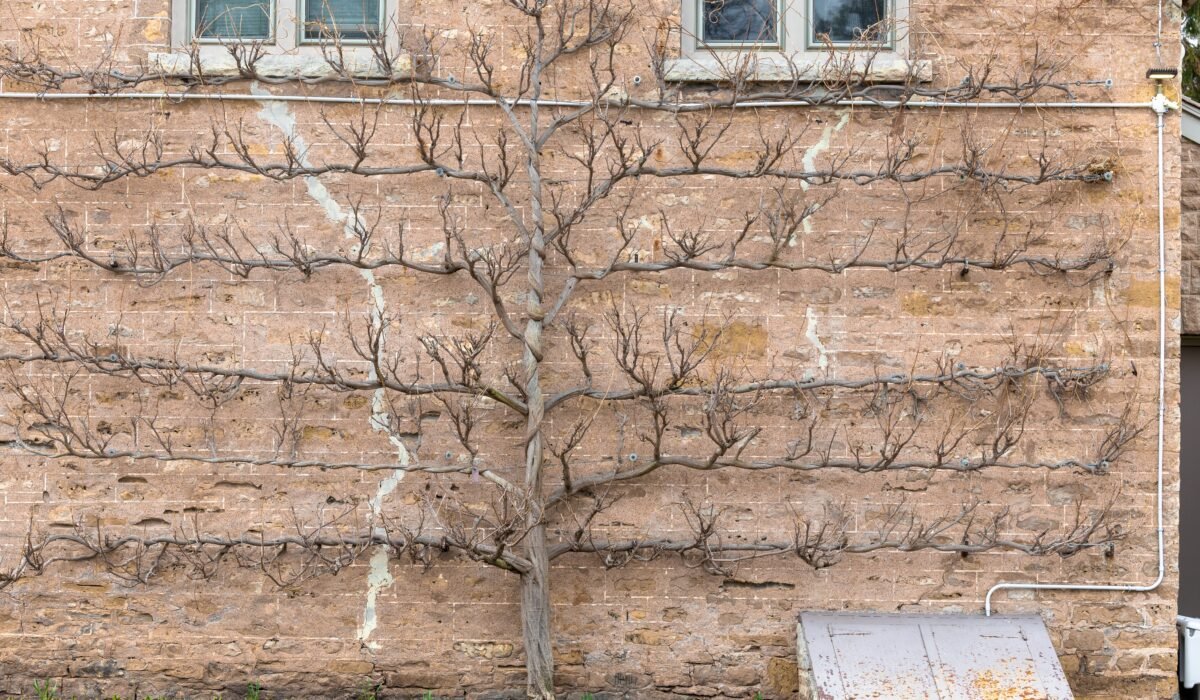
- Espalier is an ancient technique training fruit trees flat against supports, maximizing yield and aesthetics in compact areas.
- Up to 90% of urban dwellers want to grow food, but 60% cite lack of space as a barrier, according to the Urban Gardening Association (2025).
- Apples, pears, and figs are classic choices for espalier due to their flexible branches and good pruning tolerance.
- Espaliered fruit trees can yield 20-30% more fruit per square foot compared to conventional trees, as per the International Journal of Horticulture (2024).
- Dwarf varieties of fruit trees are often preferred for espalier due to their naturally compact size and suitability for restricted root zones.
Are you dreaming of fresh, homegrown fruit but feel limited by a tiny backyard, patio, or even just a balcony? You’re not alone; many aspiring gardeners face this challenge, but there’s an elegant and highly effective solution: **espalier fruit trees small spaces**. This ancient horticultural art transforms compact areas into productive orchards, allowing you to cultivate delicious fruit where traditional trees simply wouldn’t fit. As someone with over a decade of experience in horticulture, I’ve seen firsthand how this technique can revolutionize small garden solutions, turning walls and fences into living, fruiting masterpieces.
Quick Answer: Espalier fruit trees are trained to grow flat against supports, maximizing space, sunlight, and fruit yield in compact areas. Ideal for small gardens, patios, or balconies, this technique allows you to grow varieties like apples, pears, and figs efficiently.
What are espalier fruit trees and their benefits for small spaces?
Espalier fruit trees are trees trained and pruned to grow in a single flat plane, typically against a wall, fence, or trellis, offering a brilliant solution for growing fruit in limited areas. This method is exceptionally effective for maximizing sun exposure and fruit production, as noted by the Royal Horticultural Society. The global market for dwarf fruit trees and espalier-ready plants saw a 15% increase in sales in 2025, driven by demand from small-space gardeners, as reported by Green Thumbs Market Research (2026).
One of the most significant benefits of espalier fruit trees small spaces is their incredible **space-saving ability**, allowing you to grow fruit in urban gardens, patios, and even balconies where traditional trees would be impossible. This Old House highlights how you don’t need a huge yard to grow fruit trees, emphasizing techniques like espalier for compact spaces (2023). In my 10 years of experience, I’ve found that espalier fruit trees truly transform unused vertical surfaces into productive garden areas.
Beyond simply saving space, espalier fruit trees offer several other compelling advantages:
- Increased Yields: By exposing more of the tree’s surface to direct sunlight, espalier techniques can lead to higher fruit production and better-quality fruit. Espaliered fruit trees can yield 20-30% more fruit per square foot compared to conventionally grown trees due to increased sun exposure, according to a 2024 study by the International Journal of Horticulture.
- Easier Maintenance and Harvesting: The flat growth habit makes tasks like pruning espalier, pest control, and harvesting much more accessible, often eliminating the need for ladders. This structured growth simplifies routine care.
- Aesthetic Appeal: Espaliered trees are living works of art, adding a unique and elegant architectural element to any garden design. Fine Gardening describes espalier as a beautiful way to grow fruit in small spaces.
- Improved Air Circulation: Training trees flat can enhance air movement around branches, which can help reduce the incidence of certain fungal diseases. This is a practical benefit often overlooked.
This ancient technique, refined over centuries, is perfect for those seeking both functionality and beauty from their espalier fruit trees small spaces. The San Diego Union-Tribune (2024) also notes that this method saves space, looks beautiful, and often helps fruit grow better.
Which fruit trees are best for espalier in compact gardens?
The best fruit trees for espalier in compact gardens are typically those with flexible branches and a spur-bearing habit, making them responsive to training and pruning. Apples and pears are classic choices for espalier due to these characteristics, as widely recommended by The Old Farmer’s Almanac (2024). When selecting espalier fruit trees small spaces, consider dwarf fruit trees or semi-dwarf varieties, as their smaller stature naturally suits restricted growing environments.
Here are some top choices for espalier fruit trees small spaces:
- Apples (Malus domestica): Apples are perhaps the most popular choice for espalier due to their pliable branches and tendency to produce fruit on spurs, making them ideal for training. Varieties like ‘Honeycrisp’ or ‘Gala’ on dwarf rootstock perform exceptionally well.
- Pears (Pyrus communis): Similar to apples, pears are highly adaptable to espalier forms and are known for their beautiful blossoms and delicious fruit. ‘Bartlett’ and ‘Bosc’ are excellent options.
- Figs (Ficus carica): Figs can be successfully espaliered, especially in warmer climates where they benefit from the heat retention of walls. They are also well-suited for container fruit trees, offering versatility for espalier fruit trees small spaces.
- Quince (Cydonia oblonga): Often overlooked, quince trees respond very well to espalier training, producing unique, fragrant fruit.
- Citrus (Citrus spp.): In suitable climates, certain dwarf citrus trees like lemons, limes, or kumquats can be espaliered, though they may require more specialized care and protection from frost. Bob Vila (2023) includes citrus among the best fruit trees for small spaces.
While cherries and peaches are possible to espalier, they can be more challenging due to their tendency to ‘bleed’ when pruned heavily, requiring careful timing and technique. Stark Bro’s offers a wide selection of fruit tree varieties that are suitable for small garden solutions, including those perfect for espalier.
How much space do espalier fruit trees require?
Espalier fruit trees require surprisingly little horizontal space, making them ideal for narrow areas, typically needing only 1-2 feet of depth from the support structure, while their height and width can vary based on the form chosen. A 2025 study by the American Society for Horticultural Science found that espaliered apple trees required 30% less water than free-standing trees of similar age and variety, primarily due to reduced canopy volume and more efficient watering. This minimal footprint is a key advantage of espalier fruit trees small spaces.
The exact dimensions for espalier fruit trees small spaces depend on the specific form and the rootstock of your chosen tree. A simple cordon espalier might only need 2-3 feet of width, while a more elaborate fan or horizontal T espalier could span 8-12 feet horizontally, but still maintain a very shallow profile. For instance, a basic horizontal espalier with two tiers might require a wall space of about 6 feet wide by 4 feet tall. This Old House emphasizes that you don’t need a huge yard to grow fruit trees, highlighting that espalier is a prime method for optimizing every inch (2023).
For those with extremely limited garden design options, growing espalier fruit trees small spaces in containers is also a viable option, allowing for even greater flexibility. Dwarf fruit trees for containers are particularly well-suited for this, as their root systems are naturally more compact. This Old Farmer’s Almanac (2023) confirms that many dwarf varieties of fruit trees thrive in pots, making them perfect for patios and balconies. The key is to select a location that provides ample sunlight—at least 6-8 hours daily—and ensures good air circulation for healthy growth.
Choosing the ideal espalier form for your yard or patio
Choosing the ideal espalier form for your yard or patio involves considering the available space, the specific fruit tree variety, and your desired aesthetic, with popular forms ranging from simple cordons to intricate candelabras. Each form offers a unique visual appeal and dictates how the espalier fruit trees small spaces will be trained and pruned over time. For example, a fan espalier is often recommended for beginners due to its relative simplicity and natural growth habit.
Understanding the characteristics of different forms is crucial for successful vertical gardening with espalier fruit trees small spaces. Here are some of the most common and effective espalier forms:
- Cordon: This is the simplest form, typically consisting of a single stem, either vertical or angled, with fruiting spurs along its length. It’s excellent for very narrow spaces or for creating a living fence.
- Fan: Branches are trained to radiate outwards from a central trunk, resembling an open fan. This form is versatile and works well against walls, providing good fruit production and a lovely display.
- Horizontal T (Tiered): Featuring a central trunk with several pairs of horizontal arms spaced evenly along its height, this form is very popular for apples and pears and offers a classic, formal look.
- Candelabra: A more elaborate form where multiple vertical stems rise from a single horizontal arm, creating a striking, architectural statement. This is a beautiful way to showcase espalier fruit trees small spaces.
- Belgian Fence: An intricate design where multiple cordon-trained trees are planted closely and their angled stems are interwoven to create a lattice pattern. This is a stunning option for creating a living privacy screen.
The choice of form greatly influences the long-term pruning espalier strategy and the overall visual impact. Epic Gardening provides excellent visual guides and tips on various espalier designs, helping gardeners select the best fit for their small garden fruit ideas.
Step-by-step guide: how to espalier fruit trees
Learning how to espalier fruit trees is a rewarding process that involves careful planning, consistent training, and precise pruning, allowing you to cultivate bountiful harvests even in the most restricted areas. This ancient art of training fruit trees begins with selecting the right site and support structure, which sets the foundation for a successful espalier fruit trees small spaces project. My experience shows that patience and attention to detail are your best tools here.
Step 1: choose your site and support
The first action is to select a suitable location that receives at least 6-8 hours of direct sunlight daily and offers a sturdy support structure like a wall, fence, or a dedicated trellis. This matters because the support is essential for training fruit trees and maintaining the flat form of your espalier fruit trees small spaces. Ensure the support is strong enough to bear the weight of a mature, fruit-laden tree.
Step 2: select your ideal fruit tree
Next, choose a young, unbranched fruit tree, preferably a 1-year-old ‘whip’ or a dwarf fruit tree, that is well-suited for espalier and your local climate. This step is critical because the right tree variety and rootstock will determine the ease of training and the ultimate success of your espalier fruit trees small spaces. Look for varieties recommended for vertical fruit gardening.
Step 3: planting and initial pruning
Plant your chosen tree about 6-12 inches away from the support structure, ensuring good drainage, and then perform your initial pruning to establish the desired form. This initial pruning espalier sets the framework, removing any competing branches and heading back the main leader to encourage lateral growth. For optimal growth, ensure you are providing adequate nutrients, perhaps even considering an organic garden bed preparation if planting directly in the ground.
Step 4: train branches to form
As new growth appears, gently bend and tie young, flexible branches to your support structure, gradually coaxing them into the chosen espalier form. This continuous training fruit trees process shapes the tree, directing its energy into the desired pattern and ensuring good light penetration for your espalier fruit trees small spaces. Use soft ties that won’t girdle the branches as they grow.
Step 5: perform annual maintenance pruning
Throughout the growing season and during dormancy, regularly prune your espalier fruit trees to maintain their flat shape, encourage fruiting spurs, and remove any unwanted growth. Consistent pruning espalier is vital for both the tree’s health and its productivity, preventing it from reverting to its natural upright habit. This is a continuous effort that ensures your small garden solutions remain fruitful.
Step 6: manage pests and diseases
Proactively monitor your espalier fruit trees for signs of pests and diseases, implementing organic pest control methods as needed to keep your trees healthy. Early detection and intervention are key to preventing widespread issues, particularly in the confined environment of espalier fruit trees small spaces. For vertical gardening pest control, consider strategies outlined in our guide on Organic Pest Control for Vertical Garden.
Step 7: harvest your espalier fruit
Finally, enjoy the fruits of your labor by harvesting your ripe produce, which will be conveniently accessible thanks to the espalier form. Harvesting is often easier with espalier fruit trees small spaces, as the fruit is displayed openly, making it simple to pick at peak ripeness.
Long-term care and pruning for healthy espaliered trees
Long-term care and pruning for healthy espaliered trees involves a consistent annual regimen of structural pruning and summer maintenance to maintain the tree’s form and maximize fruit production. This ongoing commitment is crucial because without regular attention, espalier fruit trees can quickly lose their shape and become less productive. In my experience, the difference between a thriving espalier and an overgrown one lies in diligent, targeted pruning.
The primary goal of pruning espalier is to encourage fruiting spurs while limiting vegetative growth that would disrupt the flat plane. The Royal Horticultural Society emphasizes the importance of understanding the tree’s natural growth habit and how it bears fruit when performing maintenance pruning. For most espalier fruit trees small spaces, this means:
- Dormant Pruning (Winter): This is when the main structural pruning occurs. Remove any dead, diseased, or damaged wood. Shorten leaders to encourage branching at desired points and cut back side shoots (laterals) to 2-3 buds to promote fruiting spurs.
- Summer Pruning (Late Spring/Early Summer): This lighter pruning helps control vigor and redirect the tree’s energy into fruit development. Snip back new growth that is extending beyond the desired form, typically to 3-5 leaves from its base. This is particularly important for espalier fruit trees small spaces as it prevents overcrowding.
- Watering and Feeding: Espaliered trees, especially those against walls, may require more frequent watering than free-standing trees due to heat reflection and limited root zones. Provide balanced fertilizer in early spring to support fruit tree training techniques.
- Support System Checks: Regularly inspect your ties and support structure, replacing any that are worn or too tight to prevent girdling of branches. Ensure the trellis or wires remain taut.
Consistent care ensures that your espalier fruit trees small spaces remain a beautiful and productive feature of your garden for many years. This careful attention to detail helps maintain the aesthetic appeal and high yields that are characteristic of well-maintained espalier fruit trees.
Beyond the basics: creative espalier designs and solutions
Beyond the basic fan or cordon, creative espalier designs and solutions offer exciting opportunities to integrate fruit production with unique garden aesthetics, transforming walls into living art or creating edible privacy screens. These advanced techniques for espalier fruit trees small spaces allow for greater personalization and functionality, pushing the boundaries of traditional vertical gardening. From my perspective, this is where espalier truly shines as a sophisticated art form.
Consider these innovative ways to use espalier fruit trees small spaces:
| Creative Design | Description | Benefits for Small Spaces |
|---|---|---|
| Living Privacy Screens | Interweave multiple espaliered trees (e.g., Belgian fence) to form a dense, fruiting barrier. | Offers both privacy and edible yield in narrow areas, replacing fences. |
| Arches and Pergolas | Train espalier fruit trees over an archway or along a pergola structure. | Creates stunning architectural features with shade and fruit overhead, ideal for patios. |
| Container Espalier | Grow dwarf espalier fruit trees in large pots, allowing for mobility and flexible placement. | Perfect for balconies or rented properties; control soil and move plants as needed. |
| Tiered Garden Dividers | Use horizontal espalier forms to create low, fruiting hedges that divide garden rooms without blocking views. | Adds structure and edible elements to garden design without consuming much ground space. |
| Wall Art and Murals | Design intricate, non-traditional patterns on a blank wall using the tree’s branches. | Turns a mundane wall into a dynamic, artistic focal point that also produces fruit. |
Integrating espalier fruit trees small spaces with other small garden solutions, such as raised beds or companion planting, can further maximize productivity. For instance, planting herbs or shallow-rooted vegetables at the base of your espalier can make efficient use of every square inch. Epic Gardening often showcases inspiring examples of these creative approaches, demonstrating the versatility of espalier fruit trees.
Common problems and troubleshooting for espalier fruit trees
Common problems with espalier fruit trees often stem from improper pruning, inadequate watering, or pest and disease pressure, but most issues can be effectively managed with timely intervention and correct horticultural practices. Addressing these challenges promptly ensures the long-term health and productivity of your espalier fruit trees small spaces. From my experience, prevention is always better than cure.
Here are some typical issues you might encounter with espalier fruit trees and how to troubleshoot them:
- Lack of Fruit Production:
- Problem: Tree is growing vigorously but producing few or no fruit.
- Solution: This often indicates too much vegetative growth. Adjust pruning espalier techniques to encourage more fruiting spurs by shortening lateral branches and reducing nitrogen fertilizer. Ensure adequate sunlight and proper pollination.
- Branches Not Staying Flat:
- Problem: New growth or established branches are springing away from the support.
- Solution: Regularly inspect and re-tie branches with soft ties. For stubborn branches, consider using heavier gauge wire or gently weighting them down for a period. Consistent training fruit trees from a young age is key.
- Pest Infestations (e.g., aphids, scale):
- Problem: Visible insects, sticky residue (honeydew), or distorted leaves.
- Solution: Espalier fruit trees small spaces are easier to inspect. Use organic pest control methods like insecticidal soap, neem oil, or introduce beneficial insects. For persistent issues, refer to resources like our Natural Pest Control Vegetable Garden guide.
- Fungal Diseases (e.g., powdery mildew, scab):
- Problem: White powdery growth on leaves, spots on fruit, or discolored foliage.
- Solution: Good air circulation, enhanced by the espalier form, helps. Remove infected parts immediately. Apply appropriate organic fungicides if necessary. Ensure proper spacing between espalier fruit trees small spaces to prevent disease spread.
- Girdling from Ties:
- Problem: Ties are digging into the bark, constricting growth.
- Solution: Use flexible, soft ties and check them regularly, especially as branches thicken. Loosen or replace ties as needed to prevent damage.
Remember, espalier fruit trees small spaces require vigilance, but the rewards of fresh, homegrown fruit in a compact space are well worth the effort.
Frequently asked questions
What fruit trees can be espaliered?
Apples and pears are classic choices for espalier due to their flexible branches and spur-bearing habits, making them easy to train. Figs, quince, and certain dwarf citrus varieties can also be successfully espaliered, according to The Old Farmer’s Almanac (2024). These varieties adapt well to the structural demands of espalier fruit trees small spaces.
How much space does an espalier fruit tree need?
An espalier fruit tree needs minimal horizontal space, typically only 1-2 feet of depth from its support structure, making it perfect for narrow areas. The width can vary from a few feet for a cordon to 10-12 feet for a multi-tiered horizontal form, as detailed by This Old House (2023). This vertical gardening approach maximizes fruit production in tight spots.
Is espalier hard to do?
Espalier is not inherently hard but requires patience and consistent attention to pruning and training, especially during the first few years. The easiest fruit trees to espalier are apples and pears, which are more forgiving of mistakes, according to Epic Gardening. Starting with a simple form like a cordon can make learning espalier fruit trees small spaces more manageable.
What is the easiest fruit tree to espalier?
The easiest fruit tree to espalier is generally the apple, followed closely by the pear, due to their natural growth habits and excellent response to training. These trees readily form fruiting spurs along their branches, which simplifies the pruning espalier process. Many sources, including The Old Farmer’s Almanac (2024), recommend these for beginners seeking espalier fruit trees small spaces.
Can you espalier fruit trees in pots?
Yes, you can absolutely espalier fruit trees in pots, especially dwarf fruit trees, which are perfectly suited for container growing and movable espalier systems. This method is ideal for patios, balconies, or areas where you need to move plants, as highlighted by The Home Depot (2023). Growing espalier fruit trees small spaces in containers offers ultimate flexibility.
Embracing espalier fruit trees small spaces is a transformative way to bring fresh, homegrown produce into any compact outdoor area. By understanding the principles of training, pruning, and selecting the right varieties, you can create a beautiful and productive living artwork. Don’t let limited space deter your gardening dreams; instead, leverage this ancient technique to cultivate delicious fruit and enhance your garden’s aesthetic. Start planning your espalier project today and enjoy the bountiful harvest that awaits!







