
Key Takeaways
- Aphids were the most frequently cited persistent pest across various crops in a 2026 Greenhouse Product News survey, according to Greenhouse Product News (2026).
- Powdery mildew was the top disease concern in 2025 and remains a significant worry for 2026, as reported by Vegetable Growers News (2026).
- Integrated Pest Management (IPM) prioritizes cultural controls and beneficial insects before resorting to organic sprays for managing herb garden pests and diseases.
- Neem Oil is a broad-spectrum organic treatment effective against many common herb garden pests and diseases, including aphids and spider mites.
- Proper watering and spacing are critical cultural practices that can prevent over 70% of common herb diseases like root rot and powdery mildew.
As a gardener with over 10 years of experience and a degree in Horticulture, I know firsthand the frustration of seeing your beloved herbs suffer from unwanted invaders or mysterious ailments. Dealing with **herb garden pests and diseases** is a common challenge for both new and seasoned growers, but understanding the culprits and implementing effective strategies can ensure your basil, mint, and rosemary thrive. This guide will walk you through identifying, treating, and preventing these issues to keep your herb garden healthy and productive.
Quick Answer: Common herb garden pests and diseases like aphids, powdery mildew, and root rot weaken plants. Key solutions include early detection, proper watering, spacing, and organic controls such as neem oil or beneficial insects to maintain a healthy herb garden.
What are the most common herb garden pests?
The most common **herb garden pests and diseases** include aphids, spider mites, whiteflies, and caterpillars, which can quickly compromise the health and yield of your plants if not addressed promptly. Approximately 80% of respondents identified insect and pest pressure as a primary challenge in a 2026 Greenhouse Product News survey, highlighting the pervasive nature of these issues, according to Greenhouse Product News (2026). Understanding these common invaders is the first step in effective organic pest control for herb gardens.
Regular inspection is crucial for early detection of these tiny attackers. I always advise gardeners to check the undersides of leaves, new growth, and flower buds, as this is where many pests first establish colonies. Early intervention significantly reduces the impact of **herb garden pests and diseases**.
Aphids
Aphids are small, soft-bodied insects that cluster on new growth, sucking plant sap and causing stunted, distorted leaves. These persistent issues affect annuals, perennials, and greenhouse crops, making aphids a top concern for any gardener. They excrete a sticky substance called honeydew, which can lead to sooty mold.
To get rid of aphids on mint and other herbs, a strong spray of water can dislodge them. For heavier infestations, horticultural soaps or Neem Oil are effective organic treatments.
Spider Mites
Spider mites are minuscule arachnids that thrive in hot, dry conditions, causing fine webbing and tiny yellow or bronze stippling on leaves. These pests are particularly problematic for herbs like rosemary. They often go unnoticed until significant damage has occurred, making early scouting vital.
For **spider mites on rosemary** and other susceptible herbs, increasing humidity around the plants can deter them. Applying Neem Oil or insecticidal soap can effectively manage populations.
Whiteflies
Whiteflies are tiny, white, winged insects that fly up in a cloud when disturbed from the undersides of leaves. They also feed on plant sap, leading to yellowing leaves and stunted growth. Like aphids, they produce honeydew, which can encourage sooty mold.
Yellow sticky traps can help monitor and reduce whitefly populations in your herb garden. Regular sprays with organic insecticidal soap are also effective against these **herb garden pests and diseases**.
Caterpillars
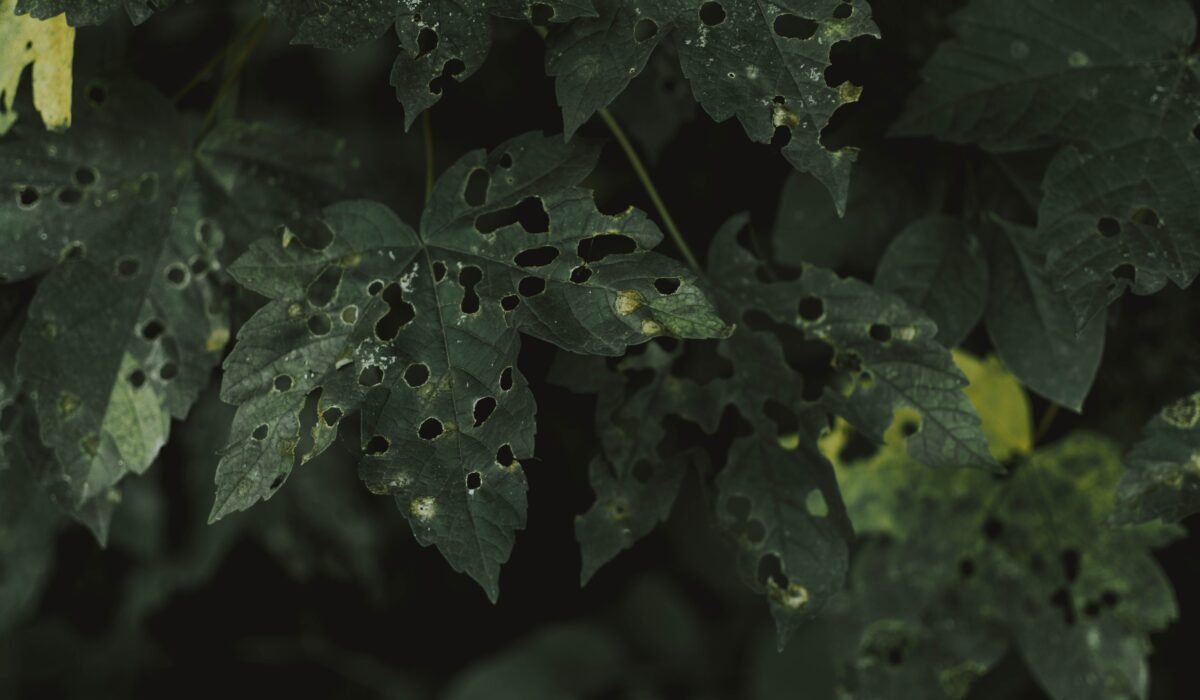
Various caterpillar species can chew holes in leaves, sometimes defoliating entire plants if left unchecked. Identifying the specific type of caterpillar can help in choosing the most effective treatment. They are often found on basil and parsley.
Hand-picking caterpillars is a simple and effective method for smaller infestations. For larger problems, Bacillus thuringiensis (BT) is a natural bacteria spray that specifically targets caterpillars, providing safe pest control for edible herbs without harming beneficial insects.
How to identify and treat common herb diseases?
Identifying and treating common **herb garden pests and diseases** requires keen observation of symptoms like discolored leaves, wilting, or fungal growth, followed by targeted cultural practices or organic remedies. Powdery mildew topped the list of trouble spots for diseases in 2025 and remains a significant concern for 2026, according to the Vegetable Growers News Pest & Disease Survey report (2026). Early diagnosis is crucial to prevent widespread plant damage.
Many herb diseases are exacerbated by environmental factors such as high humidity, poor air circulation, or improper watering. Adjusting these conditions can often be the most effective treatment.
Powdery Mildew
Powdery mildew appears as white, powdery spots on leaves and stems, often leading to distorted growth and reduced photosynthesis. This common fungal disease thrives in humid conditions with poor air circulation. It can be particularly troublesome for herbs like mint and basil.
To treat **powdery mildew on herbs treatment** options include increasing air circulation and reducing overhead watering. Organic fungicides, like a baking soda solution or Neem Oil, can also be effective.
Root Rot
Root rot is a serious condition caused by overwatering or poorly draining soil, leading to soft, brown, mushy roots and wilting foliage. This disease suffocates the roots, preventing them from absorbing water and nutrients. It is a major cause of failure in container plants.
Preventing root rot in herbs involves ensuring excellent drainage and watering only when the top inch of soil is dry. For potted herbs, using a well-draining potting mix is essential.
Leaf Spot
Leaf spot diseases manifest as circular spots on leaves, which can vary in color from brown to black, often with a yellow halo. These spots can merge, causing leaves to yellow and drop prematurely. Various fungi or bacteria can cause leaf spot.
Improving air circulation and avoiding overhead watering can help prevent the spread of leaf spot. Removing affected leaves immediately and applying a copper-based fungicide, if necessary, can manage the disease.
Here’s a quick guide to common herb garden diseases:
| Disease | Common Symptoms | Preferred Conditions | Primary Herbs Affected |
|---|---|---|---|
| Powdery Mildew | White, powdery spots on leaves, stunted growth | High humidity, poor air circulation | Mint, Basil, Sage |
| Root Rot | Wilting, yellowing leaves, mushy roots | Overwatering, poor drainage | All herbs, especially in pots |
| Leaf Spot | Circular brown/black spots on leaves, yellowing | High humidity, overhead watering | Basil, Parsley, Cilantro |
| Damping-off | Seedlings collapse at soil line | Excess moisture, cool temperatures | New seedlings of all herbs |
This table highlights key indicators for identifying common **herb garden pests and diseases**, helping you quickly diagnose issues in your plants.
How can you naturally prevent pests in your herb garden?
You can naturally prevent **herb garden pests and diseases** by implementing proactive cultural practices like proper plant spacing, adequate watering, and strategic companion planting, which create an unfavorable environment for pests. “Herb growing problems tend to be relatively few as long as you pay attention to a few golden rules,” notes Garden Delights Herb Farm (2021). These methods are key to organic pest control for herb gardens.
My experience has shown that a healthy plant is naturally more resistant to problems. Focusing on prevention rather than cure is always the best approach for managing **herb garden pests and diseases**.
- Proper Spacing and Air Circulation: Crowded plants create humid, still conditions that are ideal for fungal diseases like powdery mildew and attract pests. Ensure adequate space between herbs to allow for good airflow. This simple step significantly reduces disease pressure.
- Appropriate Watering: Overwatering leads to root rot, while underwatering stresses plants, making them vulnerable. Water deeply and consistently, allowing the soil to dry slightly between waterings. Avoid overhead watering, which can spread fungal spores.
- Healthy Soil: Nutrient-rich, well-draining soil is fundamental for strong, resilient herbs. Incorporate compost and ensure good drainage to prevent root issues.
- Companion Planting for Pest Control: Certain plants can naturally deter pests or attract beneficial insects. This is an excellent natural pest repellent for herbs.
- Marigolds repel whiteflies, nematodes, and hornworm moths, while attracting beneficial insects like Ladybugs and hoverflies.
- Chives can repel aphids, deer, and carrot flies.
- Basil is known to repel flies, mosquitoes, carrot flies, asparagus beetles, and whiteflies, making it a valuable addition to your garden for managing **herb garden pests and diseases**.
- Regular Inspection: Make it a habit to inspect your herbs daily or every few days. Early detection of identifying herb plant problems allows for immediate, often simple, interventions before an infestation or disease takes hold.
These preventative measures form the backbone of a resilient garden, minimizing the need for reactive treatments for **herb garden pests and diseases**.
Effective organic treatments for specific herb problems
Effective organic treatments for specific **herb garden pests and diseases** focus on non-toxic solutions such as Neem Oil, insecticidal soaps, and beneficial insects, which target problems without harming the environment or the edibility of your herbs. These methods are crucial for safe pest control for edible herbs. Always ensure any product you use is certified for organic gardening.
When I face a specific problem, I always start with the least invasive solution first. Sometimes, a simple manual removal or water spray is all that’s needed to manage **herb garden pests and diseases**.
- Neem Oil: This natural oil, extracted from the neem tree, is a powerful organic pesticide and fungicide. It disrupts insect feeding and growth cycles and can also suppress fungal diseases.
- Application: Mix Neem Oil with water and a small amount of mild soap (as an emulsifier) according to package directions. Spray thoroughly on all plant surfaces, including undersides of leaves, usually in the evening to avoid burning foliage and to target nocturnal pests.
- Targets: Highly effective against aphids, spider mites, whiteflies, mealybugs, and even powdery mildew. It’s a versatile solution for many **herb garden pests and diseases**.
- Bacillus thuringiensis (BT): A naturally occurring soil bacterium, BT is a biological pesticide specific to caterpillars.
- Application: Mix and spray on leaves where caterpillars are feeding. Caterpillars ingest the bacteria, which then paralyzes their digestive system, causing them to stop eating and eventually die.
- Targets: Excellent for managing leaf-eating caterpillars without harming beneficial insects or other wildlife. This is particularly useful when you find caterpillars on basil or parsley.
- Horticultural Soaps: These soaps work by suffocating soft-bodied insects.
- Application: Dilute according to instructions and spray directly onto pests, ensuring thorough coverage.
- Targets: Effective against aphids, spider mites, whiteflies, and thrips. They are a good choice for immediate knockdown of these **herb garden pests and diseases**.
- Beneficial Insects: Releasing natural predators like Ladybugs and Lacewings can provide long-term biological control for various pests.
- Ladybugs: Voracious eaters of aphids, also consume spider mites and whiteflies.
- Lacewings: Their larvae (often called “aphid lions”) are excellent predators of aphids, mealybugs, and other soft-bodied insects.
For more detailed insights on specific pest control, resources like the University of Connecticut IPM program offer comprehensive guidance on managing **herb garden pests and diseases**.
Are certain herbs more vulnerable to pests and diseases?
Yes, certain herbs are indeed more vulnerable to specific **herb garden pests and diseases** due to their unique growth habits, leaf structures, or environmental preferences. For instance, basil is frequently affected by common basil pests and diseases like downy mildew and Japanese beetles, while mint is susceptible to rust and spider mites. Understanding these susceptibilities helps in targeted prevention and care.
“The essential fragrant oils of most herbs are a natural repellent to many insects,” states Garden Delights Herb Farm (2021), yet some still fall victim. This demonstrates that while many herbs have natural defenses, none are entirely immune to **herb garden pests and diseases**.
Here’s a look at some common herbs and their typical vulnerabilities:
| Herb | Common Pests | Common Diseases | Vulnerability Factors |
|---|---|---|---|
| Basil | Aphids, Japanese beetles, Slugs | Downy Mildew, Fusarium Wilt, Leaf Spot | Prefers warmth; susceptible to fungal issues in humid conditions. |
| Mint | Spider Mites, Aphids, Whiteflies | Rust, Powdery Mildew, Mint Anthracnose | Spreads aggressively; dense growth creates humid microclimates. |
| Rosemary | Spider Mites, Mealybugs | Root Rot (from overwatering), Powdery Mildew (rare) | Drought-tolerant; sensitive to overwatering and high humidity. |
| Cilantro | Aphids, Leaf Miners | Bacterial Leaf Spot, Damping-off | Short-lived, bolts quickly; susceptible to early season pests. |
| Thyme | Spider Mites, Mealybugs | Root Rot, Gray Mold | Low-growing, dense foliage can trap moisture. |
This table outlines common **herb garden pests and diseases** associated with popular herb varieties, offering insight into their specific challenges.
My experience suggests that herbs like rosemary and thyme, which prefer drier conditions, are often more susceptible to root rot if overwatered. Conversely, basil, thriving in humidity, can struggle with fungal diseases. Tailoring care to each herb’s needs is crucial in preventing **herb garden pests and diseases**.
Implementing Integrated Pest Management (IPM) for healthy herbs
Implementing Integrated Pest Management (IPM) for healthy herbs involves a holistic, sustainable approach that prioritizes prevention, monitoring, and non-chemical interventions to manage **herb garden pests and diseases** effectively. The University of Connecticut IPM program emphasizes combining various strategies to minimize pest impact while protecting beneficial organisms and the environment. This systematic approach reduces reliance on synthetic pesticides.
IPM is not about eradicating every single pest, but rather about maintaining pest populations at manageable levels. It’s a smart, long-term strategy that aligns perfectly with growing edible herbs.
Here are the key steps for implementing IPM in your herb garden:
- Monitoring and Identification: Regularly inspect your herbs for signs of **herb garden pests and diseases**. Correctly identify the problem to choose the most appropriate control method. NC State University’s Plant Disease and Insect Clinic is an excellent resource for identification, with 13% of plant samples submitted in 2025 being vegetables and herbs, according to NC State University (2026).
- Cultural Controls: These are preventative practices that create an unfavorable environment for pests and diseases.
- Sanitation: Remove diseased plant material, fallen leaves, and weeds that can harbor pests or pathogens.
- Proper Watering: Avoid overhead watering and ensure good drainage to prevent fungal diseases and root rot.
- Air Circulation and Spacing: Provide adequate space between plants to promote airflow and reduce humidity.
- Soil Health: Maintain healthy soil with organic matter to support strong plant growth.
- Physical and Mechanical Controls: These methods involve physically removing or excluding pests.
- Hand-picking: Manually remove larger pests like caterpillars or slugs.
- Pruning: Remove affected leaves or stems to stop disease spread.
- Barriers: Use row covers to protect young plants from flying insects.
- Water Sprays: Dislodge aphids and spider mites with a strong stream of water.
- Biological Controls: Introduce or encourage natural enemies of pests.
- Beneficial Insects: Release Ladybugs, lacewings, or predatory mites to control pest populations.
- Companion Planting: Utilize plants that attract beneficial insects or repel pests, as discussed earlier for **herb garden pests and diseases**.
- Organic Chemical Controls (Last Resort): If other methods are insufficient, use organic pesticides judiciously.
- Neem Oil: Effective against a wide range of pests and some diseases.
- Horticultural Soaps: Good for soft-bodied insects.
- Bacillus thuringiensis (BT): Specific for caterpillars.
By following these IPM principles, you can significantly reduce the incidence of **herb garden pests and diseases**, leading to a healthier and more sustainable garden. Mariam Scott from Growcycle (2025) emphasizes that “a healthy herb garden can provide fresh flavors, natural remedies, and pleasant aromas.”
Choosing pest and disease resistant herb varieties
Choosing pest and disease resistant herb varieties is a proactive strategy to minimize issues with **herb garden pests and diseases**, allowing gardeners to cultivate healthier plants with less intervention. While no herb is entirely immune, selecting varieties bred or known for their resilience can significantly reduce common basil pests and diseases or other specific plant problems. This approach saves time and effort in the long run.
In my years of gardening, I’ve found that starting with robust, resistant plants is one of the best defenses against future problems. It’s about setting your garden up for success from day one.
- Basil Varieties:
- ‘Prospera’ Basil: Known for strong resistance to downy mildew, a devastating fungal disease for basil.
- ‘Everleaf Emerald Towers’: Offers good resistance to Fusarium wilt, another common basil ailment.
- Mint Varieties:
- While mint can be prone to rust and powdery mildew, choosing vigorous, well-adapted varieties and ensuring good air circulation can help. Some sources suggest ‘Mojito Mint’ from Stark Bro’s Organic Herbs shows good overall vigor.
- Rosemary Varieties:
- Rosemary is generally robust, but varieties like ‘Arp’ are known for their hardiness and cold tolerance, indirectly making them more resilient to stress that can lead to pest problems. Ensure proper drainage to prevent root rot.
- Thyme Varieties:
- Most thyme varieties are quite hardy. ‘Creeping Thyme’ and ‘English Thyme’ are generally reliable. The key is providing well-drained soil to prevent root issues, which are the main concern for **herb garden pests and diseases** in thyme.
- Oregano Varieties:
- Greek oregano (Origanum vulgare hirtum) is often cited as a very hardy and pest-resistant choice, thriving in dry conditions.
When purchasing plants or seeds, look for descriptions that highlight disease resistance. Many nurseries, like Growcycle, offer certified organic herbs that are bred for resilience, providing a strong foundation against **herb garden pests and diseases**. Considering companion planting for pest control alongside resistant varieties further strengthens your garden’s defenses. For more on creating resilient gardens, explore Best Companion Plants strategies.
Frequently Asked Questions
What is eating my herb leaves?
Various pests, including caterpillars, slugs, and grasshoppers, can be eating your herb leaves, creating holes or ragged edges. Codling moth emerged as the most troublesome pest in 2025, with mentions sharply climbing from the previous year, particularly in apples and pears, according to Vegetable Growers News (2026). Inspect your plants thoroughly, especially the undersides of leaves, to identify the culprit and take appropriate action.
How do I keep bugs from eating my herbs naturally?
You can keep bugs from eating your herbs naturally by employing methods like companion planting, introducing beneficial insects, and using physical barriers. Planting marigolds near your herbs can repel whiteflies and nematodes, while attracting helpful Ladybugs. Consistent monitoring and manual removal are also highly effective for managing **herb garden pests and diseases**.
How do you get rid of white powdery mold on herbs?
To get rid of white powdery mold on herbs, improve air circulation around plants, reduce overhead watering, and apply an organic fungicide like a diluted Neem Oil spray. Powdery mildew was the top disease concern in 2025 and remains a significant worry for 2026, as reported by Vegetable Growers News (2026). Pruning affected leaves can also help prevent its spread, ensuring a cleaner, healthier plant.
What is a natural pest repellent for herbs?
A natural pest repellent for herbs can include companion plants like basil, which repels flies and mosquitoes, or chives, which deter aphids. Neem Oil also acts as a natural repellent and insecticide for many **herb garden pests and diseases**. Regularly spraying herbs with a mild garlic or pepper spray mixture can also deter unwanted visitors.
Are there any herbs that specifically deter pests?
Yes, several herbs specifically deter pests due to their strong aromatic oils, making them excellent choices for companion planting. Rosemary, for instance, can repel mosquitos, while mint is known to deter ants and rodents. These herbs contribute to a natural defense system against **herb garden pests and diseases** in your garden.
Maintaining a thriving herb garden free from **herb garden pests and diseases** is entirely achievable with consistent effort and the right knowledge. By focusing on preventative measures like proper cultural care, embracing organic treatments, and understanding the specific vulnerabilities of your herbs, you can ensure a bountiful and healthy harvest. Start implementing these strategies today to enjoy fresh, vibrant herbs all season long, making your garden a beacon of health and productivity.







