Key Takeaways
- The home gardening market is projected to reach approximately USD 16.71 billion by 2026.
- 63.6% of gardeners plan to expand their gardens by 2026, according to Axiom (2026).
- Terracotta pots offer excellent breathability for plant roots but can be heavy and prone to cracking in frost, according to gardening experts.
- Fiberglass planters are lightweight and highly durable, making them ideal for terrace gardens with weight restrictions, as highlighted by Jay Scotts.
- Self-watering planters can reduce watering frequency by up to 80%, providing convenience for busy gardeners, according to manufacturer data.
When you’re planning your dream outdoor oasis, choosing the right terrace garden planters can feel like a daunting task, especially with so many options available. Finding durable, aesthetically pleasing, and functional terrace garden planters is key to cultivating a thriving green space that truly reflects your style and supports your plants’ health. This guide will walk you through seven essential choices, ensuring your terrace garden thrives and becomes the envy of your neighborhood.
Quick Answer: Successful terrace garden planters are durable, weather-resistant, and appropriately sized for plant growth and structural considerations. Essential choices include lightweight fiberglass, aesthetically pleasing terracotta, versatile metal, space-saving vertical systems, and self-watering options for ease of care.
What kind of pots are best for terrace garden?
The best pots for a terrace garden are those that balance aesthetics, durability, and plant health, often featuring good drainage and appropriate weight. Approximately 63.6% of gardeners plan to expand their gardens by 2026, according to Axiom (2026), making smart planter choices even more important for maximizing space and success. When considering terrace garden planters, you need options that can withstand outdoor elements while also providing a stable, healthy environment for your plants.
From my experience, while terracotta offers a classic look, its weight and fragility can be a real challenge for terrace spaces. That’s why I often lean towards materials like fiberglass or recycled plastic. They give you the visual appeal without the back-breaking effort or worry of cracks. Lightweight garden pots are a game-changer when you’re dealing with structural limits or want the flexibility to rearrange your plants.
Here are some top choices for terrace garden planters:
- Fiberglass and Resin: These are incredibly lightweight, durable, and come in a vast array of styles and finishes. They’re excellent weather-resistant planters.
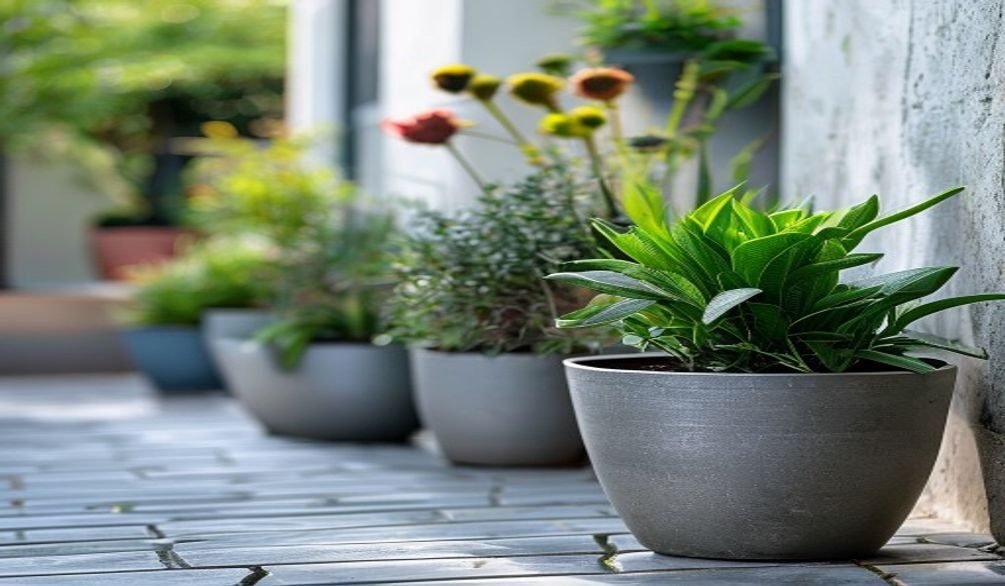
- Terracotta: Known for its classic look and breathability, terracotta helps prevent root rot. However, it’s heavy and can crack in freezing temperatures.
- Metal (Steel, Aluminum): Modern and sleek, metal planters are durable but can heat up quickly in direct sun, potentially stressing roots.
- Recycled Plastic: An eco-friendly and lightweight option, often very affordable and available in many colors. Elho Loft Urban Round Plant Pots are a great example, recommended by Hannah Mendelsohn, Homes Editor at Good Housekeeping, for their lightweight nature and use of recycled plastic.
- Wood: Offers a natural, rustic charm but requires regular maintenance to prevent rot and insect damage.
Which material is best for outdoor planters?
The best material for outdoor planters depends largely on your climate, aesthetic preferences, and practical needs like weight and durability. U.S. homeowners spend about $300 per month on landscaping and gardening activities on average in 2026, indicating a significant investment in outdoor spaces that warrants careful material selection. For terrace garden planters, a material that can withstand diverse weather conditions while being manageable in terms of weight is often paramount.
What most people miss is that “best” isn’t a one-size-fits-all answer. A heavy concrete planter might be fine for a ground-level patio, but on a raised terrace, it could pose structural issues. In my decade of gardening, I’ve seen too many people choose solely on looks, only to regret the practicality later. Always consider the long-term.
Let’s compare some popular outdoor planter materials:
| Material | Pros | Cons | Best Use for Terrace Garden Planters |
|---|---|---|---|
| Fiberglass/Resin | Lightweight, durable, weather-resistant, versatile designs, low maintenance. | Can be more expensive than plastic, some may look less natural. | Ideal for large garden planters, balconies, modern terrace planters, where weight is a concern. |
| Terracotta | Excellent breathability, classic aesthetic, good for drought-tolerant plants. | Heavy, brittle, prone to cracking in frost, dries out quickly. | Smaller decorative plants, areas with mild climates, where traditional look is desired. |
| Metal (Steel/Aluminum) | Modern, strong, durable, sleek look. | Can heat up in sun, may rust (steel), can be heavy. | Contemporary terrace garden design, architectural plants, requires proper drainage. |
| Recycled Plastic | Lightweight, affordable, eco-friendly, wide color range, durable. | Can look less premium, may fade over time, less breathable than natural materials. | Budget-friendly options, balcony garden pots, quick setup, versatile use. |
| Wood | Natural look, good insulation for roots. | Requires sealing/lining, prone to rot, attracts pests, heavy when wet. | Rustic terrace garden, herb gardens, requires more maintenance. |
How do i choose a planter for my terrace garden?
Choosing a planter for your terrace garden requires careful consideration of size, material, drainage, and the overall aesthetic of your outdoor space. 50.2% of gardeners expect to spend more time gardening in 2026, according to Axiom (2026), highlighting the importance of selecting terrace garden planters that will support your dedication and effort. It’s not just about picking a pretty pot; it’s about creating a sustainable environment for your plants.
The short answer: think about the plant, the space, and your climate. Many people rush into buying a planter because they like its look, only to find it’s too small for the plant’s mature size or doesn’t have proper drainage. This is where most guides stop—we won’t. You need to consider the practicalities.
Here’s how to make an informed choice:
- Consider Plant Size and Root System:
- Choose terrace garden planters that are large enough to accommodate the plant’s mature root ball. A general rule of thumb is to select a pot that is at least twice the width of the plant’s root ball.
- Deeper pots are needed for plants with taproots (like roses or fruit trees), while shallower, wider pots suit plants with spreading root systems.
- Assess Material Based on Climate and Weight:
- For hot climates, opt for lighter-colored or insulating materials to prevent root overheating.
- In cold climates, choose frost-resistant planters like fiberglass or fibrecotta. Primrose Outdoor Fibrecotta Garden Planter Pots are noted for being lightweight, frost-resistant, and non-corrosive.
- On terraces, lightweight garden pots are often critical due to structural weight limits. Fiberglass, resin, and recycled plastic are excellent choices.
- Ensure Adequate Drainage:
- This is non-negotiable. Every planter must have drainage holes to prevent waterlogging and root rot. 72% of container plants fail due to poor drainage, according to Penn State Extension (2023).
- Consider using a false bottom or drainage layer in very large planters.
- Match Your Aesthetic:
- Treat your terrace as an outdoor room, as landscape designers recommend. Your terrace garden planters should complement your outdoor furniture and home’s architectural style.
- Modern terrace planters often feature clean lines and neutral colors, while rustic garden planters might use natural wood or aged terracotta.
- Think About Maintenance:
- Do you want low-maintenance options? Self-watering planters or durable planter options like fiberglass require less frequent attention.
- Wood planters, while beautiful, will need regular sealing and inspection.
What is the most durable planter material for outdoor use?
The most durable planter materials for outdoor use are typically fiberglass, high-grade recycled plastic, and certain metals like powder-coated steel or aluminum. These materials offer superior resistance to weather, UV radiation, and physical impact, ensuring your terrace garden planters last for many seasons. The home gardening market is projected to reach approximately USD 16.71 billion by 2026, indicating a strong demand for long-lasting gardening solutions.
When it comes to durability, you’re looking for materials that won’t crack in frost, fade in intense sun, or corrode over time. Real talk: a cheap plastic pot might seem like a bargain, but if you’re replacing it every year, it’s not saving you money or effort. Investing in durable planter options is always a smart move.
Here’s a breakdown of highly durable planter materials:
- Fiberglass: This is my go-to for durability, especially for large garden planters. Fiberglass planters, like those from Jay Scotts, are incredibly strong, lightweight, and weather-tough. They resist cracking in freezing temperatures and won’t fade under harsh sun. Plus, they come in a huge range of finishes, mimicking everything from concrete to terracotta.
- High-Quality Recycled Plastic/Resin: Brands like Elho and Veradek (Veradek Block Series Pedestal Planters are a great example) produce outdoor planter materials from recycled plastic that are surprisingly robust. They are lightweight, UV-stabilized to resist fading, and often designed to withstand extreme temperatures. These are excellent balcony garden pots.
- Powder-Coated Steel or Aluminum: Metal planters, when properly treated, offer incredible longevity. Powder-coating provides a protective layer against rust and corrosion. A Terrace Garden Planter made of high-quality, powder-coated steel with a patented drip watering system, available in various heights, exemplifies this durability and functionality.
- Fibrecotta: A blend of fiber, resin, and clay, fibrecotta offers a balance of durability and aesthetic appeal. It’s lighter than traditional terracotta, frost-resistant, and non-corrosive, making it a good choice for terrace garden planters.
These durable planter options mean less worry for you and a more consistent look for your terrace garden.
Self-watering planters: convenience for your terrace garden
Self-watering planters offer unparalleled convenience for your terrace garden by providing a consistent water supply to your plants, significantly reducing the frequency of manual watering. In 2025, 49.5% of gardeners spent more money on gardening, an 11.5% increase from 2024, suggesting a willingness to invest in solutions that simplify care and enhance success. This convenience is particularly valuable for busy individuals or those who travel frequently.
Sounds simple, right? It’s not always. While self-watering planters are fantastic, they still need some initial setup and understanding of your plant’s specific needs. Overwatering can still occur if you’re not careful with certain plant types. But for most common terrace plants, they are a lifesaver.
Self-watering planters work by using a reservoir at the bottom of the pot, allowing plants to draw water as needed through a wicking system. This method promotes healthier root development by avoiding the typical wet-dry cycles of top-down watering. Lechuza Self Watering Plant Pots are a well-known example of effective self-watering garden planters.
The benefits of self-watering terrace garden planters include:
- Reduced Watering Frequency: You can often go days or even weeks between refills, depending on the plant and weather.
- Consistent Moisture: Plants get a steady supply of water, which is ideal for growth and can prevent stress caused by inconsistent watering.
- Efficient Water Use: Less water is lost to evaporation, making them an eco-friendly choice.
- Nutrient Retention: Nutrients are less likely to be leached out of the soil compared to frequent top-watering.
- Travel-Friendly: Perfect for when you’re away, ensuring your plants remain hydrated.
For instance, SQUARELY COPENHAGEN GrowLARGE offers large outdoor wooden planters with a built-in self-watering system, combining aesthetics with ultimate functionality for your terrace garden.
Vertical gardening systems: maximizing small terrace spaces
Vertical gardening systems are an ingenious solution for maximizing small terrace spaces, transforming unused walls or railings into lush, productive gardens. Many contemporary landscape designers consider vertical planting an essential strategy for small-space gardening, and I couldn’t agree more. These systems allow you to grow a diverse array of plants without consuming precious floor space, making them ideal terrace garden planters for urban environments.
Here’s the thing: everyone wants more green space, but not everyone has a sprawling yard. Vertical gardening is the answer for so many of us. I’ve seen clients turn drab balcony walls into vibrant herb gardens or stunning flower displays using these systems. It truly expands what you can do with limited square footage.
Vertical gardening systems come in various forms, each offering unique benefits for your terrace:
- Wall-Mounted Planters: These systems attach directly to a wall, featuring individual pockets or modular containers. The Cubiko wall planter is a modern, space-saving system that uses a sturdy metal frame and lightweight recycled planters to create a customizable vertical garden.
- Stackable Planters: Designed to stack on top of each other, these create a tiered effect, allowing multiple plants to grow in a compact footprint. They are excellent for herbs, strawberries, or small flowers.
- Freestanding Vertical Gardens: These structures, often resembling shelves or A-frames, can be placed anywhere on your terrace. They offer flexibility in placement and can be moved as needed.
- Pocket Planters: Fabric or felt planters with multiple pockets are lightweight and easy to install, perfect for growing herbs or succulents.
These innovative terrace garden planters not only save space but also add a striking visual element to your terrace garden design, creating an engaging focal point. You can learn more about protecting these systems in colder months by checking out our guide on vertical garden winter protection.
Expert tips for selecting your terrace garden planters
Selecting the right terrace garden planters involves more than just aesthetics; it requires strategic thinking about weight, plant needs, and long-term maintenance. As an expert gardener with over a decade of experience, I’ve seen the difference careful selection makes, and it’s clear that thoughtful choices lead to thriving gardens. Mike Reiber, founder and CEO of Axiom, notes that gardeners spent record amounts of time and money on their gardens in 2025, underscoring the value of making informed decisions for those investments.
What most people miss is that the best terrace garden planters are an investment in your garden’s future. Don’t just grab the cheapest option. Think about how much joy and produce your plants will give you, and choose planters that support that. It’s about building a foundation for success.
Here are my top expert tips for choosing your terrace garden planters:
- Prioritize Weight: Always consider the structural capacity of your terrace. Lightweight garden pots made from fiberglass, resin, or recycled plastic are often the safest and most versatile choice, especially for larger plants or multiple containers.
- Think Big: Opt for larger planters than you think you need. Larger terrace garden planters provide more soil volume, which means better insulation for roots, more consistent moisture, and less frequent watering. This is particularly important for large garden planters that will house trees or shrubs.
- Drainage is King: I can’t stress this enough – ensure every planter has adequate drainage holes. If a beautiful planter lacks them, you’ll need to drill your own. Poor drainage is a common mistake I’ve seen lead to stunted plant growth and root rot.
- Group for Impact: Instead of scattering many small planters, group a few larger, complementary terrace garden planters together. This creates a more cohesive and impactful visual statement, making your terrace garden design feel more intentional.
- Consider Self-Watering Features: For convenience, especially if you have a busy schedule, self-watering planters are a game-changer. They provide consistent moisture, which is key for many plants, and can drastically cut down on your watering chores.
- Mix Materials Wisely: Don’t be afraid to mix different outdoor planter materials. A large fiberglass planter can anchor a corner, while smaller terracotta pots or modern terrace planters of metal can add accents. Just ensure they complement each other.
- Plan for Growth: Always think about the plant’s mature size. Choosing a planter that’s too small is one of the most common reasons plants struggle. Give your plants room to grow and thrive in their terrace garden planters.
Frequently asked questions
What kind of pots are best for a terrace garden?
The best pots for a terrace garden are typically lightweight, durable, and weather-resistant, such as those made from fiberglass, recycled plastic, or fibrecotta. These materials offer longevity and are easier to move, crucial for managing weight on a terrace.
Which material is best for outdoor planters?
Fiberglass is often considered the best material for outdoor planters due to its superior durability, lightweight nature, and resistance to extreme weather conditions. Jay Scotts, a fiberglass planter manufacturer, highlights these benefits for various outdoor applications.
How do i choose a planter?
To choose a planter, consider the plant’s mature size, ensuring adequate room for root growth, and check for sufficient drainage holes to prevent waterlogging. Also, match the planter’s material and style to your climate and desired aesthetic for your terrace garden planters.
What is the most durable planter material for outdoor use?
Fiberglass and powder-coated metals like steel or aluminum are among the most durable planter materials for outdoor use, offering excellent resistance to impact, UV radiation, and temperature fluctuations. These materials ensure your terrace garden planters withstand harsh outdoor elements.
Are self-watering planters good for terrace gardens?
Yes, self-watering planters are excellent for terrace gardens as they provide consistent moisture, reduce watering frequency, and are highly convenient for busy gardeners. They are particularly beneficial for plants that require steady hydration, according to Lechuza, a self-watering plant pot brand.
Selecting the right terrace garden planters is a pivotal step in creating a beautiful and thriving outdoor space. By focusing on durable, lightweight, and appropriately sized options like fiberglass, high-quality recycled plastic, or functional self-watering systems, you can ensure your plants flourish. Remember to consider drainage, aesthetic appeal, and the specific needs of your plants to make choices that will provide joy and greenery for years to come. Your terrace garden planters are more than just containers; they are the foundation of your outdoor sanctuary.