If you’re wondering about the best flowers to attract hummingbirds to your yard, you’re not alone; many gardeners dream of these tiny, shimmering jewels zipping through their landscape. This guide will reveal the specific nectar-rich plants that hummingbirds adore, along with practical tips to transform your garden into a vibrant hummingbird haven, ensuring you draw in these energetic visitors all season long.
What are the Best Flowers to Attract Hummingbirds?
The short answer is: tubular, brightly colored flowers, especially red ones, that are packed with nectar. Hummingbirds are high-energy birds, needing to consume large amounts of nectar, visiting between 1,000 and 2,000 flowers per day to sustain their supercharged metabolisms, according to the National Audubon Society.
This means your garden needs to be a continuous buffet of easily accessible, energy-rich fuel. Madison Moulton, a gardening expert, notes that “The right flowering plants provide natural nectar sources while adding spectacular color and texture to your landscape.”
Why Do Hummingbirds Love Certain Flowers?
Hummingbirds don’t just pick flowers at random; their unique physiology has co-evolved with specific plant characteristics. They have an excellent sense of sight, particularly for red and orange hues, but a poor sense of smell.
Their long bills and grooved tongues are perfectly adapted for reaching deep into tubular flowers, bypassing many insects that can’t access the same nectar-rich plants. Wayne Klockner, Executive Director of the American Birding Association, explains that “Hummingbirds have the most super-charged metabolism of all birds… it takes a lot of energy to keep a hummingbird going.” This drives their preference for high-sugar nectar sources.
The Science Behind Their Preferences
- Color: While hummingbirds are famously attracted to red, they also favor orange, pink, and purple flowers. These vibrant colors act as visual beacons.
- Shape: Tubular or trumpet-shaped flowers are ideal, allowing their long bills to access nectar while excluding many insects.
- Nectar Content: Hummingbirds seek flowers with high sugar content to fuel their incredibly fast heart rates, which can reach up to 1,260 beats per minute.
- Lack of Scent: Flowers that rely on hummingbirds for pollination often have little to no scent, as these birds don’t use smell to find food.
Top Perennial Flowers for Your Hummingbird Garden
Perennial flowers are the backbone of any sustainable hummingbird garden design because they return year after year, providing a consistent food source with less effort. When selecting perennial flowers for hummingbirds, consider varieties that offer continuous or staggered blooms.
These easy to grow hummingbird flowers will establish strong root systems, ensuring a reliable supply of nectar throughout the growing season. Here’s a look at some of the best flowers to attract hummingbirds that will come back reliably.
Salvia (Sage)
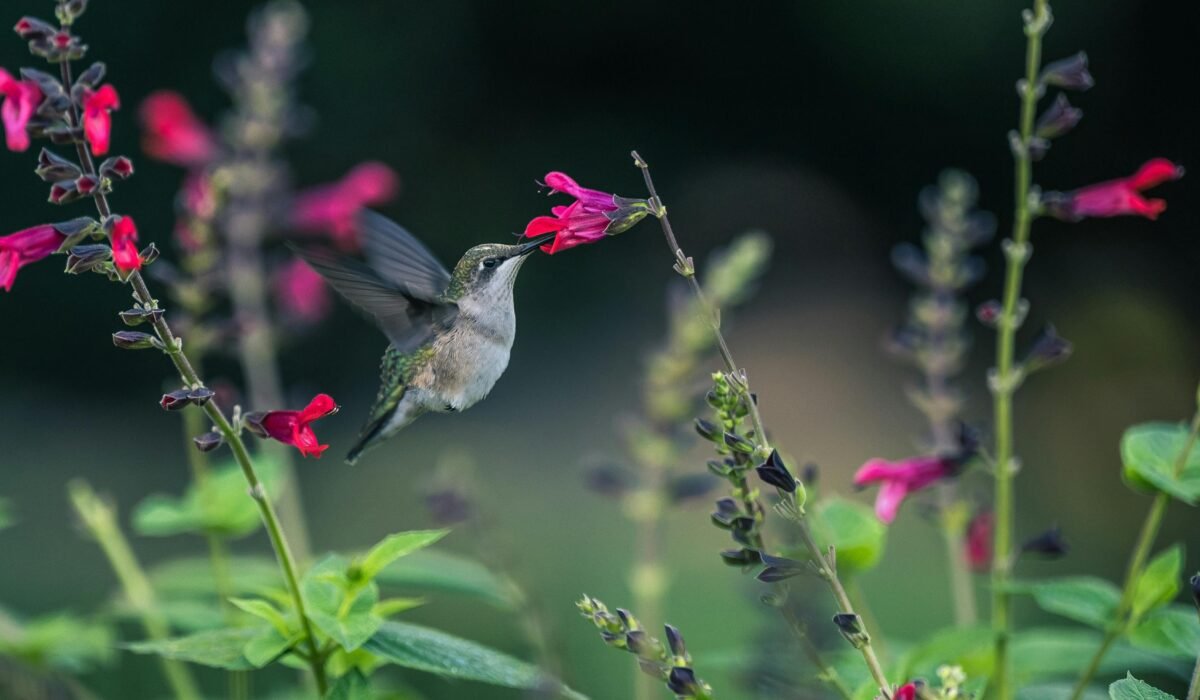
Salvia is arguably one of the best perennial flowers for hummingbirds, offering an incredible variety of colors, sizes, and bloom times. Varieties like ‘Black & Blue’ salvia, scarlet sage, and pineapple sage are particularly popular due to their vibrant blue and red tubular flowers.
They are incredibly nectar-rich plants and relatively low maintenance, thriving in full sun and well-drained soil. You’ll find these plants are consistent performers, keeping hummingbirds coming back from spring through fall.
Bee Balm (Monarda)
Known for its shaggy, often pink, red, or purple flowers, Bee Balm is a native plant that attracts hummingbirds, as well as bees and butterflies. Its unique flower structure makes it easy for hummingbirds to access the nectar.
Monarda thrives in full to partial sun and moist soil, spreading to form dense clumps. This makes it an excellent choice for creating a lush, hummingbird-friendly habitat, but be mindful of its spreading habit.
Cardinal Flower (Lobelia cardinalis)
With its striking, brilliant red flowers, Cardinal Flower is a hummingbird magnet. This wetland perennial prefers moist to wet soil and partial shade, though it can tolerate full sun if kept adequately watered.
Its vibrant color and tubular shape are exactly what hummingbirds are looking for, making it a spectacular addition to the garden, especially near water features or boggy areas.
Trumpet Honeysuckle (Lonicera sempervirens)
This native vine offers beautiful, trumpet-shaped red and orange flowers that are irresistible to hummingbirds. Unlike some invasive honeysuckle species, Trumpet Honeysuckle is a well-behaved native plant that fits well in any garden space, as cited by the USDA Forest Service.
The more sun this vine gets, the more flowers it produces, making it an excellent choice for vertical garden trellis ideas or covering fences and arbors, providing both food and potential perching spots.
Columbine (Aquilegia canadensis)
Another fantastic native plant, Columbine produces intricate, bell-shaped flowers in shades of red and yellow. Its unique structure, with nectar spurs, is perfectly suited for hummingbirds.
Columbine prefers partial shade and well-drained soil, blooming in late spring to early summer, providing early-season nectar for migrating hummingbirds. This is a great choice for hummingbird flowers for shade.
Annual Flowers That Keep Hummingbirds Coming Back
Annual flowers are invaluable for filling in gaps and ensuring a continuous seasonal bloom calendar, especially when perennial flowers are between their bloom cycles. They grow quickly and bloom profusely, offering a constant supply of nectar-rich plants.
These plants are often easy to grow hummingbird flowers, making them perfect for new gardeners or those looking for immediate impact. They are excellent for boosting your hummingbird garden design with vibrant flower colors hummingbirds prefer.
Zinnia
Zinnias are cheerful, drought-tolerant annuals that come in a rainbow of colors, though red and orange varieties are particularly attractive to hummingbirds. Their flat, daisy-like blooms provide an easy landing pad for hummingbirds to access nectar.
Planting a variety of Zinnias, especially single-petal types, will provide a consistent food source from summer through fall. They thrive in full sun and are very straightforward to grow from seed, as noted by ornithologist Bob Mulvihill.
Fuchsia
Known for their elegant, drooping, bell-shaped flowers, Fuchsias are a hummingbird favorite, especially in hanging baskets and containers. Their intricate blooms often feature contrasting colors, with rich pinks, purples, and reds.
Fuchsias prefer partial shade and consistently moist soil, making them ideal for shaded patios or balconies. Maria from @growingjoywithmaria successfully demonstrates creating stunning hummingbird gardens on balconies using trumpet-shaped flowers like fuchsia.
Lantana
Lantana is a tough, heat-loving annual (or perennial in warmer zones) that produces clusters of small, brightly colored flowers. These flowers often change color as they mature, creating a multi-hued effect that hummingbirds find irresistible.
Lantana thrives in full sun and well-drained soil, tolerating dry conditions once established. It’s an excellent choice for adding a splash of color and consistent nectar through the hottest parts of summer.
Petunias
Do hummingbirds like petunias? Absolutely, especially the older, single-flower varieties with trumpet shapes. While modern, double-flowered petunias might be harder for them to access, the classic types are a great option.
Petunias are easy to grow in full sun and come in a vast array of colors, ensuring you can find varieties that appeal to these tiny birds. They are perfect for containers, window boxes, and mass plantings, adding vibrant color to any hummingbird garden design.
Native Plants: The Secret to a Thriving Hummingbird Ecosystem
Incorporating native plants for hummingbirds into your garden is one of the most impactful choices you can make. Native plants are those that have evolved in your specific region, making them perfectly adapted to local climate and soil conditions. This means they often require less water and maintenance than non-native species.
More importantly, hummingbirds have co-evolved with these plants, developing a symbiotic relationship where the plants provide optimal nectar and the birds facilitate pollination. The USDA Forest Service and National Wildlife Federation strongly advocate for native plants for this reason, emphasizing their role in creating a robust hummingbird habitat.
Why Native Plants Matter
Native plants provide more than just nectar; they support the entire local ecosystem. They host native insects, which are a critical food source for hummingbirds, especially during nesting season when protein is essential for their young.
Choosing native plants by zone ensures you’re planting species that will thrive naturally and offer the most benefit to local hummingbird populations. This is key to creating a truly sustainable and thriving hummingbird ecosystem.
Beyond Flowers: Creating a Complete Hummingbird Habitat
While flowers are paramount, a truly successful hummingbird garden design goes beyond just nectar-rich plants. To create a complete hummingbird habitat, you need to consider their other needs: water, shelter, and protein.
Think of your garden as a comprehensive ecosystem, not just a feeding station. Providing these additional elements will encourage hummingbirds to not only visit but also to linger, nest, and thrive in your yard.
Hummingbird Feeders & Water
Hummingbird feeders can supplement natural nectar sources, especially during migration or when natural blooms are scarce. Use a simple solution of one part white sugar to four parts water, and avoid red dyes.
For water, hummingbirds don’t typically use bird baths. They prefer misters or shallow moving water sources where they can fly through the fine spray to bathe. A simple bird bath with a dripper or a fountain with a shallow catch basin can work wonders.
Perching Spots & Shelter
Hummingbirds need safe places to rest, survey their territory, and guard their food sources. Tall shrubs, small trees, and even clotheslines or dead branches can serve as ideal perching spots.
Dense foliage from shrubs or evergreen trees provides crucial shelter from predators and harsh weather, and can even be used as nesting sites. A diverse planting of varying heights contributes significantly to a rich hummingbird habitat.
Pesticide-Free Gardening
Here’s the thing: hummingbirds eat small insects and spiders for protein, especially when feeding their young. Using pesticides in your garden eliminates this vital food source and can also directly harm the birds. Embracing organic, chemical-free gardening practices is essential for their well-being.
What most people miss is that a healthy, biodiverse garden naturally manages pests. By avoiding harmful chemicals, you support not only hummingbirds but also the entire beneficial insect population that helps keep your garden balanced. For further reading on creating a sustainable space, check out our guide on sustainable terrace garden design tips.
Planning Your Hummingbird Garden: Seasonal Bloom & Regional Tips
A truly effective hummingbird garden offers a continuous supply of nectar from early spring through late fall, accommodating the hummingbird migration patterns. This requires thoughtful planning of your seasonal bloom calendar.
Noah Perlut, an ornithologist, advises to “Plan your garden so that different species of flowers open asynchronously across the growing season.” This ensures there’s always something in bloom, providing a consistent food source for these voracious eaters.
Creating a Continuous Bloom Calendar
- Early Spring: Start with early bloomers like Columbine (Aquilegia canadensis) and Bleeding Heart (Dicentra spectabilis) to greet the first migrating hummingbirds.
- Late Spring/Early Summer: Transition to Bee Balm (Monarda), Salvia, and Trumpet Honeysuckle (Lonicera sempervirens).
- Mid-Summer: Zinnia, Lantana, and Fuchsia will be in full swing, providing abundant nectar during peak activity.
- Late Summer/Fall: Continue with late-blooming Salvias, Cardinal Flower (Lobelia cardinalis), and Cypress Vine (Ipomoea quamoclit) to fuel hummingbirds preparing for their long migration.
Regional Plant Recommendations (Hummingbird Plants by Zone)
Understanding your USDA hardiness zone is crucial for selecting plants that will thrive. For example, some plants are perennial in warmer zones but treated as annuals in colder regions.
Always prioritize native plants for your specific region, as they are best adapted to local conditions and provide optimal support for local wildlife. For instance, the University of Florida’s IFAS Gardening Solutions provides excellent region-specific advice for Florida gardeners, while the University of Illinois Extension offers resources for the Midwest.
In practice, a mix of reliable perennials and vibrant annuals, chosen for your specific climate and bloom times, creates the most resilient and attractive hummingbird garden.
Frequently Asked Questions
What is the best flower to attract hummingbirds?
While many flowers attract hummingbirds, Salvia is often cited as the single best flower due to its diverse varieties, extended bloom times, and high nectar content. Specifically, ‘Black & Blue’ Salvia and scarlet sage are top performers, consistently drawing hummingbirds to their vibrant, tubular blooms.
What flowers do hummingbirds like most?
Hummingbirds show a strong preference for red, orange, and pink tubular flowers that are rich in nectar. Beyond Salvia, other favorites include Bee Balm (Monarda), Cardinal Flower (Lobelia cardinalis), Trumpet Honeysuckle (Lonicera sempervirens), Fuchsia, and Zinnia. These plants provide the visual cues and nectar access that hummingbirds need.
What is the best plant to attract hummingbirds and butterflies?
Many plants that attract hummingbirds also appeal to butterflies, especially those with abundant nectar. Bee Balm (Monarda) and Zinnia are excellent choices, as their flower structures and nectar content are suitable for both. Lantana also serves as a dual attractant, offering a continuous bloom that both hummingbirds and butterflies enjoy.
Do hummingbirds like petunias?
Yes, hummingbirds do like petunias, particularly the older, single-flowered varieties with clear, open trumpet shapes. These traditional petunias allow easy access to nectar. While some modern, double-flowered petunias might be harder for them to access, planting classic red or pink petunias can definitely add to your hummingbird garden’s appeal.
Creating a garden that hums with life is a rewarding endeavor, and by choosing the right plants, you’re not just growing flowers—you’re cultivating a vibrant ecosystem. Focus on nectar-rich plants, prioritize native species, and remember the importance of a pesticide-free environment to truly support these magnificent birds. Start planning your continuous bloom calendar today, and prepare to welcome the dazzling spectacle of hummingbirds to your garden.