Are you wondering **how to grow beautiful hydrangeas** that become the envy of your neighborhood? You’ve landed in the right place, because achieving those stunning, abundant blooms is entirely within your reach with the right knowledge and consistent care. This expert guide will walk you through every step, from selecting the perfect plant to troubleshooting common issues, ensuring your hydrangeas flourish.
What is the secret to growing beautiful hydrangeas?
The real secret to **growing beautiful hydrangeas** isn’t a single magic trick, but rather a combination of understanding their fundamental needs and providing consistent, tailored care. It all starts with choosing the right variety for your climate and giving it a proper home. As University of Missouri Extension horticulturist Debi Kelly notes, these “showstopping bloomers” are surprisingly adaptable once established.
Many beginners wonder about the best approach for **hydrangea care for beginners**, and the truth is, a solid foundation in planting, watering, and feeding makes all the difference. What most people miss is that different types of hydrangeas have distinct requirements, especially when it comes to sun exposure and pruning. Getting these basics right ensures a vibrant, healthy plant that rewards you with abundant flowers year after year.
Choosing the Best Location and Soil for Your Hydrangeas
Selecting the ideal spot for your hydrangea is perhaps the most critical decision you’ll make, influencing its health and bloom production. Most hydrangeas thrive in a location that receives morning sun and afternoon shade, which protects their delicate leaves from scorching during the hottest parts of the day. Too much intense sun can lead to wilting and reduced flowering, especially in warmer climates.
The soil itself also plays a huge role. Hydrangeas prefer well-draining, organically rich soil that retains moisture without becoming waterlogged. This is why amending your soil with compost or other organic matter is essential during planting; it improves both drainage and nutrient availability. For optimal growth, the **best soil for hydrangeas** is slightly acidic to neutral, typically with a pH between 5.5 and 6.5. This range supports healthy root development and nutrient uptake. For more on enriching your garden naturally, consider exploring our Organic Soil Amendments Guide.
Essential Care: Watering, Fertilizing, and Pruning Hydrangeas
Once planted, your hydrangeas need ongoing attention to thrive, particularly in their first few years. Consistent care in watering, fertilizing, and pruning will ensure strong growth and spectacular blooms. The key is to understand the “why” behind each action.
Watering Hydrangeas Correctly
Hydrangeas are thirsty plants, especially during their establishment period and hot, dry spells. The best way to ensure **watering hydrangeas correctly** is to provide deep, consistent moisture rather than frequent, shallow sprinkles. Aim for about 1 inch of water per week, either from rainfall or irrigation, checking the soil moisture regularly.
A good practice is to feel the soil about 2-3 inches deep; if it feels dry, it’s time to water. Water deeply at the base of the plant, allowing the water to soak into the root zone, which encourages a strong, deep root system. Overwatering can be just as detrimental as underwatering, leading to root rot, so ensure your soil drains well.
Fertilizing Hydrangeas for Blooms
Proper nutrition is vital for encouraging those showstopping flowers. For most varieties, **fertilizing hydrangeas for blooms** once a year in early spring is sufficient. Ryan McEnaney, a fifth-generation member of Bailey Nurseries, recommends a basic, slow-release granular fertilizer.
For bigleaf (Hydrangea macrophylla) varieties, which are known for reblooming, he suggests using a bloom booster higher in phosphorus in spring and again in July. Products like Plant-tone® + Iron-tone® or Holly-tone® + Iron-tone® are excellent slow-release options. Always follow package directions to avoid over-fertilization, which can lead to lush foliage but fewer flowers.
Understanding Hydrangea Pruning Timelines
Pruning hydrangeas can seem daunting, but it’s crucial for plant health and bloom production. The timing of your pruning depends entirely on the **types of hydrangea varieties** you’re growing, specifically whether they bloom on old wood or new wood. This is a critical piece of **hydrangea pruning tips**.
* **Old Wood Bloomers** (Bigleaf/Macrophylla, Oakleaf/Quercifolia, Mountain/Serrata, Climbing): These varieties set their flower buds on last year’s growth. Prune these immediately after they finish blooming in late summer. Avoid pruning after August, as you risk cutting off next year’s flower buds.
* **New Wood Bloomers** (Smooth/Arborescens, Panicle/Paniculata): These hydrangeas form buds on the current season’s growth. You can prune them in late winter or early spring before new growth begins. This makes them much more forgiving for beginners.
* **Reblooming Varieties** (like Endless Summer®): These bloom on both old and new wood. Light deadheading can be done throughout the season, and more significant structural pruning can be done in late winter/early spring.
Lorraine Ballato, a renowned Hydrangea Expert and author, emphasizes that “different hydrangea varieties have different needs” and that **pruning timing is crucial**. Always identify your hydrangea type before making any cuts. For a more general guide, our Best Fertilizer for Flower Garden article offers insights into supporting flowering plants.
Recommended Pruning Tools
Having the right tools makes pruning easier and ensures clean cuts, which are important for plant health.
- Bypass Pruners: Ideal for small branches, up to 1/2 inch thick, providing clean, precise cuts.
- Loppers: Used for thicker branches, typically 1 to 1.5 inches in diameter, offering more leverage.
- Pruning Saws: Essential for branches too thick for loppers, ensuring a smooth cut without tearing.
Always wear gardening gloves and safety glasses to protect yourself during pruning.
How to Get Your Hydrangeas to Bloom Beautifully
Many gardeners ask, “**How do I get my hydrangeas to bloom beautifully?**” The answer lies in a holistic approach, combining all the care practices we’ve discussed. It’s not just one factor, but the synergy of proper site selection, appropriate feeding, and timely pruning that yields stunning results. In practice, healthy roots mean healthy shoots and, ultimately, abundant flowers.
Beyond basic care, you can influence the bloom color of bigleaf hydrangeas (Hydrangea macrophylla) by adjusting soil pH. This is a fascinating aspect of **changing hydrangea bloom color**. To encourage blue blooms, you’ll need acidic soil (pH 5.0-5.5). You can achieve this by adding aluminum sulfate, such as HiYield 12# Aluminum Sulfate, or elemental sulfur. For pink blooms, aim for more alkaline soil (pH 6.0-6.5) by adding garden lime, like True Organic 6# Garden Lime pH Up. White hydrangeas, however, will always remain white regardless of soil pH. For an extra boost of phosphorus to promote flowering, consider products like Back To Earth 5# Rock Phosphate.
Troubleshooting Common Hydrangea Problems: Pests and Diseases
Even with the best care, hydrangeas can occasionally face challenges from pests and diseases. Knowing how to identify and address these issues promptly is key to maintaining healthy, **beautiful hydrangeas**. A common observation is that a healthy plant is naturally more resistant to problems.
Hydrangea Pest Management
Common pests include aphids, spider mites, and slugs or snails.
- Aphids: Small, soft-bodied insects that cluster on new growth, sucking sap. A strong spray of water can dislodge them, or you can use insecticidal soap or neem oil.
- Spider Mites: Tiny pests that thrive in hot, dry conditions, causing stippling on leaves and fine webbing. Neem oil or miticides are effective.
- Slugs and Snails: These creatures chew ragged holes in leaves, especially on young plants. Hand-picking, beer traps, or organic slug baits can control them.
Implementing integrated pest management (IPM) strategies, which prioritize prevention and non-chemical solutions, is highly effective. For more organic solutions to common garden ailments, check out our guide on Organic Solutions for Plant Diseases.
Common Hydrangea Diseases
Hydrangeas can be susceptible to fungal diseases, especially in humid conditions or with poor air circulation.
- Powdery Mildew: Appears as a white, powdery coating on leaves. Ensure good air circulation, avoid overhead watering, and use fungicides if severe.
- Leaf Spot: Various fungi can cause brown or black spots on leaves. Remove affected leaves and ensure proper spacing.
- Anthracnose: Characterized by large, irregular brown spots, often with concentric rings. Good sanitation and fungicides can help.
Prevention is always better than cure. Choose disease-resistant varieties, provide proper spacing, and ensure good air circulation around your plants.
Selecting the Right Hydrangea Varieties and Companion Plants
With so many stunning options available, choosing the right hydrangea for your garden can be a delightful challenge. Understanding the **types of hydrangeas and their care** will help you make the best selection. New varieties are constantly being introduced, emphasizing unique colors and adaptability.
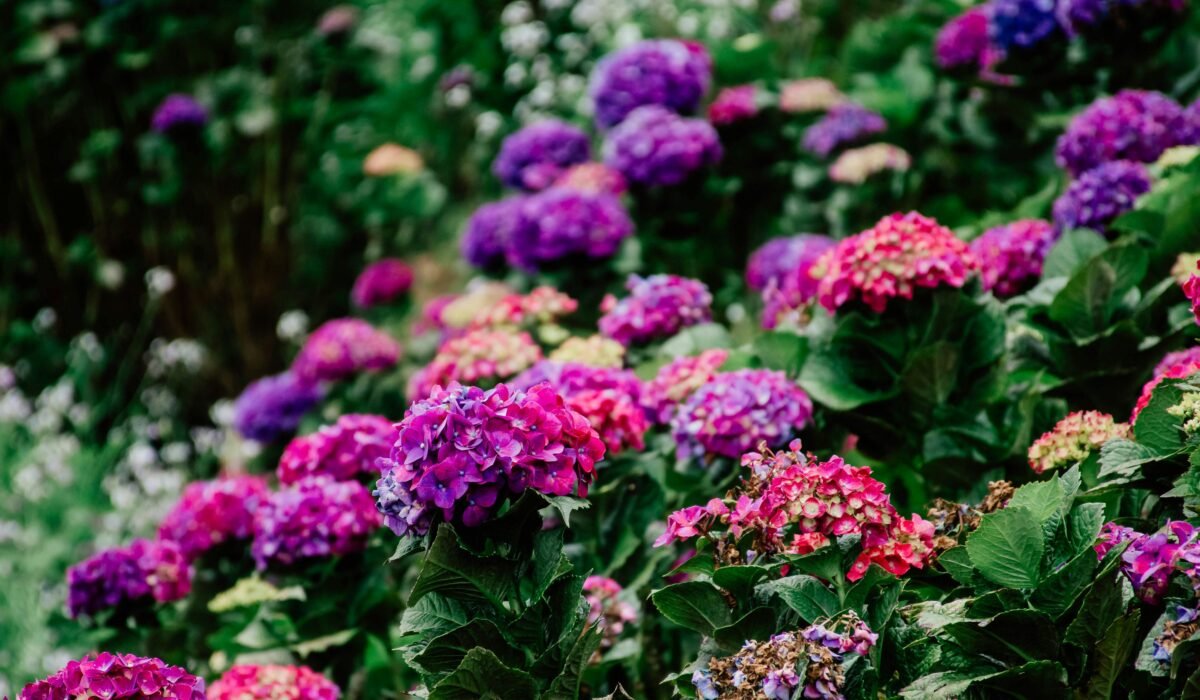
* **Bigleaf Hydrangeas (Hydrangea macrophylla):** Known for their large mophead or lacecap flowers, often changing color with soil pH. ‘Endless Summer®’ is a popular reblooming choice.
* **Panicle Hydrangeas (Hydrangea paniculata):** Very hardy and sun-tolerant, with cone-shaped flowers that often change color as they mature. ‘Limelight’ is a top-loved variety known for its large, green-white blooms.
* **Smooth Hydrangeas (Hydrangea arborescens):** Also known as ‘Annabelle’ types, these are very cold-hardy with large, rounded white flowers. ‘Invincibelle Mini Mauvette®’ and ‘Incrediball®’ are modern examples that bloom on new wood.
* **Oakleaf Hydrangeas (Hydrangea quercifolia):** Distinguished by their oak-shaped leaves, attractive fall color, and exfoliating bark. They prefer more shade.
* **Climbing Hydrangeas (Hydrangea anomala petiolaris):** A vigorous vine that clings to surfaces with aerial roots, perfect for walls or fences.
When it comes to garden design, hydrangeas pair beautifully with plants that share similar light and soil preferences. Good **companion planting** choices include hostas, ferns, azaleas, rhododendrons, and astilbes, which all appreciate dappled shade and rich, moist soil. Integrating hydrangeas into mixed borders, foundation plantings, or woodland gardens can create stunning visual impact. This thoughtful **hydrangea planting guide** ensures both aesthetic appeal and plant health.
Adapting Hydrangea Care to Your Regional Climate
Hydrangeas are incredibly adaptable, but their care needs to be fine-tuned to your specific regional climate and microclimates. What works in a cool, moist Pacific Northwest garden might not suit a hot, dry Texas landscape. Understanding your Plant Hardiness Zones is a crucial starting point.
In regions with **extreme heat**, like the American South, certain hydrangeas, particularly bigleaf, mountain, oakleaf, and climbing types, cannot be planted in full sun, as noted by expert Lorraine Ballato. They will require more consistent afternoon shade and potentially more frequent watering. For prolonged droughts, consider drip irrigation to conserve water and ensure deep root hydration. Conversely, in areas with **very cold winters**, selecting cold-hardy varieties and providing winter protection (which we’ll cover next) is paramount. Microclimates within your own yard, such as a sheltered north-facing wall or a spot under a large tree, can also significantly influence a hydrangea’s success.
Preparing Your Beautiful Hydrangeas for Winter
As the growing season winds down, preparing your hydrangeas for winter is essential, especially in colder climates (USDA Zones 4-6). This **winter care for hydrangeas** helps protect their dormant buds and ensures a strong start in spring. While hardy varieties like Panicle and Smooth hydrangeas are quite resilient, Bigleaf and Oakleaf types often benefit from extra protection.
Once the leaves have dropped and the ground begins to freeze, apply a generous layer of mulch (4-6 inches) around the base of the plant. This could be shredded leaves, pine needles, or wood chips. The mulch helps insulate the soil, protecting the roots from extreme temperature fluctuations. In very cold areas, you might also consider wrapping the entire plant with burlap or creating a cage filled with leaves to protect the above-ground stems, particularly for old-wood blooming varieties whose flower buds are vulnerable to winter damage. Avoid pruning in late fall, as the old growth offers some natural protection.
Frequently Asked Questions
What is the secret to growing beautiful hydrangeas?
The secret to growing beautiful hydrangeas lies in understanding their specific needs for location, soil, water, and pruning. Providing morning sun and afternoon shade, well-draining, rich soil, consistent deep watering, and fertilizing with a high-phosphorus bloom booster in spring are key. Timely pruning, tailored to whether your variety blooms on old or new wood, is also crucial for abundant flowers.
How do I get my hydrangeas to bloom beautifully?
To get your hydrangeas to bloom beautifully, ensure they are planted in the right location with adequate sun and shade, in nutrient-rich, well-draining soil. Consistent watering, especially during dry spells, is vital. Fertilize annually in early spring with a balanced fertilizer, and for reblooming types, use a bloom booster in spring and mid-summer. Finally, prune correctly for your specific hydrangea variety, avoiding cutting off old-wood buds for those types.
How do you care for hydrangeas so they flourish?
For hydrangeas to flourish, provide them with a spot that receives morning sun and afternoon shade, and plant them in moist, well-draining, organically rich soil. Water deeply and regularly, especially when establishing or during dry periods. Fertilize appropriately for their variety and prune according to their blooming habit (old wood vs. new wood). Protecting them from extreme winter conditions in colder zones also contributes significantly to their overall health and vigor.
What is the best food for hydrangeas to bloom?
The best food for hydrangeas to bloom is generally a slow-release granular fertilizer applied in early spring, with a balanced NPK ratio or one slightly higher in phosphorus (the middle number). For bigleaf hydrangeas that rebloom, a second application of a high-phosphorus bloom booster in July can encourage more flowers. Products like Plant-tone® + Iron-tone® or Holly-tone® + Iron-tone® are often recommended for their effectiveness.
Growing **beautiful hydrangeas** is a rewarding journey that adds incredible beauty to any garden space. By following these expert care guidelines, from precise planting to seasonal maintenance and troubleshooting, you’ll cultivate healthy, vibrant plants that produce stunning blooms year after year. Don’t be afraid to experiment and observe your plants; they will tell you what they need. Now, go forth and transform your garden with these magnificent flowers!