Are you struggling to push your hydroponic plants to their absolute genetic potential, wondering how to achieve those legendary growth rates and massive yields? The secret weapon many commercial growers employ to unlock explosive growth in their hydroponic systems is CO2 enrichment hydroponics, a powerful technique that can dramatically transform your harvests.
What is CO2 Enrichment and Why is it Crucial for Hydroponics?
CO2 enrichment, also known as CO2 supplementation hydroponics, involves artificially increasing the concentration of carbon dioxide in your grow environment beyond ambient levels. This practice is absolutely crucial for hydroponics because plants utilize CO2 as a primary ingredient for photosynthesis, the process by which they convert light energy into chemical energy for growth.
Think of CO2 as plant food; without enough of it, even with perfect light and nutrients, your plants will hit a growth ceiling. Current ambient CO2 levels hover around 426 parts per million (ppm), a significant increase from 320 ppm in the 1960s, but still a limiting factor for vigorous plant growth, especially in a sealed hydroponic system. Plants can essentially stop growing below 200 PPM, highlighting just how essential this gas is.
In a controlled environment agriculture (CEA) setting like hydroponics, you have the unique ability to precisely control every growth factor, including CO2. This allows you to optimize conditions far beyond what’s possible outdoors, leading to unprecedented growth rates and yields. As indoor gardening expert Ed Rosenthal famously quipped, “Before you add another light, add C02,” underscoring its fundamental importance.
How Does CO2 Enrichment Significantly Boost Hydroponic Yields?
The core benefit of CO2 enrichment is its direct impact on photosynthesis, which translates directly into a significant hydroponic yield increase. When plants have an abundance of CO2, they can photosynthesize more efficiently, leading to faster vegetative growth, larger fruits, and more robust overall plant structures.
Research consistently demonstrates the impressive results of CO2 supplementation. Studies have reported that CO2 enrichment can boost plant growth and yield in hydroponic systems by 20-30% or more. For specific crops, increases can be even more dramatic; a 2023 Agronomy Journal report noted up to a 30% increase for leafy greens in hydroponic environments. For cannabis, studies showed a remarkable 39% increase in biomass and a 43% increase in flower yield when grown at 1,400 ppm CO₂ compared to ambient conditions.
This isn’t just about bigger plants; it’s about healthier, more resilient ones. Increased CO2 can improve a plant’s ability to tolerate environmental stresses and enhance its nutrient uptake CO2 synergy, making your entire hydroponic system CO2-optimized for peak performance. Adeoluwa Olasehinde’s groundbreaking environmental science research, “Greenhouse Gas to Green Growth: Carbon Dioxide Supplementation in Hydroponics Cultivation,” presented at the Gannon Conference in March 2025, confirmed that plants exposed to CO2 supplementation demonstrated significantly higher growth rates, positioning CO2-enriched hydroponics as a scalable and sustainable agricultural method.
What are the Optimal CO2 Levels for Hydroponic Plants?
Finding the right balance is key when it comes to CO2 levels; too little limits growth, and too much can be wasteful or even detrimental. Generally, CO2 levels between 1000-1500 ppm are considered optimal for most hydroponic crops, representing a sweet spot for maximizing plant photosynthesis CO2 efficiency without excessive cost.
Some experienced growers may push levels up to 1800-2000 ppm, particularly during peak growth or flowering stages, although the benefits often diminish beyond 1500 ppm for most plants. For specific high-value crops like flowering stage cannabis, some growers even suggest levels between 2000 to 2500 ppm to further enhance yield and potency. It’s crucial to remember that these higher levels must be matched with increased light intensity, warmth, and nutrient availability to be effective.
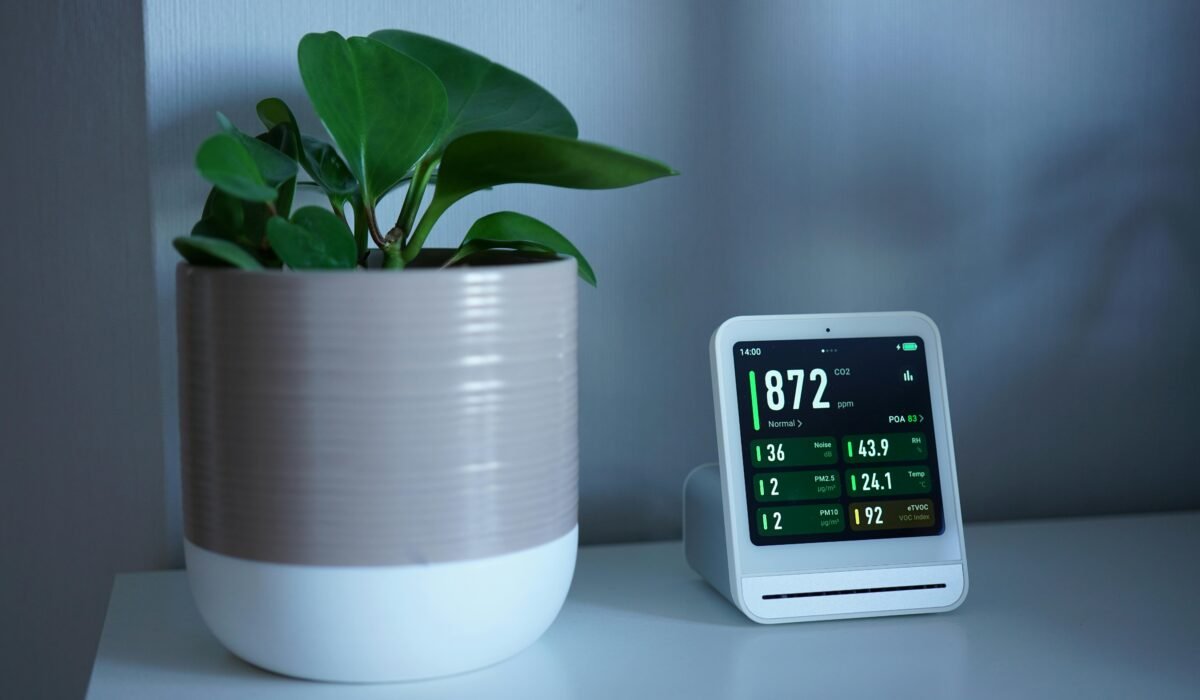
What most people miss is that optimal CO2 ppm plants need to be monitored constantly. Manual checks are insufficient; a reliable CO2 monitoring system is essential to maintain consistent levels. This continuous feedback loop ensures your plants are always operating at their photosynthetic peak.
How Do You Add CO2 to a Hydroponic System? Methods & Equipment
There are several effective ways to introduce CO2 into your hydroponic system, each with its own benefits, costs, and practical considerations. Choosing the right method depends on the size of your grow space, your budget, and your willingness to manage the system.
CO2 Generators (Burners)
CO2 generators, often called burners, produce CO2 by burning natural gas (NG) or liquid propane (LP). These are highly efficient for larger grow spaces and can rapidly increase CO2 levels. They also produce heat, which can be a beneficial byproduct in cooler climates or a challenge in warmer ones.
- Pros: High output, effective for large areas, can help with heating.
- Cons: Require fuel (NG or LP), produce heat, need proper ventilation to avoid oxygen depletion, initial setup cost.
- Examples: Reputable brands like Titan Controls (e.g., Ares 10 Series, Ares 4 Burner, suitable for 15′ x 15′ areas, raising CO2 to 710-1500 PPM), Autopilot, and LTL Controls (e.g., 10-burner NG model for high altitudes, delivering ~27 cu ft/hour) offer robust solutions. The HydroGEN PRO LP model is notable for its water-cooled heat exchanger, extracting 86% of combustion heat, making it ideal for climate-sensitive crops.
Pressurized CO2 Tanks
Pressurized CO2 tanks deliver pure CO2 directly into your grow space via a regulator and distribution system. This method is clean, precise, and ideal for smaller to medium-sized operations where heat generation from burners is undesirable.
- Pros: Clean, no heat byproduct, precise control, easy to set up.
- Cons: Tanks need refilling, can be expensive for very large areas, initial cost for tank and regulator.
- Consideration: When comparing CO2 generator vs tank hydroponics, tanks offer simplicity and purity, while generators offer scale and a heat benefit.
Organic/Passive CO2 Solutions
For smaller setups or those on a tight budget, passive CO2 solutions can offer a modest boost. These often involve composting, fermenting organic materials, or using specialized CO2 bags that slowly release carbon dioxide.
- Pros: Low cost, simple to implement, environmentally friendly.
- Cons: Limited output, less precise control, often insufficient for significant yield increases in larger systems.
- Examples: Products like The Green Pad offer simple, ready-to-use solutions for small grow tents.
CO2 Controllers and Monitoring
Regardless of your chosen method, a reliable CO2 controller and monitoring system is indispensable. These devices constantly measure the CO2 levels in your grow space and activate/deactivate your CO2 source to maintain your desired ppm range. This is the best CO2 controller hydroponics can offer for precision.
- Install a CO2 sensor at plant canopy level.
- Connect the sensor to a digital CO2 controller.
- Connect your CO2 generator or regulator to the controller.
- Set your desired CO2 ppm target.
- The controller will automatically manage CO2 delivery.
Brands like Titan Controls (e.g., Atlas 8 CO2 Controller) are leaders in this field, offering advanced systems for precise environmental management. This level of CO2 monitoring is crucial for achieving consistent and optimal results.
Beyond CO2: Holistically Optimizing Your Hydroponic Environment
While CO2 enrichment is a powerful tool, its full potential is only realized when integrated into a holistically optimized hydroponic environment. Think of CO2 as one crucial piece of a complex puzzle; it works synergistically with other hydroponic plant growth factors to maximize your increase hydroponic plant yield.
Light Intensity and Duration
Plants need intense light to effectively utilize elevated CO2 levels. If your lighting isn’t strong enough, the additional CO2 won’t be converted into energy, leading to wasted resources. Consider high-output LED or HPS lights to match your CO2 supplementation, ensuring your plants have all the energy they need for accelerated growth.
Temperature and Humidity (Vapor Pressure Deficit – VPD)
Temperature and humidity are critical for CO2 absorption and overall plant health. When CO2 levels are high, plants can often tolerate and even thrive in slightly warmer temperatures (e.g., 78-85°F or 25-29°C) because their stomata don’t need to open as wide to capture CO2, reducing water loss. However, maintaining the correct vapor pressure deficit (VPD) is paramount.
VPD measures the difference between the amount of moisture in the air and how much moisture the air can hold when it’s saturated. An optimal VPD allows plants to transpire efficiently, facilitating nutrient uptake and CO2 absorption. Most people miss that elevated CO2 often requires a slightly higher VPD (lower relative humidity) to prevent fungal issues and encourage transpiration. This complex interaction between CO2, temperature, and humidity is a hallmark of advanced controlled environment agriculture.
Hydroponic Nutrient Requirements CO2 Interaction
With increased growth rates from CO2 enrichment, your plants will have a higher demand for essential nutrients. This is a critical area where many growers fall short. A new study (January 5, 2026) involving the University of Graz found that the “CO2 fertilization effect” has been significantly overstated in climate models because natural nitrogen fixation has been overestimated by about 50 percent. This implies that the climate-cooling benefits of plant growth under high CO2 are smaller than expected due to nitrogen limitation, resulting in an overall reduction of about 11 percent in the projected CO2 fertilization effect.
What this means for you: you’ll likely need to adjust your nutrient regimen, particularly increasing nitrogen and potentially phosphorus, to support the accelerated growth. MIT researchers (August 18, 2025) also highlighted that plants require essential nutrients like nitrogen and phosphorus to fully capitalize on elevated CO2 levels. Regularly monitor your nutrient solution’s EC (electrical conductivity) and pH to ensure your plants are receiving everything they need. For more on optimizing your setup, check out our guide on Hydroponic Grow Space Optimization: Maximize Your Yield.
Species-Specific CO2 Needs & Troubleshooting Common Issues
While general guidelines exist, different hydroponic plant species respond uniquely to CO2 enrichment. Understanding these nuances can help you fine-tune your approach and avoid common pitfalls.
Crop-Specific CO2 Levels
Not all plants have the same optimal CO2 ppm plants threshold. Here’s what recent studies suggest for some common hydroponic crops:
- Leafy Greens (Lettuce, Bok Choy, Fennel): Studies show significant benefits at more moderate CO2 levels. Auvona lettuce saw a 24.7% increase in fresh weight and 21.4% dry weight with CO2 supplementation at 800 ppm. Bok choy biomass significantly increased at concentrations double ambient (around 840 ppm). Fennel (Foeniculum vulgare Mill.) showed improved length, leaf length, and fresh/dry weights under 800 ppm elevated CO2 conditions over five weeks.
- Fruiting Plants (Tomatoes, Peppers): These generally thrive at the higher end of the 1000-1500 ppm range, especially during flowering and fruiting stages, to support the energy demands of fruit development.
- Cannabis: As mentioned, flowering stage cannabis can utilize CO2 levels between 1400-2500 ppm, depending on light intensity and other environmental factors, to achieve maximum biomass and flower yield.
Always research the specific needs of your chosen crop to truly dial in your CO2 strategy. This individualized approach is what separates good growers from great ones.
Troubleshooting Common CO2 System Issues
Even with the best equipment, issues can arise. Here are some common problems and their solutions:
- Inconsistent CO2 Levels:
- Cause: Leaks in the grow space, faulty sensor, improper controller settings.
- Solution: Seal all air leaks, calibrate or replace the CO2 sensor, adjust controller set points and deadband.
- High Temperatures with CO2 Generators:
- Cause: Generator heat output exceeding ventilation capacity.
- Solution: Increase exhaust fan capacity, use a water-cooled generator (like HydroGEN PRO LP), or switch to CO2 tanks if heat is a persistent problem.
- CO2 Depletion (especially with tanks):
- Cause: Tank running empty, regulator malfunction.
- Solution: Regularly check tank pressure, have a spare tank, inspect regulator for proper function.
- Poor Plant Response:
- Cause: Insufficient light, incorrect temperature/humidity, nutrient deficiencies.
- Solution: Ensure all other environmental factors (light, temperature, VPD) are optimized to match elevated CO2. Adjust your hydroponic nutrient requirements CO2 synergy. Remember, CO2 is an accelerator, but other factors must be in place.
For broader troubleshooting tips, consider reviewing resources like Troubleshooting Vertical Garden Problems: Solutions Guide, as many environmental control issues are transferable.
Frequently Asked Questions
How much CO2 do hydroponic plants need?
Most hydroponic plants thrive with CO2 levels between 1000-1500 ppm, significantly higher than the ambient 426 ppm. This range maximizes photosynthesis and growth without being wasteful. Some specific crops or flowering stages may benefit from slightly higher concentrations, up to 1800-2500 ppm, provided all other environmental factors like light and temperature are also optimized.
Does CO2 increase hydroponic yield?
Yes, CO2 enrichment significantly increases hydroponic yield, often by 20-30% or more, with some crops seeing even higher boosts. By providing plants with an abundant supply of carbon dioxide, you enable them to photosynthesize more efficiently, leading to faster growth rates, larger plant structures, and ultimately, a more substantial harvest.
How do you add CO2 to a hydroponic system?
You can add CO2 to a hydroponic system using several methods: CO2 generators (burners) that combust natural gas or propane for larger spaces, pressurized CO2 tanks with regulators for precise and clean delivery, or passive/organic solutions like CO2 bags or composting for smaller, budget-friendly setups. Regardless of the method, a CO2 controller is essential for monitoring and maintaining optimal levels.
Is CO2 good for hydroponic plants?
Absolutely, CO2 is exceptionally good for hydroponic plants. It is a fundamental ingredient for photosynthesis, allowing plants to convert light energy into growth. Increasing CO2 levels beyond ambient concentrations in a controlled hydroponic environment directly accelerates growth rates, boosts yields, and can even improve a plant’s resilience to stress when other environmental factors are also optimized.
Mastering CO2 enrichment hydroponics is a game-changer for any serious grower looking to maximize their yields and plant health. By understanding the science, implementing the right equipment, and holistically optimizing your environment, you’re not just growing plants; you’re cultivating an incredibly efficient, high-performing ecosystem. Start experimenting with controlled CO2 supplementation today and watch your hydroponic garden flourish like never before.