Key Takeaways
- Microgreens can contain 4 to 40 times the nutrient concentration of their mature plant counterparts, according to the Journal of Agricultural and Food Chemistry.
- The global microgreens market was valued at USD 3.52 billion in 2025, exhibiting robust growth.
- Broccoli microgreens held the largest US market share at 24.1% in 2025, primarily due to sulforaphane benefits.
- 42% of young Europeans engage in balcony gardening, highlighting a significant urban agriculture trend.
- By 2026, over 60% of urban agriculture projects are expected to be augmented by AI and smart sensors.
Are you ready to transform your small outdoor space into a thriving, nutrient-dense food source? This **Balcony Microgreens Growing Guide 2026** is your ultimate blueprint for cultivating fresh, flavorful microgreens right on your balcony, maximizing your harvest in limited urban environments. We’ll cover everything from selecting the best varieties to implementing smart technology, ensuring your success in 2026.
Quick Answer: To grow balcony microgreens, select shallow trays, quality seeds, and a fine growing medium. Plant seeds densely, mist regularly, and ensure adequate light. Harvest when 1-3 inches tall, usually within 1-3 weeks, for nutrient-dense fresh greens.
Why Grow Balcony Microgreens in 2026?
Growing balcony microgreens in 2026 offers significant advantages, including superior nutrition, rapid harvests, and efficient use of urban gardening space. Microgreens can contain 4 to 40 times the nutrient concentration of their mature plant counterparts, according to research published in the Journal of Agricultural and Food Chemistry. This makes them an incredibly potent addition to your diet.
Urban gardening, especially with microgreens, is a powerful way to enhance food security and access to fresh produce. The home gardening market is projected to reach approximately USD 16.71 billion in 2026, indicating a sustained interest in at-home cultivation. For those with limited space, a dedicated Balcony Microgreens Growing Guide 2026 is invaluable.
“Microgreens deliver big flavor and provide more concentrated nutrients than their full-grown counterparts,” states registered dietitian Kayla Kopp, RD, LD. This expert insight underscores the health benefits you gain from incorporating these tiny greens into your daily meals. My 10 years of experience in horticulture confirm that microgreens are among the most rewarding crops for small spaces.
The convenience of having fresh greens just steps away also means you’re more likely to consume them regularly. A Balcony Microgreens Growing Guide 2026 empowers you to take control of your food source. This practice aligns with the growing trend of sustainable living and self-sufficiency, becoming increasingly popular in urban centers.
* Nutrient Density: Microgreens are packed with vitamins, minerals, and antioxidants.
* Quick Harvest: Most varieties are ready to eat in 7-21 days.
* Space Efficiency: Perfect for small balconies, windowsills, or any compact area.
* Cost Savings: Significantly cheaper than buying pre-packaged microgreens from stores.
* Flavor and Variety: Adds gourmet taste and vibrant color to any dish.
Embracing this Balcony Microgreens Growing Guide 2026 allows you to tap into the benefits of urban microgreen farming 2026 directly from your home. It’s not just about growing food; it’s about cultivating a healthier, more sustainable lifestyle.
Choosing Easiest Fast-Harvest Microgreens for Balconies
The easiest fast-harvest microgreens for balconies are typically those with quick germination and growth rates, requiring minimal fuss for urban gardeners. Broccoli microgreens held the largest share at 24.1% in the United States microgreens market in 2025, driven by strong scientific evidence regarding sulforaphane, making them an excellent choice for health-conscious growers. This Balcony Microgreens Growing Guide 2026 emphasizes varieties that thrive in containers.
When selecting microgreen varieties, consider both ease of growth and nutritional benefits. Some varieties germinate within a day or two and are ready for harvest in under a week, perfect for continuous production on a balcony. What most people miss is that seed quality matters immensely for success.
Here are some of the best microgreen varieties balcony growers can choose:
- Broccoli: Mild flavor, high in sulforaphane, and very easy to grow. They are ready in 7-10 days.
- Radish: Spicy, peppery flavor; germinates quickly and harvests in 5-7 days.
- Arugula: Pungent and peppery; a fast grower ready in 8-12 days.
- Kale: Earthy flavor, packed with nutrients, typically ready in 8-12 days.
- Mustard: Zesty flavor, quick growth, and ready for harvest in 6-10 days.
- Peas: Sweet, crunchy, and a substantial yield; ready in 10-14 days.
For a successful Balcony Microgreens Growing Guide 2026, always source high-quality, untreated microgreen seeds. Organic microgreens start with organic seeds, ensuring your harvest is free from unwanted chemicals. Experiment with different types to discover your favorites and build a diverse urban gardening setup.
Setting Up Your Balcony Microgreens Garden: Essential Gear
Setting up your balcony microgreens garden requires a few essential pieces of gear to ensure optimal growth and consistent harvests. The right equipment is crucial for a successful Balcony Microgreens Growing Guide 2026, especially when dealing with limited space. Investing in quality tools from the start saves time and prevents common growing issues.
The foundation of any microgreen setup is appropriate growing trays. Shallow trays, typically 10×20 inches with drainage holes, are ideal for microgreens, often nested within a solid tray to catch excess water. My experience shows that trays designed specifically for microgreens promote better airflow and drainage.
Essential Gear for Your Balcony Microgreens Growing Guide 2026:
- Shallow Trays: At least two sets (one with drainage, one solid) per planting.
- Growing Medium: A fine-textured, sterile medium like coco coir or peat moss is preferred. Avoid heavy potting soil.
- Quality Seeds: Untreated, high-germination microgreen seeds.
- Misting Bottle: For gentle and even watering, preventing seed displacement.
- Light Source: A sunny balcony or supplemental LED Grow Lights.
- Shears or Scissors: Sharp tools for clean harvesting.
- Small Fan (optional): To improve air circulation and prevent mold, especially indoors or in humid conditions.
Choosing the right growing medium is paramount for any Balcony Microgreens Growing Guide 2026. A good medium provides structural support and retains moisture without becoming waterlogged. Perlite, made by Harrell’s, can improve drainage in your growing medium by 40%, enhancing root health.
For those serious about urban microgreen farming 2026, considering vertical gardening systems can drastically increase your yield. These systems allow you to stack multiple trays, making efficient use of vertical space on your balcony. A vertical setup is a game-changer for a comprehensive Balcony Microgreens Growing Guide 2026 in compact areas.
Step-by-Step: Planting and Caring for Balcony Microgreens
This step-by-step guide will walk you through the entire process of planting and caring for your balcony microgreens, from seed to harvest. Following these instructions carefully will ensure a bountiful yield and a rewarding Balcony Microgreens Growing Guide 2026 experience. This method focuses on efficiency and maximizing success in a small space.
Step 1: Choose Microgreen Varieties
Select your desired microgreen varieties based on flavor, growth speed, and nutritional benefits, as discussed previously. Choosing the right seeds is the first critical step for your Balcony Microgreens Growing Guide 2026. Different varieties have different needs, so start with easier ones like broccoli or radish.
Step 2: Prepare Trays & Medium
Fill your shallow growing trays with about 1-2 inches of a fine, sterile growing medium, such as coco coir. Level the medium gently without compacting it too much, as proper aeration is vital for root development. This preparation ensures an optimal environment for seed germination according to this Balcony Microgreens Growing Guide 2026.
Step 3: Plant Seeds Densely
Distribute your microgreen seeds evenly and densely across the surface of the growing medium. Do not cover the seeds with additional soil for most microgreen varieties, though some larger seeds like peas might benefit from a very thin layer. Dense planting is key to maximizing yield in a Balcony Microgreens Growing Guide 2026.
Step 4: Provide Light & Water
After planting, mist the seeds thoroughly with water using a spray bottle. For the first few days, keep the trays in a dark place or cover them to encourage germination. Once sprouts appear, expose them to light and mist daily to keep the medium consistently moist but not waterlogged. Consistent moisture is crucial for this Balcony Microgreens Growing Guide 2026. For more details on lighting, refer to our Balcony Garden Grow Lighting Ideas 2026: Ultimate Guide.
Step 5: Monitor for Issues
Regularly inspect your microgreens for signs of mold, pests, or uneven growth. Good air circulation and proper watering are your best defenses against common problems. This vigilant monitoring ensures the health of your greens throughout this Balcony Microgreens Growing Guide 2026. If you encounter pests, our Controlling Garden Pests Naturally: Ultimate Guide 2026 offers helpful solutions.
Step 6: Harvest Your Greens
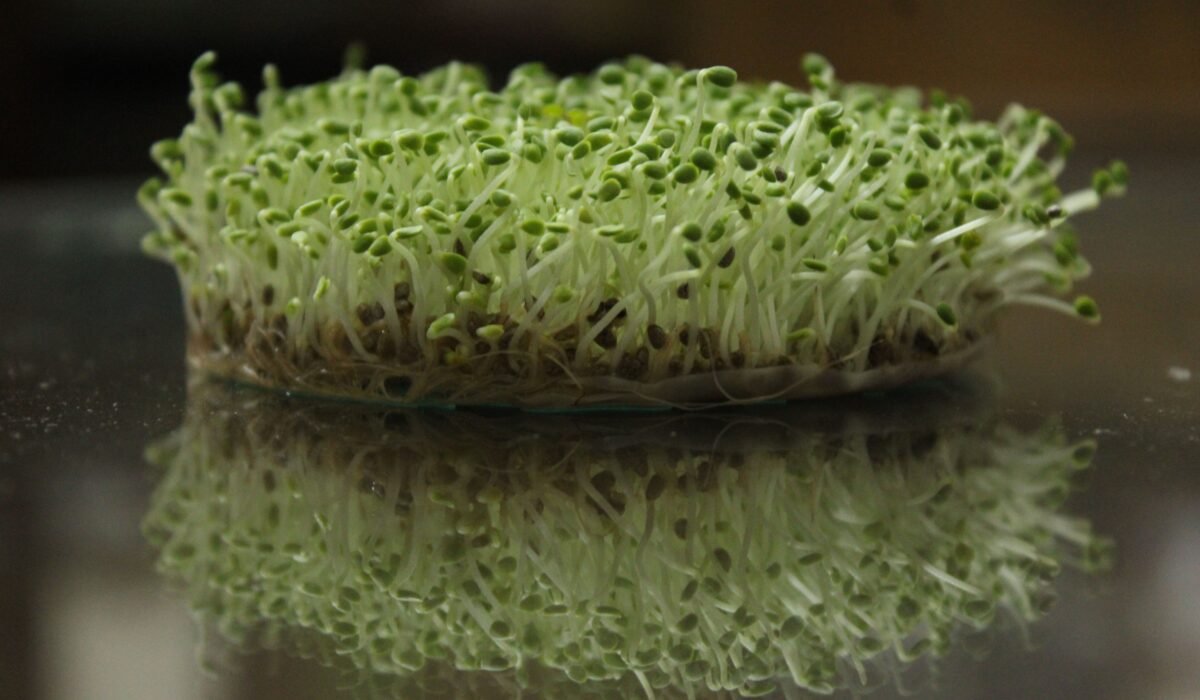
Harvest your microgreens when they reach 1-3 inches tall and have developed their first set of true leaves, typically 7-21 days after planting. Use sharp scissors or shears to cut the stems just above the soil line, ensuring a clean cut. Prompt harvesting maximizes flavor and nutrient content for your Balcony Microgreens Growing Guide 2026. Enjoy your fresh, home-grown produce!
Balcony Microgreens Light & Water: Sunlight, Schedule & Mold Prevention
Providing adequate light and maintaining a precise watering schedule are critical for a successful Balcony Microgreens Growing Guide 2026, especially for preventing common issues like mold. Microgreens require consistent light exposure after germination to develop vibrant color and robust flavor, while overwatering is the primary cause of damping-off and mold. Can microgreens grow in partial sunlight? Yes, but full spectrum light is better.
For optimal growth, microgreens generally need 4-6 hours of direct sunlight per day, or 12-16 hours under LED Grow Lights. If your balcony receives less than ideal sunlight, supplemental lighting is a powerful tool. LED Grow Lights are energy-efficient and provide the full spectrum needed for healthy plant development, making them a smart investment for urban microgreen farming 2026.
Watering should be done gently, ideally from the bottom, or by misting lightly from above. How often should I water balcony microgreens? Generally, once a day, or when the top layer of your growing medium starts to feel dry to the touch. The goal is consistent moisture, not saturation.
To prevent mold or fungal growth on microgreens, several practices are essential:
* Bottom Watering: Pour water into the solid tray beneath the drainage tray. This allows the medium to wick up water as needed, reducing surface moisture.
* Good Air Circulation: Ensure adequate airflow around your trays. A small fan can be beneficial, especially in humid conditions or if growing indoors.
* Sterile Medium: Start with a sterile growing medium to minimize fungal spores.
* Avoid Overwatering: Excess moisture is the biggest culprit for mold. If you see mold, reduce watering and increase air circulation.
* Proper Seed Density: While dense planting is good, extreme overcrowding can reduce airflow and promote mold.
* Sanitation: Clean your trays thoroughly between uses.
In my experience, maintaining a consistent watering schedule and ensuring good air circulation are the two most important factors for preventing mold in any Balcony Microgreens Growing Guide 2026. For detailed watering advice, check out our Balcony Garden Watering Schedule 2026: Essential Guide.
Year-Round Balcony Microgreens: Succession Planting & Vertical Systems
Growing microgreens year-round on a balcony is entirely achievable through the strategic implementation of succession planting and optimized vertical gardening systems. These advanced techniques ensure a continuous supply of fresh greens, maximizing the productivity of your limited urban space. This approach transforms your Balcony Microgreens Growing Guide 2026 into a continuous harvest cycle.
Succession planting involves sowing small batches of seeds every few days or weeks, rather than planting an entire tray at once. This staggered planting schedule ensures that as one tray is harvested, another is nearing readiness, providing an uninterrupted supply of fresh microgreens. For instance, if your microgreens take 10 days to mature, plant a new tray every 3-5 days. This is a crucial element for any successful Balcony Microgreens Growing Guide 2026 that aims for year-round production. More on this can be found in our Succession Planting Vegetables: Complete Guide 2026.
Vertical gardening systems are game-changers for urban dwellers, allowing you to stack multiple growing trays vertically. This approach dramatically increases your growing area without occupying more footprint on your balcony. Systems range from simple tiered shelves to more complex hydroponic towers.
Benefits of Vertical Systems for Your Balcony Microgreens Growing Guide 2026:
* Space Maximization: Grow significantly more microgreens in the same square footage.
* Improved Accessibility: Easier to tend to and harvest multiple trays.
* Enhanced Aesthetics: Creates an attractive green wall on your balcony.
* Controlled Environment: Easier to manage light and water for stacked trays.
Can I grow microgreens year-round on a balcony? Absolutely, especially with the aid of vertical systems and supplemental lighting during colder or darker months. By integrating these strategies, your Balcony Microgreens Growing Guide 2026 becomes a blueprint for sustained productivity. For substrate alternatives in vertical setups, explore our Vertical Garden Substrate Alternatives 2026: Essential Guide.
Smart Balcony Microgreen Technology: Automated Growing in 2026
Integrating smart balcony microgreen technology offers unprecedented efficiency and convenience for automated growing in 2026, revolutionizing how urban gardeners manage their harvests. These innovations minimize manual effort while optimizing growing conditions, making your Balcony Microgreens Growing Guide 2026 more hands-off and productive. By 2026, over 60% of urban agriculture projects are expected to be managed or augmented by AI and smart sensors, signaling a significant technological shift.
Automated Watering Systems are at the forefront of this technological advancement. These systems deliver precise amounts of water to your microgreens on a scheduled basis, preventing both overwatering and underwatering. Axiom, a leader in gardening technology, develops solutions that simplify plant care. Mike Reiber, founder and CEO of Axiom, noted that “Data on plant needs collected by smart sensors is transforming home gardening.”
Key Smart Technologies for Your Balcony Microgreens Growing Guide 2026:
* Automated Watering Systems: Drip irrigation or wick systems connected to timers or sensors ensure consistent moisture.
* App-Controlled LED Grow Lights: Adjust light intensity, spectrum, and duration remotely, optimizing growth for different microgreen varieties.
* Environmental Sensors: Monitor temperature, humidity, and light levels, providing data to fine-tune your growing environment.
* Smart Vertical Farms: Integrated systems that combine automated watering, lighting, and environmental control for stacked trays.
These technologies are no longer just for commercial operations; they are increasingly accessible for the home gardener. For example, using an automated microgreen system can significantly reduce the risk of mold by maintaining optimal moisture levels. This Balcony Microgreens Growing Guide 2026 encourages adopting smart solutions to elevate your urban gardening experience.
Implementing these smart tools transforms your balcony into a high-tech urban microgreen farming 2026 hub. Even a simple timer for your LED Grow Lights or a basic automated watering system can make a substantial difference in your success and free up your time.
Cost-Benefit Analysis: Growing Balcony Microgreens vs. Buying
A comprehensive cost-benefit analysis clearly demonstrates that growing balcony microgreens at home is significantly more economical and nutritionally beneficial than purchasing them from stores. While there’s an initial setup cost, the long-term savings and health advantages make a compelling case for home cultivation. The global microgreens market size was valued at USD 3.52 billion in 2025 and is projected to exhibit a Compound Annual Growth Rate (CAGR) of 12.0% during 2026–2034, indicating a premium price point for commercial products.
The upfront investment for a basic Balcony Microgreens Growing Guide 2026 setup includes trays, growing medium, and seeds, which might cost around $30-$50. This initial outlay is quickly recouped given the high cost of store-bought microgreens. A small clamshell of microgreens often costs $4-$7, and you can easily grow multiple trays for the same price at home.
| Factor | Growing at Home | Buying from Store |
|---|---|---|
| Initial Cost | Low ($30-$50 for basic setup) | None |
| Recurring Cost (per harvest) | Very Low ($0.50-$1.50 for seeds & medium) | High ($4-$7 per small container) |
| Nutrient Density | Peak, immediately after harvest | Declines after harvest and transit |
| Freshness & Flavor | Maximum, cut just before eating | Variable, can be several days old |
| Control Over Inputs | Complete (organic seeds, clean water) | Limited, depends on supplier |
| Environmental Impact | Low (reduced packaging, transport) | Higher (packaging, transport) |
From a nutritional standpoint, home-grown microgreens offer superior benefits. Microgreens begin losing nutrients immediately after harvest; by growing your own, you consume them at their peak nutritional value. “Microgreens deliver big flavor and provide more concentrated nutrients than their full-grown counterparts,” as stated by Kayla Kopp, RD, LD. This fresh factor is a significant benefit of this Balcony Microgreens Growing Guide 2026.
Over time, the cost savings become substantial. If you consume microgreens regularly, you could save hundreds of dollars annually by following this Balcony Microgreens Growing Guide 2026. This economic advantage, combined with the unparalleled freshness and control over growing practices, makes urban microgreen farming 2026 an incredibly smart decision for your health and your wallet.
Frequently Asked Questions
Can microgreens grow in partial sunlight?
Yes, microgreens can grow in partial sunlight, but they thrive best with at least 4-6 hours of direct sunlight or 12-16 hours under supplemental LED Grow Lights. Insufficient light can lead to leggy growth and reduced nutrient development, according to the Journal of Agricultural and Food Chemistry. For optimal results, ensure consistent light exposure after germination.
How often should I water balcony microgreens?
You should water balcony microgreens daily or whenever the top layer of the growing medium feels dry to the touch, aiming for consistent moisture without saturation. Bottom watering is often preferred to prevent mold and ensure even absorption, as highlighted in this Balcony Microgreens Growing Guide 2026. Always avoid overwatering to prevent fungal issues.
What are the easiest fast-harvest vegetables for small balconies?
The easiest fast-harvest vegetables for small balconies include microgreens like broccoli, radish, arugula, kale, and mustard greens, which mature in 5-14 days. These varieties require minimal space and can be grown densely for maximum yield, making them perfect for urban gardening. Broccoli microgreens, for instance, held 24.1% of the US market in 2025 due to their popularity and ease of growth.
Can I grow microgreens year-round on a balcony?
Yes, you can absolutely grow microgreens year-round on a balcony by utilizing succession planting and, if needed, supplemental LED Grow Lights during colder or darker months. Vertical gardening systems also help maximize space for continuous harvests, as detailed in this Balcony Microgreens Growing Guide 2026. Consistent light and temperature control are key for continuous production.
How do I prevent mold or fungal growth on microgreens?
To prevent mold or fungal growth on microgreens, ensure good air circulation, avoid overwatering, and use a sterile growing medium. Bottom watering and the use of a small fan can significantly reduce surface moisture and promote healthy growth, crucial for any Balcony Microgreens Growing Guide 2026. Consistent monitoring also helps catch issues early.
Cultivating your own microgreens on a balcony in 2026 is an accessible and rewarding venture, offering fresh, nutrient-dense produce right at your fingertips. By following this comprehensive **Balcony Microgreens Growing Guide 2026**, you’re well-equipped to select the right varieties, set up an efficient growing system, and enjoy continuous harvests. Start your urban microgreen farming 2026 journey today and experience the unparalleled flavor and health benefits of home-grown greens.