Key Takeaways
- The global vertical farming market was valued at USD 9.62 billion in 2025, according to Grand View Research (2026).
- Vertical garden plant supports can increase garden yields by training plants upward, improving air circulation, and reducing disease contact.
- DIY vertical garden plant supports like bamboo grids or cattle panel trellises offer cost-effective and highly customizable solutions.
- North America held the largest revenue share of 33.4% in the global vertical farming market in 2025, according to Grand View Research (2026).
- Choosing the right vertical garden plant supports depends on plant type, available space, desired aesthetics, and material durability.
Growing plants vertically can transform any space, but how do you ensure your climbing plants thrive and your garden looks its best? The secret lies in selecting and implementing the right **vertical garden plant supports**. In my 10 years of experience in horticulture, I’ve seen firsthand how effective support systems can maximize yields, improve plant health, and turn small spaces into lush, productive gardens. This guide will walk you through creative and effective solutions to uplift your vertical garden.
Quick Answer: Vertical garden plant supports maximize space and plant health by training plants upward. Effective solutions include trellises, cages, stakes, and netting, improving air circulation, reducing disease, and making harvesting easier. Creative options range from DIY bamboo structures to specialized modular systems.
Why Use Vertical Garden Plant Supports?
Vertical garden plant supports are essential for maximizing garden space and promoting healthier plant growth. These structures allow plants to grow upward instead of sprawling across the ground, which is particularly beneficial in urban areas or small gardens where space is limited, as highlighted by Katie Settlage and Alex Hessler of Virginia Tech. The practice of “gardening up” is a smart way to utilize every inch.
The primary benefit of using **vertical garden plant supports** is the significant increase in usable planting area. The vertical garden construction market size was valued at USD 0.97 billion in 2024, demonstrating a growing trend towards efficient space utilization. This growth is projected to reach USD 1.92 billion by 2035, exhibiting a compound annual growth rate (CAGR) of 6.4% from 2025 to 2035, according to Research and Markets (2024).
Beyond space-saving, these support systems offer several advantages for plant health and yield. Improving air circulation around foliage is crucial, as it helps prevent fungal diseases and allows leaves to dry more quickly after rain or watering. This reduces contact with soil-borne pathogens.
“Just like people, plants need a little support to thrive,” explains organic gardener Tricia. “Whether you’re growing tomatoes, cucumbers, or pole beans, proper plant supports can improve your garden’s health and yield.” This expert insight underscores the fundamental role of **vertical garden plant supports**.
By keeping fruits and vegetables off the ground, you can also deter pests and make harvesting considerably easier. Imagine picking ripe tomatoes without bending over or searching through dense foliage; that’s the convenience **vertical garden plant supports** provide.
What Types of Vertical Garden Plant Supports Are There?
Vertical garden plant supports encompass a diverse range of structures, each designed to cater to different plant types and gardening needs. These systems provide the necessary framework for plants to climb, vine, or simply stand upright.
Here’s a breakdown of common types of **vertical garden plant supports**:
- Trellises: Often made from wood, metal, or plastic, trellises feature a grid-like or open framework. They are ideal for vining plants like cucumbers, peas, beans, and climbing roses, providing ample surfaces for tendrils to grip.
- Cages: Typically round or square, plant cages surround individual plants, offering support from all sides. They are particularly effective for bushy plants with heavy fruit, such as tomatoes and peppers. Whites 1.2m galvanised vegetable cage plant trainers are an example of effective round cage plant trainers for capsicum plants, as highlighted in gardening discussions.
- Stakes: Simple and versatile, stakes are individual poles inserted into the soil next to a plant. They are best for plants that need single-point support, like young trees, tall flowers, or individual tomato plants, often requiring ties to secure the plant.
- Netting: Lightweight and flexible, netting provides a mesh for plants to climb. It’s an economical choice for peas, beans, and other light climbers, easily adaptable to various spaces. Hortonova Plastic Trellis is a lightweight, reusable, and UV-stabilized plastic trellis recommended for both horizontal and vertical support, including for sprawling plants like cucumbers.
- Obelisks: These decorative, pyramid-shaped structures add an aesthetic touch while providing vertical support. They are excellent for showcasing ornamental climbers or creating a focal point in the garden.
Choosing the right type of **vertical garden plant supports** depends heavily on the specific growth habit and weight of the mature plant. A heavy fruiting vine will require a much sturdier support than a delicate flowering annual.
For instance, robust cattle panels are increasingly popular for creating sturdy, durable, and long-lasting trellises, especially for heavy crops like tomatoes and squash, with one YouTube creator noting how they “completely changed how we grow food.” The global vertical farming market size was valued at USD 9.62 billion in 2025 and is projected to reach USD 39.20 billion by 2033, growing at a CAGR of 19.3% from 2026 to 2033, according to Grand View Research (2026). This significant growth reflects the increasing demand for efficient, vertically integrated agricultural solutions.
DIY Vertical Garden Plant Supports: Creative Solutions
Creating your own vertical garden plant supports can be a cost-effective and rewarding way to customize your growing space. Many common household items and natural materials can be repurposed into functional and attractive plant support systems.
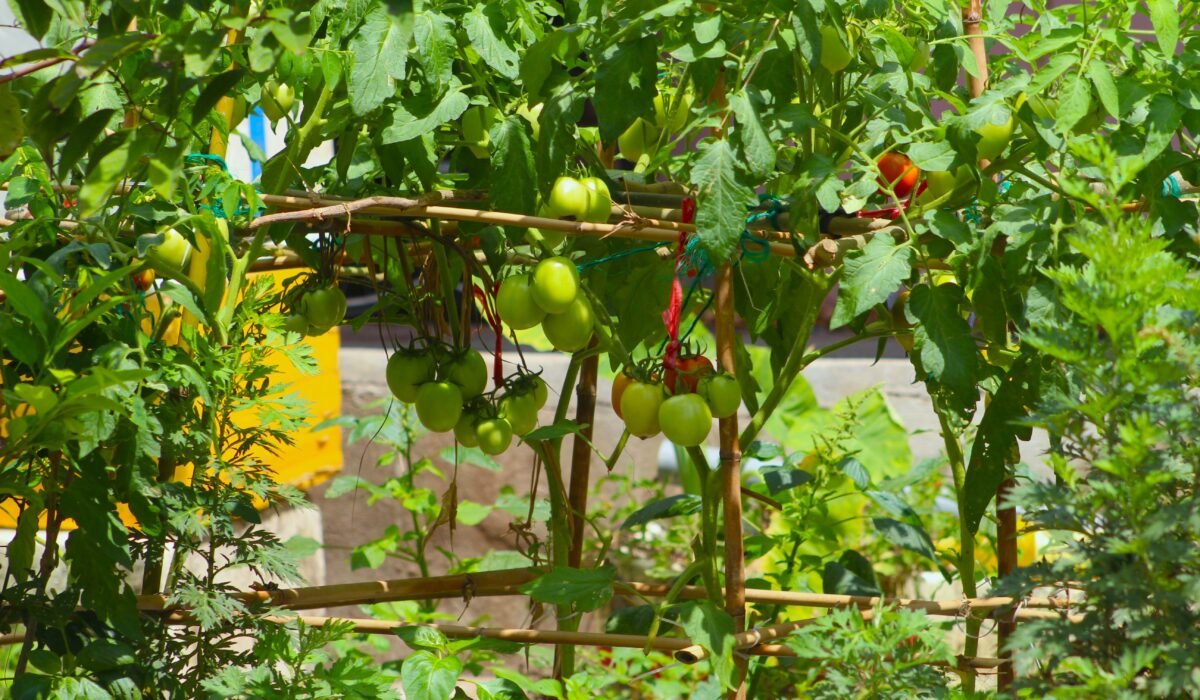
One popular and simple DIY option involves using bamboo. Organic gardener Tricia recommends using 7-foot bamboo stakes and zip ties to build bamboo grids for sprawling plants, or gathering 3-4 bamboo stakes to create teepees for pole beans, peas, or other climbing plants. These bamboo grids and teepees are excellent DIY vertical garden supports that offer both strength and a natural aesthetic.
For gardeners seeking robust DIY vertical garden plant supports, cattle panels offer an incredibly sturdy and long-lasting solution. These heavy-duty wire panels can be bent into arches or stood upright to create formidable trellises for even the heaviest vines.
Here are some creative DIY vertical garden plant supports ideas:
- Rebar or Conduit Trellises: For a more industrial look and extreme durability, rebar or electrical conduit can be bent and welded (or connected with fittings) to create custom trellises. These are particularly good for permanent installations.
- Old Ladder Trellis: An old wooden ladder can be leaned against a wall or fence, providing multiple rungs for climbing plants to ascend. This adds rustic charm and is a fantastic way to upcycle.
- Pallet Vertical Garden: Repurposed wooden pallets can be modified to create tiered planting pockets, with some sections left open to serve as integrated plant supports for smaller climbers or cascading plants.
- String or Twine Systems: For lightweight plants like peas or small cucumbers, a simple string trellis can be made by running lines of twine from an overhead support down to the base of the plants.
These DIY vertical garden plant supports not only save money but also allow for unique designs that perfectly fit your garden’s specific dimensions and style.
Choosing the Best Support for Your Climbing Plants
Selecting the best support for climbing plants involves understanding the plant’s growth habit, its mature size, and the environmental conditions of your garden. Not all vertical garden plant supports are created equal, and a mismatch can hinder plant health and yield.
First, consider how your plant climbs. Some plants, like pole beans and morning glories, are “twiners” that wrap their stems around a support. Others, like peas and clematis, use slender tendrils to grip onto thin structures. Tomatoes, on the other hand, are “sprawlers” that need robust support for their heavy fruit-laden branches, rather than actively climbing.
For heavy-fruiting plants like tomatoes, sturdy cages or cattle panel trellises are often the best support for climbing plants, preventing breakage and keeping fruit off the ground. Delicate tendril climbers thrive on netting or narrow-grid trellises.
Next, evaluate the mature size and weight of your plant. A small cucumber vine might do well on a lightweight plastic trellis, but a vigorous winter squash will require much stronger vertical garden plant supports, such as a metal cattle panel or a robust wooden arbor. Overlooking the mature weight can lead to collapsed supports and damaged plants.
Consider the aesthetics and available space. If you have a small balcony, a compact obelisk or a modular system like the GreenStalk Vertical Planter with its dedicated plant support rings might be ideal. For a larger garden, you might opt for a grand arbor or a series of cattle panel trellises to create a dramatic effect. GreenStalk’s support system is specifically designed to snap together, supporting vining plants like tomatoes, cucumbers, squash, peppers, and melons within its unique vertical structure.
Vertical Garden Supports: Materials, Durability, and Cost
The choice of material for your vertical garden plant supports significantly impacts their durability, aesthetic appeal, and overall cost. Understanding these factors is crucial for making a smart investment that will last for seasons to come.
When evaluating vertical garden plant supports, consider that materials like galvanized steel offer superior longevity and strength compared to untreated wood, though often at a higher initial cost. This trade-off between upfront expense and long-term durability is key.
Here’s a comparison of common materials for **vertical garden plant supports**:
| Material | Durability | Cost | Pros | Cons |
|---|---|---|---|---|
| Wood (untreated) | 1-3 years | Low | Natural look, easy to work with, readily available. | Prone to rot, requires replacement, can splinter. |
| Wood (treated/cedar) | 5-10+ years | Medium-High | Resistant to rot/pests, attractive, strong. | Higher cost, treated wood can be controversial for edibles. |
| Bamboo | 1-3 years | Low | Eco-friendly, natural look, lightweight, flexible for DIY. | Can degrade quickly, less robust for heavy plants. |
| Galvanized Steel/Metal | 10-20+ years | Medium-High | Extremely durable, strong, weather-resistant, reusable. | Higher initial cost, can be heavy, less flexible for DIY shaping. |
| Plastic/PVC | 3-7 years | Low-Medium | Lightweight, inexpensive, weather-resistant, easy to clean. | Can become brittle in sun, less aesthetic, not as strong for heavy loads. |
| Hortonova Plastic Trellis | 3-5 years | Low | Lightweight, reusable, UV-stabilized, easy to install. | Not suitable for very heavy plants, can tangle. |
From my experience, while the initial cost of high-quality metal or treated wood **vertical garden plant supports** might seem higher, their longevity often makes them more cost-effective in the long run. You avoid the annual expense and labor of replacing cheaper, less durable options. North America held the largest revenue share of 33.4% in the global vertical farming market in 2025, according to Grand View Research (2026), indicating a strong market for durable and efficient gardening solutions.
Beyond Trellises: Innovative Support Alternatives
While trellises are a classic choice, the world of vertical garden plant supports offers many innovative alternatives that can provide unique benefits and aesthetics. Exploring these options can open up new possibilities for your garden design and plant performance.
One often-overlooked alternative is the use of support stakes and ties for plants that grow tall but don’t actively climb. For instance, Agriframes offers “Elegance Round Grow Through Frames,” which are pre-formed metal supports that you place over plants as they grow, allowing them to grow up through the grid. This prevents sprawling and provides discrete support. These are excellent plant support systems.
Consider using existing structures as integrated vertical garden plant supports; a sturdy fence or wall can be transformed into a living green wall with the addition of simple hooks and wire. This leverages existing infrastructure, saving costs and space.
Here are some innovative trellis alternatives and other creative **vertical garden plant supports**:
- Obelisks and Cages: As mentioned, these structures are self-contained and provide all-around support, especially for bushy plants. They can be highly decorative, acting as garden art.
- Espalier Frameworks: For fruit trees or woody ornamentals, espalier involves training branches to grow flat against a wall or trellis. This is a highly artistic and space-saving method, requiring specific plant support systems.
- Living Walls and Pocket Planters: While not traditional supports, these systems inherently provide vertical growing space. Many incorporate internal structures or pockets that support the plants directly, creating stunning garden aesthetics.
- DIY String or Netting Ladders: For lighter climbers, creating a “ladder” out of natural twine or soft rope can offer gentle yet effective support, particularly in a small space.
- Whites Grip & Grow Wall Frame: For super secure support for heavy vegetables, a DIY vertical panel setup using the Whites Grip & Grow Wall Frame offers a robust and adaptable solution, allowing gardeners to configure supports precisely where needed.
These innovative plant support systems demonstrate that **vertical garden plant supports** can be both highly functional and visually appealing, moving beyond the conventional trellis design.
Integrating Vertical Supports for Garden Aesthetics
Integrating vertical garden plant supports into your garden design is an opportunity to enhance its overall beauty and create striking visual interest. These structures are not just utilitarian; they can be powerful elements of garden aesthetics.
Start by considering the style of your garden. For a rustic look, bamboo teepees or rough-hewn wooden trellises fit perfectly. A modern garden might benefit from sleek metal grids or minimalist wire systems. The materials you choose for your **vertical garden plant supports** should complement existing hardscaping and planting schemes.
“Arbors and trellises add structure and are decorative elements,” notes Deborah J. Benoit. “They can also add valuable planting space and increase garden yields by training plants to grow up.” This highlights their dual role in both function and garden aesthetics.
Color plays a role too. A dark-colored trellis can make green foliage pop, while a lighter shade might blend into the background. For instance, a beautifully crafted metal arbor from Agriframes, even before plants fully cover it, can serve as a stunning architectural feature. Think about how the structure will look both when bare in winter and when fully covered in summer.
Consider creating a focal point with your **vertical garden plant supports**. An ornate obelisk covered in climbing roses or a dramatic archway draped with clematis can draw the eye and define garden zones. These elements contribute significantly to space-saving garden solutions by directing growth upwards in an organized and attractive manner.
Maximizing Your Vertical Garden with the Right Supports
To truly maximize the potential of your vertical garden, selecting and implementing the right **vertical garden plant supports** is paramount. This strategic approach ensures optimal plant health, bountiful harvests, and a visually appealing growing space.
The key to success lies in matching the support to the specific needs of each plant and your overall garden design. In my 10+ years of gardening, I’ve found that pre-planning is crucial. Don’t wait until your plants are sprawling to install their support. Install **vertical garden plant supports** when plants are young, guiding them from the start.
Here are essential tips for maximizing your vertical garden using the right **vertical garden plant supports**:
- Match Support to Plant Type: Understand whether your plant is a twiner, tendril climber, or sprawler. This dictates the type of vertical garden plant supports it needs.
- Consider Future Growth: Always choose supports that can handle the plant’s mature size and weight. A small initial investment in sturdy **vertical garden plant supports** prevents future problems.
- Ensure Accessibility: Design your vertical garden plant supports so that you can easily reach plants for watering, pruning, and harvesting. This is a common oversight that impacts long-term enjoyment.
- Leverage Existing Structures: Fences, walls, or even downspouts can be integrated into your vertical garden plant supports strategy, saving materials and space.
- Think About Aesthetics: Your supports are part of your garden’s visual appeal. Choose materials and designs that complement your garden’s style.
By thoughtfully integrating well-chosen **vertical garden plant supports**, you transform a simple growing area into a productive and beautiful vertical oasis. This not only conserves space but also enhances the overall gardening experience, making it more efficient and enjoyable.
Frequently Asked Questions
What can I use for vertical plant support?
You can use various items for vertical plant support, including trellises, cages, stakes, netting, obelisks, and repurposed materials like bamboo or cattle panels. The vertical garden construction market is projected to grow to USD 1.92 billion by 2035, indicating a wide array of commercially available and DIY options, according to Research and Markets (2024). Choose a support type based on your plant’s growth habit and weight.
How do you support plants in a vertical garden?
Plants in a vertical garden are supported by training them to grow upwards on structures like trellises, stakes, or specialized vertical planter systems. This method leverages vertical space, which is particularly well-suited to urban areas where space is limited, as noted by Virginia Tech experts Katie Settlage and Alex Hessler. Secure young plants to the chosen support early to guide their growth.
What is the best support for climbing plants?
The best support for climbing plants depends on the plant’s specific climbing mechanism and mature weight. For tendril climbers like peas, netting or thin trellises work well, while heavy vining plants such as tomatoes benefit most from sturdy cages or cattle panel trellises. Organic gardener Tricia emphasizes that proper plant supports are crucial for improving garden health and yield.
What can I use instead of a trellis?
Instead of a traditional trellis, you can use various alternatives such as individual stakes, plant cages, obelisks, or even repurposed items like old ladders or string systems. Whites Group offers a 1.2m galvanised vegetable cage plant trainer as an effective alternative for bushy plants like capsicum. Consider these options for unique garden aesthetics or specific plant needs.
How can vertical garden plant supports improve plant health?
Vertical garden plant supports improve plant health by enhancing air circulation around foliage, reducing contact with soil-borne pathogens, and minimizing pest access. Keeping plants off the ground results in healthier growth and can significantly reduce disease, according to Deborah J. Benoit. This leads to cleaner produce and stronger plants.
Embracing the right **vertical garden plant supports** is a game-changer for any gardener looking to maximize space and cultivate healthier, more productive plants. From simple DIY bamboo structures to advanced modular systems, the options are vast and adaptable to every need. By thoughtfully choosing durable materials and integrating supports seamlessly into your garden’s aesthetic, you can transform your growing space. Start exploring these creative and effective solutions today to watch your garden reach new heights, literally!