
Key Takeaways
- U.S. beekeepers lost an estimated 55.6% of managed honey bee colonies from April to April, the highest rate since 2010-2011, according to USDA (2025).
- Approximately one-third of global food production relies on bee pollination, highlighting their critical role.
- About 70% of all bee species are ground-nesting bees, requiring undisturbed soil for their homes.
- Bees are most attracted to purple, violet, blue, and yellow flowers, often with UV patterns invisible to humans.
- The total number of honey bee colonies in the United States increased by 6% to 2.81 million on January 1, 2026, from the previous year, according to USDA (2026).
Most Mumbai balcony gardeners struggle to get a good yield from fruiting plants like tomatoes or bhindi, often wondering why their flowers just don’t set fruit. The secret to a thriving harvest and a vibrant ecosystem in your urban space is often simple: you need to attract bees to flower garden. Creating a welcoming haven for these crucial pollinators can transform your gardening success, from better yields to a more beautiful display of blooms.
Quick Answer: Attract bees by planting diverse native flowers that bloom continuously, providing a shallow water source, creating nesting habitats, avoiding pesticides, and planting flowers in groups to maximize their appeal.
Why is it important to attract bees to your garden?
It’s incredibly important to attract bees to your garden because they are vital for pollination, which directly impacts our food supply and ecosystem health. Approximately one-third of the food produced worldwide relies on bees pollinating crops, highlighting their critical role. Without bees, many of the fruits, vegetables, and nuts we enjoy daily wouldn’t exist, and our gardens would look very different.
The truth is, bee populations are facing significant challenges. From April 2024 to April 2025, U.S. beekeepers lost an estimated 55.6% of their managed honey bee colonies, which is the highest loss rate recorded since annual tracking began in 2010-2011, according to USDA (2025). This isn’t just a distant problem; it affects every gardener, especially those of us trying to grow food in our limited urban spaces. When you make an effort to attract bees to flower garden, you’re not just helping your plants; you’re contributing to bee conservation efforts on a local scale. It’s about creating a beneficial insects garden that supports life beyond just your pots.
What flowers attract bees the most?
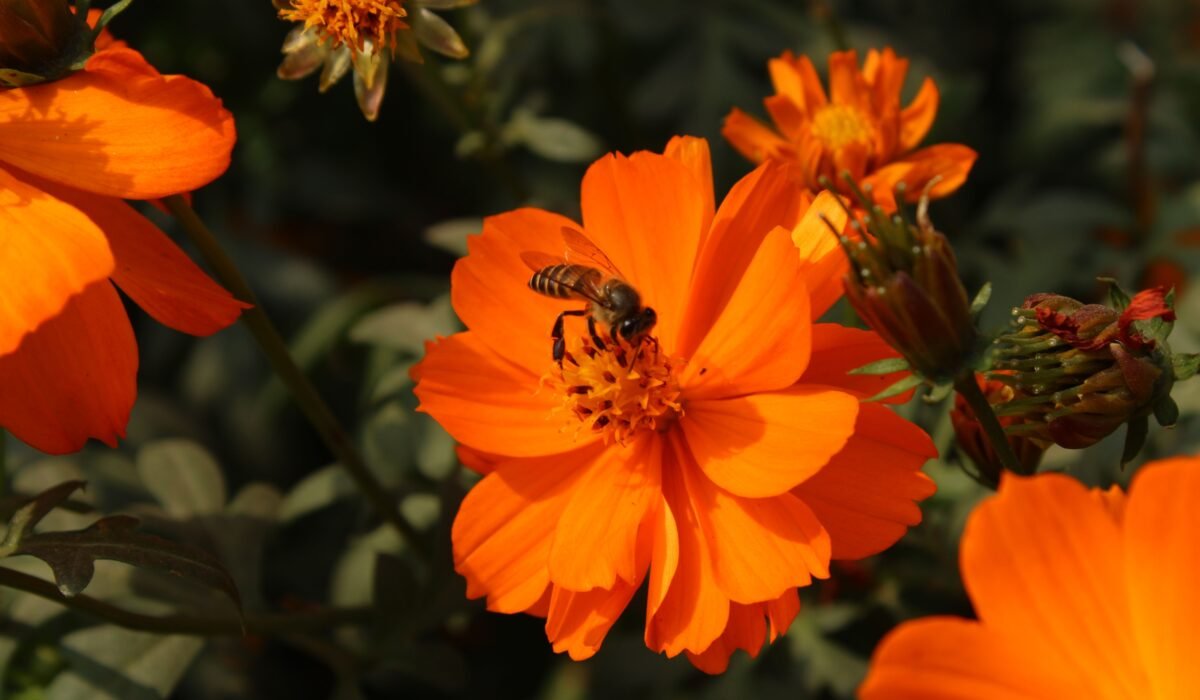
To attract bees to your flower garden, you’ll want to choose flowers that are rich in nectar and pollen, offering a consistent food source. Plants like sunflower, lavender, borage, and cosmos are excellent choices, as demonstrated by the Bee Girl Organization’s pilot program, which used 1800 square feet of sunflowers to attract bees in 2019. When I set up my terrace garden in Pune, I noticed that certain marigold varieties and even some types of pudina flowers were buzzing with activity, much more than the ornamental roses.
The key here is diversity and native bee habitats. Different bees have different preferences – some have long tongues for deep flowers, others prefer open, shallow blooms. So, a mix is best. You might have heard that all flowers are good for bees. In practice, while any flower offers some benefit, highly hybridized ornamental flowers often have less nectar or pollen compared to their wilder counterparts. Focus on single-petal varieties over double or triple petaled ones; those extra petals often come at the expense of pollen and nectar. Here’s a quick list of bee-friendly plants that perform well in Indian climates:
- Marigold (Genda): Easy to grow, provides continuous blooms, and attracts various pollinators.
- Cosmos: Bright, cheerful, and a favorite for many bee species.
- Sunflower (Surajmukhi): A powerhouse for pollen and nectar, especially good for attracting bees to flower garden.
- Tulsi (Holy Basil): Its small flowers are incredibly attractive to bees and beneficial insects garden.
- Lavender: Not just for fragrance, its blooms are a bee magnet.
- Coriander (Dhania) flowers: If you let your dhania go to seed, the tiny white flowers are a huge hit with bees.
When selecting seeds, remember my friend’s experience: she tried growing methi from seeds bought at a kirana store, getting only 15% germination. Switching to proper garden seeds like Sarpan or Indo-American varieties boosted her success to 80%+. The same applies to flowers for bees year round; quality seeds make a difference in plant vigor and bloom production.
How can you provide water for bees in your garden?
Providing a shallow water source is crucial for bees, helping them hydrate and regulate hive temperatures, especially during the scorching Indian summer heat. Bees need water but can drown easily in open dishes, so you must create a safe landing spot for them.
You don’t need anything fancy. A simple shallow dish or bird bath filled with pebbles, marbles, or even corks works perfectly. Just make sure some of the stones break the water surface, creating tiny islands where bees can land and drink without falling in. Down2Earth Gardening in Western Australia, known for its bee-friendly practices, maintains four ponds to support native bee populations, showing the importance of accessible water. I often use an old terracotta pot saucer, placing a few small stones and filling it with water. Change the water every day or two to keep it fresh and prevent mosquito breeding. This simple addition can significantly help attract bees to flower garden, particularly when temperatures soar above 40°C.
What colors are bees most attracted to?
Bees are most attracted to specific colors, primarily purple, violet, blue, and yellow, as these hues stand out clearly in their unique vision spectrum. Unlike humans, bees can see ultraviolet (UV) light, which reveals hidden patterns and nectar guides on flowers that are invisible to our eyes.
So, while a bright red hibiscus might catch your eye, it’s less appealing to a bee. They don’t perceive red as a distinct color, often seeing it as black or gray. This is why you’ll see so many bee-friendly plants in shades of blue, purple, and yellow. When planning your pollinator garden design, prioritize these colors. Think about planting clusters of vibrant blue Salvia, cheerful yellow Marigolds, or purple Verbena to create visual targets that say “come here!” to passing bees. Planting flowers in groups, rather than scattering individual plants, also creates a larger, more attractive target, making it easier for bees to spot and efficiently forage.
How to create nesting habitats for different bee types?
Creating diverse nesting habitats is essential to support various bee species, as not all bees live in hives like honey bees. About 70% of all bee species are ground-nesting bees, according to scientific estimates, meaning they need undisturbed soil to dig their tunnels.
For these ground-nesting bees, the best thing you can do is leave small patches of bare, unmulched soil in sunny spots. Resist the urge to till or cover every inch of your garden. You can also create small mounds of sand and clay mix in a quiet corner. For tunnel-nesting bees, like mason bees and leafcutter bees, consider installing bee hotels or bundles of hollow stems. These can be made from bamboo canes, hollowed-out logs, or even store-bought bee houses. Just make sure the tubes are clean and of varying diameters to accommodate different species. I’ve found that placing these structures near a water source and a cluster of bee-friendly plants really helps to attract native bees. Remember, a thriving bee-friendly garden needs both food and shelter, so providing both will help attract bees to flower garden more effectively.
How to avoid pesticides and protect pollinators?
Avoiding pesticides is paramount for protecting pollinators, as even “bee-friendly” labels can sometimes be misleading and harm beneficial insects. Synthetic pesticides, especially neonicotinoids, can be lethal to bees or impair their navigation and foraging abilities.
The best approach is to adopt integrated pest management (IPM) strategies. This means focusing on prevention first: healthy soil, resistant plant varieties, and good garden hygiene. If you do encounter pests, start with non-chemical solutions like hand-picking pests, using insecticidal soaps, or introducing beneficial insects like ladybugs. Huckle Bee Farms advocates for integrated pest management to reduce reliance on synthetic pesticides, safeguarding pollinators. You might have heard that organic pesticides are always safe. In practice, even organic options like neem oil should be used carefully, applied in the evening when bees are less active, and never directly on open blooms. The goal is to prevent vegetable garden pests without harming the very creatures you’re trying to attract to your flower garden.
Honestly, for small container gardens, I’ve found that organic granular fertilizers are often overrated. The soil volume in a 12-inch pot is simply too small for slow-release nutrients to work the way they do in ground soil. Liquid fertilizers, like diluted jeevamrit or seaweed extract, work faster and are much easier to control in pots. This also helps keep the plants healthy and less susceptible to pests, reducing the need for any kind of pesticide in the first place.
What is a bee-friendly garden and how to maintain it?
A bee-friendly garden is a space intentionally designed to provide food, water, and shelter for bees and other pollinators, maintained with practices that avoid harm to them. It’s a living ecosystem where your gardening choices actively support bee conservation tips.
Maintaining such a garden involves several key practices:
- Planting diverse flowers: Ensure a continuous bloom cycle from pre-monsoon through post-monsoon.
- Providing water: A shallow dish with pebbles is perfect.
- Creating shelter: Bare ground for ground-nesting bees and bee hotels for tunnel-nesting species.
- Avoiding chemicals: This is non-negotiable for a truly bee-friendly space.
- Grouping plants: Plant flowers in clusters of at least one square foot to make them more visible to foraging bees.
- Letting some plants go to seed: The flowers of herbs like dhania or methi are incredibly attractive to bees.
The UCD Bee Haven at UC Davis, a half-acre garden, serves as an excellent example, dedicated to research and inspiring individuals to create pollinator-friendly spaces. My experience suggests that even in a compact balcony garden in Delhi, careful planning can create a vibrant pollinator hub. For instance, I use grow bags, but after one season where a “15-liter” bag I bought online only held 9 liters because the sides collapsed, wasting my tomato harvest, I now only buy from physical nurseries where I can check the material thickness. This ensures my plants have enough root space to thrive and produce enough blooms to attract bees to flower garden effectively.
What should i plant to attract bees all year?
To attract bees all year, you need to select a variety of plants that bloom in succession across different seasons, ensuring a continuous supply of nectar and pollen. This means thinking beyond just one season and planning your flowers for bees year round.
For Indian climates, here’s a seasonal planting guide to help you attract bees to flower garden throughout the year:
| Season | Example Plants | Why They Attract Bees |
|---|---|---|
| Winter (North India) / Cooler Months (South India) | Mustard, Calendula, Alyssum, Phacelia | Provide early season nectar and pollen when other sources are scarce. |
| Pre-Monsoon (March-May) | Marigold, Cosmos, Zinnia, Sunflower | Hardy and heat-tolerant, offering blooms before the heavy rains. |
| Monsoon (June-September) | Balsam, Gomphrena, Hibiscus (single petal) | Thrive in humidity, providing continuous color and food during wet periods. |
| Post-Monsoon (October-February) | Salvia, Verbena, Asters, Lantana | Offer abundant blooms as temperatures cool, preparing bees for winter. |
Consider species that are native to your region; they are often best suited to the local climate and provide the most beneficial food sources for local bee populations. For example, in Bangalore’s mild climate, you can often find something blooming almost continuously. The key is variety and overlapping bloom times. Don’t just plant one type of flower; mix it up. This ensures that even if one plant finishes its bloom cycle, another is just beginning, keeping your garden a constant buffet for pollinators and making it easier to save the bees garden by supporting them year-round.
Frequently asked questions
What flowers attract bees the most?
The flowers that attract bees the most are typically those rich in nectar and pollen, such as sunflowers, lavender, borage, and marigolds. Bees are particularly drawn to purple, blue, and yellow flowers, often perceiving UV patterns on petals that guide them to nectar. Planting diverse native flowers ensures a wide range of bee species are supported.
What should i plant to attract bees all year?
To attract bees all year, plant a succession of flowers that bloom in different seasons, ensuring a continuous food source. For instance, in India, plant mustard and calendula for cooler months, marigold and sunflower for pre-monsoon heat, balsam during monsoon, and salvia and verbena for post-monsoon. A diverse selection of native plants is key to providing consistent forage.
What colors are bees most attracted to?
Bees are most attracted to purple, violet, blue, and yellow colors, as these hues are most visible within their unique vision spectrum. They also perceive ultraviolet (UV) patterns on flowers that humans cannot see, which act as “nectar guides.” Red flowers are generally less appealing to bees, as they often appear as black or gray.
What is a bee friendly garden?
A bee-friendly garden is a space designed to provide bees with essential resources: diverse flowers for food, a shallow water source, and suitable nesting habitats. It’s maintained without synthetic pesticides or harmful chemicals, prioritizing the health and survival of pollinators. Such gardens contribute to supporting bee populations and broader ecosystem health.
How can you provide water for bees in your garden?
You can provide water for bees in your garden by setting out a shallow dish or bird bath filled with pebbles, marbles, or corks. These elements provide safe landing spots for bees to drink without drowning. Change the water regularly to keep it fresh and prevent mosquito breeding, making it an inviting water source for bees.
Creating a vibrant, buzzing garden is one of the most rewarding things you can do, not just for yourself but for the planet. By implementing these foolproof strategies, you’ll successfully attract bees to flower garden, enhancing your yields and contributing to vital pollinator conservation. Start small, observe which plants your local bees love, and enjoy the magical hum they bring to your space. Your efforts truly make a difference in supporting these incredible creatures.







