Key Takeaways
- The global indoor plant market was valued at approximately $20–21 billion in 2025.
- Clean leaves can increase photosynthetic efficiency by nearly 20%, according to research.
- Mycorrhizal fungi increase plant root surface area for nutrient absorption by up to 70%.
- Lack of adequate light is a primary factor holding back indoor plant growth, according to Tom Knight of OurHouseplants.com.
- Traditional garden centers and nurseries held 50.10% of the total indoor plant market share in 2025.
When your favorite gulmohar sapling on the balcony looks droopy, or the pudina isn’t thriving despite your best efforts, it’s easy to feel frustrated. You’re not alone in finding this hard; most people feel exactly this way when their indoor greens aren’t flourishing. Luckily, with a few key adjustments, you can absolutely **boost indoor plant growth** and see your beloved plants flourish.
Quick Answer: To boost indoor plant growth, provide adequate bright, indirect light (supplementing with grow lights if needed), use a balanced, high-quality fertilizer, ensure consistent and proper watering, maintain appropriate humidity, and repot when root-bound.
How can i make my indoor plant grow bigger?
To make your indoor plants grow bigger, focus on providing optimal light, consistent nutrition, and sufficient space for root development. In my 10 years of experience with balcony and terrace gardens in India, I’ve seen that most people give up on gardening after one failed crop and blame themselves — but 80% of first failures are caused by wrong pot size, wrong season, or wrong soil mix, not wrong technique. Get those three right, and almost any plant becomes easy to grow.
The truth is, even a small tulsi plant needs room to stretch its roots to really thrive. If your plant is in a pot that’s too small, its growth will be stunted, no matter how much you water or fertilize. This is why repotting into a slightly larger container when your plant becomes root-bound is crucial for promoting bigger, healthier growth.
Think about it like this: a healthy root system is the foundation for a big, bushy plant. Without enough space, roots get tangled, can’t absorb nutrients efficiently, and the plant just can’t expand. So, start with the right foundation.
What makes indoor plants grow faster and stronger?
To truly **boost indoor plant growth**, making them faster and stronger, you need to provide a balanced approach of proper light, nutrients, and environmental conditions. Lack of light is often one of the biggest things holding your plants back, according to Tom Knight of OurHouseplants.com. This means getting the basics right, like ensuring your plants receive enough bright, indirect sunlight, especially during the shorter days of a Delhi winter.
Here’s what I noticed after trying this myself: I tried liquid seaweed fertilizer on my hibiscus expecting faster flowering — got 3 new leaves and no flowers for 8 weeks. The seaweed was pushing vegetative growth because the plant was already in a nitrogen-rich soil. Lesson learned: understand what your plant needs before adding any fertilizer. It’s not just about adding *something*; it’s about adding the *right thing* at the *right time*.
To make your plants grow stronger and faster, consider these key elements:
- Adequate Light: Most indoor plants need bright, indirect light for 10-16 hours daily.
- Balanced Nutrition: Use a high-quality fertilizer that provides essential macro and micronutrients.
- Consistent Watering: Avoid both overwatering and underwatering – consistency is key.
- Proper Humidity: Many indoor plants, especially tropical varieties, prefer higher humidity levels.
- Good Air Circulation: Prevents fungal diseases and strengthens stems.
- Clean Leaves: Research indicates that clean leaves can increase photosynthetic efficiency by nearly 20%.
How do you stimulate indoor plant growth with light?
You stimulate indoor plant growth with light by ensuring your plants receive the correct intensity, duration, and spectrum tailored to their specific needs. Most indoor plants require 10 to 16 hours of light per day depending on the species and growth stage, and using full spectrum light bulbs consistently within this range helps maintain healthy growth cycles without overexposing plants to light. This is particularly important in places like Mumbai where natural light can be limited in certain apartments, or during the monsoon when skies are perpetually overcast.
For instance, my dhania plants on the balcony really struggle to get enough light during the monsoon season. That’s when grow lights become a game-changer. You might have heard that any bright light works, but in practice, specialized grow lights offer specific light spectrums that ordinary bulbs don’t. Blue light, for example, is fantastic for vegetative growth, encouraging leafy greens, while red light is key for flowering and fruiting plants.
If you’re serious about seeing your plants thrive, investing in a good grow light can make a huge difference. You’ll find a range of options online on Ugaoo or Nurserylive, or at larger nurseries, with prices starting from around ₹500 for basic LED strips.
What is a natural growth booster for plants?
A natural growth booster for plants often involves organic amendments and beneficial microbes that enhance soil health and nutrient availability. Mycorrhizal fungi create a symbiotic relationship with plant roots, effectively increasing the surface area for nutrient absorption by up to 70%. This means your plant can take in more water and nutrients from the soil, leading to a noticeable **boost indoor plant growth**.
For me, incorporating organic matter like compost or vermicompost into my potting mix has been a revelation for my bhindi plants. It’s not just about feeding the plant; it’s about feeding the soil, which in turn feeds the plant naturally. These natural boosters improve soil structure, water retention, and microbial activity, creating an ideal environment for roots to thrive.
Some excellent natural growth boosters include:
- Compost: Rich in diverse nutrients and beneficial microorganisms.
- Vermicompost: Worm castings packed with enzymes and plant-available nutrients.
- Seaweed Extract: Contains trace minerals and hormones that promote growth and stress resistance.
- Mycorrhizal Fungi: These fungi form a network with plant roots, significantly increasing nutrient uptake. You can find them at local nurseries or even larger retailers like Walmart.
- Neem Cake: Provides slow-release nitrogen and helps deter soil pests.
Adding these to your potting mix can significantly **boost indoor plant growth** without relying on synthetic chemicals.
How does proper watering and humidity boost plant growth?
Proper watering and humidity levels directly influence a plant’s ability to absorb nutrients, photosynthesize, and prevent stress, all contributing to a significant **boost indoor plant growth**. Overwatering is a common killer, especially in humid climates like Mumbai during the monsoon, as it suffocates roots and leads to rot. Conversely, underwatering stresses the plant, causing wilting and stunted growth.
You might have heard that “more water is always better” for thirsty plants. In practice, that’s often wrong – especially for indoor plants. The key is consistent, deep watering when the top inch or two of soil is dry, allowing excess water to drain away. I once had a reader plant seedlings two weeks too early for the winter season in North India — they lost the whole tray because the soil temperature was still around 12°C, making roots unable to absorb water properly. They replanted after waiting for 18°C+ soil temperature and got 80% germination. It’s not just about the water, but the conditions that allow the plant to use it.
Humidity also plays a vital role, particularly for tropical plants like ferns or money plants. Dry air, often caused by air conditioning, can lead to crispy leaf edges and slow growth. Using a simple hygrometer can accurately track room moisture levels, letting you know when to mist your plants or use a pebble tray.
When should you repot indoor plants for optimal growth?
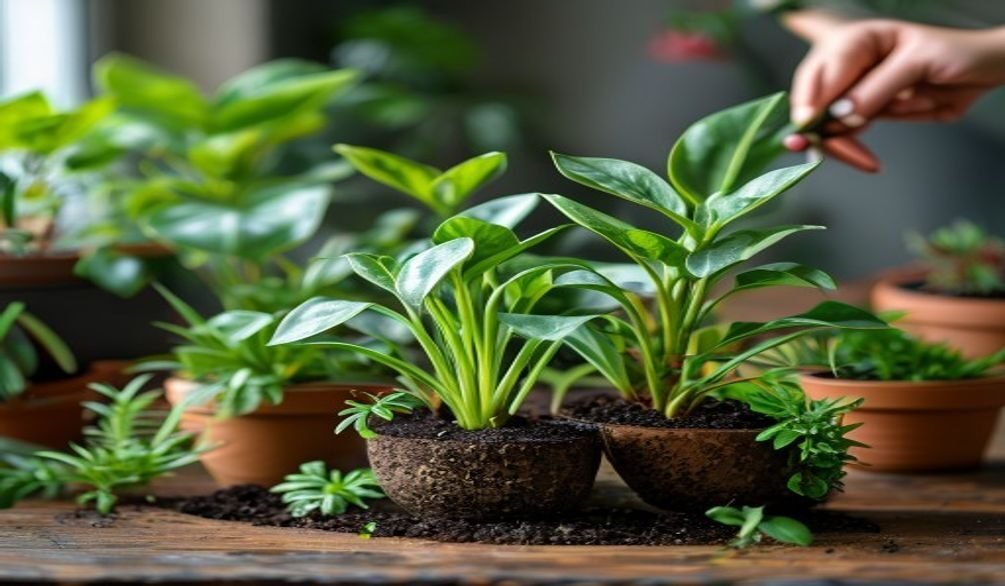
You should repot indoor plants for optimal growth when they become root-bound, meaning their roots have filled the current pot and are starting to circle or emerge from drainage holes. This usually happens every 12-18 months for fast-growing plants, but slower growers might only need it every 2-3 years. Repotting into a slightly larger pot gives the roots fresh soil and space to expand, which is essential to **boost indoor plant growth**.
Honestly, it’s one of those gardening tasks that sounds simple but can be tricky if you’re not careful. I remember buying a “grow bag” online advertised as 15 litres – it held only 9 litres when filled properly because the sides were too thin to stand upright. Wasted an entire season of Pusa Ruby tomatoes because the root volume wasn’t enough. Now I only buy grow bags from physical nurseries where I can check the material thickness and ensure my plants get the space they need.
Signs your plant needs repotting:
- Roots are growing out of the drainage holes.
- Water runs straight through the pot without soaking in.
- The plant’s growth has significantly slowed or stopped.
- The plant looks top-heavy and easily tips over.
- Salt or mineral buildup is visible on the soil surface or pot edges.
When you repot, choose a pot that’s only one size larger (e.g., from a 6-inch to an 8-inch pot) to avoid overwatering issues.
Are there specific products that boost indoor plant growth?
Yes, several specific products are designed to **boost indoor plant growth**, from specialized fertilizers to advanced grow lights and nutrient-rich potting mixes. For instance, plants in containers have a limited supply of nutrients, and once the soil is depleted, growth stalls; using a balanced, water-soluble fertilizer provides the essential nitrogen, phosphorus, and potassium (N-P-K) needed for root and foliage development. This is why a good quality fertilizer is often the first step people take.
When I’m looking for products, I often check local nurseries first, or reliable online stores like Ugaoo. For fertilizers, something like Espoma Organic Indoor Plant Food (2-2-2) is a fantastic organic option, or Miracle-Gro Indoor Plant Food for a popular and effective choice. Don’t forget that a good potting mix is foundational. Rosy Soil Indoor Potting Soil, for example, is a peat-free option enriched with biochar and beneficial microbes, which can give your plants a great start.
Here’s a quick look at some top-rated products that can help **boost indoor plant growth**:
| Product Category | Recommended Brands/Types | Key Benefit for Growth |
|---|---|---|
| Fertilizers | Dyna-Gro Foliage Pro 9-3-6, Espoma Organic Indoor Plant Food 2-2-2, Miracle-Gro Indoor Plant Food | Provides essential N-P-K and micronutrients for robust development. |
| Grow Lights | Soltech Aspect Gen 2, Sansi 24W Grow Light Bulb, ViparSpectra XS Series | Delivers optimal light spectrum and intensity for photosynthesis. |
| Potting Mixes | FoxFarm Ocean Forest Potting Soil, Espoma Organic Potting Mix, Rosy Soil Indoor Potting Soil | Offers excellent drainage, aeration, and nutrient retention for roots. |
| Humidity Tools | Hygrometers, small humidifiers, pebble trays | Maintains ideal ambient moisture, crucial for tropical plants. |
Frequently asked questions
How often should i fertilize my indoor plants?
You should fertilize most indoor plants every 2-4 weeks during their active growing season, typically from spring through early autumn, then reduce frequency in winter. This schedule aligns with when plants naturally utilize nutrients for growth, according to gardening experts. Always follow the product’s instructions and consider diluting liquid fertilizers to half strength to avoid over-fertilization.
Can talking to plants really make them grow better?
While direct scientific evidence is limited, a 2022 survey by trees.com found that 50% of 1,250 respondents reported talking to their plants, with 65% believing it helps them grow. The act of talking often means spending more time observing your plants, leading to earlier detection of issues like pests or watering needs. So, it might be more about your attentiveness than their listening skills!
What are the signs of an unhealthy indoor plant?
Signs of an unhealthy indoor plant include yellowing leaves, stunted growth, wilting despite watering, brown or crispy leaf edges, and visible pests. These symptoms often indicate issues with light, water, nutrients, or humidity, requiring adjustments to your plant care routine. Catching these signs early is key to reviving your plant.
Is it better to use organic or synthetic fertilizer for indoor plants?
The choice between organic and synthetic fertilizer depends on your gardening philosophy; organic fertilizers improve soil health over time, while synthetic ones offer immediate, precise nutrient delivery. Organic options like Espoma Organic Indoor Plant Food (2-2-2) release nutrients slowly, building a healthier soil ecosystem. Synthetic fertilizers, like Miracle-Gro, provide quick boosts, but don’t contribute to long-term soil structure.
How can i increase humidity for my indoor plants in a dry climate?
You can increase humidity for your indoor plants in a dry climate by misting leaves regularly, placing plants on pebble trays filled with water, or using a room humidifier. In places like Delhi, where winter air can be very dry, a humidifier can be particularly effective for tropical plants that thrive in higher moisture levels. Grouping plants together also creates a microclimate with slightly elevated humidity.
So, there you have it! To truly **boost indoor plant growth**, it’s about understanding and meeting their fundamental needs: light, water, nutrients, and space. Don’t be discouraged by past struggles; remember, even experienced gardeners like me learn something new every season. Take these tips, apply them consistently, and you’ll soon see your indoor plants not just survive, but absolutely thrive. Happy gardening!