Key Takeaways
- Cucumber beetles, both striped and spotted, are primary cucurbit pests in 2026, causing feeding damage and spreading bacterial wilt.
- An action threshold of 0.5 beetles per plant is recommended for highly susceptible cucurbit crops, according to Ohio State University Extension (2026).
- ‘Blue Hubbard’ squash is an effective trap crop, being 55 times more attractive to spotted cucumber beetles than zucchini, based on Lincoln University IPM research (2015).
- Early detection and control are critical for preventing bacterial wilt, a disease vectored by cucumber beetles, states UW-Madison Extension (2026).
- Organic methods like floating row covers, kaolin clay (Surround WP), neem oil, and beneficial nematodes offer comprehensive control for cucumber beetles.
Are you struggling to protect your precious cucurbit crops from relentless pests this season? It’s time to learn how to effectively Identify & Treat Cucumber Beetles 2026, safeguarding your garden from both direct damage and disease. In my 10+ years of experience in horticulture, I’ve seen firsthand how quickly these beetles can devastate a harvest, making proactive management essential for every gardener. This comprehensive guide will equip you with the expert strategies needed to keep your cucumbers, squash, and melons thriving.
Quick Answer: Identify cucumber beetles by their distinct spots or stripes. Control them in 2026 using an Integrated Pest Management (IPM) approach that includes preventative measures like floating row covers, strategically planting trap crops such as Blue Hubbard Squash, introducing beneficial nematodes, and applying organic sprays like neem oil or kaolin clay (Surround WP). This multi-faceted strategy is key to effectively preventing significant feeding damage and the spread of bacterial wilt.
How to Identify Cucumber Beetles in 2026?
To effectively Identify & Treat Cucumber Beetles 2026, the first step is knowing exactly what you’re looking for, as there are typically two main types that plague gardens: the striped cucumber beetle and the spotted cucumber beetle. These small but destructive pests are easily recognizable once you know their key characteristics. The striped cucumber beetle (Acalymma vittatum) is the primary pest of cucurbits in the northeastern United States, according to Cornell CALS (2025).
Quick and accurate identification is crucial for timely intervention and to prevent widespread cucumber beetle damage. What most people miss is that adult beetles are often the first visible sign of an impending problem, but understanding their subtle differences helps tailor your control strategy.
Step 1: Identify Beetle Species & Life Stages
Identifying the specific species and life stage of cucumber beetles is the cornerstone of any effective IPM plan. Knowing whether you’re dealing with striped or spotted varieties helps you anticipate their behavior and the type of damage they might cause. This knowledge also guides your choice of treatment, ensuring you target the most vulnerable stage of their life cycle.
Striped Cucumber Beetle Identification
Striped cucumber beetles are typically about 1/4 inch long and have bright yellow or greenish-yellow bodies with three distinct black stripes running down their wing covers. Their heads are black, and they possess prominent antennae. These beetles are highly mobile and are often found congregating on young cucurbit plants.
In my experience, these striped varieties are often the first to appear in the spring, making early scouting vital. Being able to correctly Identify & Treat Cucumber Beetles 2026 means recognizing these distinct markings quickly.
Spotted Cucumber Beetle Identification
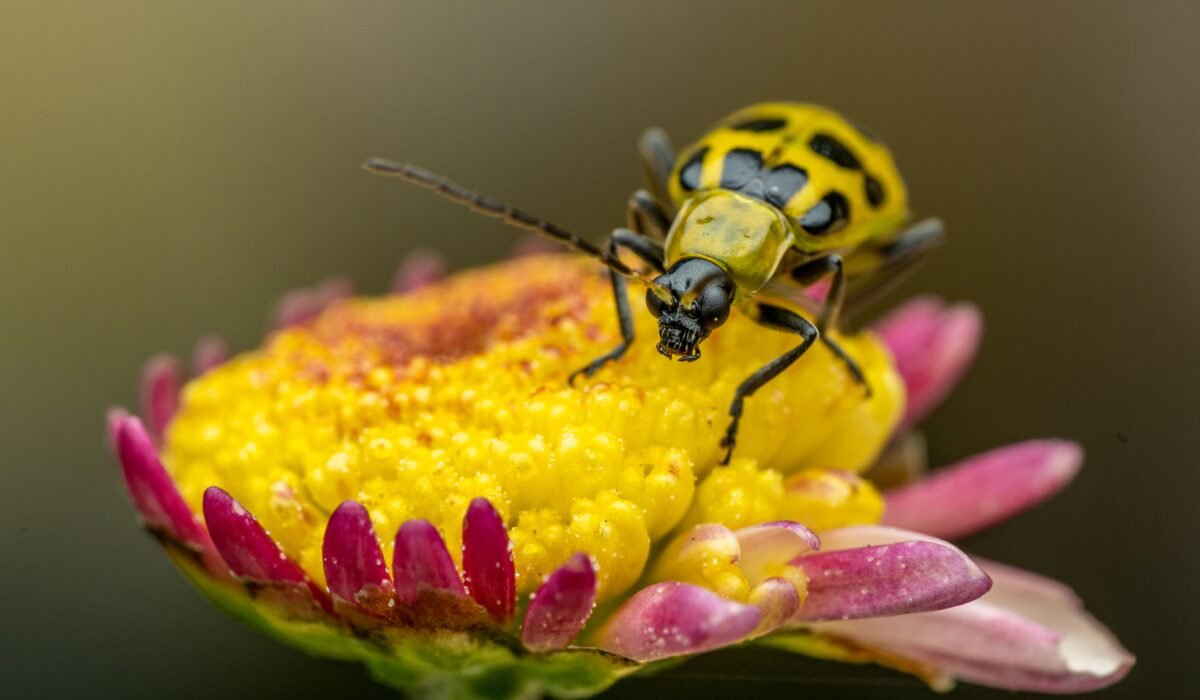
Spotted cucumber beetles (Diabrotica undecimpunctata howardi) are slightly larger than their striped counterparts, measuring about 1/3 inch long, and are yellowish-green with 12 black spots on their wing covers. Unlike the striped variety, spotted cucumber beetles have black heads. They are more generalist feeders but still pose a significant threat to cucurbits.
Their broader diet means they can sometimes be found on other garden plants, but their preference for cucurbits remains strong. If you need to Identify & Treat Cucumber Beetles 2026, spotting these distinct black dots is your first clue.
Western Striped Cucumber Beetle Identification
The Western striped cucumber beetle (Acalymma trivittatum) is similar to the striped cucumber beetle but is found in western regions. It also has three black stripes on a yellow background. Its behavior and damage patterns are largely consistent with other cucumber beetle species, necessitating similar identification and treatment strategies.
While regional, recognizing this specific variation is part of a comprehensive approach to Identify & Treat Cucumber Beetles 2026. All these adult beetles are active during the growing season, from spring through fall.
What Does Cucumber Beetle Damage Look Like?
Cucumber beetle damage manifests in several ways, from direct feeding to the transmission of devastating diseases, making it crucial to recognize the signs early. The most obvious damage includes chewed leaves, stems, and fruits, but the more insidious threat is bacterial wilt, a disease vectored by these pests. Early detection and control of cucumber beetles is critical for preventing problems with bacterial wilt, according to UW-Madison Extension (2026).
Understanding the visual cues of damage helps you determine the severity of an infestation and the urgency of your response. What’s often overlooked is that even minor feeding damage can create entry points for pathogens.
Step 2: Scout for Damage & Action Thresholds
Regular scouting is paramount to effectively Identify & Treat Cucumber Beetles 2026 before they cause irreversible harm. This involves visually inspecting your plants for both the beetles themselves and the tell-tale signs of their feeding activity. Setting clear action thresholds helps you decide when to intervene, preventing unnecessary treatments while protecting your yield.
Direct Feeding Damage
Adult cucumber beetles feed on all parts of cucurbit plants, including seedlings, leaves, flowers, and developing fruits. On young seedlings, feeding can girdle stems, leading to stunted growth or even death. On mature leaves, they chew irregular holes, often skeletonizing them.
Flower damage can reduce pollination and fruit set, directly impacting your harvest. When you need to Identify & Treat Cucumber Beetles 2026, look for these specific feeding patterns.
Fruit Scarring
As fruits develop, cucumber beetles will chew into the rinds, creating scars and blemishes that reduce their marketability and storage life. This damage is particularly frustrating for gardeners who have invested time and effort into cultivating healthy plants.
These blemishes can also make fruits more susceptible to secondary fungal or bacterial infections. My years of gardening have shown me that fruit scarring is a clear indicator that it’s time to Identify & Treat Cucumber Beetles 2026.
Bacterial Wilt Transmission
Perhaps the most significant threat posed by cucumber beetles is their role as vectors for bacterial wilt (Erwinia tracheiphila). The bacteria overwinter in the guts of adult beetles and are transmitted to plants through their feeding wounds. Once infected, the bacteria multiply in the plant’s vascular system, causing leaves to wilt irreversibly.
Symptoms of bacterial wilt include sudden wilting of individual leaves or entire vines, even when soil moisture is adequate. Infected plants will eventually die. This disease highlights why it’s so vital to Identify & Treat Cucumber Beetles 2026 proactively.
A 2025 survey by Fruit Growers News indicated that cucumber beetles accounted for 4% of growers’ reported pest challenges across various fruit and vegetable crops, underscoring their economic impact.
Understanding the Cucumber Beetle Life Cycle for Effective Control
To truly Identify & Treat Cucumber Beetles 2026 effectively, you must understand their complete life cycle, as targeting different stages requires different strategies. Cucumber beetles undergo complete metamorphosis, progressing through egg, larva, pupa, and adult stages, with each stage presenting unique vulnerabilities. The most effective cucumber beetle management uses Integrated Pest Management (IPM) programs, combining early monitoring, physical barriers, biological controls, cultural tactics, and targeted organic treatments, according to NaturesGoodGuys.
Knowing when and where each stage occurs allows you to disrupt their reproduction and reduce populations before they become a major problem. From my experience, missing a single stage in your management plan can lead to recurring infestations.
Cucumber Beetle Life Cycle Stages
Adult cucumber beetles overwinter in garden debris or wooded areas near host plants. They emerge in spring, typically around the time cucurbits begin to germinate or are transplanted. After mating, females lay eggs at the base of host plants.
Understanding these stages is crucial for timing your interventions. Here’s a breakdown of the key stages:
- Egg Stage: Females lay tiny, yellowish-orange eggs in clusters in the soil at the base of cucurbit plants. These eggs typically hatch within 7-10 days, depending on temperature.
- Larval Stage: The larvae are slender, white, worm-like grubs with brown heads, growing up to 1/2 inch long. They feed on plant roots and stems underground for 2-4 weeks, causing root damage that can stunt growth or lead to wilting.
- Pupal Stage: After feeding, larvae pupate in the soil for about 7-10 days. This is a transitional stage where they transform into adult beetles.
- Adult Stage: Newly emerged adults feed on foliage, flowers, and fruits, mate, and lay eggs, starting the cycle anew. There can be 2-3 generations per year in warmer climates.
A proactive approach to Identify & Treat Cucumber Beetles 2026 must consider these overlapping generations. Here’s a quick overview:
| Life Stage | Appearance | Duration | Primary Damage | Control Strategy Focus |
|---|---|---|---|---|
| Egg | Tiny, yellowish-orange, laid in soil | 7-10 days | None (pre-hatch) | Soil cultivation, beneficial nematodes |
| Larva | White grub with brown head, up to 1/2″ | 2-4 weeks | Root feeding, tunneling into stems | Beneficial nematodes, soil drenches (Spinosad) |
| Pupa | White, inactive, in soil | 7-10 days | None (transforming) | Beneficial nematodes |
| Adult | Striped or spotted, 1/4″ – 1/3″ long | Several weeks to months | Leaf, flower, fruit feeding; bacterial wilt vector | Row covers, trap crops, organic sprays, hand-picking |
How Do You Prevent Cucumber Beetles Organically in 2026?
Preventing cucumber beetles organically in 2026 involves a combination of cultural practices, physical barriers, and strategic planting that disrupts their life cycle and deters them from your crops. The most effective strategies focus on making your garden less appealing to these pests from the outset. For young and vulnerable plants, both seed treatments (in direct-seeded crops) and soil drenches at transplant can help reduce early-season feeding damage, according to Ohioline, Ohio State University Extension (2026).
My years of gardening have taught me that prevention is always easier than cure when dealing with pests like cucumber beetles. Implementing these steps early in the season can significantly reduce your workload later on.
Step 3: Implement Preventative Cultural Controls
Cultural controls are foundational to organic pest management, leveraging good gardening practices to minimize pest populations. These methods focus on creating an environment that is less hospitable to cucumber beetles while promoting overall plant health. They are often the first line of defense when you need to Identify & Treat Cucumber Beetles 2026.
- Crop Rotation: Rotate your cucurbit crops to different areas of the garden each year. This prevents overwintering beetles or larvae in the soil from emerging directly onto new host plants. This simple practice significantly disrupts their life cycle.
- Sanitation: Remove and destroy all plant debris at the end of the growing season. This eliminates overwintering sites for adult beetles and reduces the likelihood of a large population emerging in the spring.
- Timing Plantings: For areas with known early-season beetle pressure, consider delaying planting cucurbits until later in the spring when initial beetle populations may have peaked or moved on. Alternatively, planting very early under protection can also work.
- Healthy Soil: Building healthy soil with plenty of organic matter supports strong, resilient plants that are better able to withstand pest pressure. Refer to our “Understanding Soil Types for Beginners: Simple 2026 Guide” for more insights on soil health.
Step 4: Deploy Physical Barriers & Traps
Physical barriers and traps are highly effective non-toxic methods to prevent adult cucumber beetles from reaching your plants, especially during their vulnerable early growth stages. These methods physically exclude pests without the need for sprays. This is a critical component to Identify & Treat Cucumber Beetles 2026.
- Floating Row Covers: These lightweight fabric covers can be draped over young cucurbit plants immediately after planting or seeding. They physically prevent adult beetles from landing on and feeding on the plants. Remember to remove them when plants begin to flower to allow for pollination.
- Trap Cropping with Blue Hubbard Squash: Plant a highly attractive “trap crop” like Blue Hubbard Squash a week or two before your main cucurbit crop. Cucumber beetles are strongly attracted to Blue Hubbard Squash; research from the Lincoln University IPM program (2015 data) found it to be 55 times more attractive to spotted cucumber beetles and 25 times more attractive to striped cucumber beetles than zucchini. Once beetles congregate on the trap crop, you can then destroy them or treat the trap crop specifically.
- Yellow Sticky Traps: While not a primary control method, yellow sticky traps can be useful for monitoring adult cucumber beetle populations. Place them near the base of plants or suspended over the canopy to catch adult beetles. This helps you gauge pest pressure and decide when to escalate other control efforts.
What are the Most Effective Organic Treatments for Cucumber Beetles?
The most effective organic treatments for cucumber beetles involve a multi-pronged approach combining repellents, biological controls, and targeted organic insecticides. These solutions aim to reduce beetle populations and protect plants without resorting to harsh chemicals. Combining these tactics is key to successfully Identify & Treat Cucumber Beetles 2026.
From my gardening experience, the trick is knowing which treatment to apply at the right time, targeting the most vulnerable life stages. What makes organic treatments stand out is their ability to work with nature, not against it.
Step 5: Apply Targeted Organic Treatments
When preventative measures aren’t enough, targeted organic treatments can provide necessary intervention. These options are generally safer for pollinators, beneficial insects, and the environment when used correctly. They are essential tools when you need to Identify & Treat Cucumber Beetles 2026.
- Kaolin Clay (e.g., Surround WP): This fine clay creates a physical barrier on plant foliage, repelling beetles by making the plant unappealing for feeding and egg-laying. “Kaolin clay is uniquely effective against cucumber beetle because it builds up in their antennae and creates a gummy coating, making it difficult for them to navigate,” state Natalie Hoidal and Marissa Schuh, UMN Extension Educators (2026). It needs to be reapplied after heavy rains.
- Neem Oil (e.g., Dyna-Gro Pure Neem Oil Concentrate, Safer® Brand BioNEEM): Neem oil acts as an antifeedant, repellent, and insect growth regulator. It disrupts the feeding and reproductive cycles of cucumber beetles. Apply in early morning or evening to minimize impact on pollinators.
- Spinosad: A naturally derived insecticide, Spinosad is effective against cucumber beetle larvae when applied as a soil drench. It targets the next generation before they emerge as damaging adults. It can also be used as a foliar spray against adults, though care should be taken to avoid spraying during peak pollinator activity.
- Insecticidal Soaps: For direct contact kills of adult cucumber beetles, insecticidal soaps can be effective. They work by disrupting the insect’s cell membranes. Ensure thorough coverage and reapply as needed.
Here’s a comparison of common organic treatments:
| Treatment | Mechanism | Target Stage(s) | Pros | Cons |
|---|---|---|---|---|
| Kaolin Clay (Surround WP) | Repellent, physical barrier | Adults | Non-toxic, broad-spectrum repellent | Needs reapplication, can leave white residue |
| Neem Oil | Antifeedant, IGR, repellent | Adults, Larvae | Multi-action, relatively safe for beneficials | Requires consistent application, can harm pollinators if misused |
| Spinosad | Insecticide (contact & ingestion) | Adults, Larvae | Effective, naturally derived | Can harm beneficials upon direct contact, avoid peak pollinator activity |
| Beneficial Nematodes | Parasitic (soil application) | Larvae, Pupae | Long-term control, targets underground stages | Specific species needed, soil moisture critical |
What Kills Cucumber Beetles Instantly (and Safely)?
While few organic methods kill cucumber beetles instantly, certain approaches offer rapid control with minimal harm to your garden ecosystem. The most immediate and safest methods often involve direct physical removal or targeted, fast-acting organic sprays. When you need to Identify & Treat Cucumber Beetles 2026 with urgency, these options are your best bet.
The key here is balancing speed of action with safety for your plants, the environment, and beneficial insects. What I’ve learned from years of practical gardening is that sometimes a quick, direct intervention is necessary to save a struggling plant.
- Hand-Picking: For smaller gardens and manageable infestations, hand-picking adult cucumber beetles off plants is a highly effective and instant solution. Drop them into a bucket of soapy water to kill them. This method is labor-intensive but completely safe and chemical-free.
- Vacuuming: A small handheld vacuum cleaner can be used to quickly remove large numbers of cucumber beetles from plants without direct contact. This is particularly useful for larger plantings or when you need to cover more ground quickly.
- Insecticidal Soap Spray: A direct spray of insecticidal soap (potassium salts of fatty acids) can kill cucumber beetles on contact. Ensure the spray directly hits the beetles for maximum effectiveness. This is generally safe for plants and dissipates quickly.
- Pyrethrin Sprays (Use with Caution): While derived from chrysanthemums, pyrethrin-based sprays are broad-spectrum and kill insects on contact. They offer a fast knockdown but can harm beneficial insects as well. Use these as a last resort for instant kills, and always apply in the evening when pollinators are not active.
In 2025, UCCE Sonoma County monitoring showed cucumber beetle populations averaged around 1-2 beetles per trap in March and April, increasing to an average of 26 beetles per trap at Front Porch Farm and 8 per trap at Longer Table Farm in June. This data highlights the rapid increase in populations and the need for timely, decisive action.
Creating a Proactive 2026 IPM Plan for Long-Term Control
Creating a proactive 2026 Integrated Pest Management (IPM) plan for cucumber beetles is essential for long-term, sustainable control, moving beyond reactive treatments to a holistic strategy. This comprehensive plan integrates monitoring, cultural practices, physical barriers, biological controls, and targeted organic treatments throughout the growing season. A robust IPM strategy is your best defense to Identify & Treat Cucumber Beetles 2026 effectively year after year.
The beauty of an IPM plan is its adaptability and its focus on ecological balance. From my perspective, this approach not only manages pests but also contributes to a healthier, more resilient garden ecosystem.
Step 6: Introduce Beneficial Biological Controls
Leveraging nature’s own pest control is a cornerstone of organic IPM. Introducing beneficial insects and microorganisms can significantly reduce cucumber beetle populations over time by preying on or parasitizing their various life stages. This is a subtle yet powerful way to Identify & Treat Cucumber Beetles 2026.
- Beneficial Nematodes (e.g., NemaSeek (Hb), Heterorhabditis bacteriophora): These microscopic roundworms are applied to the soil and parasitize the larval and pupal stages of cucumber beetles. They are a safe and effective way to target the underground life stages, reducing the number of adults that emerge.
- Generalist Predators: Encourage beneficial insects like ladybugs, green lacewings, assassin bugs, and soldier beetles. While they may not specifically target cucumber beetles, they will feed on eggs and young larvae, contributing to overall pest suppression. Planting a