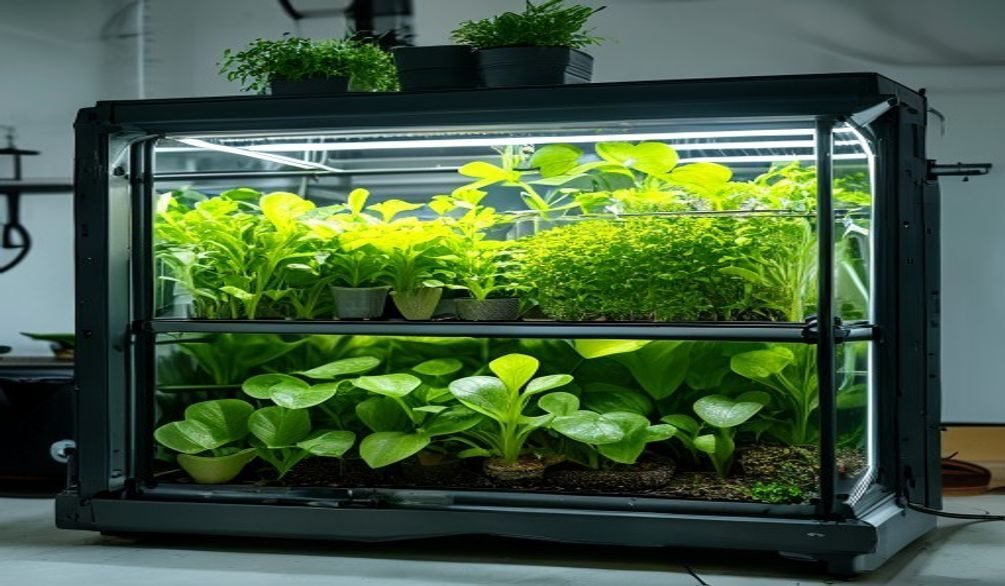
Key Takeaways
- The global hydroponics market was valued at USD 12.24 billion in 2025, according to market data.
- North America led the hydroponics market, holding a 36.02% share in 2025, as reported by industry analysis.
- Maintaining grow tent temperatures between 70-75°F during the day is ideal for most hydroponic plants.
- Humidity levels should range from 50-70% in the vegetative stage and 30-40% during flowering.
- Proper air circulation ensures a complete air exchange every 1-3 minutes for plant health.
Struggling to get your hydroponic plants to thrive, even with all the right nutrients? The secret often lies in optimizing hydroponic grow tent environment, where every subtle shift in climate can dramatically impact your yield. After more than 10 years in gardening, I’ve learned that consistent environmental control isn’t just a suggestion—it’s the backbone of successful hydroponics. Let’s dive into the seven critical tips that will transform your grow tent from good to exceptional, ensuring your plants reach their full potential.
Quick Answer: Optimizing a hydroponic grow tent environment involves precise control over temperature (70-75°F day, 60-70°F night), humidity (50-70% vegetative, 30-40% flowering), light intensity and spectrum, and consistent air circulation with fresh air exchange every 1-3 minutes.
Why is optimizing your hydroponic grow tent environment crucial?
Optimizing your hydroponic grow tent environment is crucial because it directly dictates your plants’ health, growth rate, and ultimately, your harvest yield. In fact, “when your plant gets the right light intensity, the right air exchange rate, and the right humidity at each stage of growth, it doesn’t waste energy adapting. It just grows,” according to Grow With Hydroponics. This means a dialed-in environment allows plants to focus all their energy on production, rather than stress responses.
Think of it this way: your grow tent is a miniature ecosystem. Every factor—temperature, humidity, light, air—interacts. Get one wrong, and it can cascade, affecting nutrient uptake or making your plants vulnerable to pests. What most people miss is that even small fluctuations can hinder growth. In my experience, striving for consistency in optimizing hydroponic grow tent environment makes all the difference, especially when you’re aiming to maximize hydroponic yield.
What is the ideal temperature for a hydroponic grow tent?
The ideal temperature for a hydroponic grow tent generally ranges from 70-75°F (21-24°C) during the day and slightly cooler at night, according to expert guides on maintaining optimal conditions. Maintaining these specific temperatures is fundamental for healthy metabolic processes within your plants. During the day, warmer temperatures support photosynthesis and nutrient absorption.
But here’s the thing: night temperatures are just as important. A drop of 5-10°F (3-6°C) at night mimics natural conditions, encouraging respiration and preventing stretching. For example, keeping nighttime temperatures around 60-70°F (15-21°C) is a good target. Many growers overlook this subtle distinction, which can lead to leggy plants and reduced vigor. When you’re optimizing hydroponic grow tent environment, temperature control isn’t a set-it-and-forget-it task; it requires attention to both day and night cycles.
How do you control humidity in a grow tent?
Controlling humidity in a grow tent involves a combination of ventilation, humidifiers, and dehumidifiers, adjusted according to the plant’s growth stage. Humidity levels should be maintained between 50-70% during the vegetative stage and then reduced to 30-40% in late flowering, according to expert recommendations. This precise control supports transpiration and prevents issues like mold.
To achieve this, you’ll typically need:
- Exhaust Fan: This is your primary tool for reducing humidity. By pulling stale, moist air out, you introduce drier, fresh air.
- Humidifier: During early vegetative growth, when plants prefer higher humidity, a humidifier adds moisture to the air.
- Dehumidifier: As plants mature and especially during flowering, a dehumidifier becomes essential to prevent excess moisture, which can lead to fungal diseases.
- Hygrometer: A digital hygrometer is non-negotiable for accurate monitoring. You can’t manage what you don’t measure.
What most people miss is how critical humidity is for nutrient uptake. Too low, and plants struggle to transpire; too high, and they can’t effectively move water and nutrients. In my 10 years of experience, a common mistake is not adjusting humidity as plants transition from veg to flower. This is a key part of optimizing hydroponic grow tent environment.
How much air circulation does a grow tent need?
A grow tent needs consistent air circulation to ensure a complete air exchange every 1-3 minutes, which is vital for providing fresh CO2 and preventing stagnant air pockets. “Maintaining optimal grow tent conditions requires controlling…air circulation (complete exchange every 1-3 minutes),” states a guide on growing tents. This rapid exchange ensures plants have access to the CO2 they need for photosynthesis and helps regulate both temperature and humidity.
Here’s how to ensure adequate air movement:
- Inline Exhaust Fan: This fan pulls air out of the tent, creating negative pressure and drawing fresh air in through passive or active intake vents. Sizing your fan correctly for your tent volume is paramount.
- Carbon Filter: Often connected to the exhaust fan, a carbon filter removes odors before the air exits your space.
- Oscillating Clip Fans: Positioned inside the tent, these fans gently move air around the plant canopy, strengthening stems and preventing localized humidity buildup.
Real talk: skipping internal circulation with oscillating fans is a common rookie error. It leads to weak stems and increased risk of mold. When you’re optimizing hydroponic grow tent environment, think of air as another nutrient—it needs to be constantly refreshed and gently moved around your plants for optimal health.
What is the ideal ph for hydroponic plants in a grow tent?
The ideal pH for most hydroponic plants in a grow tent typically falls between 5.5 and 6.5, as this range allows for optimal nutrient availability and uptake. Outside this narrow window, certain nutrients can become “locked out,” meaning plants can’t absorb them even if they’re present in the solution. This is a core component of hydroponic nutrient management.
Maintaining this pH is incredibly important because nutrient deficiencies can quickly appear if the pH drifts too far. I’ve seen countless growers struggle with nutrient issues only to find out their pH meter was uncalibrated or they weren’t checking it frequently enough. For optimizing hydroponic grow tent environment, regular pH monitoring and adjustment is non-negotiable. You’ll need a reliable pH meter and pH Up/Down solutions to keep your nutrient reservoir in check.
Understanding vapor pressure deficit (vpd) for optimal growth
Vapor Pressure Deficit (VPD) is a critical metric that describes the difference between the amount of moisture in the air and how much moisture the air can hold when saturated, indicating how hard the air is “pulling” moisture from your plants. “The relationship between temperature and humidity is where VPD becomes relevant,” explains Grow With Hydroponics, adding that “too low and transpiration slows, nutrient uptake stalls; too high and plants close stomata to conserve water, also slowing growth.” This makes VPD a more precise measure for plant transpiration than humidity alone.
By understanding VPD, you can fine-tune both temperature and humidity simultaneously to encourage optimal transpiration rates. This means better nutrient delivery to the plant, more robust growth, and increased yields. It sounds complex, but it’s a powerful tool for optimizing hydroponic grow tent environment. Many advanced growers use VPD charts to guide their climate control settings.
| Growth Stage | Target VPD Range (kPa) | Impact on Plant |
|---|---|---|
| Clones/Seedlings | 0.4 – 0.8 | Encourages rooting, gentle transpiration |
| Vegetative | 0.8 – 1.2 | Robust growth, strong nutrient uptake |
| Flowering | 1.2 – 1.6 | Increased water demand, prevents mold |
Essential equipment for an optimized grow tent environment
Equipping your grow tent with the right tools is fundamental for successfully optimizing hydroponic grow tent environment and ensuring consistent results. You simply can’t achieve precise control without reliable hardware. Brands like AC Infinity, Vivosun, and Mars Hydro offer a range of products to help you manage your grow tent climate control.
Here’s a breakdown of the key equipment:
- Grow Tent: A quality tent like those from AC Infinity CLOUDLAB or Gorilla Grow Tent provides a sealed environment for control.
- Grow Lights: LED lights are energy-efficient and offer spectrum control, crucial for different growth stages. Mars Hydro Grow Plant Kits often include good starter lights.
- Inline Fan & Carbon Filter: For exhaust and odor control. AC Infinity inline fans are highly rated for their efficiency and quiet operation.
- Circulation Fans: Small oscillating fans keep air moving within the canopy.
- Humidifier/Dehumidifier: To adjust moisture levels.
- Heater/AC Unit: To maintain target temperatures, especially in fluctuating climates.
- Environmental Controller: A device that integrates and manages fans, humidifiers, and heaters based on sensor readings.
- pH Meter & EC Meter: For monitoring nutrient solution parameters.
My advice? Don’t skimp on the environmental controller. It’s the brain of your operation, allowing you to set parameters and let the system do the heavy lifting, which is key for optimizing hydroponic grow tent environment without constant manual intervention. For beginners, a kit like the Mars Hydro Grow Plant Kit can get you started with many essential components.
Automating your hydroponic grow tent for consistent results
Automating your hydroponic grow tent is the most effective way to achieve consistent environmental parameters, significantly reducing manual labor and human error. This means setting up systems that automatically adjust temperature, humidity, lighting, and air circulation based on pre-set conditions. For example, the Hey Abby Grow Box 420 SE (Samsung LED Edition) utilizes an AI-powered grow algorithm and automated deep water culture, making it a top pick for automated grows in 2025.
Automation isn’t just for advanced growers; it simplifies the process and allows for greater precision, which is vital for optimizing hydroponic grow tent environment. Imagine not having to constantly check your temperature or adjust your fan speed. This allows you to focus on other aspects of plant care, like pruning or managing your nutrient solution.
Key automation tools include:
- Smart Environmental Controllers: Devices like those from AC Infinity allow you to set target ranges for temperature, humidity, and VPD. They then control your fans, humidifiers, and heaters to maintain these conditions.
- Timers: Essential for automating light cycles and pump schedules for nutrient delivery.
- Smart Power Strips: These can be integrated with environmental controllers to turn devices on or off remotely or based on sensor data.
- Monitoring Apps: Many modern controllers connect to smartphone apps, providing real-time data and alerts, even when you’re away.
The biggest benefit of automation, in my opinion, is peace of mind. You know your plants are getting exactly what they need, around the clock. This consistent, stable environment is paramount for optimizing hydroponic grow tent environment and achieving truly impressive results. If you’re serious about your grow, investing in automation is a game-changer.
Frequently asked questions
What should the temperature be in a hydroponic grow tent?
The ideal temperature for most hydroponic plants is 70-75°F (21-24°C) during the day and slightly cooler, 60-70°F (15-21°C), at night. These temperatures support optimal photosynthesis and respiration cycles, according to a guide on maintaining optimal conditions in growing tents. Consistent temperature control is crucial for preventing plant stress.
How do you control humidity in a grow tent?
Humidity in a grow tent is controlled using exhaust fans, humidifiers, and dehumidifiers, with target levels varying by growth stage. For instance, humidity should be 50-70% during the vegetative stage and 30-40% in late flowering, as recommended by Grow With Hydroponics. Monitoring with a hygrometer is essential for precise adjustments.
How much air circulation does a grow tent need?
A grow tent requires sufficient air circulation to achieve a complete air exchange every 1-3 minutes. This ensures a fresh supply of CO2 for photosynthesis and prevents stale, humid air pockets that can lead to disease, according to expert hydroponic guides. An inline exhaust fan combined with oscillating fans inside the tent will achieve this.
What is the ideal ph for hydroponic plants in a grow tent?
The ideal pH for hydroponic plants in a grow tent is typically between 5.5 and 6.5. This range ensures that all essential nutrients are readily available for the plants to absorb from the nutrient solution. Regular testing with a pH meter and adjustments with pH Up/Down solutions are critical for nutrient management.
What is vpd in hydroponics?
VPD, or Vapor Pressure Deficit, measures the drying power of the air, indicating how much moisture the air is pulling from your plants. It’s a more precise environmental metric than relative humidity alone, affecting transpiration and nutrient uptake. Understanding VPD allows for fine-tuning temperature and humidity to optimize plant growth, as highlighted by Grow With Hydroponics.
Achieving a thriving hydroponic garden truly boils down to optimizing hydroponic grow tent environment. By meticulously managing temperature, humidity, air circulation, pH, and even understanding advanced concepts like VPD, you create the perfect conditions for your plants to flourish. My 10 years in gardening have taught me that attention to these details, especially through smart equipment and automation, can turn a good harvest into a truly exceptional one. So, take these tips, apply them diligently, and watch your hydroponic plants reach their full, amazing potential. Your efforts in optimizing hydroponic grow tent environment will be rewarded with robust growth and impressive yields.