Key Takeaways
- Simple Plant Propagation for Beginners 2026 makes creating new plants easy and cost-effective.
- The floriculture market is valued at USD 67.43 billion in 2026, according to Future Market Insights (2025).
- Vegetative materials held a 37.7% share of the specialty crop propagation materials market in 2024, as per Global Market Insights Inc. (2025).
- Pothos, Philodendron, and Snake Plants are among the easiest plants to propagate using cuttings.
- Using sterilized tools and proper rooting hormone like Rootone® significantly increases propagation success rates.
Are you eager to expand your plant collection without breaking the bank, or perhaps share your green thumb with friends and family? Then mastering **Simple Plant Propagation for Beginners 2026** is your next exciting step in gardening, empowering you to effortlessly multiply your favorite plants. This comprehensive guide will walk you through everything you need to know to successfully grow new plants from existing ones, transforming your garden into a thriving, self-sustaining ecosystem.
Quick Answer: Plant propagation is the process of creating new plants from existing ones using methods like cuttings, division, or seeds. It empowers beginners to easily multiply favorite plants, save money, and expand their gardens, typically yielding genetically identical copies.
What is Plant Propagation for Beginners?
Plant propagation is the fascinating process of creating new plants from existing ones, effectively expanding your garden or sharing your beloved specimens. This practice allows you to produce genetically identical copies of a parent plant, ensuring desirable traits are passed on. Brittnay Haag, an Illinois Extension horticulture educator, states that “Propagation is the process of growing new plants from existing ones through seeds, sexual, or vegetatively with plant parts, asexual” (Illinois Extension, 2024). Understanding **Simple Plant Propagation for Beginners 2026** opens up a world of possibilities for any gardener.
The core idea behind **Simple Plant Propagation for Beginners 2026** is to utilize various parts of a plant—like stems, leaves, or roots—to initiate new growth. This method is incredibly rewarding, offering a sustainable way to acquire more plants without purchasing them. For instance, the specialty crop propagation materials market is expected to grow from USD 5 billion in 2025 to USD 8.5 billion in 2034, at a CAGR of 5.9%, according to Global Market Insights Inc. (2025), underscoring the broad interest in plant multiplication.
Propagation is not just for experts; it’s a fundamental skill that every gardener can master. My 10 years of experience as an expert gardener have shown me that even the simplest cutting can yield magnificent results with the right approach. This guide focuses on making **Simple Plant Propagation for Beginners 2026** accessible and successful for everyone.
Easiest Plant Propagation Methods for Beginners in 2026
The easiest plant propagation methods for beginners involve techniques that require minimal specialized equipment and have high success rates, making **Simple Plant Propagation for Beginners 2026** achievable for anyone. These methods predominantly fall under asexual propagation, which means creating new plants from a single parent plant without seeds. Vegetative materials dominated the specialty crop propagation materials market with a 37.7% share in 2024, according to Global Market Insights Inc. (2025), highlighting the prevalence and effectiveness of these techniques.
Choosing the right method for **Simple Plant Propagation for Beginners 2026** depends on the plant species you wish to multiply. Some plants respond best to stem cuttings, while others thrive through division. Each method offers a unique pathway to growing new plants and expanding your collection.
Stem Cuttings: A Popular Choice for Houseplant Propagation
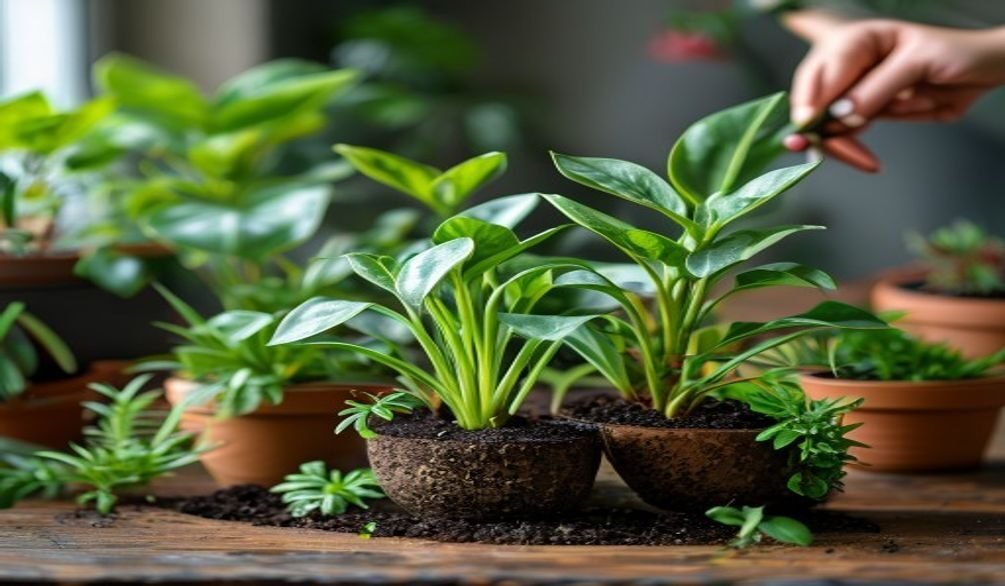
Stem cuttings are one of the most popular and straightforward methods for **Simple Plant Propagation for Beginners 2026**, especially for houseplants. This involves snipping a section of a stem, often containing a few leaves and a node, and encouraging it to root in water or soil. This technique is fantastic for multiplying plants like Pothos, Philodendron, and many herbs.
* Water Propagation: Many popular houseplants, such as Pothos and Monstera, readily root in water. This method allows you to visually monitor root development, which is incredibly satisfying for beginners. Keep the water fresh and change it every few days to prevent bacterial growth.
* Soil Propagation: For other plants, like many succulents or woody herbs, rooting directly in a well-draining potting mix is more effective. Using a rooting hormone, such as Rootone®, can significantly increase success rates by stimulating root growth. This is a key aspect of successful **Simple Plant Propagation for Beginners 2026**.
Leaf Cuttings: Ideal for Succulents and Certain Foliage Plants
Leaf cuttings are particularly effective for succulents and plants like African violets, where a single leaf can produce an entirely new plant. This method showcases the incredible regenerative power of plants, making it a compelling part of **Simple Plant Propagation for Beginners 2026**.
To propagate via leaf cuttings, simply remove a healthy, mature leaf and place it on top of or slightly inserted into a well-ddraining soil mix. Over time, tiny plantlets will form at the base of the leaf. This process can take several weeks, but the results are incredibly rewarding.
Plant Division: Instant Gratification for Many Perennials and Houseplants
Plant division is often considered the “Number One Propagation Method” by experts like Debbie Wolfe due to its quick, beginner-friendly nature and low risk of error (Good Housekeeping, 2024). This method involves splitting a mature plant into smaller sections, each with its own roots and shoots. Division provides instant, larger plants compared to cuttings.
Plants suitable for division include many perennials (e.g., daylilies, hostas) and clumping houseplants (e.g., ZZ plants, Snake Plants). This technique is a crucial part of **Simple Plant Propagation for Beginners 2026** for expanding established plant colonies.
Simple Layering: A Low-Risk Outdoor Method
Simple layering is an excellent, low-risk technique for **Simple Plant Propagation for Beginners 2026**, particularly for outdoor shrubs and vines. It involves bending a flexible stem to the ground, burying a section of it while keeping the tip exposed, and allowing it to root while still attached to the parent plant. This provides continuous nourishment until the new plant is established.
Once the buried section has developed a strong root system, typically after a few months, you can sever it from the parent plant. This method guarantees a higher success rate than cuttings for many difficult-to-root plants, as the parent plant supports the new growth throughout the rooting process.
Top 5 Easiest Plants to Propagate for Beginners
Choosing the right plants to start with is crucial for building confidence and achieving success in **Simple Plant Propagation for Beginners 2026**. Certain plants are incredibly forgiving and root readily, making them perfect for novice propagators. Focusing on these varieties ensures a positive experience and encourages further exploration into plant multiplication.
Here are five of the easiest plants to propagate, ideal for anyone diving into **Simple Plant Propagation for Beginners 2026**:
* Pothos (Epipremnum aureum):
* Method: Stem Cuttings (water or soil).
* Why it’s easy: Pothos cuttings root very quickly, often within a week in water, making them a fantastic visual success story. They are incredibly resilient, tolerating a range of light and moisture conditions. This plant is a cornerstone for learning **how to propagate houseplants in water**.
* Philodendron (various species):
* Method: Stem Cuttings (water or soil).
* Why it’s easy: Similar to Pothos, Philodendrons are eager rooters. Just ensure your cutting includes at least one node. Their fast growth makes them highly satisfying for **Simple Plant Propagation for Beginners 2026**.
* Snake Plant (Sansevieria trifasciata):
* Method: Leaf Cuttings (soil is best, water is possible but slower).
* Why it’s easy: You can cut a leaf into several sections, each capable of producing a new plant. While slower than stem cuttings, the process is largely hands-off once set up. This is a prime example for **propagating succulents from leaves step by step**.
* Spider Plant (Chlorophytum comosum):
* Method: Plantlets (direct potting).
* Why it’s easy: Spider plants produce “spiderettes” or plantlets on long stems, which are essentially pre-formed baby plants. Simply snip them off and plant them directly into soil, or place them in water to root first. This is arguably the easiest form of **Simple Plant Propagation for Beginners 2026**.
* Mint (Mentha species):
* Method: Stem Cuttings (water or soil).
* Why it’s easy: Mint is notoriously vigorous and roots almost instantly in water. This makes it a perfect herb for continuous harvesting and multiplication. Propagating herbs like Mint is a highly practical skill for any home gardener.
Step-by-Step Guide to Propagating Plants
Embarking on **Simple Plant Propagation for Beginners 2026** is a rewarding journey, and following a clear, step-by-step guide can significantly boost your success. This process breaks down into manageable stages, ensuring you provide the best conditions for your new plants to thrive. From my experience, attention to detail at each stage makes all the difference.
Step 1: Choose Your Parent Plant & Method
The first step in **Simple Plant Propagation for Beginners 2026** is selecting a healthy, mature parent plant and determining the most suitable propagation method. A vigorous parent plant provides the best genetic material for strong new growth. Ensure the plant shows no signs of pests or disease, as these can easily transfer to your new propagations.
Consider the plant type; for instance, a clumping perennial would be ideal for division, while a trailing houseplant is perfect for stem cuttings. Researching your specific plant’s preferred method will set you up for success.
Step 2: Prepare Cuttings or Divisions
Proper preparation of your plant material is critical for successful **Simple Plant Propagation for Beginners 2026**. Always use clean, sharp bypass pruners or snips to make precise cuts, minimizing damage to both the parent plant and the cutting. Sterilize your tools with rubbing alcohol before and after use to prevent the spread of diseases.
For stem cuttings, aim for a section 4-6 inches long with several nodes and leaves. Remove any leaves that would be below the soil or water line to prevent rot. For division, carefully unpot the plant and gently separate the root ball into smaller sections, ensuring each section has a healthy portion of roots and foliage.
Step 3: Apply Rooting Aid (Optional)
While not always mandatory, applying a rooting aid can significantly improve the success rate for many types of **Simple Plant Propagation for Beginners 2026**. Products like Rootone® or Hormodin® contain auxins, plant hormones that stimulate root development. According to research funded by the Horticultural Research Institute (HRI) in 2026, experts like Haiying Liang at Clemson University are actively researching plant growth regulators to improve rooting success in woody ornamentals.
Dip the cut end of your stem or leaf cutting into the rooting hormone powder, then tap off any excess. This ensures even coverage and prevents over-application, which can sometimes hinder rooting. This step is especially beneficial for plants that are typically slower or more challenging to root.
Step 4: Set Up Your Propagation Station
Creating an optimal environment for your cuttings is a cornerstone of **Simple Plant Propagation for Beginners 2026**. A propagation station provides the necessary humidity and stability for root development. Many beginners find joy in setting up a Giunn Plant Propagation Station, or similar models, which allow for multiple cuttings to root simultaneously.
If propagating in water, place cuttings in clean jars or vases, ensuring only the stem node is submerged. For soil propagation, use a well-draining mix, such as a blend of perlite and peat moss, and keep it consistently moist. Humidity domes or clear plastic bags can help maintain high humidity around soil-based cuttings.
Step 5: Provide Optimal Care & Monitoring
Consistent care and diligent monitoring are essential during the rooting phase of **Simple Plant Propagation for Beginners 2026**. Place your propagation station in a location with bright, indirect light, avoiding direct sunlight which can scorch tender cuttings. Maintain consistent temperatures, ideally between 65-75°F (18-24°C).
Regularly check water levels for water propagation and moisture levels for soil propagation. Look for signs of root growth (in water) or gentle tug resistance (in soil) as indicators of success. This watchful period can take anywhere from a few weeks to several months, depending on the plant.
Step 6: Transplant Your New Plants
Once your cuttings have developed a robust root system—typically 1-2 inches long for water-rooted cuttings, or when soil-rooted cuttings show significant new leaf growth—it’s time to transplant them. This final step completes the cycle of **Simple Plant Propagation for Beginners 2026**. Gently transfer the rooted cutting into a small pot filled with an appropriate potting mix.
Water thoroughly after transplanting to help settle the soil around the new roots. Continue to provide bright, indirect light and gradually acclimate the new plant to less humid conditions if it was under a dome. Celebrate your success as your propagated plant begins to thrive independently! For more tips on starting plants, consider reading our guide on How to Start Seeds Indoors: Beginner’s Step-by-Step Guide.
Troubleshooting Common Plant Propagation Mistakes
Even with the best intentions, beginners can encounter challenges when attempting **Simple Plant Propagation for Beginners 2026**. Understanding common pitfalls and how to address them is key to turning potential failures into learning opportunities. My years of gardening have taught me that persistence and observation are your best tools for overcoming propagation hurdles.
Here’s a look at common mistakes and their solutions for successful **Simple Plant Propagation for Beginners 2026**:
* Cuttings Rotting Before Rooting:
* Problem: Overwatering, poor drainage, or leaving too many leaves submerged in water. This is a frequent issue in **how to propagate houseplants in water**.
* Solution: Ensure water is changed every few days for water propagation. For soil, use a well-draining mix (e.g., adding perlite or sand) and allow the top inch of soil to dry slightly between waterings. Remove all leaves below the water or soil line.
* No Roots Developing:
* Problem: Incorrect cutting type (e.g., taking from non-node sections), insufficient warmth, or lack of rooting hormone for difficult plants.
* Solution: Ensure your cuttings include at least one node. Provide consistent warmth (a heat mat can help). Consider using a rooting hormone like Hormodin® for plants known to be slow or challenging to root.
* Cuttings Wilting or Drooping:
* Problem: Lack of humidity, too much direct sunlight, or dehydration.
* Solution: Increase humidity using a clear plastic bag or a humidity dome. Move cuttings to a location with bright, indirect light. Ensure the soil is consistently moist but not waterlogged.
* Pests or Diseases:
* Problem: Unsterilized tools, infected parent plant, or poor air circulation.
* Solution: Always sterilize pruners before each use. Inspect parent plants thoroughly for pests or diseases before taking cuttings. Ensure good air circulation around your propagation station to deter fungal issues.
* Slow Growth After Rooting:
* Problem: Insufficient nutrients, too small a pot, or inadequate light after transplanting.
* Solution: Once rooted and transplanted, provide a balanced, diluted liquid fertilizer. Ensure the pot size is appropriate for the new plant’s root ball, allowing room for growth. Gradually increase light intensity as the plant matures.
When is the Best Time to Propagate Plants?
The best time to propagate plants largely depends on the specific plant species and the method of **Simple Plant Propagation for Beginners 2026** you choose. Generally, the spring and early summer months are ideal, as plants are actively growing and have abundant energy. This period offers optimal conditions for root development and subsequent growth.
For many houseplants, **houseplant propagation** can occur year-round, but success rates are often higher during their active growing season in spring and summer. This is when light levels are higher and temperatures are consistently warm, providing the perfect environment for new roots to form.
For outdoor plants, timing is more critical.
* Softwood Cuttings: Best taken in late spring to early summer when new growth is still flexible.
* Hardwood Cuttings: Typically taken in late fall or early winter when the plant is dormant.
* Plant Division: Most effective in early spring or fall when the weather is cool and the plant is not under stress from extreme heat. Debbie Wolfe notes that division is a quick method, often done in spring or fall (Good Housekeeping, 2024).
* Seed Propagation: Follow specific seed packet instructions, but generally, starting seeds indoors in late winter to early spring aligns with outdoor planting schedules. For more details, see How to Start Seeds Indoors: Beginner’s Step-by-Step Guide.
Understanding the optimal **outdoor plant timing** for propagation significantly increases the likelihood of success for **Simple Plant Propagation for Beginners 2026**. Hsuan Chen at North Carolina State University, for example, is actively developing micropropagation systems for redbud cultivars in 2026, which involves precise timing and environmental controls for success.
Sustainable Plant Propagation: Grow Your Eco-Friendly Garden
Engaging in **Simple Plant Propagation for Beginners 2026** is not just a rewarding hobby; it’s a powerful step towards creating a more sustainable and eco-friendly garden. By propagating your own plants, you actively contribute to reducing environmental impact and fostering biodiversity. This approach aligns perfectly with the growing trend of conscious gardening.
One of the most significant benefits of **Simple Plant Propagation for Beginners 2026** is the reduction of plastic waste. Every plant you propagate at home means one less plastic nursery pot, tray, or tag ending up in a landfill. This small action collectively makes a big difference.
Furthermore, propagating plants allows you to preserve specific plant genetics, especially for heirloom varieties or unique specimens that might be difficult to find commercially. This helps maintain genetic diversity within your garden and community. The floriculture market is valued at USD 67.43 billion in 2026 and is forecast to attain USD 123.04 billion by 2036, expanding at a 6.2% CAGR, according to Future Market Insights (2025), indicating a vast industry where home propagation can make an impact.
By sharing your propagated plants with friends and family, you also foster a sense of community and encourage others to embrace sustainable gardening practices. This creates a ripple effect, multiplying both plants and environmental consciousness. This makes **Simple Plant Propagation for Beginners 2026** a truly impactful activity.
Essential Tools for Successful Plant Propagation
Having the right tools is fundamental for making **Simple Plant Propagation for Beginners 2026** both easy and successful. While you don’t need a vast array of expensive equipment, a few key items will significantly improve your efficiency and success rates. From my own gardening experience, investing in quality tools always pays off in the long run.
Here are the essential tools you’ll need for **Simple Plant Propagation for Beginners 2026**:
* Sharp Pruning Shears or Snips:
* Why: Clean cuts are vital for healthy rooting and preventing disease. Dull tools can crush stems, making it harder for the plant to recover. Mr. Pen offers reliable pruning shears suitable for beginners.
* Tip: Always sterilize your shears with rubbing alcohol before and after each use.
* Rooting Hormone:
* Why: Products like Rootone® or Hormodin® contain auxins that stimulate root development, especially beneficial for cuttings that are slow to root.
* Tip: Apply sparingly; too much can inhibit growth.
* Propagation Station (or DIY alternative):
* Why: Provides a stable environment for cuttings, often with multiple spots for various plants. Brands like Giunn Plant Propagation Station, Mkono Propagation Stations, and Renmxj Plant Propagation Stations are popular choices.
* DIY: Simple glass jars, repurposed plastic containers, or even clear plastic domes over trays can work effectively for **diy plant propagation station ideas**.
* Well-Draining Potting Mix:
* Why: A light, airy mix prevents waterlogging and provides good aeration for developing roots. A blend of peat moss, perlite, and vermiculite is ideal.
* Tip: Avoid heavy garden soil, which can compact and suffocate tender roots.
* Small Pots or Seed Trays:
* Why: Once rooted, new plants need individual homes to grow. Small pots (2-4 inches) are perfect for starting.
* Tip: Ensure pots have drainage holes to prevent root rot.
* Watering Can or Spray Bottle:
* Why: Gentle watering is crucial for young cuttings and seedlings. A spray bottle can help maintain humidity without overwatering.
* Labels and Marker:
* Why: Essential for keeping track of plant types, propagation dates, and methods, especially when propagating multiple varieties.
| Tool Category | Specific Item/Brand | Purpose in Propagation |
|---|---|---|
| Cutting Tools | Sharp Pruning Shears (e.g., Mr. Pen) | Making clean, precise cuts on parent plants and cuttings. |
| Rooting Aids | Rootone® or Hormodin® | Stimulating root growth and increasing success rates for cuttings. |
| Propagation Environment | Giunn Plant Propagation Station | Providing a stable, humid setting for multiple cuttings to root. |
| Growing Medium | High-quality Potting Mix (with perlite/sand) | Offering drainage and support for soil-rooted cuttings and transplants. |
| Watering | Small Watering Can or Spray Bottle | Delivering gentle, controlled moisture to delicate young plants. |
Frequently Asked Questions
What is the easiest plant to propagate for beginners?
The easiest plant to propagate for beginners is generally the Pothos (Epipremnum aureum) due to its rapid rooting in water or soil. This resilience makes it a prime candidate for **Simple Plant Propagation for Beginners 2026**. Gardening expert Debbie Wolfe notes that tomato suckers also root incredibly easily, allowing gardeners to multiply vegetables for free (Good Housekeeping, 2024).
What is the easiest way to propagate plants?
The easiest way to propagate plants for most beginners is through stem cuttings in water, especially for common houseplants like Pothos and Philodendron. This method allows visual monitoring of root growth, which is highly encouraging for **Simple Plant Propagation for Beginners 2026**. Division is also very easy for clumping plants, offering instant results.
How long does it take for cuttings to grow roots?
The time it takes for cuttings to grow roots varies significantly by plant species, ranging from one week to several months. For fast-rooting plants like Pothos, you might see roots in 7-14 days, while woody plants can take 4-8 weeks or longer. Patience is key for **Simple Plant Propagation for Beginners 2026**.
Can all plants be grown from cuttings?
No, not all plants can be grown from cuttings; some require propagation via seeds, division, or specialized techniques like grafting. However, a vast majority of common houseplants, shrubs, and perennials can be successfully propagated from cuttings. Vegetative materials accounted for 37.7% of the specialty crop propagation materials market in 2024, highlighting their widespread applicability, according to Global Market Insights Inc. (2025).
What are the 3 main methods of propagation?
The three main methods of propagation are stem cuttings, leaf cuttings, and plant division, alongside seed propagation. These techniques form the core of **Simple Plant Propagation for Beginners 2026**, offering various ways to multiply plants. Each method is best suited for different types of plants and desired outcomes.
Mastering **Simple Plant Propagation for Beginners 2026** is an incredibly rewarding skill that empowers you to expand your garden, save money, and share your passion with others. By following these straightforward methods and troubleshooting tips, you