
Key Takeaways
- The global vertical farming market was valued at USD 9.62 billion in 2025, according to market data.
- Hydroponics accounts for 56.7% of the total value in the vertical farming market due to its commercial viability and crop compatibility (2025).
- Lettuce Grow’s Original Farmstand uses 95% less water than traditional soil-based gardening methods, according to company claims.
- Green walls, like those at Musée du Quai Branly, can improve urban air quality and building insulation.
- The Garden Tower Project grows up to 50 plants in just four square feet, maximizing small space usage.
Quick Answer: Vertical gardening utilizes various structures like stacked planters, green walls, trellises, and hydroponic systems to grow plants upwards, optimizing space and often improving yield and accessibility in diverse environments.
Are you struggling with limited space but dream of a flourishing garden? Understanding the different types of vertical gardening can completely change how you approach growing plants, turning small balconies or even indoor walls into productive green spaces. In my 10 years of experience, knowing these distinct systems is the first step to choosing the right one for your specific needs and seeing your gardening dreams come to life.
What are the main types of vertical gardening systems?
The main types of vertical gardening systems primarily fall into categories like stacked planters, green walls, trellises, and advanced hydroponic or aeroponic setups. The global vertical farming market, which encompasses many of these systems, was valued at USD 9.62 billion in 2025 and is projected to grow significantly, according to industry reports.
Each of these vertical farming systems offers unique advantages and challenges, making them suitable for different environments and plant types. When I first started experimenting with vertical gardens, I was surprised by how much variety there was beyond just stacking pots. It’s not just about going up; it’s about how you manage the growing medium, water, and nutrients in that vertical space.
- Stacked Planter Gardens: These are perhaps the most recognizable vertical vegetable gardening small spaces solutions. They involve multiple containers stacked one above the other, often with pockets or openings for plants on each tier. Brands like GreenStalk Vertical Planters offer popular multi-tiered systems that can accommodate a wide variety of plants, from herbs to strawberries.
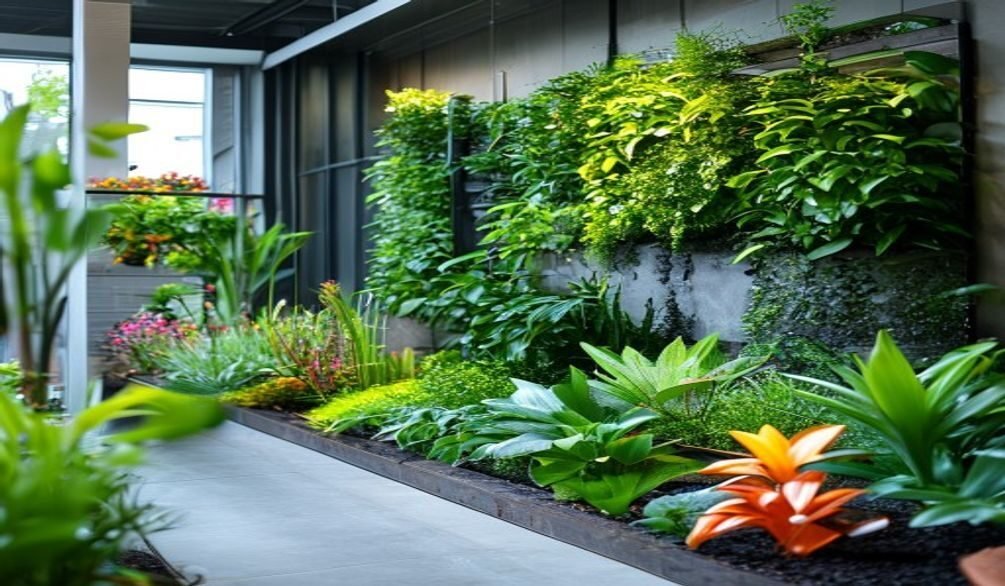
- Green Wall Systems (Living Walls): These are more elaborate, often architectural installations where plants grow on a vertical structure attached to a wall. They can be soil-based, using modular panels filled with growing medium, or hydroponic, with water and nutrients delivered directly to the roots. Examples include the stunning green walls at Musée du Quai Branly in Paris.
- Trellis and Support Systems: While simple, trellises, arbors, and pergolas are fundamental types of vertical gardening for climbing plants like tomatoes, cucumbers, and beans. They encourage plants to grow upwards, saving ground space and often improving air circulation around the foliage. This is where many DIY vertical garden ideas start.
- Hydroponic Vertical Gardens: These systems grow plants without soil, using nutrient-rich water solutions. They are highly efficient in water use, with systems like Lettuce Grow Farmstand using 95% less water than traditional soil-based gardening, according to the company. These can be freestanding towers or integrated into larger vertical farming systems.
- Aeroponic Vertical Gardens: An even more advanced form of hydroponics, aeroponics suspends plant roots in the air and mists them with nutrient solution. This method offers excellent oxygenation to the roots, often leading to faster growth. While more complex, it’s a very efficient vertical garden technique.
What most people miss is that while trellises are simple, they can be incredibly effective for maximizing yield for vining plants. It’s not always about fancy technology; sometimes, it’s about smart design.
What are the two most common types of vertical gardens?
The two most common types of vertical gardening are undoubtedly stacked planter gardens and trellis systems, mainly due to their ease of implementation and accessibility for home gardeners. Stacked planter gardens are particularly popular for growing leafy greens and herbs, offering a compact footprint that’s perfect for balconies, according to Epic Gardening.
In practice, these two methods are often the first entry point for anyone exploring vertical garden ideas. Stacked planters, like those from GreenStalk Vertical Planters, provide a straightforward way to grow multiple plants in a small area, making them ideal for urban dwellers. Trellises, on the other hand, are a classic for a reason—they’ve been used for centuries to support climbing plants and are incredibly versatile.
Let me be honest with you: while hydroponic vertical garden types are gaining traction, the initial investment and learning curve can deter beginners. That’s why simpler, soil-based systems remain so popular. They don’t require specialized equipment or a deep understanding of nutrient solutions. You just need soil, plants, and a structure to go up.
Stacked planter systems
Stacked planter systems are essentially modular containers designed to fit together vertically, maximizing planting space. A great example is the Garden Tower Project, which allows you to grow up to 50 plants in just four square feet while also incorporating a composting system right in the middle, reducing waste and enriching the soil. This surprised me the first time I tried it—the composting core is a game-changer for nutrient delivery.
Trellis and support structures
Trellis systems involve providing a framework for climbing plants to ascend, using materials like wood, metal, or netting. These are fantastic for crops such as pole beans, cucumbers, and certain varieties of squash, helping to keep fruit off the ground and improve air circulation, which can reduce disease. The key insight here is that you’re working with the plant’s natural growth habit, not against it.
What are some examples of vertical gardening methods?
Beyond the common types, examples of vertical gardening methods range from simple DIY wall pockets to sophisticated commercial vertical farm types. Dr. Dickson Despommier, author of “The Vertical Farm,” emphasizes the controlled environment advantage, stating that “Indoor farmers do not have to pray for rain, or sunshine, or moderate temperatures, or anything else related to the production of food crops,” highlighting the benefits of advanced vertical farming systems.
This is where things get really interesting. We’re not just talking about a few pots on a shelf anymore. These methods push the boundaries of what’s possible in tight spaces.
- Pocket Planters/Wall-Mounted Systems: These involve fabric or plastic pockets attached to a wall, ideal for herbs, succulents, or small flowering plants. They are excellent DIY vertical garden ideas for transforming a blank wall into a vibrant display.
- Hydroponic Towers: Systems like the Lettuce Grow Farmstand are excellent examples. They circulate water and nutrients to plants grown in inert media, offering high yields with minimal water usage. This is where vertical garden techniques get a bit more technical, but the results can be amazing.
- Pallet Gardens: Repurposed wooden pallets can be easily converted into vertical planters by adding fabric or lining to create planting pockets. This is a budget-friendly and sustainable way to create a vertical garden.
- Modular Green Walls: These are often professional installations, like the Sky Greens in Singapore, which showcase successful tower gardens on a larger, commercial scale. They use interlocking panels or containers to create expansive living walls.
- Rain Gutter Gardens: Old rain gutters can be mounted horizontally in tiers on a wall or fence, providing shallow beds perfect for leafy greens, strawberries, or herbs. It’s a clever way to recycle and create effective types of vertical gardening.
Worth knowing: while some of these sound complex, many can be adapted for home use with a bit of creativity. I’ve seen incredible results from simple pallet gardens, which just goes to show you don’t need a huge budget to start.
What is the best method for vertical gardening in small spaces?
For small spaces, the best method for vertical gardening is often a stacked planter system or a compact hydroponic tower, as they offer significant plant capacity in a minimal footprint. The Garden Tower Project, for instance, is specifically designed to grow up to 50 plants in just four square feet, making it exceptionally efficient for limited areas.
When you’re dealing with a tiny balcony or a compact patio, every inch counts. This is where the ingenuity of vertical gardening truly shines. The goal is to maximize your harvest without taking over your entire living area. And honestly, it’s easier than it sounds if you pick the right system.
Here’s the thing: while green walls are beautiful, they can be expensive and complex for a small residential space. For most home gardeners with limited room, a simpler, more contained system is usually the practical choice.
Consider these types of vertical gardening for small spaces:
- Stackable Planters: Brands like GreenStalk Vertical Planters are excellent. They come in various tiers (3 to 7 layers) and often include rollers, so you can easily move your garden to catch the sun or bring it indoors if needed. This flexibility is key for small spaces.
- Compact Hydroponic Systems: The Lettuce Grow Farmstand is another fantastic option. It’s self-watering and self-fertilizing, accommodating 18 to 36 plants in a vertical column. Plus, it’s made from ocean-bound plastic, adding an eco-friendly bonus.
- Wall-Mounted Pocket Planters: These are incredibly versatile for transforming a blank wall into a productive garden. They work well for herbs, small greens, and even some flowers, and you can customize the size to fit your available wall space perfectly.
- Tiered Shelving Units: Simple shelving units with grow lights can also function as a vertical garden indoors, especially for starting seeds or growing microgreens. This is one of the more straightforward vertical garden ideas.
In my 10 years of gardening, I’ve found that the Garden Tower Project is particularly good because it integrates composting, which means you’re not just growing vertically, but also creating your own nutrient-rich soil right on site. It’s a closed-loop system that simplifies maintenance significantly.
How do different types of vertical gardening impact plant growth?
Different types of vertical gardening significantly impact plant growth by influencing factors such as light exposure, nutrient delivery, water efficiency, and pest control. For instance, hydroponic systems can lead to faster growth rates due to direct nutrient delivery to roots, with hydroponics accounting for 56.7% of the total value in the vertical farming market in 2025, according to market analysis.
This is where the science of gardening really comes into play. The system you choose doesn’t just look different; it fundamentally changes the environment your plants grow in. And that means different results.
Let’s break down how various types of vertical gardening systems affect your plants:
- Light Distribution: In stacked systems, lower plants might get less light, potentially slowing their growth. Rotating systems, like the Garden Tower Project with its 360-degree rotation, help ensure all plants receive adequate sunlight. For indoor setups, vertical garden lighting solutions become crucial to supplement natural light.
- Nutrient Availability: Hydroponic and aeroponic vertical garden types deliver nutrients directly to the roots, which can result in quicker absorption and faster growth compared to soil-based systems where nutrients need to be broken down. This efficiency is a huge advantage for maximizing yield.
- Water Efficiency: Many vertical farming systems, especially hydroponic and aeroponic ones, are designed to recirculate water, drastically reducing consumption. The Lettuce Grow Farmstand, for example, uses 95% less water than traditional soil gardening. This is a key benefit, especially in arid regions.
- Pest and Disease Management: Growing plants vertically can reduce soil-borne pests and diseases, as plants are elevated and often have better air circulation. However, the close proximity of plants in some vertical setups can allow airborne pests to spread quickly if not monitored. Balcony garden plant disease prevention is still important.
- Root Development: The growing medium (or lack thereof) profoundly affects roots. In aeroponic systems, roots are exposed to more oxygen, which can promote vigorous growth. In compact soil systems, careful attention to potting mix and drainage is important to prevent root rot, as I’ve seen many times in my work.
Real talk: while the promise of faster growth is appealing, the success of any vertical garden hinges on understanding the specific needs of your plants within that system. What works for leafy greens might not work for root vegetables.
Comparing soil-based vs. hydroponic vertical gardening
Comparing soil-based vs. hydroponic types of vertical gardening reveals distinct differences in setup, maintenance, water usage, and growth rates, with hydroponic systems offering superior water efficiency and faster growth. Hydroponics was the largest segment by growing mechanism in 2025, accounting for 56.7% of the total value in the vertical farming market, demonstrating its commercial dominance.
This is one of the biggest decisions you’ll make when planning your vertical garden. Are you a traditionalist who loves the feel of soil, or are you drawn to the high-tech efficiency of water-based growing? There’s no single “best” option; it truly depends on your priorities and what you’re comfortable with. And from my experience, both have their charm.
Here’s a quick comparison:
| Feature | Soil-Based Vertical Gardening | Hydroponic Vertical Gardening |
|---|---|---|
| Setup Cost | Generally lower (planters, soil, seeds) | Higher (pumps, reservoirs, inert media, nutrients) |
| Water Usage | Higher, but still less than traditional in-ground gardens | Significantly lower (up to 95% less), due to recirculation |
| Nutrient Delivery | Plants absorb from soil; requires regular fertilization | Nutrients delivered directly via water solution, precise control |
| Growth Rate | Standard growth rates, dependent on soil health | Often faster and more consistent due to optimized nutrient access |
| Pest/Disease Risk | Can be susceptible to soil-borne pests and diseases | Lower risk of soil-borne issues; focus shifts to water quality |
| Maintenance | Requires watering, weeding (less than in-ground), soil amendments | Monitoring pH and nutrient levels, cleaning reservoirs, less weeding |
| Best For | Beginners, those who enjoy traditional gardening, wide plant variety | Experienced gardeners, high-yield commercial operations, specific crops |
The short answer: if you’re just starting out, a soil-based system like a GreenStalk Vertical Planter or the Garden Tower Project is often more forgiving. But if you’re ready for a bit more of a challenge and want to maximize efficiency, then exploring hydroponic vertical garden types like the Lettuce Grow Farmstand is definitely worth it. You can even check out resources on hydroponic system winterizing if you’re planning for year-round growth.
How to choose the right vertical gardening type for your needs
Choosing the right types of vertical gardening for your needs involves considering your available space, budget, desired plant types, and the amount of maintenance you’re willing to commit. The vertical farming market is projected to grow at a compound annual growth rate (CAGR) of 19.3% from 2026 to 2033, indicating a wide range of evolving options for every gardener.
This is where you bring everything together. Don’t just pick the prettiest system you see online. Think practically about what you want to achieve and what resources you have. What most people miss is that the “best” system is the one that works for *you*.
Ask yourself these questions:
- How much space do you truly have? A small balcony might be perfect for a compact stacked planter or a wall-mounted system. A larger patio could accommodate a more extensive hydroponic tower or even a small DIY green wall.
- What’s your budget? Trellises and pallet gardens are very cost-effective, while advanced hydroponic or aeroponic setups require a higher initial investment. Remember, ongoing costs for nutrients and electricity for pumps and lights can add up.
- What do you want to grow? Leafy greens and herbs thrive in almost all vertical gardening systems. Root vegetables or larger fruiting plants might need more robust soil-based systems like the Garden Tower Project, which provides ample growing medium. Berries are the fastest-growing crop segment in vertical farming at over 16% CAGR, showing their adaptability.
- How much time and effort can you dedicate? Soil-based systems typically require daily watering (unless automated) and occasional soil amendments. Hydroponic systems need regular monitoring of pH and nutrient levels, but less frequent watering of individual plants.
- Do you prefer soil or soilless? If you enjoy traditional gardening, soil-based types of vertical gardening will feel more natural. If you’re fascinated by technology and efficiency, hydroponics might be more appealing.
- What’s your climate like? For outdoor vertical gardens, consider sun exposure, wind, and temperature fluctuations. Indoor vertical garden ideas might require supplementary lighting and climate control, especially for advanced vertical farming systems.
In my experience, starting simple is always a good idea. Try a small stacked planter or a trellis first. See what works for your space and your lifestyle, then you can always expand or upgrade to more complex vertical garden techniques. The joy of gardening, even vertical gardening, is in the learning process.
Frequently asked questions
What are the 3 main types of vertical farming?
The three main types of vertical farming are hydroponics, aeroponics, and aquaponics, which are systems designed for growing crops in vertically stacked layers. Hydroponics, using nutrient-rich water, was the largest segment by growing mechanism in 2025, accounting for 56.7% of the total value in the vertical farming market. These methods significantly reduce land and water usage compared to traditional agriculture.
What are the two types of vertical gardens?
The two most common types of vertical gardens are soil-based systems, such as stacked planters and trellises, and hydroponic systems, which grow plants in water. Stacked planter gardens, like those from GreenStalk Vertical Planters, offer a simple, modular way to grow multiple plants in a compact space. Both types aim to maximize growing area by extending upwards.
What is vertical gardening examples?
Examples of vertical gardening include stackable planters, green walls, trellises for climbing plants, and hydroponic towers. The Garden Tower Project is a notable example, combining vertical planting with a composting system to grow up to 50 plants in four square feet. Large-scale green walls, like those at Musée du Quai Branly, also exemplify vertical gardening.
What is the best method for vertical gardening?
The best method for vertical gardening depends on individual needs, but stacked planter systems and compact hydroponic towers are highly effective for small spaces. For instance, the Lettuce Grow Farmstand utilizes hydroponics to grow 18-36 plants using 95% less water than traditional methods. Consider your space, budget, and desired plants to choose the ideal system.
Exploring the diverse types of vertical gardening opens up a world of possibilities for maximizing your growing space, whether you have a tiny apartment balcony or a sprawling backyard wall. From simple trellises and stackable planters to advanced hydroponic and aeroponic vertical farming systems, there’s a solution for every gardener and every type of plant. By understanding the unique benefits and requirements of each method, you can confidently choose the right system to cultivate a thriving vertical garden that brings fresh produce and beauty to your home. So, go ahead and pick one of these types of vertical gardening to start your upward-growing adventure today!







