Are you wondering how to fertilize indoor plants to keep them thriving and vibrant? You’re not alone. Many plant parents grapple with understanding their green companions’ nutritional needs, often leading to confusion about what to use, when, and how much. This holistic guide will demystify the process, empowering you to provide the optimal plant nutrition for lush, healthy growth.
Understanding Your Plants: Why Fertilizing Indoor Plants Matters
Your indoor plants, like all living things, require specific nutrients to grow, flower, and resist disease. While they famously “make their own food” through photosynthesis, converting sunlight into energy, they still need raw mineral ingredients from their environment. As Debbie Dillion, an Extension Agent from N.C. Cooperative Extension, wisely puts it, “One does not feed a plant when you fertilize. Plants make their own food in the process of photosynthesis. Fertilizer allows plants to make and utilize this food.“
In their natural outdoor habitats, plants access a continuous supply of nutrients from decomposing organic matter and the vast soil ecosystem. However, potted indoor plants are confined to a limited amount of potting mix. This soil’s nutrient reserves deplete quickly as your plant grows and you water it, flushing away vital elements.
The rising popularity of indoor gardening, with an estimated 80 percent of American households engaging in some form of gardening in 2023 and indoor houseplants “jumping in popularity more than any other category,” means more people are realizing the importance of proper houseplant care. Providing balanced plant nutrition is crucial for maintaining their health and preventing common issues like stunted growth or yellowing leaves. It’s an essential part of responsible houseplant care.
How Do You Fertilize Indoor Plants for Beginners?
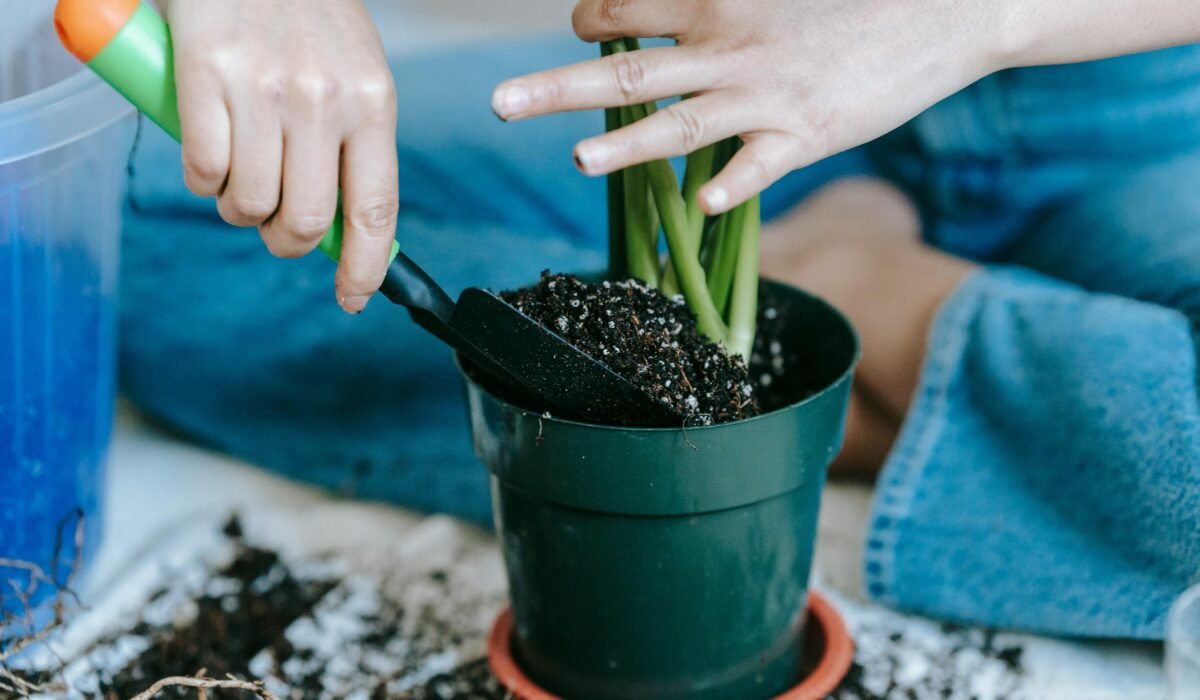
For those just starting out, fertilizing indoor plants might seem daunting, but it’s a straightforward process once you understand the fundamentals. The goal is to supplement the potting mix with essential nutrients without overdoing it. Here’s a simple step-by-step approach:
- Choose the Right Fertilizer: Select a fertilizer specifically formulated for indoor plants. Liquid fertilizers are often easiest for beginners because they mix with water, allowing for precise dilution.
- Dilute Appropriately: Always dilute liquid fertilizers more than the package recommends, especially for houseplants. A general rule is to use half or even quarter strength to avoid burning roots.
- Water Your Plant First: Never apply fertilizer to dry soil. Water your plant thoroughly an hour or two before fertilizing. This prevents the concentrated salts in fertilizer from shocking or damaging the roots.
- Apply Evenly: Pour the diluted fertilizer solution onto the soil surface, distributing it evenly around the base of the plant. Avoid splashing it directly onto leaves unless it’s a foliar spray designed for that purpose.
- Monitor and Adjust: Pay close attention to your plant’s reaction in the days and weeks following fertilization. Healthy new growth is a good sign; yellowing or crispy leaves might indicate too much fertilizer.
What most people miss is that consistency, not quantity, is key. Regular, dilute feedings are far better than infrequent, strong doses for sustained healthy growth.
Reading Your Plants: Signs They Need Fertilizer (or Too Much)
Your plants are excellent communicators if you know how to interpret their signals. Learning to “read your plants” for subtle cues of nutrient needs is a cornerstone of preventative care. Ignoring these signs can lead to significant issues, so understanding them is vital for effective houseplant care.
Signs Your Plant Needs Fertilizer (Nutrient Deficiency)
- Stunted Growth: If your plant isn’t growing new leaves or stems, or new growth is significantly smaller than old growth, it’s often a sign of nutrient deficiency.
- Yellowing Leaves (Chlorosis): Older leaves turning yellow, especially between the veins (interveinal chlorosis), often indicates a lack of nitrogen or magnesium. If new leaves are yellow, it could be iron deficiency.
- Pale Green Foliage: A general dullness or light green color across the plant suggests insufficient plant nutrition, particularly nitrogen.
- Lack of Flowering/Fruiting: If a flowering plant isn’t producing blooms or fruit, it might be lacking phosphorus, which supports reproductive growth.
- Purple Tinge: A purplish discoloration on the undersides of leaves can point to a phosphorus deficiency.
Signs Your Plant Has Too Much Fertilizer (Over-fertilization)
Over-fertilization is a common mistake and can be more damaging than under-fertilization. It essentially “burns” the roots with excess salts. You’ll want to avoid this to prevent issues like root rot, which you can learn more about in our Diagnose & Treat Root Rot: Complete Guide.
- Crispy, Brown Leaf Tips/Edges: This is a classic symptom, indicating salt burn from too much fertilizer.
- White Crust on Soil Surface: An accumulation of fertilizer salts can appear as a white, powdery crust on the potting mix.
- Stunted Growth with Dark Green Leaves: While dark green might sound good, if combined with a lack of new growth, it can signal an excess of nitrogen inhibiting other processes.
- Wilting, Even When Soil is Moist: Damaged roots struggle to absorb water, leading to wilting despite adequate moisture.
- Sudden Leaf Drop: A severe case of over-fertilization can cause leaves to drop rapidly.
In practice, observing these signs helps you adjust your houseplant fertilization schedule and amounts. It’s always better to under-fertilize slightly than to over-fertilize.
Choosing the Right ‘Food’: Best Types of Indoor Plant Fertilizers
Selecting the best indoor plant fertilizer depends on your plant’s needs, your gardening philosophy, and ease of use. There’s a wide array of options, each with its own advantages.
Liquid Fertilizers
These are concentrated solutions that you dilute with water before applying. They offer immediate nutrient availability to the plant, making them excellent for quick boosts. Many beginners find them easy to control by adjusting dilution. They are a popular choice for regular feeding during the growing season.
Slow-Release Fertilizers
Often found as granules, pellets, or spikes, these fertilizers are designed to release nutrients gradually over several weeks or months. This reduces the frequency of application and minimizes the risk of over-fertilization, making them ideal for busy gardeners or plants with consistent nutrient demands. The best indoor plant fertilizer for low-maintenance care often falls into this category.
Organic Fertilizers
Composed of natural materials like worm castings, compost tea, fish emulsion, or kelp meal, organic fertilizer options improve soil health by feeding beneficial microbes. These microbes then break down nutrients into forms plants can absorb, creating a more sustainable ecosystem in the pot. This approach aligns with the growing trend towards sustainable and eco-conscious fertilization, and you can delve deeper into this topic with our guide on Organic Fertilizers for Thriving Gardens: Your Guide.
Synthetic Fertilizers
These are chemically manufactured and provide precise NPK ratios and micronutrients. They are fast-acting and highly effective but require careful application to prevent salt buildup and root burn. Miracle-Gro is a well-known brand in this category.
When considering the best indoor plant fertilizer, think about your plant’s specific needs and how much time you want to dedicate to its care. For a natural fertilizer for indoor plants, organic options are excellent for long-term soil health.
When and How Often Should Indoor Plants Be Fertilized?
Timing your houseplant fertilization schedule correctly is just as important as choosing the right product. Most indoor plants follow a seasonal growth cycle, which should dictate your feeding routine.
The Growing Season: Spring and Summer
The short answer is: fertilize primarily during the active growing season. For most indoor plants, this means spring and summer. During these months, plants receive more light, temperatures are warmer, and they are actively producing new leaves, stems, and possibly flowers. This is when their demand for nutrients is highest.
- Google Trends data for “indoor plant care” shows a peak in interest during April, sustained through August and October, confirming this seasonal surge.
- Start fertilizing in early spring (March/April) as new growth emerges.
- Continue feeding every 2-4 weeks, depending on the plant type and fertilizer strength, throughout summer.
Dormancy: Fall and Winter
During fall and winter, light levels decrease, and many plants enter a period of dormancy or significantly slower growth. Their nutrient needs plummet. Fertilizing during this time can lead to salt buildup in the soil and potential root damage because the plant isn’t actively utilizing the nutrients.
- Reduce or completely stop fertilizing from late fall through late winter (October-February).
- If your home is exceptionally warm and bright, and your plant shows active growth, you might provide a very dilute feeding (quarter strength) once every 6-8 weeks, but err on the side of caution.
What most people miss is that dormancy isn’t just about temperature; it’s about light. Even if your home is warm, shorter, darker days signal to your plants that it’s time to rest.
Beyond the Basics: NPK Ratios, Macronutrients, and Micronutrients
Understanding the numbers on your fertilizer label is key to providing targeted plant nutrition. This is where the science of “feeding” plants truly comes into play.
NPK Ratios: The Big Three
Every fertilizer package displays three numbers, representing the NPK ratio:
- N (Nitrogen): Promotes lush, green, leafy growth. Essential for photosynthesis and chlorophyll production.
- P (Phosphorus): Crucial for strong root development, flowering, and fruiting. Think of it as the energy transfer element.
- K (Potassium): Supports overall plant health, disease resistance, and water regulation. It’s the “regulator” of many plant processes.
For most indoor foliage plants, a balanced NPK ratio like 10-10-10 or 20-20-20 is suitable. Flowering plants might benefit from a slightly higher phosphorus number, like 10-15-10. The best NPK ratio for houseplants generally depends on their primary growth habit.
Macronutrients and Micronutrients
Beyond NPK, plants require other essential elements:
Secondary Macronutrients
- Calcium (Ca): Important for cell wall structure and strength.
- Magnesium (Mg): A central component of chlorophyll, vital for photosynthesis.
- Sulfur (S): Involved in protein synthesis and enzyme activity.
Micronutrients (Trace Elements)
These are needed in much smaller quantities but are equally critical for various enzymatic functions. They include iron (Fe), manganese (Mn), zinc (Zn), copper (Cu), boron (B), molybdenum (Mo), and chlorine (Cl). A good quality indoor plant fertilizer will typically include these trace elements to ensure comprehensive plant nutrition.
The scientific “why” behind healthy soil and comprehensive nutrient provision is that each of these elements plays a specific role in cellular processes, from building plant tissue to facilitating energy transfer. Without them, even with ample water and light, plants cannot function optimally.
Troubleshooting Fertilization Issues: Advanced Diagnostics
Moving beyond basic yellowing, understanding specific nutrient deficiency symptoms can help you precisely diagnose and correct problems. This advanced troubleshooting requires keen observation and knowledge of common indoor plant nutrient deficiency indicators.
Common Deficiencies and Their Visual Cues
- Nitrogen (N) Deficiency: General yellowing of older leaves, especially from the tips inward. Overall pale green appearance. Stunted growth.
- Phosphorus (P) Deficiency: Dark green or purplish coloration on older leaves, particularly undersides. Stunted growth, poor flowering.
- Potassium (K) Deficiency: Yellowing or browning along the edges of older leaves (marginal necrosis), often starting at the tips. Weak stems.
- Iron (Fe) Deficiency: Interveinal chlorosis (yellowing between veins) on *new* leaves, while veins remain green. Often seen in plants in alkaline soil.
- Magnesium (Mg) Deficiency: Interveinal chlorosis on *older* leaves, often starting from the leaf center and moving outwards. Leaves may feel brittle.
- Calcium (Ca) Deficiency: Distorted or stunted new growth, often with brown tips or edges on young leaves. Can lead to blossom end rot in fruiting plants.
Corrective Actions
Once you’ve identified a potential issue, here’s how to respond:
- For Deficiencies: Apply a balanced liquid fertilizer at half strength, ensuring it contains a full spectrum of micronutrients. For specific deficiencies (e.g., iron), use a chelated iron supplement.
- For Over-Fertilization: This is critical. Immediately flush the soil with plenty of clean, plain water. Water until water drains freely from the bottom of the pot for several minutes. Repeat this process a few times over the next hour. This helps wash away excess salts. After flushing, avoid fertilizing for at least a month.
- Check pH: Sometimes, nutrient availability is limited not by lack of nutrients, but by incorrect soil pH. Most houseplants prefer slightly acidic to neutral soil (pH 6.0-7.0). Extreme pH levels can “lock out” nutrients, making them unavailable to the plant roots.
The key here is observation and patience. Plants don’t recover overnight, but consistent, corrective houseplant care will yield results.
Tailoring Your Approach: Fertilization for Specific Indoor Plant Types
While general guidelines exist, a truly holistic approach to how to fertilize indoor plants recognizes that different plant types have unique needs. What works for a succulent won’t work for a fern.
Foliage Plants (e.g., Pothos, Monstera, Philodendron, ZZ Plant)
These plants are all about lush leaves. They benefit most from a balanced fertilizer or one slightly higher in nitrogen to support vigorous leaf production. An NPK ratio like 2-1-2 or 3-1-2 is often ideal. Fertilize every 2-4 weeks during the growing season with a diluted liquid fertilizer.
Flowering Plants (e.g., African Violets, Orchids, Peace Lilies)
To encourage abundant blooms, these plants need more phosphorus. Look for a fertilizer with a higher middle number (e.g., 1-3-2 or 10-15-10). Fertilize regularly during their blooming cycle, reducing frequency during dormancy. Orchids, in particular, often prefer very dilute feeding year-round.
Succulents and Cacti
These desert dwellers are adapted to lean, nutrient-poor soils. They require very little fertilizer, if any. When you do fertilize, use a specialized succulent/cactus fertilizer or a highly diluted (quarter strength) balanced fertilizer once or twice during their active growing season (usually spring/summer). Over-fertilization is a common killer for these plants.
Ferns
Ferns appreciate consistent moisture and a slightly acidic environment. They prefer a balanced, gentle fertilizer, often at half strength, applied every 4-6 weeks during their active growth. They are sensitive to high salt levels, so avoid strong formulations.
Carnivorous Plants (e.g., Venus Flytraps, Pitcher Plants)
This is where things get interesting: most carnivorous plants do not need fertilizer in their soil. They evolved to capture insects for nutrients. Fertilizing their soil can actually kill them by burning their sensitive roots. If you must, a very, very dilute foliar spray (applied to leaves) might be tolerated, but generally, let them catch their own food.
Tailoring your houseplant fertilization schedule to each plant’s specific needs ensures optimal health and vibrancy throughout your diverse indoor garden.
Frequently Asked Questions
How do you fertilize indoor plants for beginners?
For beginners, the simplest way to fertilize indoor plants is by using a liquid houseplant fertilizer. Always dilute it to half or quarter strength, water your plant thoroughly first, and then apply the diluted solution to moist soil. Consistency with dilute feedings is more effective than infrequent, strong applications.
What are the signs of a plant needing fertilizer?
Common signs your plant needs fertilizer (nutrient deficiency) include stunted or slow growth, small new leaves, general pale green or yellowing foliage (especially older leaves), and a lack of flowering or fruiting. Specific discolorations like purple leaves or interveinal yellowing can indicate particular nutrient deficiencies.
How often should indoor plants be fertilized?
Most indoor plants should be fertilized during their active growing season, typically from spring through summer. A general houseplant fertilization schedule involves feeding every 2-4 weeks with a diluted liquid fertilizer. Reduce or stop fertilizing entirely during fall and winter when light levels are lower and plants are dormant.
What is the best type of fertilizer for indoor plants?
The best type of indoor plant fertilizer depends on your specific plant and preferences. Liquid fertilizers offer quick nutrient uptake and easy dilution, making them popular. Slow-release fertilizers provide consistent feeding over time, while organic fertilizers improve soil health and support beneficial microbes for a natural approach.
Mastering how to fertilize indoor plants is an art rooted in understanding your plants’ unique physiology and growth cycles. By adopting a holistic approach that prioritizes observation, appropriate dilution, and recognizing the science behind plant nutrition, you’ll cultivate a thriving indoor oasis. Start by tuning into your plants’ signals, choose the right nourishment, and watch your green companions flourish. Happy growing!