
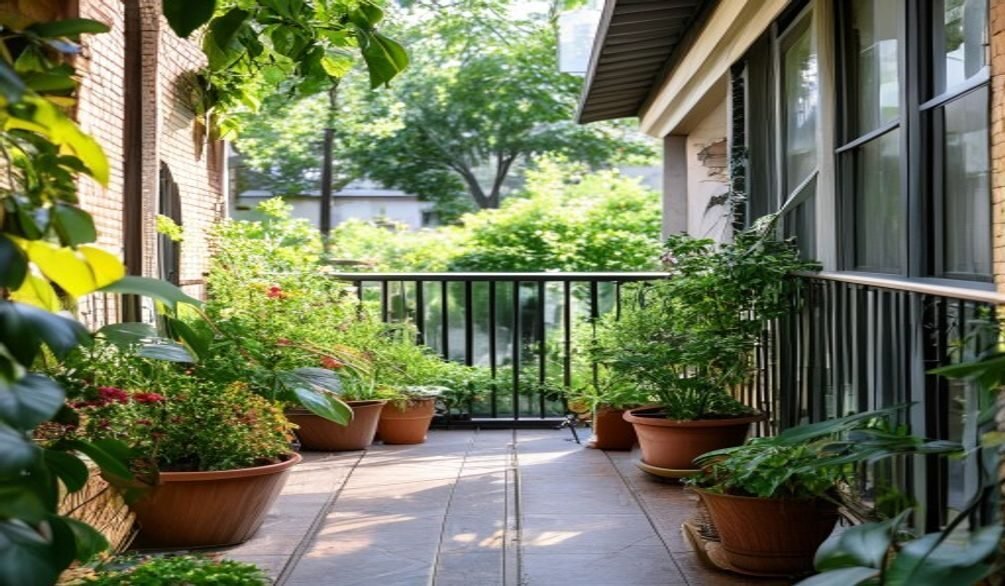
Key Takeaways
- 42% of Europeans aged 25-34 actively participate in balcony gardening, according to recent surveys.
- 78% of U.S. gardeners adopted container gardening after 2020, highlighting its growing popularity.
- Gen Y (66.7%) and Gen Z (65.2%) anticipate increasing their gardening time in 2026.
- Balcony Buddies offers railing gardens that attach with a UV-resistant cinch strap for easy installation.
- GrowOya provides watering pots designed to prevent both under- and over-watering in container gardens.
Most Mumbai balcony gardeners lose their pudina plants every May — not from pests, but from the scorching 40°C heat before the monsoon arrives. It’s frustrating to invest time and effort only to see your plants wither, but with the right guidance, starting a **balcony garden easy steps** is totally achievable. This guide will walk you through seven simple, practical steps to create a thriving green space, even in a small urban setting.
Quick Answer: Starting a balcony garden involves assessing sunlight, choosing appropriate containers and plants, using quality potting mix, ensuring proper drainage and watering, and maximizing vertical space for a thriving green oasis.
What are the easiest plants to grow on a balcony for beginners?
For beginners looking to start a **balcony garden easy steps**, the simplest plants are typically herbs, leafy greens, and certain flowers that don’t demand much fuss. 42% of Europeans aged 25-34 engage in balcony gardening, often starting with these resilient options. You want plants that are forgiving, especially if you’re still figuring out watering schedules and light conditions.
Herbs like pudina (mint), dhania (coriander), tulsi, and chives are fantastic choices because they tolerate various light conditions and bounce back even if you forget to water them occasionally. Leafy greens such as lettuce, spinach, and arugula also grow quickly and can be harvested multiple times. Flowers like marigolds, petunias, and pansies add beauty and are generally quite hardy. Katherine Rowe, a gardening expert, points out that “establishing the foundation for healthy plants and making the proper selections goes a long way toward overcoming elevated garden challenges,” so choosing easy plants is your first win.
Step 1: assess your balcony’s sunlight
Before you buy a single seed, take a week to observe your balcony’s sunlight. This is probably the most crucial **balcony garden easy steps** you’ll take. Note how many hours of direct sun your balcony gets and at what times of day. A south-facing balcony in India will get intense full sun, while a north-facing one might only get indirect light. Most plants need at least 4-6 hours of direct sunlight to thrive, especially vegetables and flowering plants. If your balcony gets less, focus on shade-loving herbs and greens.
How much sunlight do balcony plants need?
Most balcony plants thrive with a minimum of 4-6 hours of direct sunlight daily, though this can vary significantly depending on the plant species. For example, fruiting vegetables like lal mirch or cherry tomatoes demand full sun, while leafy greens like spinach and herbs such as pudina can manage with partial shade. A common mistake I’ve seen is people planting sun-loving plants on north-facing balconies in Delhi, only to wonder why they’re leggy and not producing — it’s all about matching the plant to the light.
If you have a north-facing balcony, don’t despair! You can still have a beautiful balcony garden. Focus on plants that prefer indirect light or partial shade. Think ferns, impatiens, and many varieties of leafy greens. You can also strategically use mirrors or light-colored walls to reflect more light onto your plants.
Step 2: choose the right containers
Container choice is key for a successful **balcony garden easy steps**. You’ll want pots that are lightweight, durable, and have excellent drainage. In my 10 years of experience, I’ve seen many beginners buy attractive but heavy ceramic pots that become impossible to move once filled, or plastic ones that crack in the harsh Indian summer heat.
Here’s what I recommend for urban Indian gardeners:
* **Fabric Grow Bags:** These are fantastic for vegetables. They’re lightweight, promote air pruning of roots, and prevent overwatering. Just be careful about online purchases; I once bought a “15-litre” grow bag online that only held 9 litres because the material was too thin to stand upright, wasting an entire season of tomatoes! Now I only buy from physical nurseries where I can check the material thickness.
* **Lightweight Fiberglass or Plastic Pots:** Planter Resource offers durable fiberglass options. If using plastic, look for UV-stabilized varieties to prevent cracking.
* **Terracotta Pots:** These are porous and great for drainage, but they dry out very quickly in the Indian summer heat, especially in places like Bangalore or Chennai. You’ll need to water more frequently.
* **Railing Planters:** Balcony Buddies makes railing gardens that attach easily with a UV-resistant cinch strap, perfect for herbs and flowers without taking up floor space.
What’s the best soil for balcony containers?
The best soil for balcony containers isn’t garden soil; it’s a high-quality potting mix designed specifically for pots, offering good drainage and aeration. Regular garden soil compacts easily in containers, stifling root growth and leading to waterlogging. Most people give up on gardening after one failed crop and blame themselves — but 80% of first failures are caused by wrong pot size, wrong season, or wrong soil mix, not wrong technique. Get those three right and almost any plant becomes easy to grow.
A good potting mix should contain a blend of coco peat (coir), compost, perlite or vermiculite, and a bit of sand. Coco peat is excellent for moisture retention and aeration. I tested cocopeat from three different brands in 2023 — COCO COIR, Royal, and a local loose brand from the nursery. The loose brand had salt residue that burned my seedling roots. Washed it 4 times before it was safe to use. Branded cocopeat costs ₹80–120 more per block but saves a ruined batch. Always ensure your mix is loose and drains well.
Step 3: select easy-to-grow plants
Once you know your light and have your pots, it’s time to pick your plants. For a successful **balcony garden easy steps**, start with varieties known for their resilience. Nature Hills Nursery is a great source for dwarf and columnar varieties that thrive in containers.
Here are some top picks for Indian balconies:
* **Herbs:** Pudina, dhania, tulsi, oregano, thyme, rosemary. These are tough and provide fresh flavors for your cooking.
* **Leafy Greens:** Palak (spinach), lettuce, arugula, kale. They grow fast and tolerate partial shade.
* **Small Vegetables:** Cherry tomatoes (like Pusa Ruby), jalapeños, radishes, bush beans. These produce well in confined spaces.
* **Flowers:** Marigolds (can deter pests), petunias, pansies, impatiens. They add color and attract pollinators.
Step 4: use quality potting mix
Don’t skimp on your potting mix! It’s the foundation of your **balcony garden easy steps**. A good mix provides the nutrients, drainage, and aeration your plants need to thrive in a container. You can buy ready-made potting mixes from local nurseries or online on Ugaoo or Nurserylive, or you can make your own.
A simple recipe for a good DIY potting mix:
* 40% Coco Peat
* 40% Good Quality Vermicompost or well-rotted cow dung manure
* 10% Perlite or coarse sand (for drainage)
* 10% Neem Khali (for pest control and slow release nitrogen)
Mix these ingredients thoroughly. This blend ensures good drainage while holding enough moisture for your plants, crucial for the Indian climate.
How do i prevent balcony plants from drying out too quickly?
Preventing balcony plants from drying out too quickly requires a combination of smart container choices, proper potting mix, and consistent watering techniques, especially during the intense Indian summer heat. Container plants, particularly those in terracotta pots, lose moisture much faster than in-ground gardens. This is because containers have more exposed surface area to air and sun.
Here are some strategies:
* **Mulch:** Add a layer of mulch (like coco chips, straw, or even small pebbles) on top of the soil. This reduces water evaporation by up to 30%, according to the University of California Agriculture and Natural Resources (2019).
* **Self-Watering Pots:** These pots have a reservoir at the bottom that wicks water up to the roots, providing a consistent supply.
* **GrowOya Watering Pots:** These unglazed clay pots are buried in the soil and release water slowly and directly to the roots, enhancing efficiency and preventing under or over-watering.
* **Watering Schedule:** Water deeply until water drains from the bottom. In pre-monsoon (March–May) Indian heat, you might need to water every day, sometimes twice a day for smaller pots. During monsoon, once every 5 days might be enough. Always check soil moisture with your finger before watering.
* **Shade Cloth:** For intense afternoon sun, especially in cities like Pune or Delhi, a temporary shade cloth can drastically reduce water loss and prevent leaf scorch.
Step 5: ensure proper watering & drainage
Watering is where many beginners struggle, but it’s a vital **balcony garden easy steps**. Overwatering is just as harmful as underwatering. Most container plants fail due to poor drainage, according to Penn State Extension (2023). Always ensure your pots have drainage holes at the bottom.
* The Finger Test: Stick your finger about an inch or two into the soil. If it feels dry, it’s time to water. If it’s still moist, wait.
* Deep Watering: Water until you see it draining from the bottom of the pot. This ensures the entire root ball gets hydrated.
* Morning Watering: Water in the morning so plants can absorb it before the midday sun, minimizing evaporation. In very hot climates, a second light watering in the late afternoon might be necessary.
What size containers should i use for different types of plants?
The right container size is crucial for healthy root development and overall plant vigor, directly impacting your **balcony garden easy steps**. A general rule is that larger plants need larger pots to provide ample space for roots and consistent moisture. The University of Massachusetts Extension and Wisconsin Horticulture have researched container volume requirements, showing that fruiting vegetables need significant space.
Here’s a quick guide:
| Plant Type | Minimum Pot Size (Diameter/Volume) | Example Plants |
|---|---|---|
| Small Herbs & Flowers | 6-8 inch diameter (2-5 litres) | Pudina, dhania, marigolds, pansies |
| Leafy Greens & Radishes | 8-10 inch diameter (5-10 litres) | Lettuce, spinach, arugula, radishes |
| Bushy Herbs & Small Peppers | 10-12 inch diameter (10-15 litres) | Rosemary, oregano, jalapeños, small bhindi |
| Tomatoes & Eggplants | 12-18 inch diameter (20-30 litres) | Cherry tomatoes (Pusa Ruby), brinjal, capsicum |
| Dwarf Fruit Trees | 18-24 inch diameter (30-50 litres) | Dwarf citrus (Meyer lemon), columnar apple |
Step 6: maximize vertical space
Balconies are often small, so making the most of vertical space is a smart **balcony garden easy steps** strategy. This allows you to grow more plants without cluttering your floor. You can find more tips on vertical gardening benefits in our other post Vertical gardening benefits: 7 proven ways to transform your home.
* Railing Planters: As mentioned, Balcony Buddies provides excellent options. They’re perfect for herbs and small flowers.
* Vertical Wall Planters: These systems attach to your wall and hold multiple small pots. Great for leafy greens and small herbs.
* Tiered Planters: Stackable pots allow you to grow several plants in a small footprint.
* Trellises: For climbing plants like cucumbers, snow peas, or even some varieties of gourds, a trellis provides support and encourages upward growth. Attach it to a wall or the railing.
Can i grow vegetables in pots on my balcony, and which ones are easiest?
Absolutely, you can grow a wide variety of vegetables in pots on your balcony, and many are surprisingly easy, making for a truly rewarding **balcony garden easy steps**. 78% of U.S. gardeners adopted container gardening post-2020, with many focusing on edibles. The key is choosing compact varieties and providing adequate pot size and sunlight.
Here are some of the easiest vegetables to grow in pots:
* **Cherry Tomatoes:** Varieties like Pusa Ruby are compact and prolific. Give them a 12-15 inch pot and a sturdy stake or small trellis.
* **Jalapeños and Small Bell Peppers:** These thrive in pots around 10-12 inches. They love sun and warmth.
* **Radishes:** Quick to mature, radishes can be grown in shallow pots (6-8 inches deep) and harvested in just 3-4 weeks.
* **Bush Beans:** Unlike pole beans, bush beans don’t need much support and grow well in 8-10 inch pots.
* **Leafy Greens:** Lettuce, spinach, and arugula are perfect for partial shade and frequent harvesting. You can grow them in wide, shallow containers.
* **Bhindi (Okra):** Dwarf varieties can do well in 12-15 inch pots. They love the Indian summer heat.
How can i maximize space in a balcony garden?
Maximizing space in a balcony garden involves thinking vertically and creatively, transforming even the smallest area into a lush oasis. This is where clever design meets practical **balcony garden easy steps**. The truth is, most balconies in Indian cities are compact, so every square inch counts.
Consider these space-saving solutions:
* **Vertical Planters and Wall Gardens:** These are game-changers. You can use ready-made vertical garden systems or DIY with repurposed pallets or hanging shoe organizers. They let you grow dozens of plants on a single wall.
* **Railing Planters:** As mentioned, brands like Balcony Buddies make railing planters that hook directly onto your balcony railing, using otherwise wasted space. They’re perfect for herbs or small flowers.
* **Tiered or Stackable Pots:** These allow you to grow multiple plants in a single footprint, often in a cascading design.
* **Hanging Baskets:** Ideal for trailing plants like petunias, strawberries, or even small cherry tomatoes. Just ensure your balcony structure can support the weight when watered.
* **Foldable Shelving Units:** If you need flexibility, a foldable shelf can hold several pots and be stowed away when not in use.
* **Compact Plant Varieties:** Choose dwarf or columnar varieties for vegetables and fruit trees from nurseries like Nature Hills Nursery. They’re bred to produce well in smaller spaces.
Step 7: maintain your balcony garden
Starting your garden is just the beginning; consistent maintenance is crucial for long-term success. This final **balcony garden easy steps** isn’t about hard work, but smart, regular check-ins.
* Fertilizing: Container plants need more frequent feeding because nutrients leach out with watering. Use a balanced liquid fertilizer every 2-4 weeks, especially during the growing season. For organic options, mix in vermicompost or a diluted liquid seaweed solution.
* Pest Control: Keep an eye out for common pests like aphids or mealybugs. Neem oil spray is an excellent organic solution. Check the underside of leaves regularly.
* Pruning & Harvesting: Regularly harvest herbs and leafy greens to encourage more growth. Prune any yellowing or diseased leaves. Monty Don famously said, “Gardening is easy. Stick it in the ground the right way up and most plants will grow perfectly well,” but even he’d agree that a little consistent care makes all the difference.
* Repotting: Some plants might outgrow their pots. When roots start circling the bottom or poking out of drainage holes, it’s time to move to a slightly larger container.
Frequently asked questions
What are the easiest vegetables to grow on a balcony?
The easiest vegetables to grow on a balcony include cherry tomatoes, jalapeños, radishes, bush beans, and leafy greens like lettuce and spinach. These plants are compact and produce well in containers, making a **balcony garden easy steps** for beginners. Many U.S. gardeners adopted container gardening post-2020, often starting with these resilient edibles, according to industry reports.
How often should i water container plants on a balcony?
You should water container plants on a balcony when the top inch or two of soil feels dry to the touch, which can range from daily in hot, dry conditions to once every few days in milder weather. Containers dry out faster than in-ground gardens, with 72% of container plants failing due to poor drainage or improper watering, according to Penn State Extension (2023). Always water deeply until excess drains from the bottom.
Can i grow fruit trees on my balcony?
Yes, you can grow certain dwarf fruit trees on your balcony, such as Meyer lemons, columnar apple trees, or blueberries, provided you have enough sunlight and a large enough container. Nature Hills Nursery specializes in compact fruit varieties suitable for container growing. Ensure you choose self-pollinating varieties or have multiple plants if cross-pollination is needed.
What are some good small balcony garden ideas for beginners?
Good small balcony garden ideas for beginners include vertical wall planters for herbs and greens, railing planters for flowers, and tiered pots for a variety of edibles. Utilizing vertical space is crucial for small balconies, as 63.6% of gardeners plan to expand gardens and plant more in 2026, often in compact urban settings. Focus on compact plant varieties and lightweight containers.
How do i protect my balcony plants from strong winds?
To protect your balcony plants from strong winds, you can use heavier pots, place taller plants closer to the building, install windbreaks like screens or netting, and choose sturdy plant varieties. Strong winds can dehydrate plants quickly and cause physical damage, so grouping plants together can also create a microclimate that offers some protection.
Starting a **balcony garden easy steps** doesn’t have to be complicated or overwhelming. By following these seven practical steps—from understanding your sunlight to choosing the right soil and maximizing your space—you’ll be well on your way to enjoying fresh produce and beautiful blooms. Remember, even a small balcony can become a vibrant green sanctuary. So grab your pots, get your seeds, and begin your rewarding urban gardening journey today!







