Key Takeaways
- Watering deeply and infrequently encourages robust root growth, essential for plant resilience, according to the U.S. Environmental Protection Agency (EPA) (2026).
- Early morning watering minimizes evaporation and reduces disease risk by allowing foliage to dry before nightfall, states the U.S. Environmental Protection Agency (EPA) WaterSense program (2026).
- Mulch significantly reduces water evaporation from soil by up to 70%, conserving moisture and stabilizing soil temperature, according to numerous horticultural studies (2023).
- A WaterSense-certified smart controller can save the average home about 7,600 gallons of water per year by automatically adjusting watering schedules, according to the U.S. Environmental Protection Agency (EPA) (2026).
- In 2023, over 60,000 farms in the US adopted water-saving drip or micro-flow irrigation, showcasing a growing trend towards efficient watering, according to USDA records and The Packer’s 2025 Grower Sustainability Insights (2026).
Are you tired of guessing how much water your garden needs, or seeing your plants struggle despite your best efforts? Mastering basic garden watering techniques is fundamental to a thriving garden, ensuring your plants receive the precise hydration they require to flourish. In my 10 years of experience as a gardening expert, I’ve seen firsthand how proper watering can transform a struggling plot into a vibrant oasis, and this guide will walk you through the essential steps to achieve just that.
Quick Answer: Water deeply and infrequently in the early morning, checking soil moisture first. Use mulch for retention and targeted methods like drip irrigation. Adapt to plant needs and local conditions for healthy root growth and water conservation.
Why Are Basic Garden Watering Techniques So Important?
Mastering basic garden watering techniques is crucial because it directly impacts plant health, water conservation, and overall garden success. Without proper watering, plants can suffer from stunted growth, disease, or even death, making efficient water use a cornerstone of sustainable gardening. According to the U.S. Environmental Protection Agency (EPA) WaterSense program, proper watering can significantly reduce water waste while maintaining lush landscapes (2026).
Effective watering practices encourage plants to develop strong, deep root systems, which are more resilient to drought and disease. When you apply water correctly, you ensure moisture penetrates the soil deeply, reaching the entire root zone rather than just the surface. This approach is central to developing robust plants that truly thrive.
Efficient water use also translates to significant environmental benefits.
By understanding and implementing smart basic garden watering techniques, gardeners can reduce their water footprint, especially in regions prone to water scarcity. This responsible approach supports local ecosystems and conserves a vital natural resource.
Choosing the right basic garden watering techniques also prevents common issues like soil erosion and nutrient runoff. Overwatering or improper application can wash away valuable topsoil and essential nutrients, harming both your garden and the surrounding environment. Thoughtful watering protects your soil structure and keeps nutrients where they belong.
When is the Best Time to Water Your Garden?
The best time to water your garden is typically in the early morning, between 6:00 AM and 10:00 AM, to maximize absorption and minimize water loss to evaporation. Watering at this time ensures foliage has ample opportunity to dry before nightfall, significantly preventing plant diseases, according to the U.S. Environmental Protection Agency (EPA) WaterSense program (2026). This precise timing is one of the most fundamental basic garden watering techniques.
Watering in the morning capitalizes on cooler temperatures and calmer winds, allowing water to soak deeply into the soil before the sun’s intensity increases. This approach maximizes the amount of moisture that reaches the roots. In contrast, midday watering can lead to up to 50% of water being lost to evaporation before it benefits your plants, making it a less efficient strategy.
Avoid watering in the evening if possible.
While evening watering can reduce evaporation, it leaves plant foliage wet overnight, creating an ideal environment for fungal diseases to develop. This is a critical consideration in basic garden watering techniques to maintain plant health.
For gardeners with busy schedules, smart irrigation systems like the Orbit B-hyve Smart Hose Timer can be programmed to water during these optimal morning hours. These devices automatically adjust schedules based on local weather forecasts, ensuring your plants get water when they need it most without you having to be physically present. This is a smart way to implement effective basic garden watering techniques.
How Much Water Do Your Plants Really Need?
Your plants truly need deep, infrequent watering that moistens the soil to a depth of 6-8 inches, encouraging a robust root system rather than shallow, surface roots. This method is far more effective than frequent, light sprinkles, which promote weak root growth and make plants more susceptible to stress. Most established lawns, for example, require only 1 to 1.5 inches of water per week, including rainfall, according to the U.S. Environmental Protection Agency (EPA) (2026).
To determine if your plants need water, always check the soil moisture first. My preferred method is the “finger test”: stick your finger about 2-3 inches into the soil near the plant’s base. If it feels dry at that depth, it’s time to water. If it still feels moist, hold off for another day or two.
Overwatering is just as detrimental as underwatering.
Soggy soil deprives roots of oxygen, leading to root rot and other serious plant diseases. Understanding this balance is a core principle of effective basic garden watering techniques.
Different plant types and growth stages have varying water requirements. For instance, newly planted seedlings and young plants need more consistent moisture to establish their roots, while mature, established plants can tolerate longer periods between waterings. Always observe your plants for signs of stress, such as wilting, which can indicate a need for water.
Here’s a quick guide to general watering needs:
- Vegetables: Most vegetables require consistently moist soil, especially during flowering and fruiting. Aim for 1 inch of water per week, adjusting for hot weather.
- Perennials: Once established, many perennials are quite drought-tolerant and need less frequent watering, perhaps once a week during dry spells.
- Trees and Shrubs: Young trees and shrubs need deep watering once or twice a week for their first few years to establish a strong root system. Established trees typically need less supplemental watering.
- Container Plants: These dry out much faster than in-ground plants and often require daily watering, especially in warm weather.
What Are the Most Effective Garden Watering Methods?
The most effective basic garden watering techniques focus on delivering water directly to the plant’s root zone while minimizing waste and evaporation. Targeted methods like drip irrigation and soaker hoses are highly efficient, ensuring water penetrates deeply without wetting foliage unnecessarily. In 2023, over 60,000 farms in the US utilized water-saving irrigation systems such as drip or micro-flow sprinklers, covering 6.43 million acres, demonstrating the widespread adoption of efficient basic garden watering techniques, according to USDA records and The Packer’s 2025 Grower Sustainability Insights (2026).
Step 1: Assess Soil Moisture Levels
Before you water, always check the soil moisture to prevent overwatering or underwatering. This step is critical because it ensures you only apply water when truly needed, conserving resources and preventing root issues. Use the “finger test” or a moisture meter to assess the soil’s dryness 2-3 inches deep.
Step 2: Choose the Right Watering Time
Water in the early morning to reduce evaporation and disease risk. This timing allows plants to absorb water before the heat of the day and ensures foliage dries quickly, a key aspect of successful basic garden watering techniques. Avoid midday watering, which leads to significant water loss.
Step 3: Water Deeply and Infrequently
Apply water slowly and thoroughly, aiming to moisten the soil to a depth of 6-8 inches. Deep watering encourages roots to grow downwards, making plants more resilient to dry periods. Infrequent watering, spaced out every few days, prevents shallow root development and conserves water.
Step 4: Select the Best Watering Method
Choose a watering method that delivers water efficiently and precisely to the roots. Different methods suit different garden types and plant needs, making the right selection an important part of basic garden watering techniques.
Here’s a comparison of common watering methods:
| Method | Description | Pros | Cons | Best For |
|---|---|---|---|---|
| Drip Irrigation | System of tubes with emitters delivering water directly to plant bases. | Highly efficient (90% water use), reduces disease, saves time. | Higher initial setup cost, can clog, less flexible. | Vegetable rows, permanent beds, shrubs, trees. |
| Soaker Hoses | Porous hose that “sweats” water along its length. | Good efficiency, easy to install, inexpensive. | Can clog, less precise than drip, not ideal for widely spaced plants. | Dense plantings, hedges, vegetable rows. |
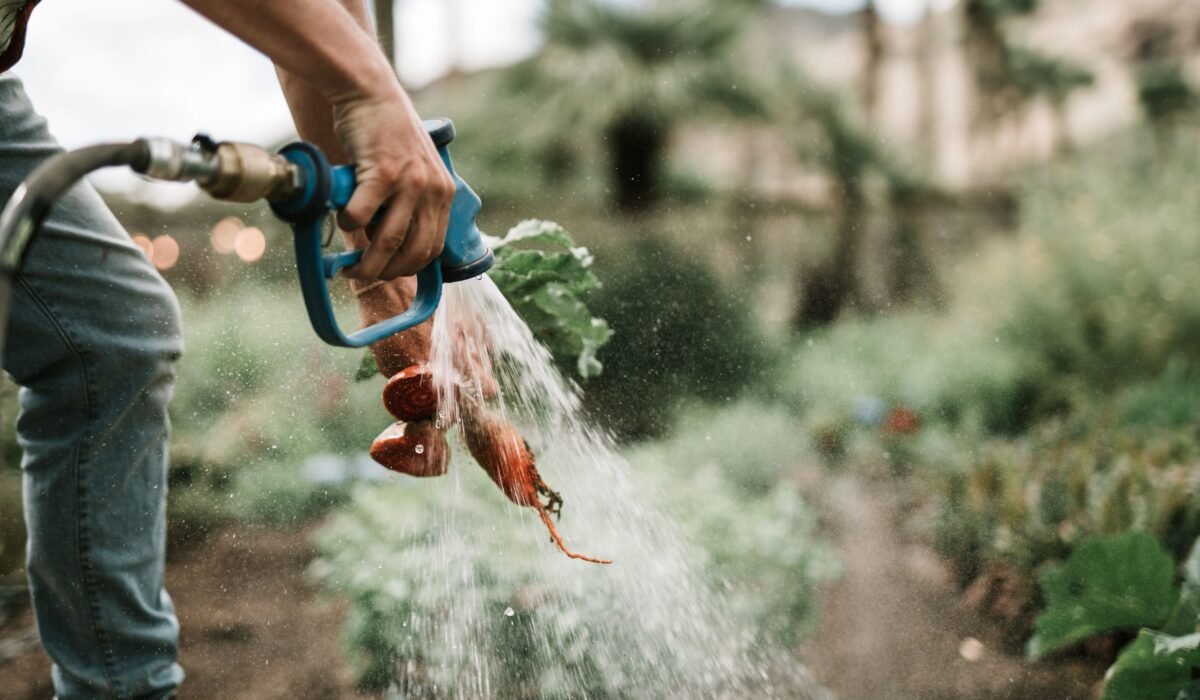
| Hand Watering | Using a watering can or hose with a nozzle (e.g., Dramm). | Precise, allows observation, good for small gardens or containers. | Time-consuming, prone to uneven watering, requires attention. | Container plants, new seedlings, small garden beds, mindful gardening. |
| Sprinklers (Oscillating/Rotary) | Broadcasts water over a wide area. | Covers large areas quickly, good for lawns. | High evaporation, wets foliage (disease risk), less efficient for plants. | Lawns, large open areas (e.g., Melnor XT Turbo Oscillating Sprinkler). |
Gardening expert Bunting, quoted in CNET (2025), recommends rainwater or hand-watering over sprinklers for garden beds, noting that sprinkler systems often lead to uneven watering. For hand watering, tools like Dramm watering wands and nozzles are excellent choices, known for their durability and gentle water dispersion, which is ideal for delicate plants. Using a quality hose like the Flexzilla Garden Hose can make hand watering easier due to its lightweight and kink-free design.
Step 5: Mulch for Moisture Retention
Apply a 2-4 inch layer of organic mulch around your plants, keeping it a few inches away from stems. Mulching is one of the simplest yet most effective basic garden watering techniques, significantly reducing water evaporation from the soil surface. This also suppresses weeds, which compete for moisture.
Step 6: Adapt to Plant Needs
Recognize that different plants have varying water requirements based on their species, age, and location. Tailoring your watering schedule is key to successful basic garden watering techniques. For example, a newly planted tomato will need more consistent moisture than an established drought-tolerant succulent.
Step 7: Monitor and Adjust
Continuously observe your plants and adjust your watering schedule as needed based on weather conditions, plant growth, and soil type. This ongoing monitoring ensures your basic garden watering techniques remain effective and responsive to your garden’s evolving needs. Hot, windy days will increase water demand, while cool, cloudy periods will reduce it.
How Do You Adapt Watering for Different Plants & Conditions?
Adapting your basic garden watering techniques for different plants and conditions is essential because a one-size-fits-all approach rarely works for a diverse garden. You need to consider factors like plant age, container size, soil type, and local climate to ensure each plant receives optimal hydration. This adaptive strategy is crucial for truly effective basic garden watering techniques.
Watering New Plants vs. Established Plants
New plants, including seedlings and recently transplanted specimens, require more frequent and consistent watering than established plants. Their root systems are still developing and cannot reach deep into the soil for moisture. For the first few weeks, keep the soil consistently moist but not waterlogged. Established plants, on the other hand, benefit from deeper, less frequent watering that encourages their roots to grow further down, making them more resilient to dry spells. This distinction is vital for successful basic garden watering techniques.
Container plants dry out significantly faster than in-ground plants.
Their limited soil volume and exposure to air mean they often need daily watering, especially during hot, windy weather. Ensure containers have good drainage to prevent root rot.
Adapting to Soil Types
Soil type profoundly influences how often you need to apply basic garden watering techniques. Sandy soils drain quickly, requiring more frequent, lighter waterings. Clay soils, conversely, retain water longer and need less frequent, but very deep, waterings to allow moisture to penetrate. Loamy soils, a balanced mix, offer good drainage and water retention, making them generally easier to manage. Incorporating organic matter can improve both sandy and clay soils’ water-holding capacity.
Watering in Hot Weather and Drought Conditions
During hot weather or drought conditions, your basic garden watering techniques must become more vigilant. Increase watering frequency for most plants, and always water deeply in the early morning. Consider using Treegator Tree Watering Bags for young trees, which provide a slow, steady release of water directly to the root zone. The South Florida Water Management District rescinded a Water Shortage Warning in June 2026 due to recent rainfall and conservation efforts, highlighting the impact of water management and environmental factors, according to the SFWMD (2026). This demonstrates the need for adaptable basic garden watering techniques.
Troubleshooting Common Garden Watering Problems
Troubleshooting common garden watering problems involves accurately diagnosing issues like wilting, yellowing leaves, or stunted growth, which can stem from either overwatering or underwatering. Understanding these signs is paramount to applying effective basic garden watering techniques and saving your plants. My years of gardening have taught me that quick identification and adjustment are key.
Signs of Overwatering vs. Underwatering Plants
Distinguishing between overwatering and underwatering is crucial for proper basic garden watering techniques.
* Overwatering signs: Yellowing leaves, wilting despite moist soil, soft or mushy stems, stunted growth, and visible mold or algae on the soil surface. The soil often smells foul due to lack of oxygen.
* Underwatering signs: Wilting leaves that feel dry and crispy, stunted growth, brown leaf edges, and very dry, cracked soil. Plants may look dull and lifeless.
The easiest way to tell the difference is to check the soil moisture. If the soil is wet and your plant is wilting, it’s likely overwatering. If the soil is bone dry, it’s underwatering.
If you suspect overwatering, stop watering immediately and allow the soil to dry out.
For container plants, ensure drainage holes are clear and consider repotting with fresh, well-draining soil if root rot is severe. This intervention is a critical aspect of basic garden watering techniques.
Fixing Uneven Watering
Uneven watering often occurs with overhead sprinklers or inconsistent hand watering. Some plants get too much, others not enough. To fix this, consider switching to targeted basic garden watering techniques like drip irrigation or soaker hoses, which deliver water uniformly to specific areas. If hand watering, ensure you spend enough time at the base of each plant to allow water to penetrate deeply. Tools like the Dramm watering wand help distribute water gently and evenly.
Dealing with Water Runoff
Water runoff occurs when water is applied too quickly for the soil to absorb, leading to waste and potential erosion. To combat this, apply water slowly and deeply, allowing it to soak in gradually. For compacted soils, consider aerating or incorporating organic matter to improve absorption. Creating small soil berms around plants can also help contain water, guiding it towards the roots. These strategies are essential for efficient basic garden watering techniques.
Smart & Sustainable Watering: Beyond the Basics
Smart and sustainable basic garden watering techniques go beyond simple hand watering by integrating technology and eco-friendly practices to conserve water and optimize plant health. These advanced approaches are becoming increasingly necessary due to ongoing water scarcity, as highlighted by Melissa Lilze, Senior Vice President of Netafim North America (2026), who notes that smart water management is now “more of a necessity.”
Utilizing Smart Irrigation Systems
Smart irrigation systems, such as the Orbit B-hyve Smart Hose Timer, take the guesswork out of watering by automatically adjusting schedules based on real-time weather data, soil moisture levels, and plant-specific needs. These systems can connect to your smartphone, allowing you to control and monitor your garden’s watering from anywhere. A WaterSense-certified smart controller can save the average home about 7,600 gallons of water per year, according to the U.S. Environmental Protection Agency (EPA) (2026). This technology is a game-changer for efficient basic garden watering techniques.
Smart controllers prevent overwatering and underwatering by only irrigating when necessary.
They are an excellent investment for gardeners looking to optimize their basic garden watering techniques and significantly reduce water consumption. Brands like Rachio and RainMachine also offer robust smart irrigation solutions.
Rainwater Harvesting for Garden Irrigation
Rainwater harvesting is an excellent sustainable practice for garden irrigation, collecting precipitation in barrels or cisterns for later use. This not only conserves municipal water but also provides plants with chlorine-free water, which many prefer. Setting up a basic rain barrel system is a simple DIY project that can greatly enhance your sustainable basic garden watering techniques.
Greywater Use for Gardens
Greywater, which is gently used water from sinks, showers, and laundry, can be safely repurposed for landscape irrigation in many areas. While requiring careful planning and adherence to local regulations, greywater systems can dramatically reduce a household’s outdoor water consumption. Always research local codes before implementing a greywater system to ensure safe and compliant basic garden watering techniques.
Embracing the Zen of Garden Watering
Embracing the Zen of garden watering transforms the chore of hydration into a mindful, meditative practice, connecting you more deeply with your plants and the natural world. This approach, championed by Dr. Matthew M. Cohen, author of “Zen of Watering Your Garden” (2014), highlights the therapeutic benefits of engaging directly with your garden through basic garden watering techniques.
When you hand water, you’re not just delivering moisture; you’re observing your plants up close, noticing new growth, subtle changes in leaf color, or the presence of pests. This focused attention allows you to respond more intuitively to your garden’s needs, fostering a profound sense of connection and care. It’s a moment of quiet reflection amidst a busy day.
Dr. Matthew M. Cohen eloquently captures this sentiment:
“Hand-watering plants in your garden with Mother Nature’s support will take you on journeys to her special beauties. And to take you to sense your inner beauty — heart, mind and soul. Keep that passion for watering.” This philosophy elevates basic garden watering techniques beyond mere mechanics.
Taking the time to mindfully water, perhaps with a high-quality Dramm watering wand that provides a gentle shower, can be incredibly grounding. It’s an opportunity to slow down, breathe, and appreciate the living beauty you are cultivating. This mindful approach to basic garden watering techniques not only benefits your plants but also nurtures your own well-being. From my own experience, these quiet moments in the garden are often the most rewarding.
Frequently Asked Questions
What are the basic watering techniques for plants?
The basic watering techniques for plants involve watering deeply and infrequently in the early morning, checking soil moisture first. This encourages strong root growth and minimizes water loss to evaporation, according to the U.S. Environmental Protection Agency (EPA) (2026). Always tailor your approach to the specific needs of your plants and local environmental conditions.
What are the 3 main ways to water plants?
The three main ways to water plants are hand watering, using drip irrigation or soaker hoses, and employing overhead sprinklers. Hand watering offers precision for small areas, drip irrigation is highly efficient for targeted delivery, and sprinklers cover large areas but can be less efficient for garden beds. Choosing the right method depends on your garden’s layout and plant types.
What are the 4 types of watering?
The four primary types of watering in gardening are surface watering (like hand watering or sprinklers), subsurface watering (drip irrigation, soaker hoses), container watering, and passive watering (rainwater harvesting, wicking beds). Each method has distinct advantages for different gardening scenarios, from precise hydration to large-scale efficiency. For instance, subsurface methods significantly reduce water waste.
What is the best way to water a garden?
The best way to water a garden is through deep, infrequent application directly to the root zone, ideally in the early morning, using methods like drip irrigation or soaker hoses. This approach minimizes evaporation and encourages deep root development, making plants more resilient, according to the U.S. Environmental Protection Agency (EPA) WaterSense program (2026). Always check soil moisture before watering to avoid overwatering.
How often should I water my vegetable garden?
You should water your vegetable garden when the top 2-3 inches of soil feel dry, typically every 2-4 days depending on weather and soil type. Most vegetables require about 1 inch of water per week, especially during fruiting, as consistent moisture is vital for healthy yields, according to the University of Minnesota Extension (2020). Adjust frequency for hot, windy conditions or recent rainfall.
Mastering basic garden watering techniques is truly a foundational skill for any gardener, transforming your approach from guesswork to precision. By consistently applying these 7 essential steps, you’ll not only conserve precious water but also cultivate a thriving, resilient garden that brings joy and abundance. So, grab your watering wand, observe your plants, and embrace the rewarding journey of mindful and effective garden watering.