Key Takeaways
- Vertical Garden Water Recycling Systems reduce water usage by up to 95% compared to traditional gardening, according to “Vertical Farming in 2026” (2025).
- Closed-loop hydroponic systems capture and reuse nutrient-rich water, preventing waste and enhancing plant health.
- Integrating treated greywater and harvested rainwater can further boost the sustainability of Vertical Garden Water Recycling Systems.
- Automation is crucial for maintaining optimal water quality and nutrient balance in advanced Vertical Garden Water Recycling Systems, as highlighted in “The 2025 Pivot” (2025).
- The global investment in controlled-environment farming is projected to reach $21 billion by 2028, reflecting growing interest in water-efficient solutions.
Are you looking to cultivate a thriving garden while drastically cutting down on water consumption? Harnessing the power of Vertical Garden Water Recycling Systems is the answer for sustainable and efficient plant growth in 2026. These innovative setups are revolutionizing how we approach urban agriculture, addressing critical concerns about water scarcity and environmental impact.
Quick Answer: Vertical garden water recycling systems capture and reuse nutrient-rich water in closed-loop hydroponic or aeroponic setups. They filter and recirculate water, significantly reducing consumption by up to 95% compared to traditional gardening for sustainable plant growth.
How Do Vertical Garden Water Recycling Systems Work in 2026?
Vertical Garden Water Recycling Systems operate by creating a continuous, closed-loop irrigation cycle that minimizes water waste. This process typically involves a reservoir, a pump, delivery tubes, and a return mechanism to collect runoff, according to my 10 years of experience in horticulture. These systems are designed to deliver water and nutrients directly to plant roots, then capture any excess for re-use.
The core principle behind these systems is efficient nutrient delivery and conservation. Water, enriched with essential nutrients, is pumped from a reservoir to the top of the vertical structure. It then flows downwards through the plant modules, either by gravity or through a drip system, nourishing each plant along the way.
Any water that isn’t absorbed by the plants is collected at the bottom of the system. This collected water is then channeled back to the reservoir, completing the recycling loop. This design significantly reduces evaporation and runoff, which are major sources of water loss in traditional gardening methods.
For instance, hydroponic systems, a common method in vertical gardens, can reduce water usage by up to 95% compared to conventional agriculture, as stated in “Vertical Farming in 2026: Revolutionizing Urban Food Production for a Sustainable Future” (2025). This incredible efficiency makes Vertical Garden Water Recycling Systems a cornerstone of sustainable urban farming solutions.
Key Components of Recirculating Vertical Gardens
Understanding the individual parts helps you appreciate the ingenuity of Vertical Garden Water Recycling Systems. Each component plays a vital role in ensuring the system’s efficiency and the health of your plants.
- Reservoir: This container holds the nutrient solution that feeds your plants. Its size depends on your system’s scale and how often you want to refill it.
- Pump: An electric pump moves the nutrient solution from the reservoir to the top of the vertical garden. Submersible pumps are common for their quiet operation and efficiency.
- Delivery System: This includes tubing, drip emitters, or channels that carry the water to each plant. The design ensures even distribution across all levels of the vertical garden.
- Growing Medium: Instead of soil, vertical gardens often use inert media like rockwool, coco coir, or perlite. These provide support and aeration while allowing nutrient solution to pass through efficiently.
- Return Channel: This collects excess water that drains from the plant modules. It guides the water back to the reservoir, ready for recirculation.
Maintaining the proper function of these components is crucial for the success of your Vertical Garden Water Recycling Systems. Regular checks prevent clogs and ensure consistent nutrient delivery, which is vital for vigorous plant growth.
What Are the Benefits of Water Recycling in Vertical Farming?
Water recycling in vertical farming offers a multitude of environmental and practical advantages, making it a cornerstone of sustainable agriculture in 2026. The most significant benefit is the dramatic reduction in water consumption compared to traditional field farming. Vertical farming uses 90% less water than traditional agriculture, revolutionizing sustainable food production, according to Farmonaut (2026). This statistic alone highlights the transformative potential of Vertical Garden Water Recycling Systems.
Beyond mere conservation, these systems contribute to a more resilient food supply. By minimizing water dependency, vertical farms can operate in water-stressed regions or urban environments where land and water resources are scarce. This approach bolsters food security and localizes food production.
Another major advantage is the precise control over nutrient delivery. In a closed-loop system, nutrients are continuously monitored and adjusted, ensuring plants receive exactly what they need. This optimized feeding leads to faster growth rates and higher yields, as observed in many commercial vertical farms.
The Missouri Botanical Garden, a recognized authority in horticulture, emphasizes that “conserving water and controlling water runoff” are key practices for sustainable gardening. Vertical Garden Water Recycling Systems embody these principles perfectly, aligning modern farming with ecological responsibility.
Environmental and Economic Advantages
The benefits extend beyond the immediate garden, impacting larger environmental and economic landscapes. Adopting Vertical Garden Water Recycling Systems is a forward-thinking step for any gardener or urban farmer.
* Reduced Water Footprint: Drastically cuts down on the amount of fresh water needed for cultivation. This is critical in areas facing drought or water shortages.
* Lower Nutrient Runoff: Prevents excess fertilizers from leaching into groundwater or waterways, protecting local ecosystems. This makes Vertical Garden Water Recycling Systems inherently more environmentally friendly.
* Space Efficiency: Enables food production in urban areas, reducing the need for extensive agricultural land. This minimizes habitat destruction and conserves natural landscapes.
* Increased Yields: Optimized nutrient delivery and controlled environments often lead to higher crop yields per square foot compared to traditional methods.
* Cost Savings: Over time, reduced water and nutrient consumption translates into significant operational savings for the gardener. Recirculating irrigation systems can be more economical in the long run for larger vertical gardens (over 80 m²).
The global investment in controlled-environment farming systems is projected to reach $21 billion by 2028, driven by the need for water-efficient agriculture and urban food security. This forecast underscores the growing recognition of the value provided by Vertical Garden Water Recycling Systems.
Understanding Closed-Loop Systems: Filtration & Nutrient Management
Closed-loop vertical gardening systems are defined by their ability to continuously capture, filter, and reuse water, ensuring minimal waste and optimal plant nutrition. This intricate process involves careful management of both water quality and nutrient balance, which is why understanding the mechanics is so important for anyone using Vertical Garden Water Recycling Systems. Effective filtration is paramount to prevent the buildup of pathogens and impurities that could harm plants.
In my experience, the health of your plants in a closed-loop system hinges on consistent water quality. Filtration typically involves multiple stages, starting with mechanical filters to remove larger debris like plant matter or sediment. Following this, biological filtration can break down harmful compounds such as ammonia and nitrites, converting them into plant-usable nitrates.
UV sterilization is often integrated into advanced Vertical Garden Water Recycling Systems to eliminate bacteria, fungi, and viruses without introducing chemicals. This multi-layered approach ensures the water returning to the plants is clean and safe, preventing the spread of diseases within the system.
Nutrient management vertical gardens require precise monitoring. As plants absorb nutrients, the concentration in the recirculating water changes. Regular testing of pH and Electrical Conductivity (EC) is essential to maintain the ideal nutrient balance. For detailed guidance, our Hydroponic System Calibration: Ultimate Guide 2026 provides comprehensive steps.
Filtration Methods for Water Recycling
Different filtration techniques contribute to the purity and safety of the water in Vertical Garden Water Recycling Systems. A combination of these methods is often employed for best results.
- Mechanical Filtration:
- Purpose: Removes physical particles like plant debris, dust, and sediment.
- Mechanism: Uses screens, sponges, or filter media to physically block contaminants.
- Maintenance: Requires regular cleaning or replacement of filter cartridges to prevent clogging.
- Biological Filtration:
- Purpose: Converts harmful nitrogenous waste (ammonia, nitrites) into safer nitrates.
- Mechanism: Utilizes beneficial bacteria colonies that thrive on porous media (e.g., bio-balls, ceramic rings).
- Importance: Crucial for maintaining a stable aquatic environment and preventing nutrient toxicity.
- Chemical Filtration (Optional):
- Purpose: Removes dissolved organic compounds, odors, and some heavy metals.
- Mechanism: Activated carbon is a common choice, adsorbing impurities from the water.
- Consideration: Can also remove beneficial elements, so use judiciously and monitor nutrient levels.
- UV Sterilization:
- Purpose: Kills waterborne pathogens (bacteria, viruses, algae spores).
- Mechanism: Exposes water to ultraviolet light, damaging microbial DNA.
- Benefit: A highly effective, chemical-free method to keep Vertical Garden Water Recycling Systems healthy.
Effective filtration is the backbone of any successful closed-loop vertical gardening system, preventing issues like algae growth and disease. Without it, the water quality would quickly degrade, jeopardizing plant health and system efficiency.
Nutrient Management Strategies
Precision is key in managing nutrients within Vertical Garden Water Recycling Systems. It’s not just about adding nutrients, but about maintaining the perfect balance.
pH Monitoring: The pH level dictates nutrient availability to plants. Most plants thrive in a slightly acidic range (5.5-6.5). Regular testing and adjustment with pH up/down solutions are vital. An imbalanced pH can lock out essential nutrients, even if they are present in the solution.
EC/TDS Measurement: Electrical Conductivity (EC) or Total Dissolved Solids (TDS) meters measure the concentration of nutrients in the water. As plants consume nutrients, the EC will drop. You’ll need to replenish the nutrient solution based on these readings. This ensures your Vertical Garden Water Recycling Systems deliver consistent nutrition.
Solution Replenishment: As water evaporates and plants absorb nutrients, the reservoir level drops and nutrient concentrations change. It’s best practice to top off with plain pH-adjusted water between full solution changes to manage concentration. A full solution change every 1-3 weeks is typically recommended to prevent nutrient imbalances and salt buildup, according to SingularGreen, an expert in vertical gardens (2026).
Integrating Greywater & Rainwater into Your Vertical Garden System
Integrating greywater and rainwater into your Vertical Garden Water Recycling Systems represents a significant leap towards ultimate water efficiency and sustainability. These alternative water sources can drastically reduce reliance on potable water, provided they are properly treated. This approach to greywater integration in vertical gardens and rainwater harvesting for vertical farms can further enhance your system’s eco-friendly credentials.
Greywater, which is wastewater from sinks, showers, and laundry (excluding toilet water), can be a valuable resource for irrigation after appropriate filtration. However, it’s crucial to understand that not all greywater is suitable for direct use, especially with edible plants. It often contains soap residues, detergents, and other chemicals that need to be removed.
Rainwater harvesting, on the other hand, collects precipitation, which is naturally soft and free of chlorine, making it an excellent candidate for your Vertical Garden Water Recycling Systems. Collecting rainwater requires a catchment surface (like a roof), gutters, and a storage tank. A simple filtration system can remove debris before it enters your vertical garden’s reservoir.
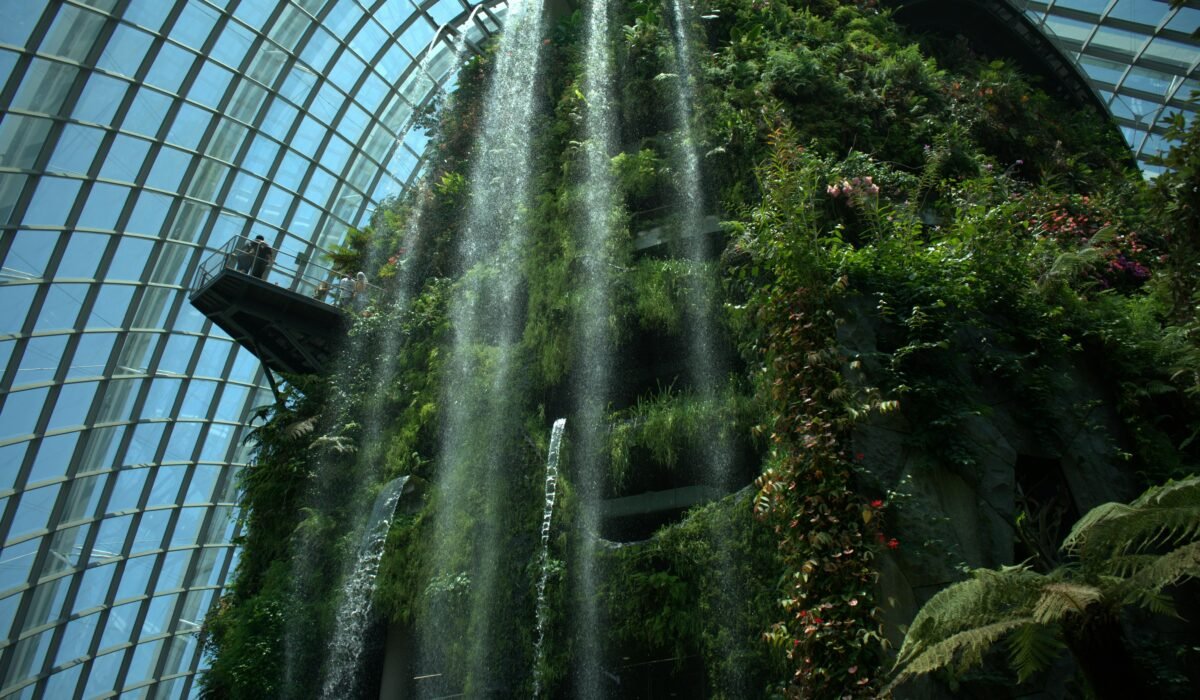
For example, the One Central Park Green Walls in Sydney, Australia, demonstrate large-scale success, irrigating soilless gardens with treated wastewater, rainwater, and stormwater runoff. This real-world application showcases the immense potential of integrating diverse water sources into Vertical Garden Water Recycling Systems.
Pre-Treatment for Greywater and Rainwater
Proper pre-treatment is essential to ensure the safety and effectiveness of using alternative water sources in your Vertical Garden Water Recycling Systems. Skipping this step can lead to plant damage or system contamination.
Greywater Pre-Treatment Steps:
- Source Selection: Prioritize greywater from showers and bathroom sinks, as it generally contains fewer harsh chemicals than laundry water. Avoid water with strong bleaches or harsh detergents.
- Filtration: Install a multi-stage filter system. This typically includes a coarse filter to remove hair and lint, followed by a fine sediment filter. Activated carbon filters can help remove dissolved organic compounds and odors.
- Biological Treatment: For advanced systems, a small bioreactor or constructed wetland can further purify greywater, breaking down organic pollutants.
- pH and Nutrient Testing: Always test the pH and nutrient content of treated greywater before mixing it into your Vertical Garden Water Recycling Systems. Greywater can be alkaline and may require pH adjustment.
Using only biodegradable and plant-safe soaps and detergents in your household can significantly simplify greywater pre-treatment. This proactive step makes greywater integration vertical garden projects much more feasible and safer for your plants.
Rainwater Harvesting and Pre-Treatment:
- Clean Catchment Area: Ensure your roof or catchment surface is clean and free of debris. Consider a “first flush” diverter to discard the initial dirty runoff.
- Gutter Guards: Install screens or guards on gutters to prevent leaves and large debris from entering your collection system.
- Sediment Filter: A simple screen filter or sediment filter should be placed before the storage tank to remove any fine particles.
- Storage: Use opaque, food-grade tanks to prevent algae growth. Position tanks to allow for gravity feed if possible, or use a pump to transfer water to your Vertical Garden Water Recycling Systems.
While rainwater is generally clean, filtering it before it enters your vertical garden water recycling systems is a simple but crucial step. This prevents clogs in your irrigation lines and ensures the purity of the water delivered to your plants.
Which Vertical Garden Systems Offer the Best Water Efficiency?
When considering Vertical Garden Water Recycling Systems, certain designs inherently offer superior water efficiency due to their engineering and operational principles. Hydroponic and aeroponic systems are generally the most water-efficient, reducing water use by up to 95% compared to traditional soil-based gardening, which is a significant factor in sustainable vertical farming technology. These methods deliver nutrients directly to the roots, minimizing waste.
Among the commercially available options, several brands have distinguished themselves with their innovative Vertical Garden Water Recycling Systems. These systems often feature integrated reservoirs, pumps, and recirculating designs that make water conservation effortless for the user. My experience shows that choosing a system with robust water recycling capabilities is key to long-term success.
The hydroponics segment held 46.6% of the total vertical farming market share in 2025, primarily due to its superior efficiency and adaptability. This dominance underscores the effectiveness of hydroponic Vertical Garden Water Recycling Systems in achieving high yields with minimal resources.
When selecting a system, look for features like self-contained reservoirs, efficient pump mechanisms, and durable materials that prevent leaks and evaporation. These design elements are critical for maximizing the water-saving potential of Vertical Garden Water Recycling Systems.
Top Water-Efficient Vertical Garden Systems
Here’s a look at some leading Vertical Garden Water Recycling Systems that excel in water conservation, offering practical solutions for home and commercial use.
| System Name | Type | Key Water Efficiency Feature | Notes |
|---|---|---|---|
| ALTO Garden GX Garden Tower | Hydroponic Tower | Closed-loop watering, recycles water, 95% less water than soil. | Enables 3x faster growth. Excellent for eco-friendly indoor vertical garden setups. |
| Verti-Gro Vertical Garden Systems | Hydroponic Tower | Nutrient tanks and pumps for efficient water delivery. | Designed for year-round production; less work, high efficiency. |
| Lettuce Grow Farmstand | Hydroponic Tower | Uses 95% less water than soil-based equivalents. | Made from ocean-bound plastic, requires upkeep only once a week. |
| AeroFarms | Aeroponic (Commercial) | Data-driven aeroponics, minimal resource use, highly efficient water reuse. | A benchmark for commercial efficiency, though less accessible for home users. |
| DIY Recycled Bottle Systems | Various (DIY) | Simple drip or recirculating designs from repurposed materials. | Cost-effective, customizable, and promotes resourcefulness in water-efficient vertical garden design. |
These examples illustrate that whether you’re a hobbyist or a commercial grower, there are effective Vertical Garden Water Recycling Systems available. The key is to choose one that fits your space, budget, and growing ambitions while prioritizing water conservation.
Considerations for Choosing Your System
When evaluating Vertical Garden Water Recycling Systems, several factors influence their water efficiency and overall performance. Making an informed choice ensures you get the most out of your investment.
* Hydroponic vs. Aeroponic: Aeroponic systems often achieve even higher water efficiency than hydroponics because they mist roots directly, using less water at any given time. However, they can be more complex and require precise calibration.
* System Scale: Smaller, self-contained units like the Lettuce Grow Farmstand are excellent for home use. Larger commercial operations might opt for sophisticated nutrient film technique (NFT) vertical gardens water reuse systems or deep water culture setups.
* Automation Level: Automated Vertical Garden Water Recycling Systems with sensors for water levels, pH, and EC can optimize water use and nutrient delivery, reducing manual effort and potential for waste. “Automation now sits at the heart of every successful commercial vertical farming system,” highlights “The 2025 Pivot” (2025).
* Material Quality: Durable, food-grade materials prevent leaks and degradation, ensuring the longevity and consistent performance of your Vertical Garden Water Recycling Systems.
Ultimately, the best vertical garden kits for water conservation are those that integrate a robust recycling mechanism with a design that minimizes evaporation and runoff. Investing in quality Vertical Garden Water Recycling Systems pays dividends in both environmental impact and gardening success.
Long-Term Maintenance & Troubleshooting for Water Recycling Systems
Long-term maintenance is critical for the sustained success and efficiency of your Vertical Garden Water Recycling Systems, preventing common issues like pump clogging, algae growth, and nutrient imbalances. Neglecting these tasks can lead to decreased plant health, system failure, and wasted resources. A proactive approach ensures your system continues to function optimally and efficiently.
In my years of gardening, I’ve learned that consistent monitoring and routine cleaning are non-negotiable for any recirculating system. This vigilance helps catch small problems before they escalate into major headaches, saving you time and effort in the long run. Proper vertical garden pump maintenance is especially important.
One common challenge is the buildup of mineral salts and organic matter, which can clog pumps and irrigation lines. Regular flushing and cleaning schedules are essential to prevent this. This ensures the continuous, unobstructed flow of nutrient-rich water throughout your Vertical Garden Water Recycling Systems.
Another frequent issue is algae growth, particularly in systems exposed to light. Algae compete with your plants for nutrients and can clog components. Keeping your reservoir opaque and cleaning it regularly are simple yet effective preventative measures for your Vertical Garden Water Recycling Systems.
Routine Maintenance Schedule
Establishing a consistent maintenance schedule is the best way to ensure the longevity and efficiency of your Vertical Garden Water Recycling Systems.
- Daily:
- Check water level in the reservoir and top off with pH-adjusted water.
- Visually inspect plants for signs of stress or disease.
- Ensure the pump is running smoothly and water is flowing evenly.
- Weekly:
- Test and adjust pH and EC/TDS levels of the nutrient solution.
- Inspect and clean pre-filters to remove any debris.
- Check for any leaks or blockages in tubing and emitters.
- Scrub visible algae from reservoir walls or system components.
- Bi-weekly/Monthly:
- Completely drain and clean the reservoir and replace the nutrient solution.
- Clean the pump impeller and housing to prevent mineral buildup and ensure vertical garden pump maintenance is thorough.
- Flush irrigation lines with plain water to remove any accumulated salts or debris.
- Inspect plant roots for health and prune if necessary.
- Quarterly/Seasonally:
- Deep clean all system components, including growing media (if reusable).
- Replace any worn tubing or emitters.
- Calibrate pH and EC meters to ensure accurate readings.
Adhering to this routine will significantly extend the life of your Vertical Garden Water Recycling Systems and keep your plants thriving. Proactive maintenance is always easier than reactive troubleshooting.
Common Troubleshooting Tips
Even with regular maintenance, issues can arise. Knowing how to troubleshoot common problems will help you quickly get your Vertical Garden Water Recycling Systems back on track.
Problem: Pump not working or weak flow.
Solution: First, check power connections. Then, inspect the pump for clogs, especially around the impeller. Mineral buildup or plant debris can obstruct it. Disassemble and clean thoroughly. Also, check for kinks in the tubing. This is a common vertical garden maintenance tips issue.
Problem: Algae growth in reservoir or on media.
Solution: Algae thrive on light and nutrients. Ensure your reservoir is opaque and not exposed to light. Regularly scrub affected areas and consider a UV sterilizer for persistent issues. Reducing light exposure is a key step in preventing algae in Vertical Garden Water Recycling Systems.
Problem: Nutrient deficiencies or toxicities in plants.
Solution: Immediately check pH and EC/TDS levels. Imbalances here are the most common cause. Adjust pH to the optimal range for your plants (typically 5.5-6.5) and ensure EC is within recommended levels. A full nutrient solution change may be necessary if readings are wildly off. For more on this, see our Hydroponic Pest Prevention: Ultimate 2026 Guide, which also touches on system health.
Problem: Water leaks.
Solution: Carefully inspect all connections, tubing, and the reservoir for cracks or loose fittings. Tighten connections, replace damaged tubing, or apply a waterproof sealant to small cracks. Promptly addressing leaks prevents water waste in Vertical Garden Water Recycling Systems.
Are Vertical Gardens Truly Eco-Friendly in 2026?
Yes, vertical gardens, especially those incorporating Vertical Garden Water Recycling Systems, are indeed truly eco-friendly in 2026, offering significant environmental advantages over traditional agriculture. Their core design principle is resource efficiency, which directly translates into a smaller ecological footprint. This is particularly true for sustainable urban farming solutions that prioritize water and land conservation.
The primary ecological benefit stems from their drastically reduced water usage. As highlighted by Farmonaut (2026), vertical farming uses 90% less water than traditional agriculture. This astounding figure is largely thanks to closed-loop Vertical Garden Water Recycling Systems that capture and