
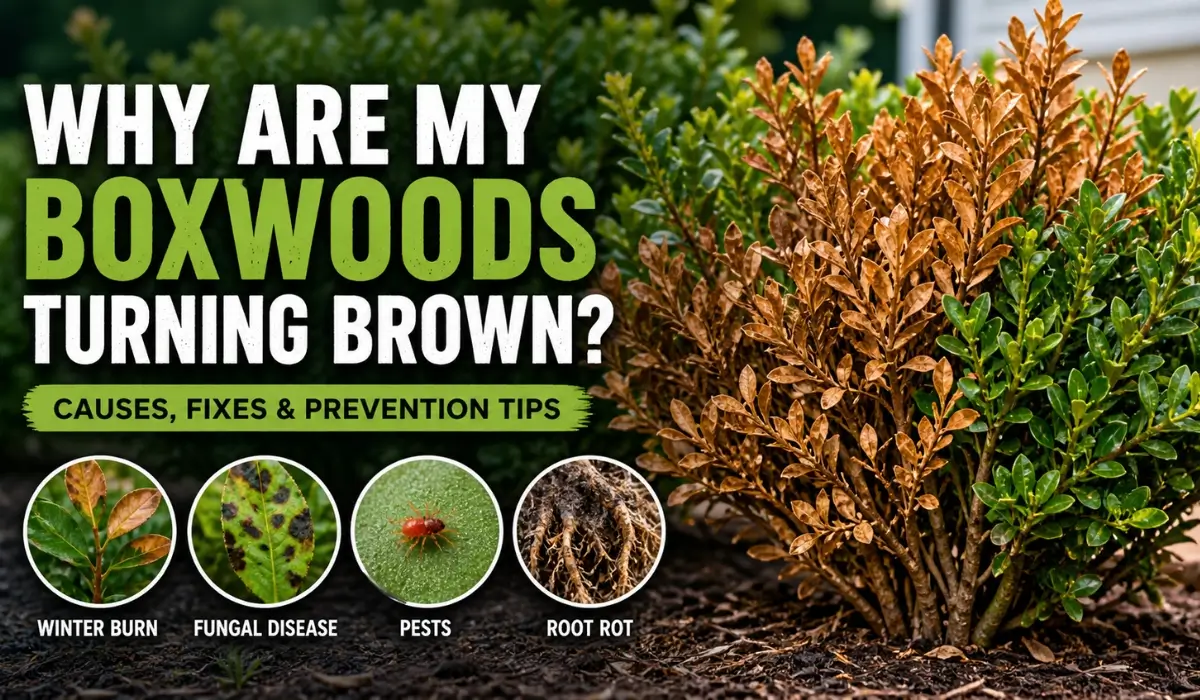
Boxwoods turning brown due to winter burn, root rot, pests, fungal diseases, or improper watering. Identifying the exact cause early is critical because some issues—like boxwood blight—can spread quickly, while others, like seasonal bronzing, are usually reversible with proper care.
- Winter burn is one of the most common causes of brown boxwoods
- Overwatering and root rot can kill shrubs from the inside out
- Boxwood blight and pests often require immediate treatment
- Proper pruning, watering, and soil drainage are essential
- Early diagnosis can save your shrubs
Boxwoods are often considered low-maintenance landscape staples, but when they start turning brown, it catches homeowners off guard fast. One week they’re lush and green. Next? Dry patches, yellow leaves, and dead-looking branches. The good news: most boxwood problems can be treated if you act quickly.
What Causes Boxwoods Turning Brown?
Boxwoods usually brown because of environmental stress, disease, or pest damage. The exact reason depends on the season, symptoms, and location of the discoloration.
Common causes include:
| Cause | Symptoms | Severity |
|---|---|---|
| Winter Burn | Bronze/brown outer leaves | Moderate |
| Root Rot | Yellowing + soggy roots | High |
| Boxwood Blight | Leaf spots + defoliation | Severe |
| Spider Mites | Speckled leaves, webbing | Moderate |
| Nutrient Deficiency | Yellow leaves | Low–Moderate |
Here’s the reality:
Many homeowners assume browning means the plant is dead. Often, it’s stress—not death.
Is Winter Burn Killing Your Boxwood?
Winter burn is one of the leading reasons boxwoods turning brown, especially after harsh winters or dry winds.
Signs of winter burn:
- Brown or bronze leaf edges
- Damage mostly on exposed sides
- Leaves dry out but branches may stay alive
- Symptoms appear in late winter or early spring
How to fix it:
- Wait until spring before pruning damaged areas
- Water deeply before winter freezes
- Apply mulch around roots
- Use burlap wind barriers for exposed shrubs
Prevention:
Boxwoods lose moisture through leaves even in winter. Frozen ground prevents root replacement, causing dehydration.
Could Root Rot Be the Problem?
If your boxwood is yellowing, wilting, and browning from the inside, poor drainage may be suffocating the roots.
Root rot symptoms:
- Yellow leaves before browning
- Soft black roots
- Soil stays wet
- Overall plant decline
Causes:
- Overwatering
- Heavy clay soil
- Poor drainage
- Fungal pathogens
Solutions:
- Improve drainage immediately
- Reduce watering frequency
- Remove severely infected plants
- Consider fungicide if caught early
How Dangerous Is Boxwood Blight?
Boxwood blight is one of the most destructive diseases affecting boxwoods.
Symptoms:
- Circular brown leaf spots
- Black streaks on stems
- Rapid leaf drop
- Dense interior dieback
Important:
Boxwood blight spreads aggressively through:
- Contaminated tools
- Splashing water
- Infected mulch
- Plant-to-plant contact
Treatment:
- Remove infected branches
- Sanitize pruning tools
- Avoid overhead watering
- Use fungicides as directed
If severe:
Full shrub removal may be necessary.
Are Pests Causing the Damage?
Spider mites, leafminers, and psyllids commonly damage boxwoods.
Warning signs:
- Fine webbing
- Tiny leaf spots
- Distorted growth
- Yellow stippling
Solutions:
- Insecticidal soap
- Neem oil
- Beneficial insects
- Proper pruning
A quick shake test over white paper can reveal mites.
How to Revive a Dying Boxwood Shrub
If your shrub still has green stems beneath the bark, recovery is possible.
Recovery checklist:
- Prune dead branches
- Test soil drainage
- Water deeply but infrequently
- Fertilize lightly in spring
- Check for pests or fungal issues
- Add mulch
Real-world gardening tip:
Many struggling boxwoods rebound within one growing season after correcting watering and airflow issues.
How Do You Prevent Boxwoods From Turning Brown?
Healthy boxwoods rely more on prevention than treatment.
Best prevention strategies:
- Plant in well-draining soil
- Water consistently during drought
- Avoid overwatering
- Prune for airflow
- Monitor for disease
- Mulch properly
- Protect from winter wind
When Should You Replace a Boxwood?
Replacement may be necessary if:
- More than 50% of the shrub is dead
- Boxwood blight is widespread
- Roots are extensively rotted
- Recovery attempts fail over multiple seasons
Consider resistant alternatives:
- Japanese holly
- Inkberry holly
- Dwarf yaupon holly
People Also Ask
Why are my boxwoods turning yellow then brown?
This often indicates root stress, overwatering, nutrient deficiencies, or fungal disease. Yellowing typically appears before tissue death.
Can brown boxwoods come back?
Yes, if stems remain alive and the root system is healthy.
Should I cut off brown boxwood branches?
Yes, prune dead branches in spring after new growth begins.
What does overwatered boxwood look like?
Yellow leaves, wilting, soft roots, and progressive browning.
Can boxwood blight spread to healthy plants?
Yes, rapidly—through tools, water, and plant contact.
Final Thoughts
Brown boxwoods are a warning sign—not always a death sentence.
Most problems come down to:
- Moisture imbalance
- Disease
- Seasonal stress
- Pest infestations
The faster you diagnose the cause, the better your odds of saving your shrubs.
For most gardeners, consistent monitoring and preventative care make the biggest difference.







