If you’re wondering how to train young fruit trees for a bountiful harvest and lasting health, you’re not alone. Mastering this essential skill transforms struggling saplings into productive, resilient trees that will yield delicious fruit for years to come. This guide will walk you through the precise techniques and foundational knowledge needed to cultivate strong, fruit-bearing structures right from the start.
Why is Training Young Fruit Trees Essential for Success?
Training young fruit trees is not merely an aesthetic choice; it’s a critical investment in their future productivity and health. Neglecting early training can lead to structural weaknesses, reduced yields, and increased susceptibility to disease. As Professor John Ball, SDSU Extension Forestry Specialist, rightly observes, “Training is probably the most neglected aspect of growing fruit trees.”
Proper training establishes a strong framework that can support heavy fruit loads without breaking, a common issue with improperly trained trees, according to Purdue Extension. This early intervention also promotes better light penetration and air circulation throughout the canopy, which are vital for fruit quality and disease prevention. Ultimately, a well-trained tree is a healthier, more productive tree.
Understanding Key Fruit Tree Training Systems and Shapes
Choosing the right fruit tree training system at the outset is crucial, as it dictates the tree’s ultimate shape and how efficiently it produces fruit. Different systems are suited for various fruit types and garden spaces, directly impacting factors like sunlight exposure and ease of harvest. Your selection determines the entire fruit tree pruning timeline and long-term canopy management.
Central Leader System: The Classic Cone
The central leader system is characterized by a dominant central trunk, much like a Christmas tree, with tiers of scaffold limbs radiating outwards. This system is ideal for apples, pears, and some cherry varieties, promoting strong vertical growth and consistent fruit production. It’s designed to maximize sunlight interception, ensuring that fruits and lower branches receive adequate light.
For this system, you’ll select a strong central leader and develop 3-5 well-spaced scaffold limbs in the first tier, followed by subsequent tiers higher up. Aim for branch angles of approximately 60 degrees to the trunk for optimal strength, as recommended by extension services like Oregon State University, which helps prevent limb breakage under heavy fruit loads.
Open Center (Vase) System: Maximum Light and Airflow
The open center system, also known as the vase system, aims to remove the central leader, creating an open, bowl-like shape. This design is particularly effective for peaches, nectarines, apricots, and Japanese plums, where maximizing sunlight penetration and air circulation to the inner canopy is paramount. The open center system encourages robust fruiting spurs along the remaining main branches.
By eliminating the central leader, you encourage vigorous growth on 3-5 main scaffold limbs that are evenly spaced around the trunk. This structure makes harvesting easier and significantly reduces disease pressure by improving airflow, a key benefit of training fruit tree branches. Training peach trees for open center is a common practice that exemplifies this system’s advantages.
Espalier and Cordon Systems: Space-Saving Solutions
For gardeners with limited space, espalier and cordon systems offer elegant and highly productive solutions. Espalier involves training branches to grow flat against a wall or trellis in a formal pattern, while cordon systems train trees into single upright or angled stems. These methods are excellent for dwarf fruit trees and can be used for apples, pears, and even some stone fruits. They require precise, ongoing pruning and training, but the visual appeal and efficient fruit production are well worth the effort.
How to Train Young Fruit Trees: Step-by-Step Guide
Successfully training a young fruit tree begins the moment you plant it, laying the groundwork for its entire productive life. This initial pruning and shaping are critical for developing a robust structure. When considering when to prune newly planted fruit trees, the answer is usually right away, during dormancy or immediately after planting.
-
Initial Heading Back (Planting Year): Upon planting, cut back the central leader to encourage branching. For a central leader system, cut it to about 30-36 inches from the ground. For an open center system, cut it to 24-30 inches, just above a strong outward-facing bud. This encourages lower scaffold development and balances the root-to-shoot ratio after transplant shock.
-
Selecting Scaffold Limbs (First Dormant Season): Identify 3-5 strong, well-spaced branches that will form your primary scaffold limbs. These should be evenly distributed around the trunk, ideally about 8 to 14 inches apart vertically, as supported by research. Remove any weak, narrow-angled, or crossing branches. Aim for wide branch angles (around 60 degrees) for maximum strength.
-
Maintaining the Leader (Central Leader System): Continue to head back the central leader each year to a strong bud, encouraging it to grow vertically. Select new scaffold limbs in subsequent years, maintaining appropriate spacing and radial distribution. You want a clear hierarchy of branches, resembling a cone.
-
Opening the Center (Open Center System): After selecting your initial scaffold limbs, ensure no central shoot is allowed to dominate. Any strong upright growth in the center of the tree should be removed to maintain the open, vase-like structure. This promotes excellent light penetration to all fruiting wood.
-
Ongoing Branch Selection and Spreading: Throughout the growing season and subsequent dormant periods, continue to select strong, well-placed branches and remove undesirable ones. Use limb spreaders or tying techniques to improve branch angles, encouraging horizontal growth and early fruiting. This is where you really start to see the benefits of training fruit tree branches.
Mastering Branch Bending & Spreading for Optimal Growth
Beyond basic pruning, actively manipulating branch angles through bending and spreading is a powerful technique to encourage earlier and more abundant fruit production. This isn’t just about shaping; it’s about influencing the tree’s internal chemistry, specifically plant hormones. Auxins, which promote vegetative growth, concentrate at branch tips. By bending branches horizontally, you reduce auxin dominance, encouraging the development of fruiting spurs along the branch.
The ideal time for bending branches is when the wood is still flexible but has begun to lignify (harden), typically in late spring or early summer. Bending branches to a 60-degree angle from the vertical is generally considered optimal for structural strength and fruitfulness. Ron Perry, an expert, favors UV-resistant rubber bands from Peach Ridge Orchard Supply for their versatility in this process, as they are less likely to damage bark than rigid ties.
When you spread branches, you’re not just creating space; you’re also exposing more of the canopy to sunlight. Remember, for optimal apple fruit color, fruits require 70% exposure to sunlight, and for good size, at least 50% sunlight is needed. This direct light exposure is a game-changer for fruit quality.
Pruning Cuts: Thinning vs. Heading for Targeted Development
Understanding the difference between thinning and heading cuts is fundamental to effective fruit tree training. Each type of cut serves a distinct purpose in directing a tree’s growth and fruit production. Applying them correctly is key to achieving your desired tree shape and yield.
Thinning Cuts: Opening the Canopy and Directing Growth
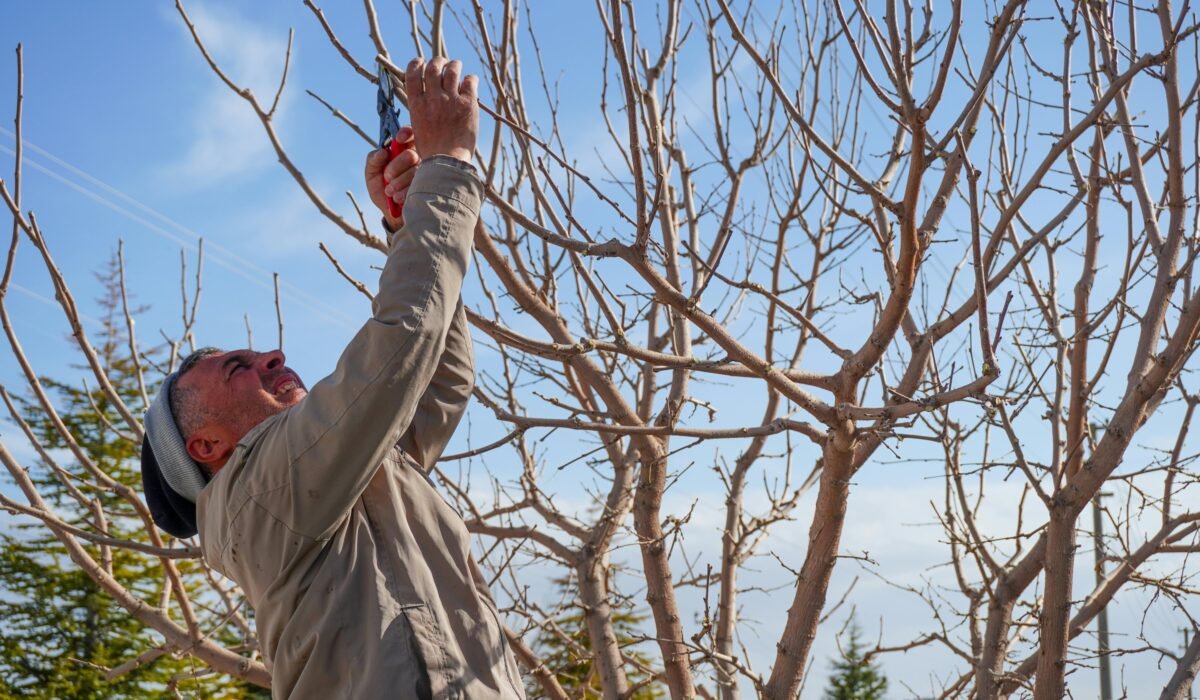
A thinning cut involves removing an entire branch back to its point of origin (trunk, main limb, or lateral branch). This type of cut does not stimulate vigorous regrowth from the cut point; instead, it redirects the tree’s energy to remaining branches. Thinning cuts are used to:
- Improve air circulation and light penetration: Essential for reducing disease and enhancing fruit quality.
- Remove crowded, crossing, or diseased branches: Maintains tree health and structural integrity.
- Control tree size: Reduces overall canopy volume without stimulating excessive vegetative growth.
When making thinning cuts, always cut cleanly to the branch collar, which is the slightly swollen area at the base of the branch. This promotes proper wound healing and minimizes stress on the tree. It’s crucial not to remove more than one-third of the tree’s canopy in a single season to avoid shocking the tree and stimulating excessive water sprout development.
Heading Cuts: Stimulating Branching and Encouraging Bushiness
A heading cut involves removing only a portion of a branch, cutting it back to a bud or a lateral branch. This cut stimulates dormant buds below the cut, leading to bushier growth and increased branching. Heading cuts are used to:
- Encourage branching: Useful for developing more scaffold limbs or increasing density in sparse areas.
- Control direction of growth: Cut to an outward-facing bud to direct new growth away from the center.
- Promote fruiting spurs: Can encourage the development of fruit-bearing wood on young branches.
While heading cuts can be beneficial, overuse can lead to a dense, brushy canopy that restricts light and air, counteracting good canopy management. Use them judiciously to guide growth rather than simply reducing length. For example, pruning young apple trees for beginners often involves heading cuts to establish initial scaffold layers.
Training Specific Fruit Types: Beyond Apples and Peaches
While apples and peaches are popular examples, the principles of training extend to a wide variety of fruit trees, each with unique growth habits and ideal forms. Understanding these differences allows for tailored care that optimizes yield and longevity for every tree in your orchard or backyard.
Cherries, Plums, and Apricots
Sweet cherries, Japanese plums, and apricots often thrive in an open center or modified central leader system, similar to peaches, to maximize light and airflow. Tart cherries, however, can be managed as a bush or a modified central leader. The key is to encourage strong branch angles to support heavy fruit loads, especially for sweet cherries. European plums are more adaptable and can be trained to a central leader or open center, depending on the cultivar and grower preference.
Figs, Pomegranates, and Persimmons
These less common fruit trees also benefit significantly from early training. Figs can be grown as multi-stemmed bushes or single-trunk trees; training as a bush often makes winter protection easier in colder climates. Pomegranates naturally grow as multi-stemmed shrubs but can be trained to a single trunk for a more tree-like appearance, requiring annual thinning of suckers. Persimmons, particularly the American varieties, generally do well with a modified central leader system, ensuring a strong framework for their often large fruit.
Dwarf Fruit Trees and Container Growing
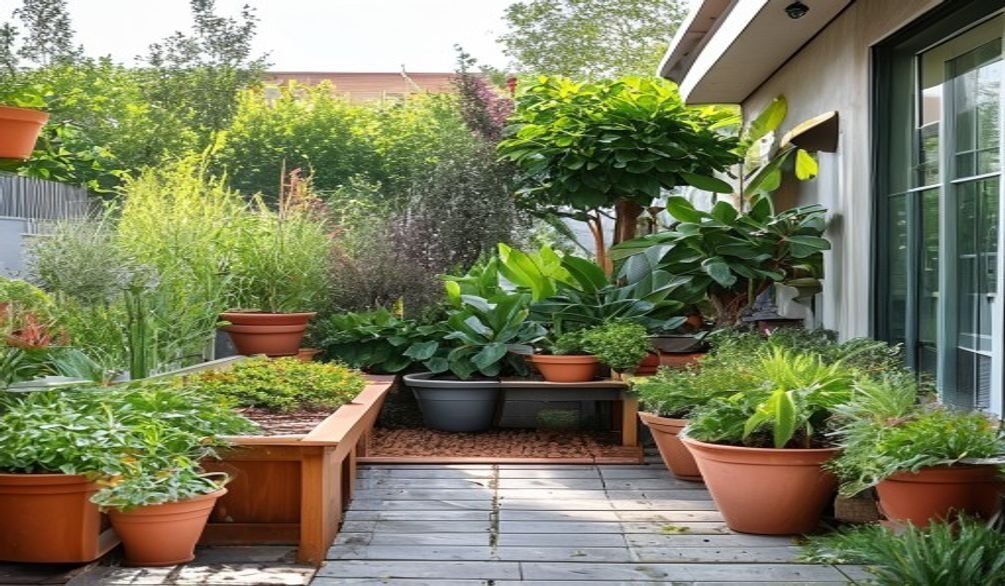
How to prune dwarf fruit trees is a common question, and the answer largely mirrors their standard-sized counterparts but on a smaller scale. Dwarf trees can be trained to central leader, open center, or even espalier systems. The main difference is the intensity of pruning to maintain their compact size and encourage fruit production close to the main trunk. For fruit trees grown in containers, careful attention to pruning also helps manage size and ensures the root system can support the canopy, often making them excellent candidates for smaller central leader or open vase forms. If you’re growing fruit trees in containers, you might also find our guide on Grow Organic Vegetables in Containers useful for general container gardening principles.
Long-Term Benefits: Maximizing Yield, Longevity & Maintenance
The initial effort you put into training young fruit trees pays dividends for decades. This “Precision Training Guide” emphasizes not just immediate fruit production but also the sustained health and economic value of your trees over their entire lifespan. It’s about building an efficient, resilient fruit-producing machine.
One of the most significant long-term benefits is the maximization of yield and fruit quality. A well-trained canopy ensures optimal sunlight exposure, which is crucial for fruit development. A University of Massachusetts (UMASS) study highlighted that proper training significantly reduces limb failure, minimizing the need for costly corrective pruning and other maintenance over time. This translates directly to less future spending and effort.
Furthermore, effective canopy management leads to better air circulation, drastically reducing the incidence of fungal diseases and pest problems. Rhonda Ferree, a retired Horticulture Educator with University of Illinois Extension, confirms that “unpruned trees and plants are difficult to maintain, produce small fruit and are much more likely to suffer disease problems.” This reduction in disease means less need for chemical treatments and healthier, more reliable harvests. A structurally sound tree, developed through proper how to train young fruit trees techniques, also boasts increased longevity, providing a consistent source of fresh fruit for many years to come.
Essential Tools and DIY Aids for Effective Fruit Tree Training
Having the right tools and knowing how to use simple DIY aids can make fruit tree training much more efficient and effective. These aids help you gently guide branches into their desired positions, promoting stronger structures and better fruit development.
Professional Tools for Precision and Strength
- Hand Pruners (Bypass Type): Essential for clean cuts on branches up to 3/4 inch thick. Bypass pruners make a scissor-like cut, minimizing damage to the cambium layer.
- Loppers: For thicker branches (up to 1.5-2 inches), loppers provide the leverage needed for clean cuts.
- Pruning Saw: Necessary for larger limbs that hand pruners or loppers can’t handle. Look for a curved blade for easier cutting in tight spaces.
- Limb Spreaders: These are invaluable for encouraging wider branch angles. Plastic limb spreaders are available in various sizes (6″, 9″, 12″) to accommodate different branch lengths and tree types. Metal spreaders offer even greater durability and rigidity. These tools are crucial for developing strong scaffold limbs.
DIY Training Aids for Budget-Friendly Solutions
You don’t always need specialized equipment; many effective training aids can be made or adapted from common household items:
- Twine and Weights: Secure twine to a branch, tie the other end to a weight (like a plastic milk jug filled with water or sand, or a homemade concrete weight), and let gravity gently pull the branch down. This is an excellent way to create wide branch angles over time.
- Clothes Pins: For very young, pliable shoots, clothespins can be clipped onto the stem to hold them at a wider angle from the main trunk, guiding horizontal growth.
- Notched Sticks: Simple sticks cut with notches can be wedged between the trunk and a branch to push the branch outwards. Ensure the ends are blunt or padded to prevent bark damage.
When using any tying material, always choose something that won’t girdle or cut into the bark as the branch grows. UV-resistant rubber bands or soft cloth strips are often preferred over thin wire or string for their flexibility and gentle grip.
Frequently Asked Questions
How do you train a young fruit tree?
Training a young fruit tree involves strategic pruning and branch manipulation to establish a strong structural framework and promote early, high-quality fruit production. This typically starts with an initial heading cut at planting, followed by selecting well-spaced scaffold limbs and using techniques like branch bending or spreading to create optimal branch angles. The goal is to develop a sturdy, open canopy that allows for good light penetration and air circulation.
What is the best shape for a fruit tree?
The “best” shape for a fruit tree depends on the fruit type and your specific growing conditions. The Central Leader system, resembling a Christmas tree, is excellent for apples and pears, promoting strong vertical growth. The Open Center (Vase) system, which removes the central leader to create a bowl shape, is ideal for peaches and plums, maximizing light and air. Both shapes aim for structural integrity and efficient fruit production.
Should I prune a young fruit tree?
Yes, you absolutely should prune a young fruit tree, often immediately after planting. Early pruning and training are essential for establishing a strong framework, preventing future structural problems, and promoting early fruit production. Without proper pruning, young trees are more likely to develop weak branch angles, suffer limb breakage under fruit loads, and be more susceptible to diseases due to poor air circulation.
How do you train fruit tree branches?
Training fruit tree branches involves gently manipulating their direction and angle of growth to improve light exposure, strengthen their attachment to the trunk, and encourage fruiting. Common methods include using limb spreaders, tying branches down with weights or twine, or employing clothespins on very young shoots. The aim is to achieve wide, strong branch angles (around 60 degrees from vertical) which promotes the development of fruiting spurs rather than excessive vegetative growth.
Mastering how to train young fruit trees is a foundational skill that will transform your gardening experience and the productivity of your orchard. By applying these precision techniques, from selecting the right training system to understanding specific pruning cuts and using appropriate tools, you’re not just shaping a tree; you’re cultivating a legacy of delicious, high-quality fruit. Start today, and watch your young trees flourish into vibrant, productive assets for years to come.