Dreaming of fresh, homegrown grapes? Learning **how to grow grapes backyard** can transform your outdoor space into a productive mini-vineyard, offering delicious fruit and a rewarding gardening experience. This comprehensive guide will walk you through every step, managing expectations with a year-by-year blueprint for success, even in challenging backyard conditions.
Is Growing Grapes in Your Backyard Hard for Beginners?
Many aspiring gardeners wonder if growing grapes is an overly complicated endeavor. The short answer is: it’s certainly a commitment, but with the right knowledge and consistent **grapevine care for beginners**, it’s absolutely achievable and immensely rewarding. What most people miss is that successful grape growing isn’t about constant fussing, but rather understanding a few key principles and applying them consistently over time.
While commercial grape production requires intensive management, a small backyard vineyard setup can thrive with proper planning. The biggest surprise for new growers often comes with pruning, as the University of Minnesota Extension notes, “In an average vineyard, 80-90% of the new growth is pruned off each winter.” This might sound drastic, but it’s essential for fruit production. By focusing on selecting **easy grapes to grow** and dedicating time to learning the basics, you can cultivate a resilient and rewarding backyard vineyard.
Choosing the Best Grape Varieties for Your Backyard
Selecting the right grape variety is perhaps the most critical decision for beginner success. Not all grapes are created equal, especially when it comes to climate resilience and disease resistance. As Farmer’s Almanac advises, “American grapes are the most cold-hardy, while European grapes—usually better for wine than the table—do well in warm, dry, Mediterranean-type zones.”
For your backyard, prioritize varieties known for hardiness and ease of cultivation.
Here are some of the **best grape varieties for backyard** growers:
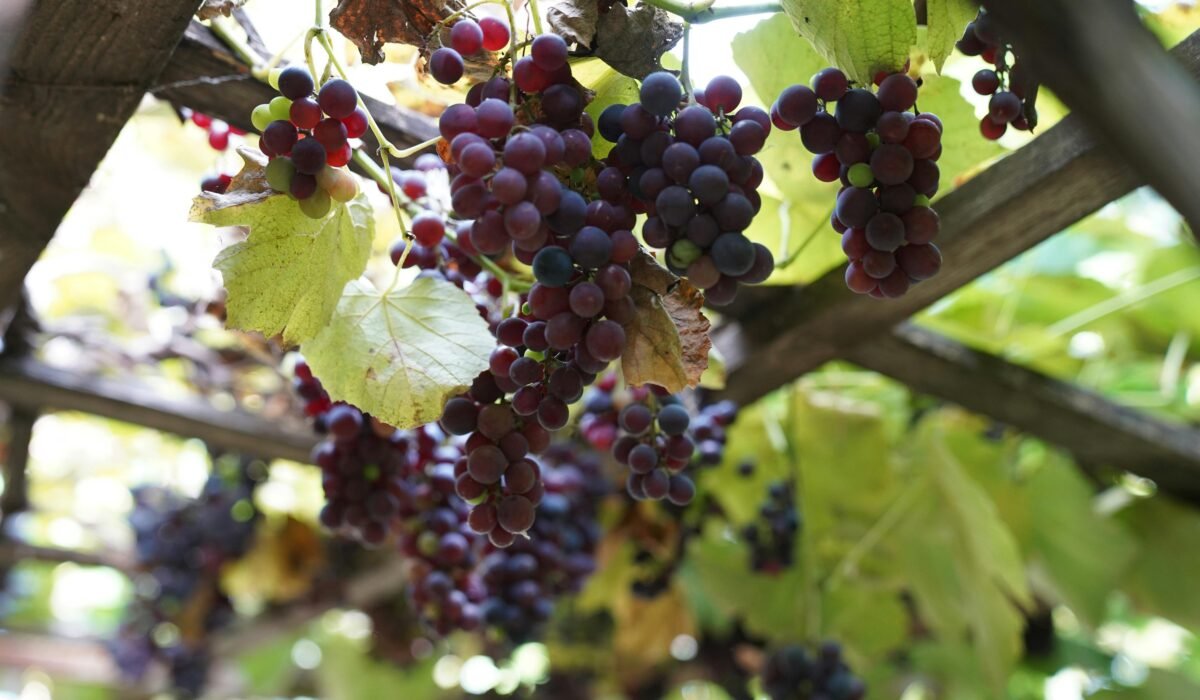
- Concord Grapes: The classic American grape, famous for its sweet, tangy flavor, perfect for fresh eating, juice, and jelly. Concord grapes are exceptionally hardy and disease-resistant, thriving in cooler climates (USDA Zones 5-8).
- Niagara Grapes: Another robust native white grape, Niagara offers a sweet, musky taste. It’s highly adaptable, vigorous, and performs well in similar climates to Concord (Zones 5-8).
- Himrod Seedless Grape Vine: If you prefer seedless varieties, Himrod is an excellent choice. This yellow-gold fruited grape boasts a honeyed flavor and is easy to grow, adapting to cool to warm climates.
Opting for varieties resistant to common local diseases will significantly reduce the amount of ongoing maintenance and chemical treatments needed, making your **grape growing for beginners** journey much smoother.
Ideal Conditions: Sun, Soil, and Site Selection for Backyard Grapes
Grapes are sun-worshippers, and providing them with ample light is non-negotiable for a bountiful harvest. They require a minimum of 155 to 160 frost-free growing days, with early maturing varieties ideally needing about 165 frost-free days to achieve peak ripeness.
Sunlight: The More, The Better
Your grapevines need at least 6-8 hours of direct, unfiltered sunlight daily. More sun means sweeter grapes and better disease resistance, as it helps dry morning dew from the leaves. When considering **how much sun do grapevines need**, always aim for the sunniest spot in your yard.
Soil: Drainage is Key
Grapevines are not particular about soil type, but they absolutely demand excellent drainage. “Vines grow best in deep, well-drained soils, as most root systems are at least 36 inches deep,” according to West Virginia University Extension. Heavy, waterlogged clay soils can lead to root rot. If your soil is dense, amend it generously with organic matter like compost to improve aeration and drainage. Grapevine roots also “like to be warm,” as noted by UMN Extension, so good drainage helps the soil warm up faster in spring. Aim for a slightly acidic to neutral **soil pH for grapevines**, ideally between 6.0 and 7.0.
Site Selection: Beyond Just Sun
Beyond sunlight and soil, consider air circulation. A site with good airflow helps reduce fungal diseases by drying leaves quickly after rain or dew. Avoid low-lying areas that act as “frost pockets,” as late spring frosts can damage new shoots and early fall frosts can harm ripening fruit. Think about integrating your **backyard vineyard setup** into your landscape, perhaps along a fence or an existing structure that can offer support.
Planting Your Grapevines: A Step-by-Step Guide
Once you’ve chosen your site and prepared your soil, planting your grapevines is a straightforward process. The ideal time to plant is in early spring after the last hard frost, allowing the young vines ample time to establish before summer heat or winter cold.
Here’s how to plant your bare-root or potted grapevines:
- Prepare the Hole: Dig a hole that is wide enough to accommodate the root system comfortably and deep enough so the vine can be planted at the same depth it was in the nursery, or with the graft union (if present) a few inches above the soil line.
- Trim Roots: For bare-root vines, trim any broken or excessively long roots to encourage new growth.
- Position the Vine: Place the vine in the center of the hole, spreading the roots out evenly.
- Backfill and Water: Gently backfill the hole with soil, tamping it lightly to remove air pockets. Water thoroughly immediately after planting to settle the soil around the roots.
- Initial Pruning: For bare-root vines, cut back the top growth, leaving only 2-3 buds on the strongest cane. This directs energy into root development.
- Provide Support: Install a temporary stake or a permanent trellis system at planting time. This guides the young vine upward and prevents damage.
For those with limited space, consider **container grape growing**. Choose large containers (at least 15-20 gallons) and select compact varieties. This method requires more frequent watering and fertilizing but makes grapes accessible to urban gardeners. For more on choosing containers, check out our guide on Best Containers for Beginner Gardeners.
Year-by-Year Care: What to Expect from Your Backyard Grapevines
Understanding the **grape growing timeline** helps manage expectations and ensures you provide the right care at each stage. Grapes are a long-term investment, with most varieties taking a few years to produce a significant harvest.
Year 1: Root Establishment and Initial Growth
In the first year, your primary goal is to establish a strong root system. Don’t expect fruit.
- Focus: Encourage vigorous vegetative growth.
- Care: Water regularly, especially during dry spells. Keep the area around the vine weed-free. Train the strongest shoot vertically up a stake or trellis, removing any side shoots.
- Pruning: In the dormant season (winter), prune back to a single strong cane with 2-3 buds, or select two canes if you’re establishing a two-cordon system.
Year 2: Developing the Permanent Framework
The second year is about building the main structure of your grapevine. You might see a small amount of fruit, but it’s best to remove it to direct energy into vine development.
- Focus: Establish the trunk and cordon (permanent arms).
- Care: Continue watering and weeding. Train one or two strong canes along your chosen trellis system to form the permanent cordons.
- Pruning: In the dormant season, prune to create your desired vine structure. For a four-arm Kniffin system, you’d select two canes for the lower wire and two for the upper wire, cutting them back to 6-10 buds each.
Year 3 and Beyond: First Harvests and Ongoing Production
By the third year, your grapevines should be mature enough to produce their first substantial harvest. This is when your patience truly pays off!
- Focus: Maximize fruit production while maintaining vine health.
- Care: Continue with consistent watering, fertilizing as needed, and pest/disease monitoring. The key to sustained production is annual dormant pruning.
- Pruning: Follow your chosen pruning method (cane or spur pruning) diligently each winter. We’ll dive deeper into this crucial step next.
So, **how long do grapes take to grow**? Expect 2-3 years for your first decent crop, with full production usually by year 4 or 5.
Mastering Pruning and Trellising for Healthy Grape Production
Pruning and trellising are the twin pillars of successful grape growing. They seem daunting at first, but they are essential for managing vine vigor, promoting fruit quality, and making harvesting easier.
Understanding Pruning Grapevines Dormant
Annual dormant pruning, performed in late winter or early spring before bud break, is critical. Without it, grapevines become overgrown, producing too much foliage and very little fruit, or fruit of poor quality. As UMN Extension emphasizes, “Annual pruning is important to keep growth healthy each year.” This is where you remove 80-90% of the previous season’s growth, leaving only enough buds to produce a good crop.
You’ll need a set of reliable tools:
- Hand Pruners: Essential for cutting one-year-old wood and smaller canes.
- Loppers: Recommended for thicker canes or two-to-three-year-old wood.
- Pruning Saw: Indispensable for removing large, woody canes or even old trunks.
While commercial vineyards might use advanced tools like the Infaco F3020 Professional Battery-Powered Pruning Shear for efficiency, quality hand tools are perfectly sufficient for a backyard operation. Learning the proper **grapevine pruning schedule** is about understanding your vine’s growth habits and how to encourage fruit-bearing wood.
Essential Grape Trellis Systems
A robust trellis system provides the necessary support for your grapevines, keeping the fruit off the ground and ensuring good air circulation and sun exposure. This is a vital part of your **backyard vineyard setup**.
Common **grape trellis systems** include:
- Four-Arm Kniffin Trellis: A classic for backyard table grapes, this system uses two horizontal wires (typically 3 feet and 5-6 feet high). The vine is trained to a central trunk with four permanent fruiting arms, two extending along each wire.
- Single-Wire High Cordon Trellis: Practical for vigorous American grapes like Concord, this system uses a single sturdy wire 5-6 feet high, along which a permanent cordon (arm) is trained.
- Arch Trellises: For aesthetic appeal and smaller spaces, structures like the Lalahoni Garden Arch Trellis or DoCred Large Garden Arch Trellis made with polyethylene-coated steel can provide excellent climbing space and create a beautiful focal point.
Trellising also applies to other garden plants. For tips on maximizing space and yields with supports, see our guide on Trellising Vegetables: Maximize Harvests & Save Space.
Harvesting and Creative Uses for Your Backyard Grapes
The moment you’ve been waiting for—harvest! Grapes don’t ripen further once picked, so timing is crucial. Look for a uniform color, taste a few to ensure sweetness, and check if they detach easily from the stem.
Beyond fresh eating, your backyard grapes offer a world of culinary possibilities:
- Juice and Jelly: This is a common and satisfying use for excess grapes, especially American varieties like Concord. Learning **harvesting grapes for juice** involves crushing, heating, and straining to extract the vibrant liquid.
- Simple Backyard Winemaking: While professional winemaking is complex, small-batch, rudimentary winemaking can be a fun hobby for the adventurous. It’s a great way to experiment with your harvest.
- Verjus: Don’t let unripe grapes go to waste! **Verjus backyard** refers to the tart juice pressed from unripe grapes. It’s an excellent, milder alternative to vinegar or lemon juice in dressings, sauces, and deglazing. This is a fantastic way to utilize grapes that may not fully ripen or those you thin early in the season.
- Ornamental Value: Even if you’re not solely focused on fruit, a well-trained grapevine can be a stunning addition to your landscape, providing shade and beauty.
Embrace the bounty of your backyard vineyard and explore the many creative ways to enjoy your homegrown grapes!
Common Challenges and Troubleshooting for Backyard Grape Growers
Even with the best planning, you’ll likely encounter a few bumps along your grape-growing journey. Recognizing common issues and knowing how to troubleshoot them is key to maintaining a healthy, productive vine.
Pests: Protecting Your Harvest
Birds and squirrels are often the biggest culprits when it comes to grape damage.
- Birds: Netting is the most effective deterrent. Drape fine mesh bird netting over your vines as grapes begin to change color.
- Squirrels: Physical barriers or exclusion methods are best. Some gardeners use cages or electric fences, though these are more involved.
Other pests like Japanese beetles or grape berry moths can occur. For general pest management strategies, including dealing with common garden invaders, you might find our article on Solve Thrips Infestations helpful, as many principles of integrated pest management apply broadly.
Diseases: Proactive Prevention
Fungal diseases are common, especially in humid climates.
- Powdery Mildew & Black Rot: These are widespread grape diseases pests home garden growers face. Prevention is paramount:
- Choose Resistant Varieties: As mentioned, this is your first line of defense.
- Good Air Circulation: Proper spacing and pruning help air move through the canopy, drying leaves.
- Sanitation: Remove fallen leaves and diseased plant parts.
- Organic Fungicides: For severe cases, organic options like sulfur or copper-based sprays can be used, following label instructions carefully, especially for those practicing **organic grape cultivation**.
Environmental Stress
Grapes are generally resilient, but extreme conditions can cause problems.
- Frost Damage: Protect young vines from late spring frosts with covers.
- Water Stress: Both too little and too much water can be detrimental. Consistent, deep watering during dry spells is important, but ensure excellent drainage to prevent root issues.
Observing your vines regularly allows you to catch problems early, making solutions much simpler and more effective.
Frequently Asked Questions
Is it hard to grow grapes in your backyard?
Growing grapes in your backyard is not excessively difficult for beginners, but it does require consistent effort and understanding of their specific needs. The biggest commitment involves regular pruning and providing adequate support. With the right variety selection and consistent care, it’s a very rewarding endeavor.
How long does it take to grow grapes in a backyard?
It typically takes 2-3 years for grapevines in a backyard to produce their first significant harvest. The first year focuses on root establishment, the second on building the vine’s permanent framework, and by the third year, you can expect a modest crop, with full production usually achieved by year 4 or 5.
What is the easiest grape to grow for a beginner?
For beginners, American grape varieties like Concord and Niagara are generally considered the easiest to grow. They are known for their hardiness, disease resistance, and adaptability to various climates. Seedless varieties like Himrod are also good, offering a sweet taste with less fuss.
Do grapevines need a lot of sun?
Yes, grapevines absolutely need a lot of sun to thrive and produce sweet, flavorful fruit. They require a minimum of 6-8 hours of direct sunlight each day. Planting them in the sunniest possible location in your backyard is crucial for their health and productivity.
Cultivating a backyard vineyard is a journey that teaches patience, observation, and the immense satisfaction of harvesting your own fruit. By following this year-by-year blueprint, choosing appropriate varieties, and committing to proper pruning and trellising, you’ll be well on your way to enjoying delicious homegrown grapes. So, grab your pruners and get ready to embark on your own rewarding adventure in **how to grow grapes backyard**.
Ready to start your backyard vineyard? Begin by researching disease-resistant varieties suited to your local climate and preparing your sunniest garden spot today!