
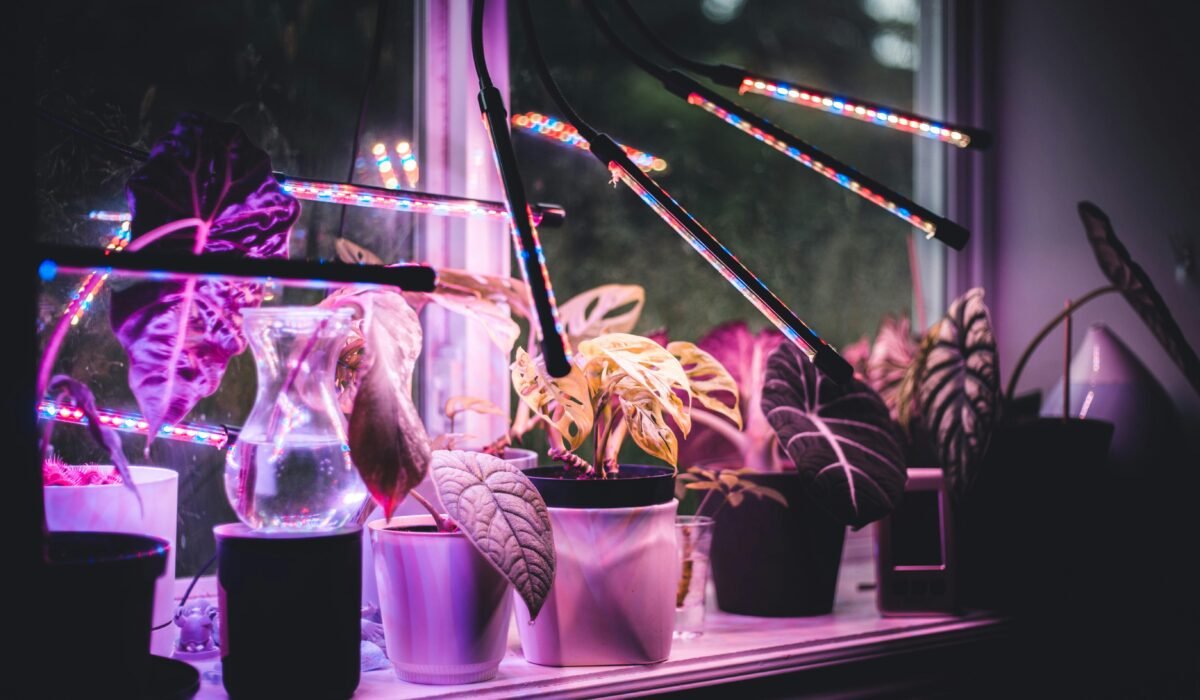
Dreaming of a lush, green oasis on your balcony, but cursed with minimal sunlight? You’re not alone. Many urban dwellers face the challenge of low-light conditions, turning what could be a vibrant garden into a struggle for survival for most plants. The good news is that technology offers a brilliant solution: Balcony Low-Light Grow Lights.
These specialized lights can transform even the shadiest corner into a thriving plant haven, allowing you to cultivate a wider variety of greenery than you ever thought possible. This guide will illuminate the best options and practices for integrating grow lights into your low-light balcony garden, ensuring your plants don’t just survive, but truly flourish.
Why Low-Light Balcony Plants Need Supplemental Lighting
Balcony gardening is a fantastic way to connect with nature, but not all balconies are bathed in glorious sunshine. North-facing balconies, those overshadowed by taller buildings, or even those with deep eaves can receive minimal or no direct sunlight. While some plants are naturally more tolerant of shade, even “low-light” plants still require a certain amount of indirect light for photosynthesis – the process by which they convert light into energy.
Without adequate light, your plants will show clear signs of distress. You might notice pale or yellowing leaves, slow and stunted growth, or leggy stems as they desperately stretch towards any available light source. These are all indicators that your precious greenery isn’t getting the energy it needs to thrive. Providing supplemental lighting is crucial for effective low light plant care, boosting their health and ensuring vibrant foliage.
Even shade tolerant balcony plants can benefit immensely from a targeted light source, especially during shorter winter days or in perpetually dim spaces. Supplemental light ensures consistent growth, stronger stems, and more robust health, making your balcony garden a success story regardless of natural light availability.
Understanding Grow Lights: Full-Spectrum LEDs & PAR
When it comes to illuminating your plants, not all lights are created equal. While a regular LED bulb might offer some ambient light, it lacks the specific spectrum and intensity that plants require for optimal growth. This is where specialized grow lights come in, particularly full-spectrum grow lights.
Full-spectrum LED grow lights are engineered to mimic natural sunlight, providing a balanced output across the entire visible light spectrum, plus crucial invisible wavelengths. Plants primarily use blue light for vegetative growth (leaves and stems) and red light for flowering and fruiting. Full-spectrum lights ensure they receive all the necessary wavelengths for healthy development through all stages.
A key metric to understand is PAR, or Photosynthetically Active Radiation. This measures the amount of light within the visible spectrum (400-700 nanometers) that plants use for photosynthesis. Unlike lumens, which measure brightness as perceived by the human eye, PAR directly quantifies the light energy available to plants. High-quality LED grow lights for balcony setups are designed to deliver targeted PAR levels efficiently.
LEDs are the preferred choice for grow lights due to their exceptional energy efficiency, low heat output, and long lifespan—often up to 50,000 hours. They consume significantly less electricity than traditional lighting, making them a cost-effective and environmentally friendly option for your balcony gardening tips. Their minimal heat production also means you can place them closer to your plants without risk of burning delicate leaves.
Best Types of Grow Lights for Small Balconies (Clip-On, Bars, Bulbs)
Small balconies require smart solutions that maximize space without cluttering your urban retreat. Fortunately, the market offers a variety of compact and efficient grow lights perfectly suited for these environments. Choosing the right type depends on your specific setup, plant arrangement, and aesthetic preferences.
Here are some of the best types of Balcony Low-Light Grow Lights for small spaces:
- Clip-On Grow Lights: These are incredibly versatile and popular for small indoor grow light setup. They feature a sturdy clip that can attach to shelves, tables, or railing, along with an adjustable gooseneck arm that allows you to direct light precisely where it’s needed. Many come with multiple light heads, perfect for illuminating several plants from a single base.
- LED Light Bars: Sleek and discreet, LED light bars are ideal for mounting under shelves, above plant racks, or directly onto walls. They provide uniform light distribution over a linear area, making them excellent for rows of herbs or small plants. Their slim profile helps maintain a clean, uncluttered look on your balcony.
- Individual LED Grow Bulbs: These bulbs screw into standard light fixtures, allowing you to convert existing lamps or pendant lights into plant-friendly illuminators. This is an excellent option for seamless aesthetic integration, as the grow light can blend in with your existing decor. Just ensure the fixture can handle the bulb’s wattage and that the light is directed effectively at your plants.
- Panel Grow Lights: While some panels can be large, smaller LED grow panels are available. These are good for providing intense, broad coverage for a small cluster of plants, often suspended above them. They are generally more powerful than clip-ons or bars but require a bit more dedicated space.
When selecting, consider options with built-in timers or dimming features for added convenience and control over your plants’ light cycles.
How Much Light Do Low-Light Plants Really Need? (PPFD & DLI)
Understanding the specific light requirements of your low-light plants is key to their success. While “low-light” suggests minimal needs, there’s a science to providing just the right amount. Two critical metrics help us quantify this: Photosynthetic Photon Flux Density (PPFD) and Daily Light Integral (DLI).
Understanding PPFD (Photosynthetic Photon Flux Density)
PPFD measures the number of photosynthetically active photons that fall on a given surface area per second, expressed in micromoles per square meter per second (µmol/m²/s). Essentially, it tells you the intensity of light reaching your plant. For low-light plants and seedlings, a PPFD level ranging from 100 to 300 µmol/m²/s is generally sufficient. Providing light within this range ensures they can photosynthesize effectively without being overwhelmed.
Understanding DLI (Daily Light Integral)
DLI quantifies the total amount of photosynthetically active radiation a plant receives over an entire day. It’s a cumulative measure, taking into account both light intensity (PPFD) and the duration of lighting. DLI is expressed in moles per square meter per day (mol/m²/day). For low-light plants like leafy greens (spinach, lettuce) and many herbs (mint, coriander), a DLI of 12 or more mol/m²/day is generally recommended for optimal growth. This ensures they receive enough total light energy throughout their daily cycle.
Knowing these plant light requirements PPFD and DLI values helps you select the right grow lights and configure your setup for maximum plant health. Many reputable grow light manufacturers provide PPFD charts for their products, allowing you to make informed decisions about light placement and intensity.
Setting Up Your Balcony Grow Lights: Duration & Distance
Once you’ve chosen your Balcony Low-Light Grow Lights, proper setup is crucial for your plants’ health. Getting the duration and distance right prevents issues like leggy growth or, conversely, leaf burn.
Optimal Light Duration
Even low-light plants need a consistent light cycle to mimic natural day and night. Most low-light plants benefit from 10-14 hours of artificial light daily. This duration allows for sufficient photosynthesis. Equally important is a crucial 6-8 hour dark period. This rest period is vital for plant respiration, hormone regulation, and overall metabolic processes. Without it, plants can become stressed and fail to thrive.
Using a simple timer, often integrated into modern grow lights or available as an inexpensive add-on, is highly recommended. This ensures your plants receive consistent light cycles without you having to remember to turn them on and off daily.
Ideal Light Distance
The distance between your grow light and your plants is a delicate balance. For most LED grow lights, a distance of 6-12 inches from the top of the plant canopy is a good starting point for low-light plants. However, this can vary based on the specific light’s intensity and the plant’s sensitivity.
- Too Close: If the light is too close, you risk “light burn,” characterized by bleached or crispy leaves, especially at the top of the plant.
- Too Far: If the light is too far, your plants will stretch and become leggy, reaching for the light source. This indicates insufficient light intensity.
Always monitor your plants closely after setting up your lights. Adjust the distance as your plants grow or if you notice any signs of distress. As your plants get taller, raise the lights accordingly to maintain the optimal distance. For more general balcony care, consider our Balcony Garden Watering: Essential Tips for Thriving Container Plants to complement your lighting efforts.
Smart Lighting & Aesthetic Integration for Your Balcony Garden
Modern grow lights offer more than just functionality; they also blend seamlessly into your home decor and provide advanced control. The trend towards smart lighting solutions is making balcony gardening more convenient and integrated than ever before.
The Rise of Smart Grow Lights
Smart grow lights come with a range of features that simplify plant care. Many allow for app control via your smartphone, enabling you to adjust intensity, set schedules, and even change light spectrums from anywhere. Voice control integration with smart home systems is also becoming common. These features ensure your plants receive precise, consistent lighting without manual intervention, making your smart grow lights an intelligent investment.
Timers are a standard feature, ensuring your plants adhere to their strict light and dark cycles. Dimming capabilities allow you to tailor light intensity to different plant stages or species, providing a customized environment for each green friend. While not grow lights, solar-powered accent lights are also popular for adding ambient glow to your balcony, enhancing the overall aesthetic sustainably.
Aesthetic Integration
Gone are the days of bulky, industrial-looking grow lights. Manufacturers are increasingly designing fixtures that are as stylish as they are effective. You can find sleek LED light bars that disappear under shelves, decorative pendant lights that double as plant illuminators, or even full-spectrum bulbs that fit into your existing lamps. Brands like Soltech are known for their aesthetically pleasing grow lights that screw into standard fixtures, offering both function and form.
When planning your balcony gardening tips, think about how the lights will fit into your overall design. Choose fixtures that complement your balcony’s style, whether it’s minimalist, bohemian, or modern. Discreet wiring and thoughtful placement can ensure your grow lights enhance, rather than detract from, your outdoor living space. For more insights on choosing the right lighting, the University of Vermont Extension provides valuable tips.
Top Low-Light Balcony Plants That Thrive with Grow Lights
With your Balcony Low-Light Grow Lights in place, a whole new world of plant possibilities opens up. While these plants tolerate low light, they will truly flourish and exhibit more vibrant growth with supplemental lighting. Here are some excellent choices for your illuminated balcony garden:
- Snake Plant (Sansevieria): Extremely resilient and architectural, snake plants are known for their ability to tolerate very low light. With a little extra light, their variegated patterns become more pronounced.
- Pothos (Epipremnum aureum): A classic for a reason, Pothos is easy to care for and adaptable. Supplemental light will encourage fuller, bushier growth and more striking leaf coloration.
- ZZ Plant (Zamioculcas zamiifolia): Another incredibly tough plant, the ZZ plant thrives on neglect. Grow lights will promote faster growth and glossier, richer green leaves.
- Peace Lily (Spathiphyllum): Known for its elegant white spathes, the Peace Lily will bloom more frequently and vigorously with consistent, moderate light from a grow light.
- Philodendron: Many varieties of Philodendron (e.g., heartleaf, Brasil) are excellent low-light options. Grow lights will help them produce larger leaves and more robust vines.
- Chinese Evergreen (Aglaonema): These plants come in a stunning array of patterns and colors. Supplemental light will enhance their vibrant foliage and encourage bushier growth.
- Cast-Iron Plant (Aspidistra elatior): True to its name, this plant is incredibly tough. Grow lights will help it maintain its deep green color and healthy upright leaves.
- Ferns (e.g., Boston Fern, Maidenhair Fern): Many ferns prefer indirect light and high humidity. Grow lights can help maintain their lush fronds, especially in drier balcony environments.
- Leafy Greens (e.g., Spinach, Lettuce, Arugula): While typically needing more light, these edibles can tolerate partial shade and will produce much more abundant harvests with consistent grow light exposure. Consider our guide on Balcony Herb Garden: Best Herbs for Small Spaces & Containers for more ideas.
- Herbs (e.g., Mint, Coriander, Parsley): These culinary favorites can also benefit from supplemental lighting, preventing leggy growth and promoting stronger, more flavorful leaves.
By pairing these resilient plants with the right grow light setup, you can ensure a thriving, beautiful balcony garden, even in the shadiest of spots.
Transforming a low-light balcony into a vibrant garden is entirely achievable with the strategic use of Balcony Low-Light Grow Lights. From understanding the vital role of full-spectrum LEDs and PAR to meticulously setting up duration and distance, every step contributes to the health and beauty of your plants.
Embrace the latest in smart lighting and aesthetic integration to create a balcony space that is not only functional but also a true extension of your home’s style. No longer will a lack of natural sunlight dictate your gardening aspirations. With the right grow lights, your balcony can become a flourishing sanctuary, teeming with life and color.
Ready to unlock your balcony’s full potential? Explore the best grow light options for your space, experiment with different low-light plants, and watch your urban garden thrive. Share your success stories and inspire others to turn their dim corners into green paradises! For more ways to optimize your outdoor space, check out our tips on Maximize Balcony Space: Smart Ideas for Small Urban Retreats.







